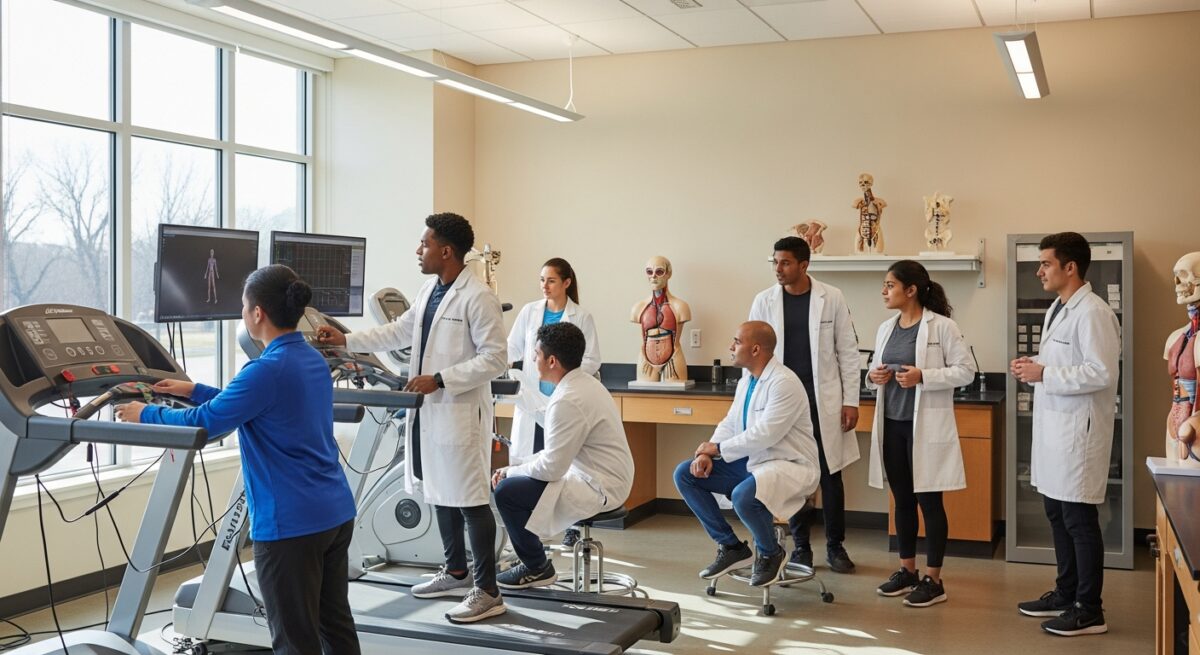
Choosing the right college for a kinesiology degree is a pivotal decision that shapes your career in exercise science, sports medicine, physical therapy, or athletic training. With hundreds of programs across the United States, identifying the best schools for kinesiology requires evaluating factors like accreditation, hands-on lab facilities, faculty expertise, internship placements, and graduate school acceptance rates. This guide profiles the top kinesiology colleges and provides a framework to match your career goals with the right institution.
What Makes a Kinesiology Program Stand Out?
Not all kinesiology degrees are created equal. The best programs combine rigorous academic coursework with practical laboratory experiences and clinical rotations. Accreditation from the Commission on Accreditation of Allied Health Education Programs (CAAHEP) or the Council on Accreditation for Exercise Science (CoAES) signals that a program meets national standards for curriculum and student outcomes.
Beyond accreditation, look for programs that offer dedicated research labs for biomechanics, exercise physiology, and motor behavior analysis. Faculty with active research agendas and clinical certifications (e.g., ACSM, NSCA) provide mentorship that translates classroom theory into real-world application. School partnerships with hospitals, sports medicine clinics, and professional sports teams create internship pipelines that are essential for building your resume.
Graduate school placement rates are another critical metric. If you plan to pursue physical therapy, occupational therapy, or physician assistant studies, a program with a strong pre-PT track and high acceptance rates into doctoral programs will save you time and money. Some of the best schools for kinesiology also offer accelerated 3+3 pathways that combine a bachelor’s degree with a graduate degree in physical therapy.
Top Kinesiology Colleges in the United States
Based on program reputation, faculty credentials, research output, and graduate outcomes, the following institutions consistently rank among the best colleges for kinesiology degrees. Each offers distinct advantages depending on your career focus.
University of Michigan , Ann Arbor
The School of Kinesiology at Michigan is a powerhouse in movement science research. Students can specialize in athletic training, sport management, or health and fitness. The program features state-of-the-art labs for gait analysis and cardiovascular research. Internships with the Michigan athletic department and local hospitals provide direct clinical exposure. Graduates have strong placement into top PT and medical schools. The campus also offers a dedicated pre-health advising center that helps kinesiology majors navigate course selection and application timelines.
University of Texas at Austin
UT Austin’s Department of Kinesiology and Health Education offers concentrations in exercise science, health promotion, and fitness instruction. The program emphasizes hands-on learning through its Human Performance Laboratory and partnerships with Dell Medical School. Students can participate in faculty-led research on chronic disease prevention and sports injury rehabilitation. The university’s location in a major metropolitan area provides access to dozens of clinical sites and corporate wellness programs. Many graduates pursue advanced degrees or enter the fitness industry with strong credentials.
University of North Carolina at Chapel Hill
UNC Chapel Hill’s Department of Exercise and Sport Science is nationally recognized for its blend of academic rigor and practical training. The program offers concentrations in exercise physiology, sport administration, and athletic training. Students benefit from the Sports Medicine Research Laboratory and clinical rotations with UNC Health and the Carolina athletic teams. The university also hosts a renowned Human Movement Science curriculum that feeds into doctoral programs. For students interested in the business side of sports, the sport administration track includes coursework in facility management and sports law.
University of Florida
UF’s College of Health and Human Performance houses the Department of Applied Physiology and Kinesiology. The program is known for its research in exercise metabolism, muscle biology, and pediatric exercise science. Students have opportunities to work in the Center for Exercise Science and the Integrative Physiology Lab. The university’s strong ties to the UF Health system and the VA Medical Center create clinical internships for aspiring physical therapists and researchers. UF also offers a unique minor in sports medicine for kinesiology majors who want additional clinical training.
University of Southern California
USC’s Division of Biokinesiology and Physical Therapy offers a rigorous kinesiology program that integrates biological sciences with clinical practice. The curriculum emphasizes foundational sciences such as anatomy, physiology, and biomechanics. Students can access the Health Sciences Campus labs and participate in research on movement disorders and rehabilitation engineering. USC’s location in Los Angeles provides internship opportunities with professional sports teams, entertainment industry wellness programs, and top hospitals. The program is particularly strong for students planning to apply to physical therapy school due to its direct affiliation with one of the country’s top PT programs.
Ohio State University
Ohio State’s School of Health and Rehabilitation Sciences offers a Bachelor of Science in Health Sciences with a specialization in exercise science. The program features a dedicated Exercise Science Laboratory and clinical partnerships with the Wexner Medical Center. Students gain experience in cardiac rehabilitation, strength and conditioning, and research on aging. Ohio State also offers a combined BS/MS program in exercise physiology for high-achieving students. The university’s large alumni network in healthcare and sports medicine creates valuable mentorship opportunities.
University of Georgia
UGA’s Department of Kinesiology is part of the College of Education and offers concentrations in exercise and sport science, health promotion, and physical education. The program is known for its strong faculty mentorship and undergraduate research opportunities. Students can join the Georgia Kinesiology Association for professional development and networking. The university’s location in Athens provides access to clinical sites in a growing healthcare market. UGA also has articulation agreements with several physical therapy programs that streamline the application process for qualified students.
How to Choose Between Kinesiology Colleges
Selecting from the best colleges for kinesiology degrees requires matching program strengths to your personal career goals. Here are key factors to evaluate when comparing schools:

- Accreditation and curriculum: Verify that the program is accredited and that the course sequence aligns with prerequisites for your target graduate programs. Some schools offer specializations in areas like sports medicine or clinical exercise physiology that may be more relevant to your interests.
- Lab and clinical facilities: Tour the exercise science labs, biomechanics studios, and simulation centers. Access to modern equipment for metabolic testing, motion capture, and strength assessment enhances your learning and resume.
- Internship and research opportunities: Ask about formal internship programs with hospitals, rehabilitation centers, or sports organizations. Undergraduate research experience is valuable for graduate school applications and can lead to co-authored publications.
- Graduate school placement rates: Request data on how many graduates are accepted into PT, OT, PA, or medical school within one year of graduation. Programs with dedicated pre-health advising often have higher success rates.
- Cost and financial aid: Compare tuition, fees, and availability of scholarships for kinesiology majors. Some states offer in-state tuition reciprocity programs that can reduce costs.
- Class size and faculty access: Smaller programs often provide more individualized mentorship and research involvement. Check the student-to-faculty ratio and whether professors teach undergraduate courses or rely on teaching assistants.
Taking time to research these factors will help you narrow your list to the kinesiology colleges that best support your long-term career plan. Many students also benefit from attending virtual information sessions or scheduling campus visits to observe lab facilities and talk with current students.
Career Paths for Kinesiology Graduates
A kinesiology degree opens doors to diverse careers in healthcare, fitness, sports, and research. Understanding the typical pathways can help you choose the right program from the best schools for kinesiology.
Many graduates pursue advanced clinical degrees to become physical therapists, occupational therapists, physician assistants, or chiropractors. These paths require strong undergraduate preparation in anatomy, physiology, and statistics, which is why program quality matters. Others enter the fitness industry as strength and conditioning coaches, personal trainers, or corporate wellness coordinators. Certifications from ACSM or NSCA can complement a degree and improve job prospects.
Sports medicine and athletic training are popular specializations. Athletic trainers work with teams and individual athletes to prevent and treat injuries. Some programs offer accredited athletic training tracks that lead to certification eligibility after graduation. Research careers in exercise science or biomechanics typically require a master’s or doctoral degree. Graduates may work in universities, hospitals, or private research institutes studying topics such as exercise metabolism, motor control, or rehabilitation engineering.
For students interested in the business side of sports, kinesiology programs with sport management concentrations prepare graduates for roles in sports marketing, facility management, or event coordination. These programs often include coursework in finance, law, and organizational behavior. Regardless of the path you choose, internships and networking during college are critical for securing a job after graduation.
Frequently Asked Questions About Kinesiology Degrees
What is the difference between kinesiology and exercise science?
Kinesiology is the broader study of human movement, encompassing exercise science, biomechanics, motor control, sport psychology, and physical education. Exercise science is a subfield of kinesiology that focuses specifically on the physiological and mechanical responses to exercise. Most undergraduate programs use these terms interchangeably, but some offer distinct concentrations. If you are interested in clinical work, look for exercise science programs with strong science prerequisites.
Can I become a physical therapist with a kinesiology degree?
Yes, a kinesiology degree is one of the most common undergraduate pathways to physical therapy school. You must complete prerequisite courses in anatomy, physiology, biology, chemistry, and physics. Many kinesiology programs are designed to meet these requirements. After earning your bachelor’s degree, you will need to complete a Doctor of Physical Therapy (DPT) program, which typically takes three years. Strong programs often have high acceptance rates into DPT programs.
Do kinesiology majors need to go to graduate school?
Not necessarily. Many entry-level positions in fitness, wellness, coaching, and corporate health are available with a bachelor’s degree. However, graduate education is required for careers in physical therapy, occupational therapy, athletic training (in some states), and research. If you are unsure about your long-term goals, choose a program that keeps multiple options open. Some schools offer accelerated master’s programs that allow you to earn both degrees in five years.
What can I do with a kinesiology degree besides physical therapy?
Graduates work in a wide range of fields, including strength and conditioning coaching, personal training, cardiac rehabilitation, corporate wellness, sports management, teaching physical education, chiropractic medicine, and occupational therapy. Some also pursue careers in fitness technology, ergonomics, or public health. The versatility of the degree is one of its greatest strengths. For more insights on degree pathways and career planning, see our guide on Best Colleges for Veterans and Military Students in 2026, which includes information on transfer credits and support services that may apply to kinesiology programs.
How long does it take to complete a kinesiology degree?
A bachelor’s degree in kinesiology typically takes four years of full-time study. Some programs offer accelerated options that allow completion in three years, especially for students who enter with college credits from AP or dual enrollment courses. Part-time study extends the timeline. Master’s degrees take an additional one to two years, and doctoral programs require three to four years beyond a bachelor’s. Planning your timeline with an academic advisor helps ensure you meet prerequisites for graduate programs.
Choosing among the best colleges for kinesiology degrees is a significant investment in your future. Focus on programs that align with your career goals, offer strong hands-on training, and provide a clear pathway to your next step. The right school will combine academic excellence with practical experience, preparing you to make a meaningful impact in the field of human movement and health. For further resources on degree options and school comparisons, explore the program listings and guides available at CollegeDegrees.School to find institutions that match your interests and budget.