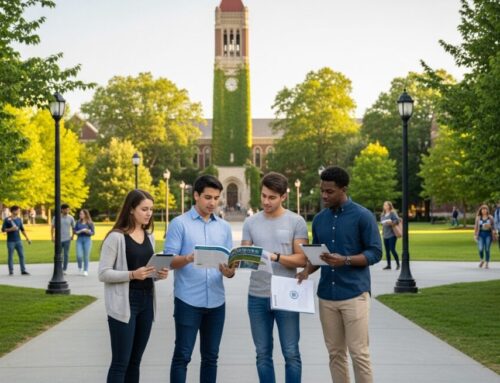
Choosing where to pursue an engineering degree is one of the most significant decisions a student can make, shaping not only their education but their entire career trajectory. The world’s best engineering programs in top universities offer far more than a prestigious name on a diploma. They provide access to cutting-edge research, world-renowned faculty, unparalleled facilities, and a network that opens doors globally. However, with so many highly-ranked institutions across the United States, the United Kingdom, Asia, and Europe, identifying the right fit requires looking beyond general rankings. This guide delves into the defining characteristics of elite engineering education, explores the strengths of leading institutions, and provides a framework for selecting a program that aligns with your academic goals and professional aspirations.
What Defines a Top-Tier Engineering Program?
While rankings from sources like QS World University Rankings, Times Higher Education, and U.S. News & World Report provide a useful starting point, they only tell part of the story. The best engineering colleges distinguish themselves through a combination of factors that create an environment for exceptional learning and innovation. First and foremost is academic rigor and curriculum depth. Top programs offer a robust foundational core in mathematics and the physical sciences, coupled with advanced, specialized coursework that keeps pace with technological change, such as in artificial intelligence, sustainable energy, and bioengineering.
Perhaps the most critical differentiator is research output and opportunity. Leading institutions are powerhouses of discovery, with faculty engaged in groundbreaking work funded by agencies like the National Science Foundation (NSF) and the Department of Energy. For undergraduate and graduate students, this translates into hands-on involvement in real-world projects, from nanotechnology labs to robotics teams. This research-centric model fosters a problem-solving mindset that is highly valued in industry and academia alike. Furthermore, the quality and accessibility of faculty are paramount. The best programs feature professors who are leaders in their fields and are deeply committed to mentorship, often involving students directly in their research endeavors.
Finally, the tangible resources and outcomes matter immensely. State-of-the-art facilities, including advanced computing clusters, materials characterization labs, and fabrication facilities (like clean rooms), are standard at top engineering schools. Equally important is the career support and industry connectivity. These programs boast strong relationships with leading tech, manufacturing, and consulting firms, facilitating internships, co-op programs, and high-placement rates upon graduation. The alumni network itself becomes a lifelong career asset. When evaluating programs, prospective students should consider this holistic blend of theory, practice, and opportunity. For those exploring specialized fields, a focused resource can be invaluable. For instance, students interested in aviation and space systems should consult our detailed guide on top aerospace engineering programs and leading universities to understand the nuances of that discipline.
Leading Engineering Programs and Their Signature Strengths
The landscape of elite engineering education is diverse, with different institutions excelling in specific areas. In the United States, a group of universities consistently tops the lists for best engineering programs. The Massachusetts Institute of Technology (MIT) is synonymous with innovation and interdisciplinary research, offering unparalleled strength across virtually all engineering disciplines, from mechanical and electrical to the burgeoning field of biological engineering. Stanford University leverages its Silicon Valley location to fuse engineering with entrepreneurship, producing leaders in computing, robotics, and sustainable design.
California Institute of Technology (Caltech), while smaller in size, offers an intensely focused and research-driven environment with profound impact in areas like aerospace (through JPL) and chemical engineering. On the other hand, public institutions like the University of California, Berkeley, and the University of Michigan, Ann Arbor, provide a scale and diversity of programming that is immense, with exceptionally strong programs in civil, environmental, and industrial engineering alongside traditional powerhouses like electrical and computer engineering. These schools demonstrate that the best engineering programs are not a monolith, they offer different cultures, sizes, and areas of deepest expertise.
Globally, other institutions set the standard. The University of Cambridge and Imperial College London in the U.K. are world leaders, with Cambridge known for its rigorous theoretical approach and Imperial for its strong industry ties and focus on technology application. In Asia, the National University of Singapore and Nanyang Technological University are rapidly ascending the ranks, while institutions like ETH Zurich in Switzerland maintain a long-standing reputation for excellence in Europe. The common thread is a commitment to pushing the boundaries of knowledge and applying engineering principles to solve complex global challenges.
Choosing the Right Program for Your Goals
With so many excellent options, selecting the right engineering school is a personal strategic decision. The first step is introspection: identify your specific engineering interests (e.g., civil, chemical, software) and your long-term career vision (e.g., academic research, product design, corporate leadership). Once you have clarity, you can evaluate programs against several key criteria beyond the general prestige.
Consider the following actionable factors when building your shortlist:
- Curriculum Flexibility and Specializations: Does the program allow for exploration before declaring a major? Does it offer the specific technical electives or concentrations you desire, such as machine learning, environmental systems, or robotics?
- Undergraduate Research Culture: How accessible are research opportunities for undergraduates? Look for formal programs like Undergraduate Research Opportunities Programs (UROPs) and the percentage of students who participate.
- Hands-On Learning and Design Sequence: Top programs integrate design projects throughout the curriculum. Investigate the capstone design courses and access to maker spaces and project labs.
- Career Outcomes Data: Review the school’s published career placement reports. Look for median starting salaries, top hiring companies, and the percentage of students with job offers at graduation.
- Campus Culture and Support Systems: Visit if possible, or connect with current students. Is the environment collaborative or intensely competitive? What academic support and tutoring services are available for challenging core classes?
Financial investment is another crucial component. While top private universities have high tuition, they also often have substantial endowments for financial aid. Public universities may offer a lower in-state tuition cost. Always calculate the net cost after grants and scholarships. Furthermore, the return on investment (ROI) for a degree from a top engineering program is typically very high, but it requires careful planning. Seeking clear college degree information on costs, aid, and long-term value is an essential part of the decision-making process for any serious student.
Beyond the Bachelor’s: Graduate Programs and Global Trends
For many engineers, a bachelor’s degree is just the beginning. The best engineering programs in top universities also host world-leading graduate schools, which are essential for careers in advanced research, development, or academia. Pursuing a Master of Science (M.S.) or a Doctor of Philosophy (Ph.D.) allows for deep specialization. When evaluating graduate programs, the specific research fit with faculty is arguably more important than the university’s overall undergraduate ranking. Prospective graduate students should meticulously review faculty publications and lab websites to identify potential advisors whose work aligns with their interests.
Contemporary engineering education is also being reshaped by powerful global trends. Interdisciplinary is no longer a buzzword but a necessity. The most pressing problems in climate change, public health, and cybersecurity require engineers to collaborate with experts in policy, business, and the social sciences. Consequently, top programs are breaking down departmental silos, creating institutes and courses that blend disciplines. Furthermore, the rise of online and hybrid learning models, accelerated by recent global events, has made elite engineering education more accessible. Many top universities now offer professional master’s degrees or certificate programs online, allowing working engineers to upskill without leaving their jobs.
Frequently Asked Questions
How important are university rankings for engineering?
Rankings are a useful initial filter that reflects academic reputation and research output. However, they should not be the sole deciding factor. A program ranked slightly lower but with a perfect fit for your specialty, better financial aid, and a supportive culture may be a superior choice.
Is it better to attend a specialized engineering institute or a large university with an engineering school?
This depends on your preferences. Institutes like MIT or Caltech offer an intense, tech-focused environment with all resources geared toward STEM. Large universities offer a broader liberal arts experience, easier cross-registration into other schools (like business), and a more diverse social environment.
What is the value of ABET accreditation?
ABET accreditation in the U.S. is critical. It ensures the program meets quality standards essential for preparing graduates to enter the profession. It is also often required for licensure as a Professional Engineer (PE). Always verify a program’s accreditation status.
How can I assess the true career support of a program?
Go beyond marketing materials. Ask the career services office for data on internship placement rates, the list of companies that recruit on campus, and the availability of career coaching specific to engineering majors. Speaking with recent alumni on LinkedIn can provide unfiltered insights.
Are there strong engineering programs outside the traditional top 10 lists?
Absolutely. Many public and private universities have exceptionally strong, even top-ranked, programs in specific engineering disciplines. A university might not crack the overall top 10 but have a civil or industrial engineering program that is consistently ranked number one. Discipline-specific rankings are crucial to consult.
The journey to finding the right engineering program requires diligent research and self-reflection. The best engineering programs in top universities offer a transformative education that combines deep theoretical knowledge with practical application. By focusing on the factors that matter most, your specific academic interests, desired learning environment, and long-term career goals, you can identify the institution that will best serve as a launchpad for a successful and impactful career in engineering. The investment of time in this selection process is the first step in building the future you envision.