Choosing where to study aerospace engineering is a critical decision that shapes your technical foundation, professional network, and career trajectory. This field, which encompasses the design, development, and testing of aircraft, spacecraft, satellites, and missiles, demands a rigorous education from institutions with strong engineering fundamentals, cutting-edge research facilities, and deep industry connections. The best universities for aerospace engineering provide more than just a degree, they offer a gateway to a dynamic industry pushing the boundaries of human exploration and technological innovation. This guide explores the leading programs, their defining characteristics, and the key factors you should consider to find the perfect fit for your academic and professional aspirations.
Defining Excellence in Aerospace Engineering Education
What separates a good aerospace engineering program from a truly exceptional one? The distinction lies in a combination of factors that create an environment where theoretical knowledge meets practical, groundbreaking application. Top-tier programs are typically characterized by their ABET (Accreditation Board for Engineering and Technology) accreditation, a non-negotiable baseline ensuring educational quality. Beyond accreditation, these institutions boast distinguished faculty who are often leaders in their research fields, from hypersonics and propulsion to autonomous systems and space exploration. Their research expenditures are substantial, directly funding state-of-the-art laboratories with wind tunnels, flight simulators, structural test facilities, and advanced computing clusters that students can access.
Furthermore, the best aerospace engineering colleges cultivate robust partnerships with major industry players like NASA, SpaceX, Boeing, Lockheed Martin, Northrop Grumman, and the U.S. Department of Defense. These relationships translate into unparalleled opportunities for internships, co-op programs, senior design projects sponsored by real industry challenges, and direct pipelines for employment upon graduation. The curriculum at these schools balances deep theoretical rigor in subjects like fluid dynamics, thermodynamics, and materials science with hands-on, project-based learning. Many top programs also offer specialized tracks or concentrations, allowing students to tailor their studies to interests in aeronautics, astronautics, avionics, or rotorcraft.
Leading Aerospace Engineering Universities in the United States
The United States is home to many of the world’s most prestigious aerospace engineering programs, often located in regions with a high density of aerospace industry and government research centers. These institutions set the global standard for education and research in the field.
The Massachusetts Institute of Technology (MIT) is consistently ranked at the pinnacle. Its Department of Aeronautics and Astronautics operates within a culture of profound innovation, with research spanning autonomous systems, space exploration, and air transportation. Students benefit from resources like the Gas Turbine Laboratory and the MIT Space Propulsion Laboratory. Similarly, Stanford University’s program excels in fundamental aerospace disciplines while offering unique strengths in multidisciplinary areas like computational mathematics and design. Its proximity to Silicon Valley fosters a focus on entrepreneurship and cutting-edge tech integration.
Georgia Institute of Technology (Georgia Tech) is renowned for its massive, highly-ranked program that emphasizes hands-on experience. The Daniel Guggenheim School of Aerospace Engineering provides extensive wind tunnel facilities and a strong focus on rotorcraft and unmanned aerial vehicles. Purdue University in West Lafayette, Indiana, has a legendary history in aerospace, famously educating numerous astronauts. Its School of Aeronautics and Astronautics offers exceptional propulsion and combustion research facilities and maintains deep ties with industry. The University of Michigan, Ann Arbor, offers a broad and deep curriculum with particular strengths in hypersonics, propulsion, and space systems. Its Multidisciplinary Design Program connects students with real-world team projects.
Other notable powerhouses include the University of Illinois Urbana-Champaign, known for its rigorous theoretical foundation and excellent flight dynamics research, and the University of Texas at Austin, which leverages its relationship with NASA’s Johnson Space Center and a thriving commercial space sector. For those interested in the intersection of aerospace and national defense, the U.S. Air Force Academy and the U.S. Naval Academy provide unparalleled pathways into military aerospace careers.
Evaluating Programs: Key Factors Beyond Rankings
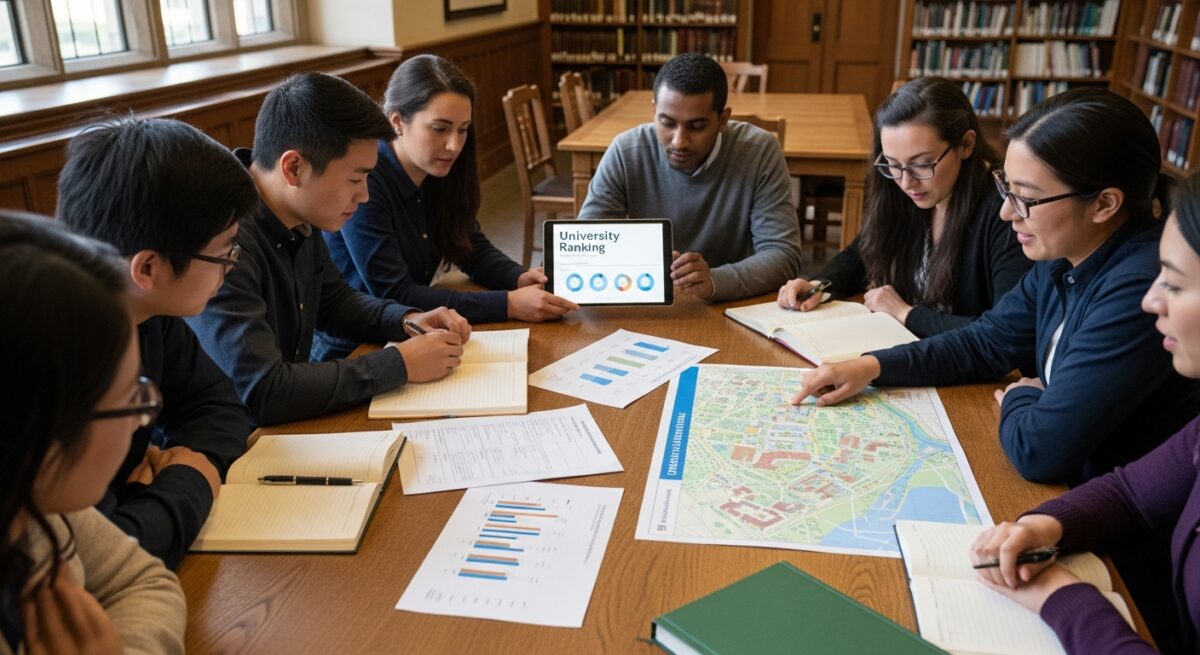
While university rankings provide a useful starting point, your personal evaluation should dig deeper. Consider the specific research areas and labs available. Does the university have a leading center in composite materials, plasma propulsion, or guidance and control systems that aligns with your interests? Investigate the undergraduate and graduate project teams, such as rocket clubs, satellite design teams, or AIAA (American Institute of Aeronautics and Astronautics) design competitions. Participation in these groups is often where the most valuable practical experience is gained.
The location of the university is a strategic career consideration. Proximity to aerospace hubs like Los Angeles, Seattle, Huntsville, Denver, or Washington D.C. can dramatically increase access to internships, networking events, and site visits. You should also examine career outcome data: what percentage of graduates secure jobs or enter graduate school within six months, and which companies are the top employers? Furthermore, the availability of combined bachelor’s/master’s degree programs can be an efficient path to an advanced credential. For students exploring flexible learning options, it’s worth noting that while the core of aerospace engineering is hands-on, foundational coursework and certain specialized master’s programs are increasingly available online. For those considering this route, comprehensive school‑level degree guidance can help identify accredited and reputable online pathways that complement traditional engineering education.
To help organize your research, consider these five critical evaluation criteria:
- Faculty Expertise & Research Focus: Are professors working on topics that excite you? Can you see yourself assisting in their labs?
- Facilities & Resources: Does the school have modern, accessible labs (wind tunnels, structures, propulsion, CFD clusters) for undergraduate use?
- Industry Connections & Career Support: What is the track record for internships and co-ops? Which companies recruit on campus?
- Curriculum Flexibility & Specializations: Does the program offer tracks or electives in your niche interest, be it spacecraft design, aerodynamics, or aviation systems?
- Student Experience & Culture: What is the class size? How collaborative is the environment? What design teams or professional societies are active?
The Global Landscape of Aerospace Education
Excellence in aerospace engineering is not confined to the United States. Several institutions around the world offer world-class education and unique perspectives. In the United Kingdom, the University of Cambridge and Imperial College London are historically prominent, with strong research outputs and connections to European aerospace initiatives like Airbus. In Europe, institutions such as Delft University of Technology (TU Delft) in the Netherlands are celebrated for their focus on sustainable aerospace and wind energy. The von Karman Institute for Fluid Dynamics in Belgium is a premier destination for specialized graduate study in aerodynamics.
In Canada, the University of Toronto and Carleton University offer strong programs with ties to the Canadian Space Agency and domestic aerospace firms. In Asia, the National University of Singapore and the Indian Institutes of Technology (IITs), particularly IIT Kanpur and IIT Bombay, have rising and highly competitive programs. For a comparative look at leading international options, our resource on top aerospace engineering universities for future engineers provides a broader geographic analysis. Choosing an international program can offer exposure to different industry standards, regulatory environments, and global research networks, which is increasingly valuable in this interconnected field.
Academic Pathways and Career Trajectories
A bachelor’s degree in aerospace engineering is the standard entry point into the profession, opening doors to roles in design, testing, analysis, and systems engineering. However, the academic journey often continues. A master’s degree (M.S. or M.Eng.) allows for deeper specialization and is frequently required for advanced research and development positions or for leadership tracks. A Ph.D. is essential for those aiming for careers in advanced research, academia, or highly specialized technical leadership within government labs or industry.
The career paths for graduates from the best aerospace programs are diverse. They include traditional roles in the defense and aviation sectors with companies like Raytheon, Boeing, and General Electric Aviation. The rapidly growing commercial space sector, led by companies like SpaceX, Blue Origin, and Virgin Galactic, is a major employer. Government agencies such as NASA, the FAA, the Department of Defense, and national research laboratories offer careers in mission planning, safety regulation, and fundamental research. Additionally, the skills learned in aerospace engineering, such as systems thinking, computational modeling, and problem-solving, are highly transferable to adjacent fields like automotive engineering, robotics, renewable energy, and data science.
Frequently Asked Questions
What is the difference between aeronautical and astronautical engineering?
Aeronautical engineering focuses on vehicles operating within Earth’s atmosphere (airplanes, helicopters, drones), while astronautical engineering deals with vehicles for space travel (rockets, satellites, spacecraft). Most top aerospace engineering programs cover both, but some allow for specialization in one track.
How important is attending a top-ranked school for aerospace engineering?
Attending a highly-ranked program provides significant advantages in terms of research opportunities, faculty mentorship, industry recruitment, and peer network. However, many excellent regional and public universities have strong, ABET-accredited programs with great career outcomes. The “fit” for your goals is as important as the ranking.
What high school preparation is best for aerospace engineering?
A strong foundation in math (through calculus) and physics is essential. Chemistry, computer science, and drafting/CAD courses are also highly beneficial. Participation in robotics clubs, model rocketry, or science fairs demonstrates practical interest.
Are there strong online degrees in aerospace engineering?
Fully online ABET-accredited bachelor’s degrees are rare due to the hands-on lab requirements. However, several reputable universities offer accredited online master’s degrees in aerospace engineering or related fields, which are ideal for working professionals seeking advancement.
What is the job outlook for aerospace engineers?
The U.S. Bureau of Labor Statistics projects growth in line with the average for all occupations. Innovation in commercial space, unmanned systems, sustainable aviation, and national defense is expected to drive demand for skilled engineers from top programs.
Selecting the right university for your aerospace engineering education is an investment in your future. By thoroughly researching the best universities for aerospace engineering, focusing on the alignment between a program’s strengths and your personal ambitions, and actively engaging with the opportunities presented, you can launch a career that contributes to the next era of aerospace achievement. The journey requires dedication, but for those passionate about flight and exploration, the educational path is the first critical mission toward a rewarding professional life.