Choosing the right electrical engineering program can shape your entire career trajectory. With technology advancing at a rapid pace, the demand for skilled electrical engineers continues to grow across industries like renewable energy, telecommunications, robotics, and semiconductor design. The best programs combine rigorous theoretical foundations with hands-on laboratory experience and strong industry connections. Whether you are a high school student exploring undergraduate options or a working professional considering a graduate degree, understanding what makes a program exceptional is essential. This article examines the most important factors to consider when evaluating top electrical engineering schools and highlights what sets elite programs apart from the rest.
What Defines a Top Electrical Engineering Program
Accreditation is the first and most critical benchmark for any quality engineering program. In the United States, the Accreditation Board for Engineering and Technology (ABET) sets the standard for engineering curricula. Graduating from an ABET-accredited program is often a prerequisite for professional engineering licensure and is widely recognized by employers. Beyond accreditation, elite electrical engineering colleges distinguish themselves through faculty expertise, research output, laboratory facilities, and industry partnerships. Programs that offer undergraduate research opportunities, co-op programs, and internship placements give students a significant advantage in the job market. The curriculum should cover core areas such as circuit analysis, electromagnetics, signal processing, control systems, and power systems while also offering electives in emerging fields like machine learning, photonics, and embedded systems.
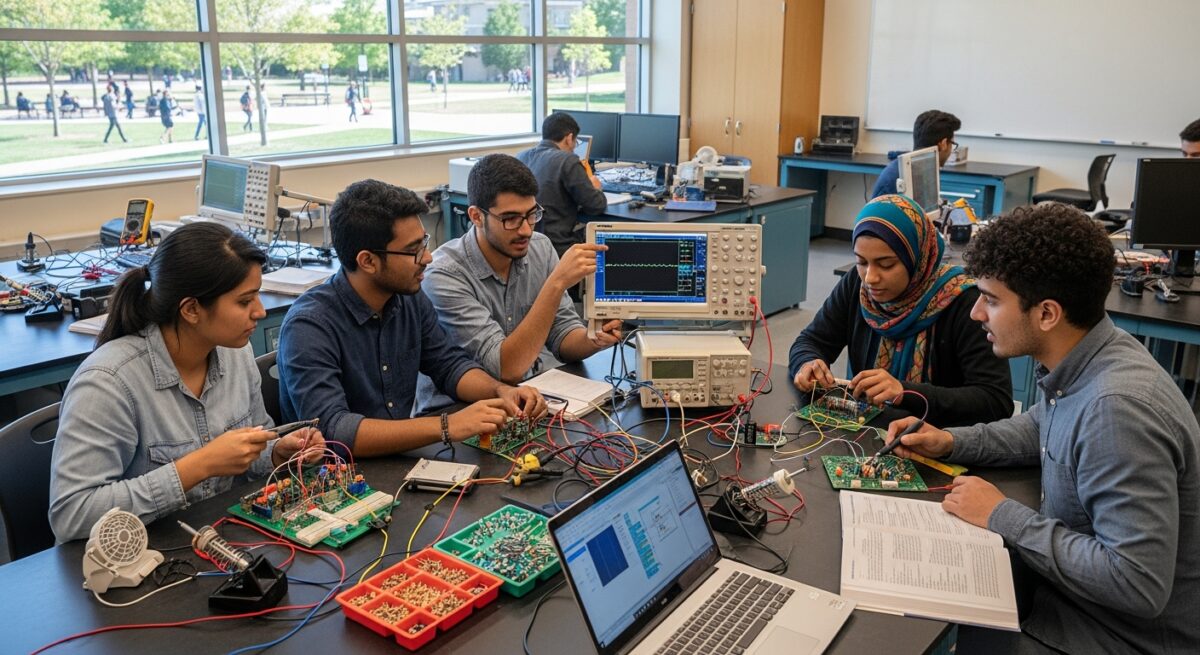
Another defining characteristic of top electrical engineering schools is their investment in modern laboratory equipment and simulation software. Students need access to oscilloscopes, spectrum analyzers, FPGA boards, and computer-aided design tools to build practical skills. The best programs also maintain strong relationships with companies like Intel, Texas Instruments, General Electric, and defense contractors. These connections often lead to sponsored research projects, guest lectures, and direct recruitment pipelines. When researching schools, pay attention to job placement rates, average starting salaries, and the percentage of graduates who pursue advanced degrees. These metrics provide tangible evidence of program quality.
Factors to Consider When Ranking Electrical Engineering Colleges
When evaluating electrical engineering colleges, you should consider several key factors beyond simple name recognition. Each factor contributes to the overall educational experience and your long-term career prospects. The following list outlines the most important criteria to use in your evaluation process:
- Research opportunities: Look for programs that allow undergraduates to work alongside faculty on funded research projects. This experience builds critical thinking skills and strengthens graduate school applications.
- Class size and student-to-faculty ratio: Smaller classes mean more personalized attention from professors and better access to office hours. A ratio below 15:1 is generally favorable for engineering programs.
- Internship and co-op placement rates: The best schools have dedicated career services that help students secure positions at top companies. Some programs even require co-op experiences as part of the curriculum.
- Specialization options: Determine whether the program offers concentrations in areas that interest you, such as power systems, telecommunications, microelectronics, or control systems.
- Alumni network strength: A robust alumni network can open doors to job opportunities and mentorship. Research where graduates end up working and whether they stay engaged with the school.
These factors should be weighed according to your personal priorities. For example, if you are interested in academic research, a program with a strong Ph.D. track and high research expenditures will be more important than one with a high internship placement rate. Conversely, if your goal is to enter the workforce immediately after graduation, prioritize schools with strong industry ties and co-op programs. Many students overlook the importance of location. Schools situated in technology hubs like Silicon Valley, Boston, or Austin often have easier access to internships and job opportunities. However, online programs are increasingly bridging this gap by offering remote internship placements and virtual career fairs. For those exploring flexible options, the article on top electrical engineering schools provides additional insights into program structures and outcomes.
Institutional Leaders in Electrical Engineering
Several universities consistently appear at the top of rankings for electrical engineering programs. The Massachusetts Institute of Technology (MIT) is widely regarded as the global leader, with its Department of Electrical Engineering and Computer Science offering unparalleled research facilities and faculty expertise. Stanford University, located in the heart of Silicon Valley, provides exceptional opportunities for entrepreneurship and collaboration with tech companies. The University of California, Berkeley, boasts a strong tradition of innovation in areas like integrated circuit design and renewable energy systems. These three institutions represent the pinnacle of electrical engineering education, but they are also highly competitive. Students with strong academic records and research experience have the best chances of admission.
Beyond the top three, there are many other excellent electrical engineering colleges that offer world-class education. The California Institute of Technology (Caltech) emphasizes small class sizes and a strong focus on fundamental science. The University of Illinois at Urbana-Champaign has one of the largest and most respected engineering programs in the country, with extensive resources in semiconductor physics and power electronics. Georgia Institute of Technology offers a highly ranked program with a strong emphasis on practical engineering and cooperative education. Carnegie Mellon University excels in areas like robotics, computer vision, and signal processing. Each of these schools has unique strengths, so it is important to research which program aligns best with your specific interests and career goals. For example, if you are interested in sustainable energy, look for programs with dedicated research centers in photovoltaics or smart grid technology.
Online and Flexible Degree Options
For students who need flexibility due to work, family, or geographic constraints, online electrical engineering programs have become a viable and respected option. Many top universities now offer ABET-accredited online bachelor’s and master’s degrees in electrical engineering. These programs use the same curriculum as their on-campus counterparts and are taught by the same faculty. The key difference is the delivery method, which often includes recorded lectures, virtual labs, and interactive discussion forums. Online programs are particularly well-suited for working professionals who want to advance their careers without leaving their current jobs. They also allow students to study from anywhere in the world, removing the need to relocate near a campus.

When evaluating online electrical engineering colleges, consider the same factors as you would for on-campus programs, but also look at the technology platform and student support services. Some programs use simulation software to replicate laboratory experiments, while others require students to purchase hardware kits for at-home experiments. Make sure the program offers adequate academic advising, tutoring, and career services for remote students. It is also worth checking whether the degree name explicitly states “online” on the diploma. Most reputable programs do not distinguish between online and on-campus degrees on the transcript, but it is wise to confirm this before enrolling. Additionally, consider the program’s graduation rate and average time to completion. Programs with strong support structures tend to have higher completion rates. You can learn more about online engineering education at Degrees Online Education, a resource that provides detailed program comparisons and enrollment guidance.
Frequently Asked Questions About Electrical Engineering Programs
What is the difference between electrical engineering and electronics engineering?
Electrical engineering is a broad field that covers the generation, transmission, and utilization of electrical energy. It includes power systems, electromagnetics, and control systems. Electronics engineering is a subset that focuses on smaller electronic circuits, semiconductor devices, and embedded systems. Both fields overlap significantly, but electrical engineering tends to deal with larger-scale systems, while electronics engineering deals with components and circuits.
Do I need a master’s degree to work as an electrical engineer?
Many entry-level positions in electrical engineering are available to graduates with a bachelor’s degree. However, a master’s degree can lead to higher salaries, more advanced roles, and specialization in areas like RF engineering, power electronics, or machine learning. Some employers offer tuition reimbursement for employees who pursue graduate degrees part-time while working.
How important is ABET accreditation for an electrical engineering program?
ABET accreditation is essential if you plan to pursue professional engineering licensure (PE) or work for companies that require degrees from accredited programs. Many federal agencies and defense contractors also require degrees from ABET-accredited programs. If you are considering a program that is not accredited, verify that your target employers accept that credential.
Can I complete an electrical engineering degree entirely online?
Yes, several universities offer fully online ABET-accredited bachelor’s and master’s degrees in electrical engineering. These programs use virtual labs, simulation software, and mailed hardware kits to provide practical experience. Online degrees are particularly popular among working professionals and military personnel who need flexible scheduling.
What are the career prospects for electrical engineering graduates?
The job outlook for electrical engineers is strong, with the U.S. Bureau of Labor Statistics projecting steady growth in fields like renewable energy, telecommunications, and automation. Median salaries are above the national average, and experienced engineers can move into management, consulting, or entrepreneurship. Specialized skills in areas like artificial intelligence, cybersecurity, and power systems can further enhance career prospects.
Selecting the right electrical engineering program requires careful research and honest self-assessment of your goals and circumstances. Whether you choose a traditional on-campus program at a prestigious university or a flexible online option, the quality of the education and the opportunities it unlocks will depend on your engagement and initiative. Look for programs that challenge you academically, provide practical experience, and connect you with a community of peers and professionals. The effort you invest now in choosing the best fit will pay dividends throughout your career. Start exploring your options today, and take the next step toward a rewarding future in electrical engineering.