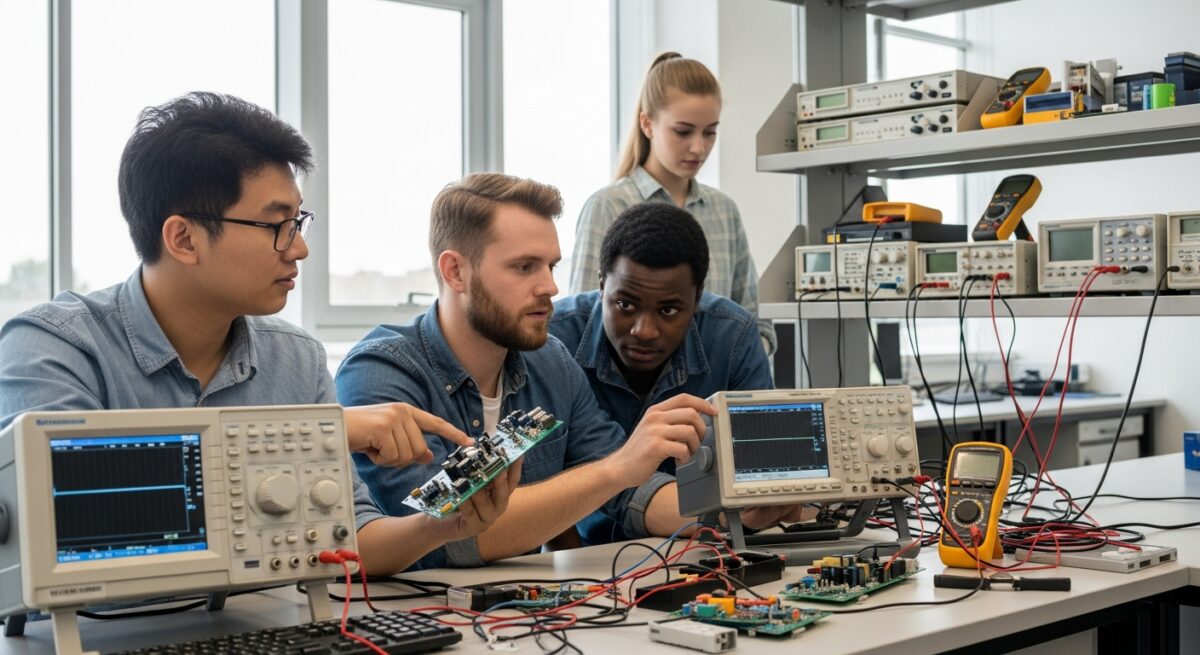
Choosing the right university for an electrical engineering degree is a pivotal decision that shapes your technical expertise, professional network, and career trajectory. The field of electrical engineering is vast, encompassing everything from microelectronics and power systems to telecommunications and robotics. Consequently, the best universities for electrical engineering programs are those that not only provide a rigorous theoretical foundation but also offer unparalleled research opportunities, cutting-edge facilities, and strong industry connections. This guide delves into the defining characteristics of top-tier electrical engineering colleges and provides a framework for evaluating programs that align with your specific academic and professional aspirations.
What Defines a Top Electrical Engineering Program?
Identifying the best universities for electrical engineering requires looking beyond generic rankings. A truly elite program is distinguished by several interconnected factors that contribute to a transformative educational experience. First and foremost is academic rigor and curriculum depth. The best programs offer a core curriculum that thoroughly covers fundamental principles like circuit theory, electromagnetics, digital systems design, and signal processing, while also providing a wide array of specialized electives in emerging areas such as photonics, machine learning applications, or renewable energy systems.
Faculty excellence is another non-negotiable hallmark. Programs are elevated by professors who are leaders in their research fields, often pioneering advancements in semiconductor technology, wireless communication, or control systems. These professors bring real-world challenges and cutting-edge knowledge directly into the classroom and laboratory. Furthermore, research output and opportunity are critical. Top engineering schools operate state-of-the-art research centers, often funded by government agencies like NSF or DARPA and industry partners, allowing undergraduate and graduate students to contribute to meaningful projects. This hands-on research experience is invaluable. Finally, strong career outcomes and industry linkages demonstrate a program’s effectiveness. This includes robust career placement services, high starting salaries for graduates, and a powerful alumni network that opens doors in sectors ranging from aerospace and computing to automotive and consumer electronics.
Key Specializations Within Electrical Engineering
Modern electrical engineering is not a monolithic field. When evaluating electrical engineering colleges, it’s essential to consider their strengths in specializations that match your interests. The depth of a program in your chosen niche can be more important than its overall reputation. Here are some of the primary specializations driving innovation and hiring today.
Electronics and Integrated Circuits: This specialization focuses on the design and fabrication of microchips and electronic devices. It’s the backbone of the computing and consumer electronics industries. Top programs in this area will have cleanroom facilities for nanofabrication and strong ties to semiconductor companies.
Power and Energy Systems: With the global shift toward renewable energy and smart grids, this area is increasingly vital. Programs excel here if they have labs for high-voltage engineering, power electronics, and grid simulation, and often collaborate with utility companies and national laboratories.
Communications and Signal Processing: This field underpins all modern wireless technology, from 5G/6G networks to satellite communications. Leading programs feature research in information theory, coding, network security, and the processing of audio, video, and sensor signals.
Computer Engineering and Hardware Systems: Sitting at the intersection of electrical engineering and computer science, this specialization deals with computer architecture, embedded systems, and hardware-software co-design. It is fundamental for careers in robotics, IoT, and high-performance computing.
Photonics and Optics: This involves the generation, detection, and manipulation of light. It’s crucial for fiber-optic communications, laser systems, medical imaging, and quantum computing. Strong programs will have advanced optics labs and often intersect with physics departments.
Evaluating Program Components Beyond the Major
While the technical curriculum is paramount, the complete educational ecosystem of a university significantly impacts your development. Prospective students should carefully assess several supporting elements. Laboratory and computational resources are a tangible differentiator. The quality and accessibility of labs for embedded systems, RF design, power machinery, and VLSI chip design indicate a program’s commitment to hands-on learning. Similarly, access to high-performance computing clusters and industry-standard software (like CAD tools from Cadence or Synopsys) is essential.
Capstone design projects and co-op/internship programs are where theory meets practice. The best electrical engineering programs integrate a substantial, year-long senior design project that requires students to solve a complex, open-ended problem, often for an industry sponsor. Furthermore, established co-operative education programs, where students alternate semesters of study with paid full-time work in engineering roles, provide unmatched professional experience and often lead to job offers. Financial considerations are also a practical reality. Investigating the availability of departmental scholarships, research assistantships for graduate students, and need-based aid is crucial. Many students successfully offset costs through targeted student scholarship programs and fellowships designed for engineering disciplines.
A Global Perspective on Leading Institutions
Electrical engineering excellence is a global pursuit. While many of the historically top engineering schools are in the United States, exceptional programs exist worldwide, each with unique strengths and contexts. In the United States, a group of institutions is consistently recognized for their breadth and depth. These include private universities like the Massachusetts Institute of Technology (MIT), Stanford University, and the California Institute of Technology (Caltech), which are renowned for their high-impact research and startup culture. Leading public universities, often called “Public Ivies,” such as the University of California, Berkeley, the University of Illinois Urbana-Champaign, and the University of Michigan, Ann Arbor, offer massive scale, extensive research facilities, and strong industry recruitment pipelines. These schools represent some of the best universities for electrical engineering programs in the world.
Outside the U.S., other regions boast world-class institutions. In the United Kingdom, universities like the University of Cambridge and Imperial College London have storied histories and strong industrial ties across Europe. In Asia, institutions such as the National University of Singapore, Tsinghua University in China, and the Indian Institutes of Technology (IITs) are powerhouses producing a large volume of highly skilled graduates and pioneering research. Similarly, excellent options exist across Europe, Canada, and Australia. For students considering international study, our resource on Exploring the Best Online Degrees in the UK provides a useful perspective on one region’s educational landscape. The choice between a domestic and international program often hinges on career goals, desired geographic location for work, and specialization focus.
Navigating the Admissions Process for Competitive Programs
Gaining admission to elite electrical engineering colleges requires strategic preparation. The process is holistic, but several components carry significant weight. Academic preparation is the foundation. This means excelling in a high school or undergraduate curriculum heavy in advanced mathematics (through calculus), physics (especially electromagnetism), and chemistry. For graduate admissions, a strong GPA in a relevant bachelor’s degree is essential. Standardized test scores (like the SAT, ACT, or for graduate school, the GRE) remain a factor at many schools, though policies are evolving.
Demonstrated passion and aptitude for engineering are what set applicants apart. Admissions committees look for evidence beyond grades. This includes meaningful project experience, such as competing in robotics clubs (FIRST Robotics), building circuits, programming microcontrollers, or contributing to open-source hardware projects. Internships or relevant work experience, even at a small local firm, demonstrate initiative and practical understanding. Compelling letters of recommendation from teachers or mentors who can speak to your problem-solving skills, curiosity, and work ethic are invaluable. Finally, a well-crafted personal statement or statement of purpose should tell a coherent story about your intellectual journey, specific interests within electrical engineering (e.g., “I want to work on low-power sensor design for biomedical devices”), and why that particular program is the ideal place to achieve your goals.
Frequently Asked Questions
What is the difference between Electrical Engineering (EE) and Computer Engineering (CE)?
Electrical engineering traditionally focuses more on physics-based applications: circuits, electronics, electromagnetics, and power. Computer engineering, often a joint department, sits between EE and Computer Science, focusing on digital systems, computer architecture, hardware-software integration, and embedded systems. There is significant overlap, and the best programs allow flexibility to take courses across both domains.
Are there strong electrical engineering programs at smaller, lesser-known schools?
Absolutely. While large research universities dominate national rankings, many smaller polytechnic institutes, liberal arts colleges with engineering programs, and regional universities offer excellent, focused electrical engineering education. These can provide smaller class sizes, more direct professor interaction, and strong regional industry connections that lead to excellent job placement.
How important is ABET accreditation for an electrical engineering degree?
In the United States, ABET accreditation is extremely important. It is a quality assurance standard that ensures a program meets the essential criteria to prepare graduates for the engineering profession. Graduation from an ABET-accredited program is typically a prerequisite for professional engineering (PE) licensure and is highly valued by employers. Always verify a program’s accreditation status.
Should I pursue a Bachelor of Science (B.S.) or a combined Bachelor’s/Master’s degree?
A B.S. is the standard four-year pathway. A combined B.S./M.S. program (often taking five years total) can be efficient if you are certain you want an advanced degree. It can provide deeper specialization and potentially higher starting salaries. However, it is more intensive. For many, completing a B.S. and then working for a few years before potentially returning for a master’s degree (which employers often fund) is a excellent alternative path.
What are the career prospects like for electrical engineering graduates?
Prospects are generally very strong. Electrical engineers are in demand across numerous industries: technology (chip design, consumer electronics), telecommunications, automotive (especially electric and autonomous vehicles), aerospace/defense, power generation and utilities, and biomedical devices. Roles include design engineer, systems engineer, test engineer, project manager, and research scientist. The skills are also highly transferable to adjacent fields like software development and data science.
The journey to finding the right electrical engineering program is a major step toward a rewarding career at the forefront of technological innovation. By focusing on the alignment between a program’s strengths and your personal interests, the quality of hands-on learning opportunities, and the long-term career support network, you can make an informed choice that sets a strong foundation for your future. The investment in finding a program that truly fits is an investment in your potential to design, build, and lead the next generation of electrical and electronic systems that will shape our world.