When prospective students consider the value of a college degree, they often focus on the credential itself, the specific job titles it unlocks, or the potential salary boost. While these are important factors, they represent only a fraction of the true return on investment. The enduring value of higher education lies in the sophisticated, transferable skills developed by college degrees, a toolkit that shapes adaptable professionals and informed citizens. These competencies, forged through years of rigorous study, collaborative projects, and critical inquiry, form the intellectual and professional foundation for a lifetime of career success and personal growth, far outlasting the memory of any single exam or course.
The Foundational Pillars: Cognitive and Communication Skills
At the heart of any collegiate experience is the deliberate strengthening of core cognitive abilities. These are not skills tied to a single major but are the bedrock of academic and professional success across all fields. The most prominent of these is critical thinking. College curricula are designed to move students beyond passive absorption of information. They are trained to analyze arguments, identify logical fallacies, evaluate evidence, and synthesize information from multiple, often conflicting, sources. A history student assesses primary documents for bias, a biology student critiques the methodology of a research paper, and a literature student deconstructs a novel’s themes. This skill transforms individuals from consumers of information into discerning evaluators, a crucial ability in an era of information overload.
Closely linked is advanced written and verbal communication. College demands a progression from high school-level writing to sophisticated, audience-aware communication. Students learn to structure complex arguments, tailor their message for different purposes (persuasive, analytical, explanatory), and adhere to professional standards of clarity and style. This extends to oral communication through presentations, class debates, and seminar discussions. The ability to articulate a nuanced position, defend it under scrutiny, and collaborate effectively in team settings are universal skills developed by a college degree that employers consistently rank at the top of their requirements. For those considering how different degree paths cultivate these abilities for modern work environments, our analysis of the best college degrees for hybrid and remote work success provides specific insights.
Specialized Knowledge and Technical Proficiency
While foundational skills are universal, a significant portion of a degree program is dedicated to building deep, specialized knowledge and technical prowess. This is the most obvious set of skills developed by college degrees, representing the mastery of a specific discipline. An engineering student gains proficiency in calculus-based physics and computer-aided design software. A nursing student learns human anatomy, pharmacology, and clinical care protocols. A computer science major delves into algorithms, data structures, and programming languages.
This specialized training goes beyond memorizing facts. It involves learning the dominant methodologies, tools, and ethical frameworks of a field. Students become fluent in the language of their discipline and adept at applying theoretical knowledge to solve practical, often ill-defined, problems. This process also includes acquiring technical skills with industry-standard software, laboratory equipment, statistical packages, or coding environments. The curriculum is structured to build this proficiency progressively, from introductory principles to advanced, capstone-level application, ensuring graduates are not just familiar with their field but are capable of contributing to it from day one. To explore how certain degrees build expertise for non-office environments, you can review our companion piece on the best college degrees for hands-on field work careers.
Research, Analysis, and Information Literacy
In the digital age, the ability to find, evaluate, and use information effectively is paramount. College serves as an intensive boot camp for research and information literacy. Students learn to navigate academic databases, distinguish between peer-reviewed journals and popular sources, and conduct a systematic review of existing literature on a topic. This skill set is critical for making evidence-based decisions in any professional context.
The research process cultivates a related cluster of analytical skills. Students learn quantitative and qualitative analysis methods. They might use statistical software to interpret data sets, apply ethical frameworks to case studies, or use content analysis to identify patterns in texts. This analytical mindset enables graduates to move from observing data or situations to deriving meaningful insights and actionable conclusions. The following list outlines key components of this skill set developed in higher education:
- Source Evaluation: Assessing the credibility, bias, and relevance of information sources.
- Synthesis: Integrating ideas and findings from multiple sources to form a new, cohesive understanding.
- Methodological Application: Selecting and applying appropriate research methods to answer specific questions.
- Data Interpretation: Moving beyond raw data to explain what the data means and its implications.
Mastering these skills means a graduate is not easily misled by poor data or flawed arguments and can build a case on a solid foundation of verified information. For a deeper exploration of academic pathways and how to select a program that maximizes these outcomes, you can always learn more about college degrees and their specific structures.
Interpersonal and Professional Competencies
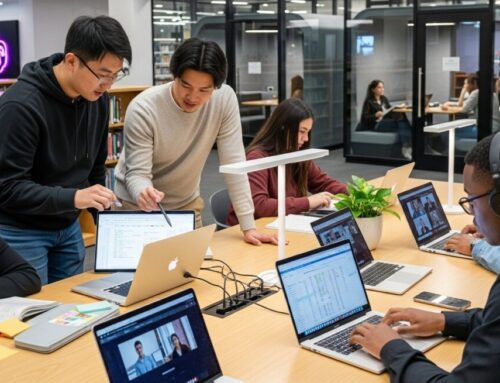
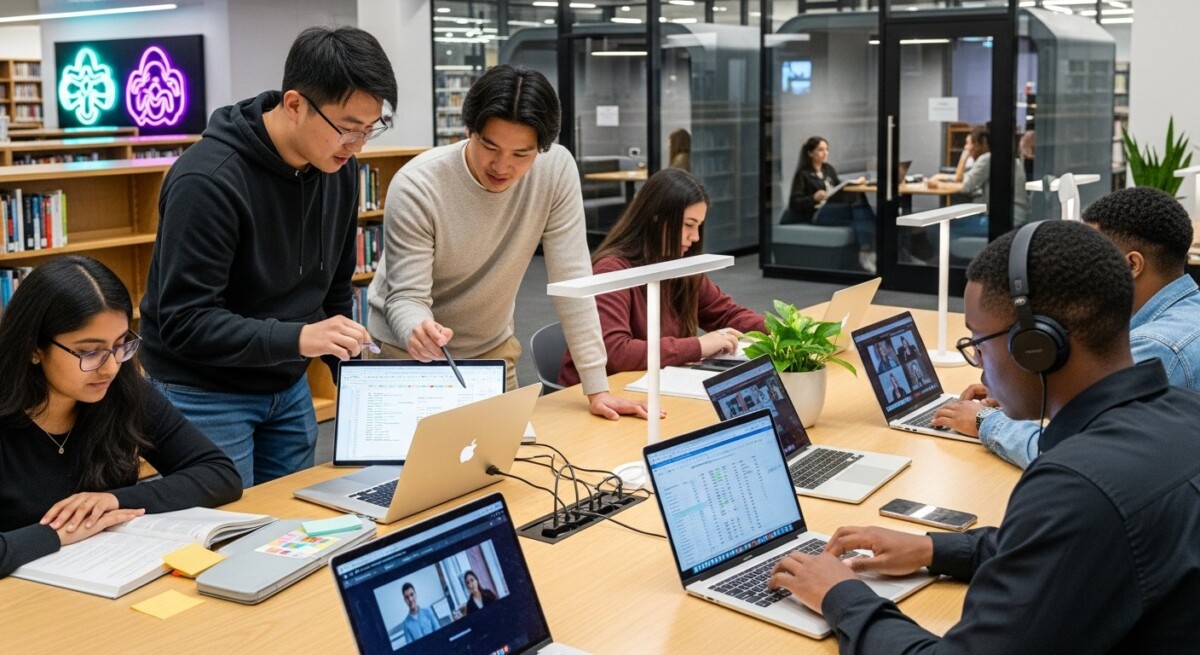
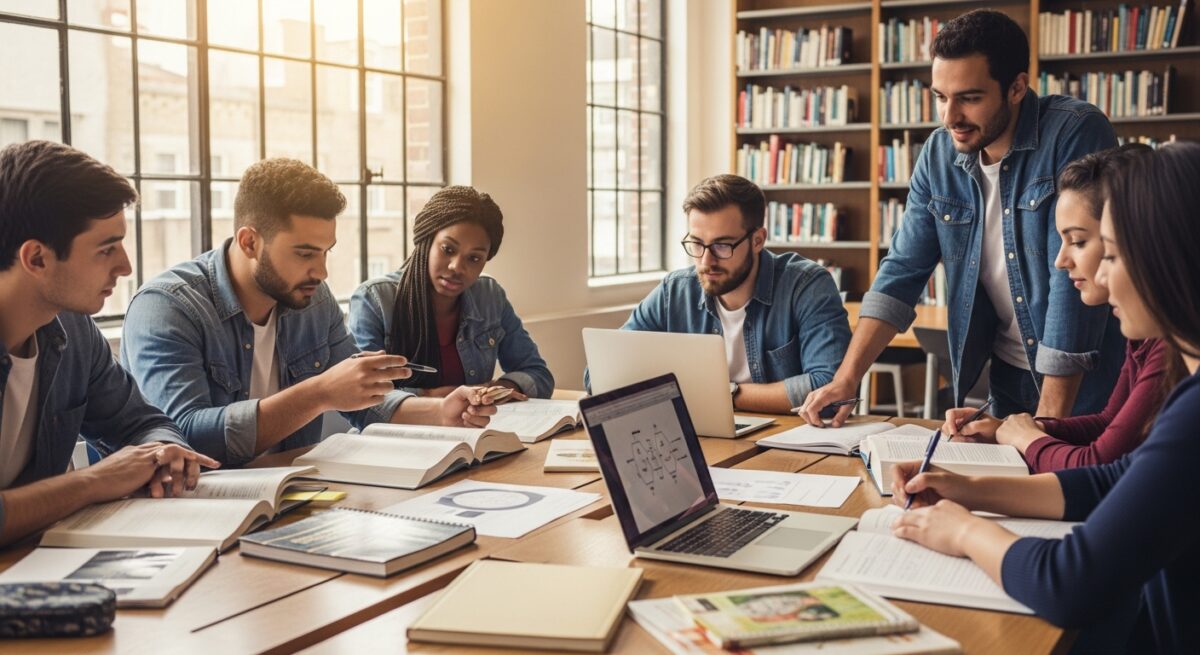
The college environment, particularly with its emphasis on group projects, lab partnerships, and campus organizations, is a training ground for essential interpersonal and professional skills. Collaboration is no longer optional, it is a required component of the curriculum. Students must learn to work with diverse teams, navigate different work styles, manage conflict, delegate tasks, and merge contributions into a single, coherent product. This mirrors the reality of most modern workplaces, where cross-functional teams are the norm.
Leadership and project management abilities are also cultivated. Students often take the lead on group assignments, manage timelines for major research papers, or oversee campus club initiatives. They learn to set goals, motivate peers, and be accountable for outcomes. Furthermore, the entire college experience builds self-management and resilience. Balancing a demanding course load, part-time work, and extracurricular activities requires exceptional time management, organization, and the ability to adapt to setbacks. Navigating challenging coursework and receiving critical feedback develops grit and a growth mindset, preparing individuals for the inevitable challenges of a professional career.
Adaptability and Lifelong Learning
Perhaps the most critical skill developed by a college degree in a rapidly changing world is the capacity for adaptability and the habit of lifelong learning. The pace of technological and social change means that the specific technical knowledge gained in year one may be updated by graduation. Therefore, the true goal of education is to teach individuals how to learn. Students are immersed in an environment where they are constantly encountering new concepts, unfamiliar perspectives, and complex problems with no pre-defined answer.
This process builds intellectual agility. A graduate emerges not with a static set of facts, but with a proven ability to grasp new systems, understand novel technologies, and apply foundational principles to emerging challenges. They learn to be comfortable with ambiguity and are trained to seek out new knowledge proactively. The completion of a degree is not the end of learning, it is the confirmation that one has mastered the process of learning itself. This meta-skill ensures career longevity and relevance, allowing individuals to pivot across roles and industries as opportunities evolve.
Frequently Asked Questions
Are soft skills really developed by college degrees, or are they more personality-based?
While personality plays a role, structured higher education actively develops soft skills. Collaborative projects teach teamwork, presentations build communication, deadlines instill time management, and complex problem-solving cultivates critical thinking. The academic environment provides consistent, low-stakes practice that shapes these professional behaviors.
Do online college degrees develop the same skills as traditional on-campus degrees?
Accredited online degrees are designed to develop the same core competencies. They utilize discussion forums for collaborative critical thinking, virtual group projects for teamwork, and rigorous assignments for research and analysis. The primary difference is the delivery mode, not the intended learning outcomes or the skills developed.
Which degrees develop the most transferable skills?
Degrees in liberal arts (e.g., English, History, Philosophy) are explicitly focused on broad transferable skills like critical analysis, communication, and research. However, STEM and business degrees also heavily develop these skills alongside technical prowess. The most transferable skill set often comes from a program that combines a strong core curriculum with a specialized major.
How can I highlight these skills on my resume?
Move beyond listing your degree and GPA. Use bullet points to describe specific academic achievements that demonstrate skills. For example: “Analyzed market datasets using statistical software (SPSS) to produce a forecast model with 95% confidence intervals,” showcases analysis, technical skill, and communication of complex results.
Is the development of these skills guaranteed by simply attending college?
No, skill development is not passive. It requires active engagement: seeking challenging courses, participating in class, contributing meaningfully to group work, utilizing professor office hours, and pursuing internships. The opportunity is systemic, but the outcome depends on the student’s level of investment.
The journey through higher education is fundamentally a process of capability building. The diploma is a symbol, but the real currency is the robust portfolio of skills developed by college degrees. These cognitive, technical, and interpersonal competencies empower graduates to navigate complexity, lead with insight, and adapt to the future of work. They represent an investment not just in a first job, but in a lifetime of informed contribution and professional resilience, making the pursuit of a degree a transformative endeavor in human capital.