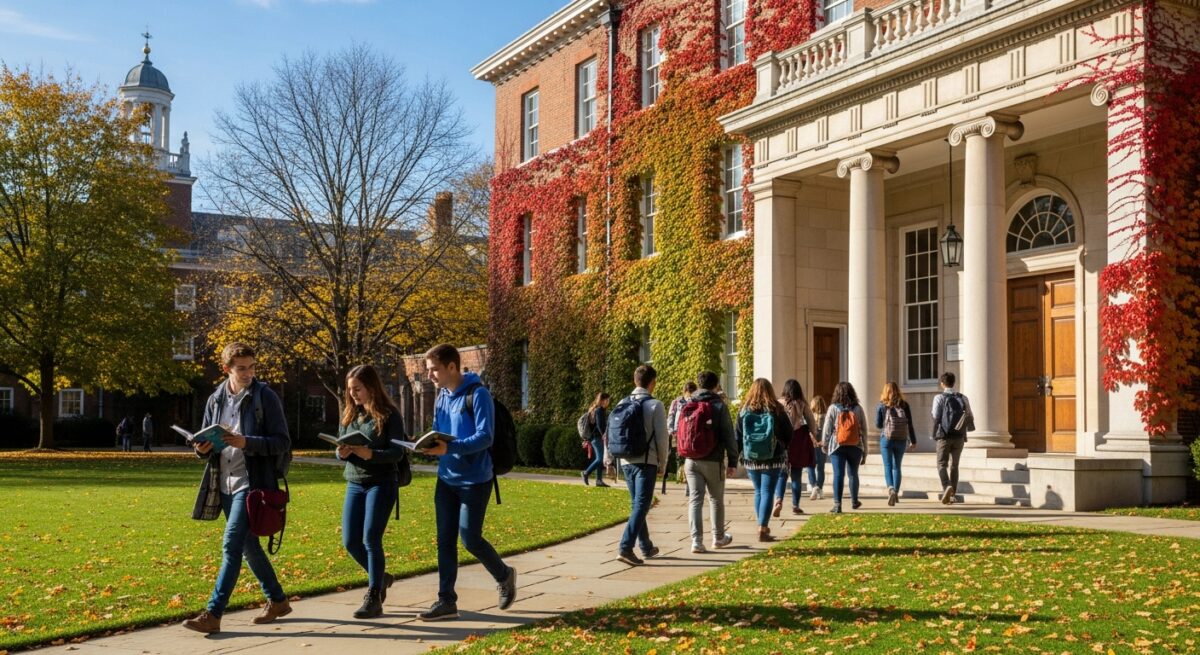
When you hear the phrase “Ivy League,” you might picture brick buildings covered in ivy, centuries of tradition, and some of the most selective universities on the planet. But the Ivy League is more than a collection of prestigious names. It is an athletic conference of eight private universities in the northeastern United States, and its members consistently appear at the top of global and national rankings. For high school students, parents, and career changers, understanding the Ivy League schools ranking is a critical step in deciding whether these institutions are worth the effort, the cost, and the competition. This guide breaks down how these eight schools compare across academics, admissions, financial aid, and career outcomes, so you can make a well-informed choice about your future.
Rankings are not just about bragging rights. They reflect measurable factors like graduation rates, faculty resources, research output, and alumni success. But the ranking that matters most depends on your personal goals. A school ranked first overall might not be the best fit for your major, your learning style, or your budget. That is why this article looks beyond the numbers and digs into what each Ivy League university offers, how they stack up against each other, and what the latest ranking trends mean for applicants. By the end, you will have a clear picture of the Ivy League landscape and the tools to evaluate your options, whether you are aiming for an undergraduate degree or considering a graduate program.
What Makes the Ivy League Schools Ranking So Important?
The Ivy League consists of Brown University, Columbia University, Cornell University, Dartmouth College, Harvard University, the University of Pennsylvania, Princeton University, and Yale University. These eight schools are among the oldest and most respected in the United States. Their collective reputation for academic rigor, groundbreaking research, and influential alumni creates a halo effect that extends far beyond the classroom. When a university like Harvard or Princeton tops a global ranking, it reinforces the idea that an Ivy League education is a gateway to success.
But rankings are also a marketing tool. Universities use them to attract top students and faculty, and prospective students use them to compare institutions. The U.S. News & World Report, QS World University Rankings, and Times Higher Education all publish annual lists that place these schools in the top tiers. Yet, the exact order shifts from year to year, and different methodologies produce different results. For example, U.S. News emphasizes graduation rates and peer assessment, while QS gives more weight to academic reputation and employer reviews. This means a school might rank third in one system and sixth in another. For applicants, the takeaway is simple: the Ivy League schools ranking is a useful starting point, but it should never be the only factor in your decision.
The Current Ivy League Schools Ranking: A Closer Look
As of the 2026 academic year, the consensus among major ranking publications places Princeton University and Harvard University at the top, with Yale and Columbia close behind. But let us examine each school individually, because the differences matter more than the order.
Harvard University
Harvard consistently ranks first in many global surveys due to its enormous endowment, unmatched research facilities, and a faculty that includes numerous Nobel laureates. It offers over 50 undergraduate concentrations and has a strong focus on producing leaders in politics, law, and business. However, Harvard’s undergraduate experience is often characterized by large lectures and a competitive culture, which does not suit every student. Its acceptance rate hovers around 3-4%, making it one of the most selective schools in the world.
Princeton University
Princeton is known for its intense focus on undergraduate education. With a student-to-faculty ratio of 5:1, it provides a more personalized learning environment than some of its peers. The university is famous for its strong programs in the humanities, natural sciences, and engineering. Princeton also offers a robust financial aid program that meets 100% of demonstrated need without loans, which is a significant advantage for families concerned about cost. In recent U.S. News rankings, Princeton has often taken the number one spot.
Yale University
Yale excels in the arts, humanities, and social sciences, with a distinctive residential college system that creates a tight-knit community. Its drama and music programs are world-renowned, and its law school is consistently ranked among the best. Yale’s undergraduate admissions are highly competitive, with an acceptance rate around 5%. The university’s location in New Haven, Connecticut, offers a vibrant cultural scene, though the city itself has economic challenges that some students find jarring.
Columbia University
Columbia’s location in New York City is a major draw for students who want access to internships, cultural institutions, and networking opportunities. Its core curriculum, which includes foundational courses in literature, philosophy, and science, ensures a broad education. Columbia is a research powerhouse, particularly in fields like economics, journalism, and international relations. However, the cost of living in Manhattan is high, and the campus can feel crowded. Columbia’s ranking fluctuates, but it generally sits in the top five.
University of Pennsylvania
Penn, as it is commonly called, is best known for its Wharton School, which offers one of the top undergraduate business programs in the country. This makes Penn an attractive option for students interested in finance, entrepreneurship, or management. The university also has strong programs in nursing, engineering, and the humanities. Penn’s culture is more career-oriented than some of its peers, with a high percentage of graduates entering consulting or investment banking. Its ranking is consistently in the top six.
Brown University
Brown stands out for its open curriculum, which allows students to design their own course of study without general education requirements. This flexibility appeals to creative and independent thinkers who thrive without rigid structure. Brown has a reputation for a more relaxed and collaborative campus culture, yet it remains academically rigorous. The university ranks highly in student satisfaction surveys, though its global research output is lower than that of Harvard or MIT. In the Ivy League schools ranking, Brown usually sits in the middle.
Cornell University
Cornell is the largest of the Ivies and the only one that is a land-grant institution, meaning it has a strong public service mission. It offers a vast array of programs, from hotel administration to engineering, and has a particularly strong reputation in agriculture and veterinary medicine. Cornell’s campus in Ithaca, New York, is beautiful but remote, and the weather can be harsh. The university’s size means a more diverse student body and more resources, but also larger classes. Its ranking is often near the bottom of the Ivy League, but it is still a top-tier university globally.
Dartmouth College
Dartmouth is the smallest of the Ivies, with an undergraduate enrollment of just over 4,000 students. It is known for its strong liberal arts curriculum and its unique D-Plan, which allows students to customize their academic calendar for internships or study abroad. Dartmouth has a deep sense of tradition and a strong alumni network, particularly in the Northeast. Its location in Hanover, New Hampshire, is idyllic but isolated, which can be a pro or a con depending on your preferences. Dartmouth’s ranking is usually in the lower half of the Ivy League, but its undergraduate focus and teaching quality are often praised.

What the Rankings Do Not Show You
The Ivy League schools ranking gives you a snapshot of institutional prestige, but it cannot capture the nuances of daily life. For example, Harvard and Yale have massive endowments that fund generous financial aid, but the culture at each is different. Harvard students often describe a competitive, high-achieving atmosphere, while Yale students emphasize collaboration and community. Brown and Dartmouth are known for happier, more laid-back student bodies, but they may lack the research infrastructure of Columbia or Penn. These qualitative factors are just as important as the numbers.
Another missing piece is career outcomes. While all Ivies boast strong placement rates, the specific industries they feed into vary. If you want to work in finance, Penn and Columbia have the strongest pipelines. For tech, Cornell and Harvard are well-connected. For public service or non-profits, Georgetown might be a better fit, but among Ivies, Harvard and Princeton have extensive alumni in government. The ranking does not tell you this, so you need to research each school’s career services and alumni network in your field of interest.
Finally, the cost of attendance is a critical factor that rankings ignore. Tuition, room, and board at an Ivy League school now exceed $80,000 per year. However, all eight schools offer need-based financial aid, and some are moving to meet full demonstrated need without loans. For families earning under $150,000, many Ivies provide free tuition. This makes an Ivy League education more accessible than the sticker price suggests, but you have to apply for aid and understand the policies. A school that ranks lower might actually be more affordable for you after aid.
How to Use the Ivy League Schools Ranking to Choose a School
Instead of obsessing over the exact order, use the ranking as a starting point for deeper research. Start by listing your academic interests and career goals. Then, look at each Ivy’s strengths. For instance, if you are passionate about environmental science, Cornell’s College of Agriculture and Life Sciences is a clear leader. If you want to study philosophy, Princeton’s department is world-class. If you are unsure what you want to study, Brown’s open curriculum or Columbia’s core might be appealing.
Next, consider the campus culture and location. Do you want the energy of a city like New York or Philadelphia, or do you prefer a small college town like Hanover or Ithaca? Are you comfortable with cold winters? Do you want a large university with endless resources or a small community where you know everyone? These preferences will narrow your list more than any ranking.
Finally, evaluate the financial side. Use each school’s net price calculator to estimate your out-of-pocket cost. Compare that with the potential return on investment, which is generally high for all Ivies. A degree from any of these schools will open doors, but the debt you take on should be manageable. If you are considering a career in public interest or academia, a school with generous loan-free aid might be more valuable than one with a slightly higher rank.
Frequently Asked Questions
What is the official ranking of Ivy League schools?
There is no official ranking because the Ivy League is an athletic conference, not an academic body. However, major publications like U.S. News, QS, and Times Higher Education release annual lists. For 2026, the most common order is Princeton, Harvard, Yale, Columbia, Penn, Brown, Cornell, and Dartmouth, but this varies by source.
Is Harvard the best Ivy League school?
Harvard is the most well-known and often ranks first globally, but “best” depends on your goals. For undergraduate teaching, Princeton and Dartmouth often receive higher praise. For business, Penn’s Wharton is the top choice. For writing and film, Yale is a leader. The best school for you is the one that aligns with your academic, social, and financial needs.
Can I get into an Ivy League school with a low GPA?
It is extremely difficult. The median unweighted GPA for admitted students is typically 4.0, and most have taken advanced courses. However, a low GPA can be offset by exceptional test scores, a compelling personal story, or extraordinary achievements in other areas. Still, the odds are slim, so consider applying to a mix of reach, match, and safety schools.
Are Ivy League schools worth the cost?
For many students, yes, because the return on investment is high. The average starting salary for Ivy graduates is significantly above the national average, and the alumni network can lead to lucrative careers. However, if you receive a full scholarship to a strong state university, that might be a better financial decision. The key is to compare the net price and career outcomes, not just the sticker price.
Final Thoughts
The Ivy League schools ranking is a valuable tool, but it is only one piece of the puzzle. These eight universities offer exceptional education, but they are not the only path to success. As you weigh your options, remember that fit is more important than prestige. A school where you feel challenged, supported, and happy will help you thrive more than one that is merely high on a list. Take the time to visit campuses, talk to current students, and reflect on your own goals. And if you are open to other excellent institutions, consider expanding your search to include top liberal arts colleges and research universities outside the Ivy League.
For more detailed insights on how these schools compare, check out our guide on how top Ivy League schools ranked for 2026. Ultimately, the decision is yours. Whether you end up at Harvard, a public university, or a community college, what matters most is the effort you put into your education. For additional resources on comparing degree programs and finding the right fit, you can explore degreeonline.education for a broader perspective on online and campus-based options.