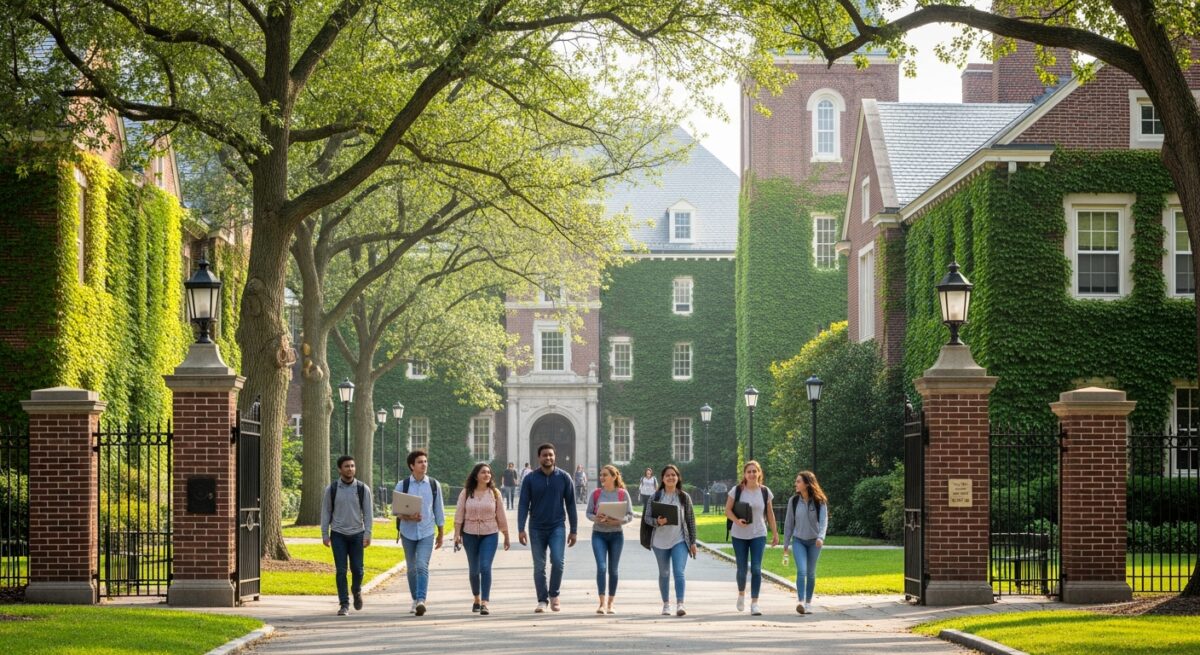
Choosing where to apply for college is one of the most consequential decisions a student can make. Among the thousands of institutions in the United States, eight private universities in the Northeast have long held a special place in the public imagination: the Ivy League. These schools are synonymous with academic rigor, historic prestige, and powerful alumni networks. But ranking them is not a simple exercise. Each year, prospective students, parents, and guidance counselors search for the definitive list of top Ivy League schools ranked by factors like selectivity, graduate outcomes, and research output. This article provides a clear, data-driven breakdown of the current landscape, helping you understand what each Ivy truly offers and how to make an informed choice for your future.
The Ivy League was originally an athletic conference, but over time it became shorthand for academic excellence. The eight members are Brown University, Columbia University, Cornell University, Dartmouth College, Harvard University, the University of Pennsylvania, Princeton University, and Yale University. While all eight are exceptionally strong, subtle differences in campus culture, academic focus, and admissions difficulty create a meaningful hierarchy. This guide examines the top Ivy League schools ranked by a combination of U.S. News & World Report standing, acceptance rate, endowment per student, and career placement data. We also consider less tangible factors like student satisfaction and location, because the right fit matters as much as a school’s reputation.
Understanding the Ivy League Hierarchy
Before diving into specific rankings, it is important to understand why these eight schools are grouped together and why they are not interchangeable. The Ivy League includes Harvard and Yale, which are often considered the pinnacle of global higher education, alongside Cornell and Dartmouth, which have distinct identities rooted in land-grant history and rural settings respectively. When people talk about top Ivy League schools ranked, they usually refer to a tiered system where Harvard, Princeton, and Yale form the top tier (sometimes called HYP), followed by Columbia and Penn, then Brown and Dartmouth, with Cornell often placed at the bottom of the pack. However, this generalization misses important nuances. For example, Cornell’s engineering and hotel administration programs are world-class and rank higher than some of those same programs at HYP schools.
Acceptance rates are a common proxy for prestige. For the class of 2028, Harvard admitted just 3.6% of applicants, while Cornell admitted 7.9%. That gap is significant, but it does not tell the whole story. Cornell receives far more applications for its College of Arts and Sciences than for its College of Agriculture and Life Sciences, skewing the overall rate. Similarly, Columbia’s acceptance rate dropped dramatically after it adopted a test-optional policy during the pandemic. When evaluating top Ivy League schools ranked by selectivity, look at school-specific rates rather than the university-wide number. This kind of granular analysis helps you identify where you have a realistic chance of admission.
The Top Four: Harvard, Princeton, Yale, and Columbia
Harvard University consistently sits at or near the top of most global rankings. With an endowment exceeding $50 billion, it offers unparalleled financial aid, a vast alumni network, and name recognition that opens doors worldwide. Harvard’s strength lies in its breadth: virtually every department is among the best in the world. Students benefit from the Harvard College curriculum, which emphasizes general education before specialization. The residential house system fosters close-knit communities within a large university. For anyone seeking the ultimate academic brand, Harvard is the default leader among top Ivy League schools ranked.
Princeton University rivals Harvard for undergraduate focus. Unlike Harvard, which has strong graduate and professional schools, Princeton emphasizes undergraduate teaching. Its famous precept system pairs small discussion groups with lectures, giving students direct access to Nobel laureates and leading scholars. Princeton’s financial aid is also generous, offering grants instead of loans. The campus in Princeton, New Jersey, is suburban and beautiful, though some students find it isolated. For those who value small class sizes and a tight-knit intellectual community, Princeton often outranks Harvard in student satisfaction surveys. It is consistently among the top Ivy League schools ranked for undergraduate education.
Yale University in New Haven, Connecticut, is known for its strengths in the humanities, law, and drama. The Yale College curriculum is flexible, allowing students to design their own majors. Yale’s residential college system is the model for many other universities, and its secret societies like Skull and Bones add an element of mystique. Yale has made significant strides in STEM in recent years, building new science facilities and hiring top faculty. Its acceptance rate hovers around 4.5%, placing it firmly in the top tier. Yale is a top choice for students who want a liberal arts education within a research university setting.
Columbia University in New York City offers a different value proposition: the city is its campus. Columbia’s Core Curriculum ensures all students are exposed to great books, philosophy, and writing. Its location provides unmatched internship and networking opportunities on Wall Street, in media, and at the United Nations. Columbia’s acceptance rate is around 3.9%, making it one of the most selective Ivies. However, the urban environment can be intense, and the cost of living in Manhattan is high. Columbia is ideal for students who thrive in a fast-paced, career-oriented atmosphere and want immediate access to professional opportunities.
Mid-Tier Schools: University of Pennsylvania and Brown
The University of Pennsylvania (Penn) in Philadelphia is famous for the Wharton School, one of the best business schools in the world. But Penn is more than just Wharton. Its College of Arts and Sciences, School of Engineering, and School of Nursing are all highly ranked. Penn’s culture is pre-professional and entrepreneurial; many students launch startups or secure internships early in their college careers. The campus is integrated into West Philadelphia, offering a mix of urban and collegiate environments. Penn’s acceptance rate is about 5.9%. For students interested in business, finance, or the intersection of technology and commerce, Penn is often the top choice among Ivy League colleges.
Brown University in Providence, Rhode Island, is known for its Open Curriculum, which eliminates distribution requirements and allows students to create their own course of study. This freedom attracts creative, independent thinkers who dislike rigid academic structures. Brown has a collaborative, low-stress culture compared to other Ivies, and students frequently report high levels of happiness. Its acceptance rate is around 5.2%. Brown’s medical school is excellent, and its undergraduate teaching is highly rated. For students who want to explore multiple disciplines without pressure, Brown stands out among top Ivy League schools ranked for student experience.
Dartmouth and Cornell: Distinctive Strengths
Dartmouth College in Hanover, New Hampshire, is the smallest Ivy League school and the most rural. Its D-Plan academic calendar allows students to take terms on and off, facilitating internships and travel. Dartmouth has a strong focus on undergraduate teaching, with faculty who prioritize mentoring. The campus is surrounded by mountains and forests, ideal for outdoor enthusiasts. Greek life is prominent, which may not suit everyone. Dartmouth’s acceptance rate is about 6.2%. It is consistently ranked among the top Ivy League schools for undergraduate teaching and student satisfaction.
Cornell University in Ithaca, New York, is the largest Ivy and the only land-grant institution in the group. This means it has a public mission alongside its private one, with some colleges (like the College of Agriculture and Life Sciences) being contract colleges with lower tuition for New York state residents. Cornell excels in engineering, hotel administration, and veterinary medicine. Its campus is sprawling and scenic, but the weather can be harsh. Cornell’s overall acceptance rate is around 7.9%, but rates vary significantly by college within the university. For students with clear career goals in specific fields, Cornell offers programs that rival or exceed those at higher-ranked Ivies.
Factors to Consider Beyond Rankings
While the top Ivy League schools ranked by prestige provide a useful starting point, several other factors deserve careful thought. Financial aid is a critical consideration. All eight Ivies meet 100% of demonstrated financial need for admitted students, but the definition of “need” varies. Harvard and Princeton offer the most generous aid, often replacing loans with grants. Location also matters. Do you prefer an urban environment (Columbia, Penn), a suburban town (Princeton, Brown), or a rural setting (Dartmouth, Cornell)? Campus culture ranges from pre-professional (Penn) to laid-back (Brown) to intense (Columbia).

Academic programs are another differentiator. If you are certain about studying computer science, Cornell and Princeton have top-tier departments. For international relations, Harvard and Columbia are hard to beat. For creative writing, Brown and Yale shine. Many students change majors, so a school with strong programs across the board (like Harvard or Yale) offers more flexibility. Use the school’s website to explore course catalogs and research opportunities. For additional insights on how to evaluate programs, you can read our guide on Leading Universities in Arkansas: Top Ranked Schools for 2026 for a comparative perspective on institutional strengths.
Another key factor is the alumni network. Ivy League alumni are influential in virtually every field, from law and medicine to finance and entertainment. However, the strength of the network varies by school. Harvard and Yale have the largest and most active alumni associations globally. Penn’s Wharton network dominates finance. Cornell’s alumni are particularly strong in engineering and hospitality. When evaluating top Ivy League schools ranked by career outcomes, research the career services office and alumni mentorship programs.
How to Apply Strategically
Applying to Ivy League schools requires a thoughtful strategy. Early Decision (ED) can significantly boost your chances at some schools. Columbia, Cornell, Dartmouth, Brown, and Penn admit a higher percentage of ED applicants than regular decision applicants. Harvard, Princeton, and Yale offer Single-Choice Early Action, which is non-binding but restricts you from applying ED elsewhere. Applying ED to your top choice is a strong signal of interest. For students who need to compare financial aid packages, Regular Decision is safer because it allows you to weigh offers from multiple schools.
Here are three concrete steps to strengthen your application:
- Craft a focused narrative. Your essays should tell a coherent story about your interests, achievements, and aspirations. Avoid listing accomplishments; instead, show how your experiences have shaped you.
- Seek meaningful extracurriculars. Depth matters more than breadth. Leadership in one or two activities (e.g., captain of a robotics team, founder of a nonprofit) is more impressive than membership in ten clubs.
- Demonstrate fit. Research each school thoroughly and mention specific programs, professors, or traditions in your supplemental essays. Generic essays are easily spotted.
Standardized test scores remain an important factor, even in the test-optional era. Many admitted students still submit SAT or ACT scores, and high scores can strengthen your application, especially if your GPA is slightly below the median. However, if your scores are below the 25th percentile for a school, it may be wise to apply test-optional and focus on other parts of your application. For more guidance on building a strong application, consider exploring resources on scholarship.education which offers tools for finding financial aid opportunities.
Frequently Asked Questions
Which Ivy League school is easiest to get into?
Cornell University has the highest acceptance rate among the eight, around 7.9% for the class of 2028. However, some of its colleges, like the College of Agriculture and Life Sciences, have even higher rates. Dartmouth and Brown also have slightly higher acceptance rates than Harvard, Yale, Princeton, and Columbia.
Are Ivy League schools worth the cost?
For most students, yes. All Ivies offer generous financial aid that can make them cheaper than a public university for families with lower incomes. The return on investment is strong: Ivy League graduates earn higher salaries on average and have access to powerful alumni networks. However, if you have to take on significant debt, it is worth comparing aid packages.
Do Ivy League schools prefer legacy students?
Legacy status (having a parent or grandparent who attended) can provide a small boost in admissions, especially at Harvard, Yale, Princeton, and Penn. However, most legacy applicants are still denied. The advantage is not as large as commonly believed.
Can I transfer into an Ivy League school?
Yes, but transfer admissions are very competitive. Cornell, Columbia, and the University of Pennsylvania accept the most transfer students. Harvard, Yale, and Princeton accept very few. Transfer applicants need a strong college GPA, compelling essays, and clear reasons for wanting to transfer.
What GPA do I need for Ivy League schools?
Most admitted students have unweighted GPAs of 3.9 or higher on a 4.0 scale. Weighted GPAs (including AP/IB courses) are typically above 4.0. While a lower GPA can be offset by exceptional test scores, essays, or extracurriculars, a high GPA is almost essential for the most selective schools.
Ultimately, the top Ivy League schools ranked provide a benchmark, but the best school for you is the one that matches your academic interests, career goals, and personal preferences. Visit campuses, talk to current students, and trust your instincts. With careful research and a strong application strategy, you can find the Ivy League college that will help you thrive.