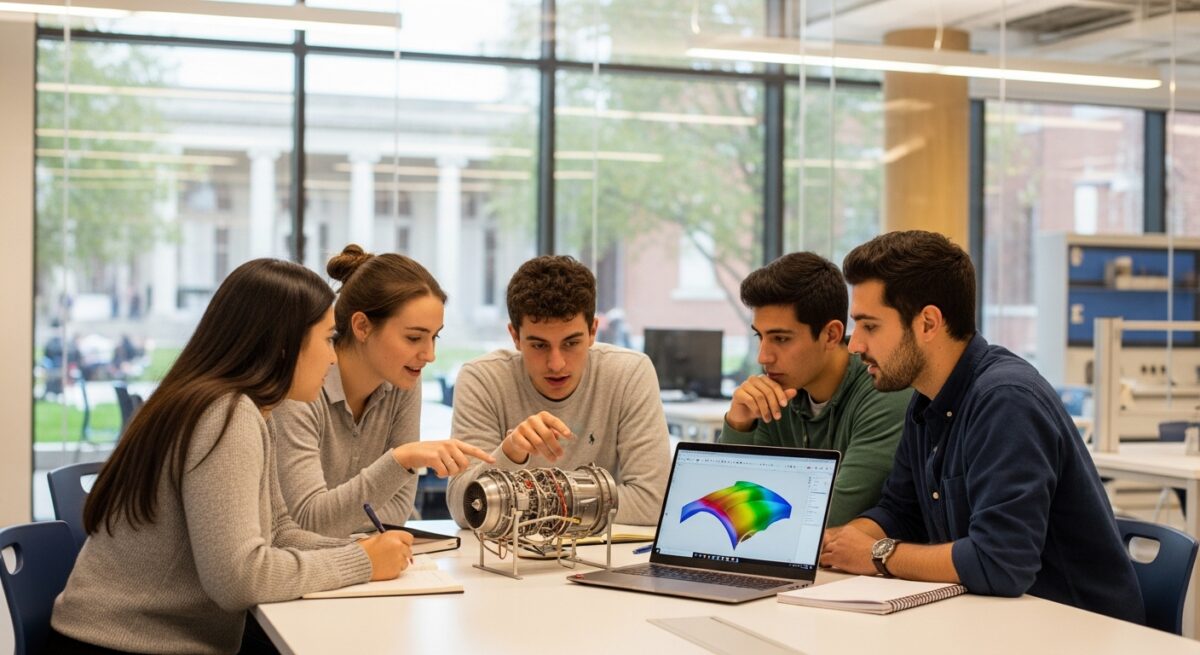
Choosing the right aeronautical engineering program is a decision that can shape your entire career. With dozens of universities offering aerospace and aeronautical degrees, the challenge is not finding a school, but finding the one that aligns with your goals, budget, and learning style. Whether you are a high school student mapping out your future or a working professional considering a career change, the search for the best aeronautical engineering schools requires careful research. This guide breaks down what makes a program stand out, how to evaluate your options, and what you can expect from top-tier institutions.
What Defines a Top Aeronautical Engineering Program?
Not all aeronautical engineering programs are created equal. The best aeronautical engineering schools share several core characteristics that set them apart from the rest. Accreditation is the first and most critical factor. Programs accredited by ABET (Accreditation Board for Engineering and Technology) meet rigorous academic standards that employers and graduate schools recognize. Without ABET accreditation, your degree may not be taken seriously in the industry.
Beyond accreditation, the quality of faculty matters immensely. Leading programs employ professors who have real-world experience at organizations like NASA, Boeing, SpaceX, and the FAA. These instructors bring practical insights into the classroom, bridging the gap between theory and application. Additionally, top schools invest heavily in research facilities, including wind tunnels, flight simulators, and propulsion labs. These resources allow students to test concepts and gain hands-on experience before they enter the workforce.
Finally, industry connections are a hallmark of elite programs. Schools with strong ties to aerospace companies often provide internship opportunities, co-op programs, and recruitment pipelines. When you graduate from a well-connected program, you are not just earning a degree; you are gaining access to a professional network that can open doors throughout your career.
Key Factors to Evaluate When Comparing Schools
As you research the best aeronautical engineering schools, you will notice that each institution has its own strengths. To make an informed decision, evaluate programs based on the following criteria:
- Curriculum depth: Look for a curriculum that covers aerodynamics, propulsion, structures, and flight mechanics, with electives in areas like drone technology or space systems.
- Research opportunities: Check if undergraduates can participate in faculty-led research projects or senior design teams.
- Internship and co-op programs: Strong programs have formal partnerships with aerospace firms, ensuring students gain practical experience.
- Graduate outcomes: Review job placement rates, starting salaries, and the percentage of graduates who continue to master’s or doctoral programs.
- Class size and support: Smaller classes often mean more personalized attention from professors and better access to advising.
Each of these factors contributes to the overall value of a program. For example, a school with a stellar reputation but no internship support may leave you struggling to find your first job. Conversely, a lesser-known program with strong industry partnerships could offer a smoother path to employment.
The Importance of Specialization and Electives
Aeronautical engineering is a broad field, and the best aeronautical engineering schools allow you to tailor your education to your interests. Some students are drawn to aircraft design, while others are fascinated by space exploration or unmanned aerial vehicles. When evaluating programs, look at the available electives and concentrations. A school that offers courses in astrodynamics, satellite design, or hypersonics may be a better fit if you want to work on space missions. On the other hand, if your passion is commercial aviation, seek programs with strong ties to airlines and aircraft manufacturers.
Specialization also extends to capstone projects. Many top programs require a senior design project where students work in teams to build and test an aircraft or component. These projects are invaluable for developing teamwork, problem-solving, and project management skills. They also give you concrete examples to discuss in job interviews. When you compare schools, ask about the types of capstone projects previous students have completed. A program with a history of innovative projects, such as designing a solar-powered drone or a hybrid-electric propulsion system, indicates a forward-thinking environment.
Online and Hybrid Options for Flexible Learning
Not everyone can attend a traditional on-campus program. If you are a working professional, a parent, or someone who needs flexibility, online aeronautical engineering programs may be the answer. While hands-on lab work is challenging to replicate online, many reputable universities now offer hybrid formats that combine online coursework with short, intensive on-campus residencies. These programs allow you to earn a degree from one of the best aeronautical engineering schools without relocating.
When considering online options, verify that the program is ABET-accredited and that the online curriculum mirrors the on-campus version. Some schools offer the exact same courses and faculty for online and in-person students, ensuring a consistent education. Additionally, check if the program provides access to virtual labs and simulation software. Tools like MATLAB, Simulink, and ANSYS are industry standards, and familiarity with them can give you a competitive edge.
For those exploring online degrees in related fields, our guide on best chemical engineering schools offers a similar framework for evaluating program quality.
Career Outcomes and Salary Expectations
The ultimate goal of attending one of the best aeronautical engineering schools is to launch a successful career. According to the U.S. Bureau of Labor Statistics, aerospace engineers earn a median annual salary of over $130,000, with the highest earners exceeding $170,000. However, salaries vary based on your location, industry, and level of experience. Graduates from top programs often command higher starting salaries because employers recognize the rigor of their training.
Career paths for aeronautical engineers include working for government agencies like NASA or the Department of Defense, commercial aircraft manufacturers like Boeing and Airbus, and private space companies like SpaceX and Blue Origin. Many graduates also find roles in consulting, software development, or academia. The skills you gain, such as systems thinking, data analysis, and project management, are transferable to many other industries, providing a safety net if you decide to pivot later in your career.
To maximize your earning potential, consider pursuing a master’s degree after your bachelor’s. Advanced degrees often lead to higher-level positions in research and management. Some employers offer tuition reimbursement, so you can continue your education while working. Additionally, obtaining a Professional Engineer (PE) license can enhance your credibility and open doors to leadership roles.

Financial Considerations and Scholarships
Cost is a major factor for most students. The best aeronautical engineering schools can have tuition fees that exceed $50,000 per year, but many offer generous financial aid packages. Before ruling out a school based on sticker price, research scholarships, grants, and work-study opportunities. Some schools have partnerships with aerospace companies that fund scholarships for students who commit to working for them after graduation.
Also, consider the total cost of attendance, including housing, books, and supplies. On-campus students may have higher living expenses, while online students can save on relocation costs. Use each school’s net price calculator to estimate your out-of-pocket costs after aid. Remember that a more expensive program may offer better career services and networking, which could lead to a higher starting salary and faster loan repayment.
For a broader perspective on affordable degree options, explore resources like CollegeDegree.School, which provides information on various programs and financial aid strategies.
How to Build a Strong Application
Once you have identified your target schools, the next step is crafting a compelling application. Aeronautical engineering programs are competitive, and strong grades in math and science are essential. Advanced coursework in calculus, physics, and computer science will strengthen your application. Additionally, participation in extracurricular activities like robotics clubs, science fairs, or model rocketry demonstrates your passion for the field.
Your personal statement should highlight why you want to study aeronautical engineering and what specific aspects of the program attract you. Mention any relevant projects or internships you have completed. If you have a particular area of interest, such as propulsion systems or avionics, explain how the school’s curriculum and faculty align with that interest. Letters of recommendation from teachers or employers who can speak to your technical abilities and character are also crucial.
For transfer students or career changers, emphasize any relevant work experience. Even if your previous job was not in engineering, you can highlight skills like project management, data analysis, or teamwork. Many programs value diversity of experience, so do not underestimate what you bring to the table.
Frequently Asked Questions
What is the difference between aeronautical and aerospace engineering?
Aeronautical engineering focuses specifically on aircraft that operate within Earth’s atmosphere, while aerospace engineering encompasses both aeronautics (aircraft) and astronautics (spacecraft). Many schools offer degrees in aerospace engineering, which includes aeronautical topics as a subset. If you are only interested in airplanes, aeronautical engineering is a viable choice, but aerospace engineering offers broader career options.
Can I become an aeronautical engineer with an online degree?
Yes, but you must ensure the program is ABET-accredited. Employers generally accept degrees from accredited programs, whether they are earned online or on campus. However, some hands-on components, like lab work, may require in-person attendance. Hybrid programs offer a balance between flexibility and practical experience.
How long does it take to complete a degree in aeronautical engineering?
A bachelor’s degree typically takes four years of full-time study. Some programs offer accelerated tracks that can be completed in three years, while part-time students may take five or six years. Master’s degrees usually require an additional one to two years.
What skills are essential for success in this field?
Strong analytical and mathematical skills are fundamental. Proficiency in computer-aided design (CAD) software and simulation tools is also important. Soft skills like communication and teamwork are essential because aerospace projects involve collaboration across multiple disciplines.
Making Your Final Decision
After gathering all the information, it is time to make a choice. Create a shortlist of schools that meet your academic, financial, and personal criteria. Visit campuses if possible, or attend virtual information sessions. Speak with current students and alumni to get a sense of the campus culture and the program’s strengths. Trust your instincts: the best aeronautical engineering schools are those where you feel you can thrive and grow.
Remember, the ranking of a school is not the only measure of success. Your dedication, curiosity, and work ethic will ultimately determine your career trajectory. The right program will provide the tools and opportunities, but it is up to you to make the most of them. Whether you dream of designing the next generation of jetliners or exploring Mars, the journey begins with a single step: choosing a school that supports your ambitions.
As you move forward, keep in mind that your education is an investment in your future. Take advantage of every resource, from career counseling to alumni networks. The aerospace industry is dynamic and ever-evolving, and your degree is the key to entering this exciting field. With careful planning and determination, you can find the program that sets you on the path to a rewarding and impactful career.