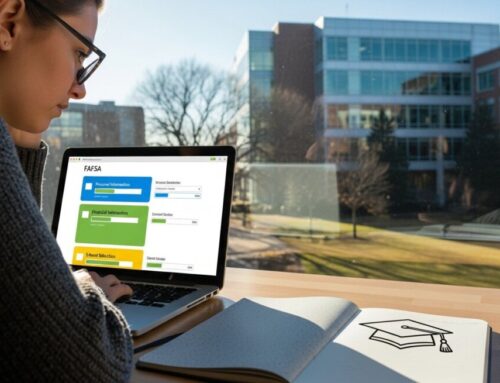
The decision to return to school as a working professional is not about starting over; it’s about strategic advancement. Juggling career, family, and education is a significant challenge, but one that millions of adults successfully navigate each year. The landscape of higher education has transformed to meet this demand, offering flexible college degrees for working professionals designed to fit around existing responsibilities, not the other way around. This shift recognizes the immense value of experienced adults in the classroom, both online and in person, and provides pathways to promotion, career change, and personal fulfillment that were once logistically impossible.
Why Working Professionals Are Returning to Academia
The motivations for pursuing a degree while employed are as diverse as the students themselves. For some, it’s a concrete requirement to climb the corporate ladder, such as needing an MBA to move into executive leadership or a Master of Science in Nursing to become a nurse practitioner. For others, it’s about reskilling or upskilling in a rapidly evolving job market where technology continuously reshapes industries. A professional in marketing might seek a data science credential, while a manufacturing supervisor might pursue a degree in operations management. Beyond career pragmatism, there is a powerful element of personal achievement. Completing a degree that was once postponed provides a profound sense of accomplishment and can reignite a passion for learning. These programs are built on the understanding that adult learners bring a wealth of real-world experience, making classroom discussions richer and the application of theory immediate and relevant. The return on investment is measured not just in future salary bumps, but in increased confidence, broader networks, and enhanced problem-solving capabilities that benefit current roles immediately.
Navigating the Format and Flexibility Landscape
The cornerstone of modern college degrees for working adults is flexibility. Traditional, rigid class schedules are largely a thing of the past for this demographic. Instead, institutions have developed multiple delivery models to accommodate busy lives. Fully online asynchronous programs are perhaps the most popular, allowing students to access lectures, complete assignments, and participate in discussions on their own schedule, whether that’s early morning, late evening, or on weekends. Synchronous online programs offer live virtual classes, providing real-time interaction but requiring a fixed weekly time commitment. Hybrid or blended formats combine the best of both worlds, with mostly online work supplemented by occasional in-person residencies, labs, or weekend seminars. For those who prefer face-to-face interaction, many universities now offer evening and weekend classes on campus specifically tailored for working students. The key is to audit your own weekly rhythm, learning style, and family commitments to choose the format that you can sustain for the long term. Consistency over two or three years is far more critical than intensity over a few weeks.
Choosing the Right Degree Program for Your Goals
Selecting a program requires careful self-assessment and research. The choice must align with a clear professional outcome. Start by defining your objective: are you aiming for a promotion within your current field, a complete career pivot, or the development of a specific, high-demand skill set? Once the goal is clear, research which degrees are recognized and valued by employers in that target area. Accreditation is non-negotiable; ensure the institution holds regional accreditation, as this guarantees quality and ensures credits are transferable. For career-specific fields like nursing, engineering, or counseling, programmatic accreditation is also essential. Look closely at the curriculum: does it cover the contemporary skills and theories you need? Examine the faculty: are they both academically qualified and professionally experienced? Finally, calculate the true cost, including fees, materials, and technology, and explore all funding options available to working adults.
Common and impactful degree paths for working professionals often fall into a few key categories. Business and Management degrees, such as an MBA, EMBA, or Master’s in Leadership, remain perennially popular for those seeking leadership roles. Technology and Data Science degrees are in high demand for professionals looking to move into fields like cybersecurity, software development, or data analysis. Healthcare Administration and Nursing degrees cater to the expanding healthcare sector, offering advancement for clinicians into management or specialized practice. For those in creative or technical fields, specialized Master’s degrees can provide cutting-edge skills. Our resource on the highest paying college degrees can offer insight into programs with strong financial returns. When evaluating potential programs, consider the following key factors:
- Career Alignment: Verify that the program’s stated outcomes match your professional goals.
- Flexibility Structure: Confirm the class schedule, assignment deadlines, and exam formats are truly compatible with your work life.
- Student Support Services: Ensure robust access to academic advisors, career counseling, technical support, and online library resources.
- Network and Community: Assess opportunities for connecting with peers, alumni, and faculty, as this network is a major value of the degree.
- Total Cost and Financial Aid: Understand all expenses and investigate employer tuition reimbursement, scholarships for adult learners, and federal aid.
Mastering Time Management and Achieving Balance
Success in a degree program while working full-time hinges on exceptional time management and clear communication. The first step is to treat your education like a second job by blocking out dedicated, non-negotiable study time in your calendar each week. This proactive approach is more effective than trying to find spare time. Communicate your goals and schedule with your employer, family, and friends to set expectations and enlist their support. Many employers offer formal tuition assistance programs, and informing your manager can often lead to schedule accommodations. Leverage technology to maximize efficiency: use productivity apps for task management, digital flashcards for studying during commutes (if not driving), and voice-to-text software for drafting papers. Most importantly, build in buffers for the unexpected, a sick child, a demanding work project, or simply mental fatigue. It’s also vital to schedule regular breaks and self-care to prevent burnout. Remember, progress is incremental. Consistent, small efforts compound into completed courses and, eventually, a degree. For those concerned about academic rigor, exploring accessible degree paths can help identify programs that align with your existing strengths and minimize unnecessary stress.
Financial Considerations and Employer Support
The financial investment in a degree is substantial, but numerous strategies can make it affordable. The first and most valuable resource to explore is employer tuition reimbursement. Many companies have programs that cover a significant portion, if not all, of tuition costs, often with a requirement to maintain a certain grade point average and remain with the company for a specified period after completion. This is a powerful benefit that directly ties your education to your career trajectory. For those paying independently, filling out the Free Application for Federal Student Aid (FAFSA) is essential, as it can qualify you for grants, loans, and work-study opportunities regardless of age. Numerous scholarships are specifically earmarked for non-traditional, returning, or adult students. Furthermore, many universities offer reduced tuition rates for online programs or for students who are residents of certain states through reciprocity agreements. When researching, it’s wise to seek clear college degree information from the financial aid office of your chosen institution to understand all options. A thoughtful financial plan turns the degree from a burden into a manageable, strategic investment in your future earnings and stability.
Leveraging Your Experience for Academic Success
Working professionals enter the classroom with a decisive advantage: practical experience. This context allows you to connect theoretical concepts from your coursework directly to real-world challenges you face at your job. Don’t hesitate to share your perspectives in discussions; they enrich the learning for everyone. Similarly, view your assignments through the lens of your profession. Can a research paper analyze a problem your department is facing? Can a project plan be developed for an actual initiative at work? This approach makes the work more engaging and immediately valuable. Furthermore, your professional discipline in meeting deadlines, managing projects, and communicating clearly are directly transferable to academic success. You are not just a student; you are a practitioner adding depth to your academic pursuit, which can lead to a more rewarding and applicable educational experience than that of a traditional undergraduate student.
Earning a degree as a working professional is a testament to discipline and ambition. It requires careful planning, a strong support system, and a sustained commitment. However, the rewards extend far beyond the diploma itself. You gain updated knowledge, a robust professional network, proven resilience, and a significant credential that can unlock new career doors. By choosing the right program, managing your time strategically, and leveraging your existing experience, you can transform the challenge of balancing work and study into one of the most empowering achievements of your life. The path is demanding, but for those who embark on it, the destination offers professional transformation and profound personal satisfaction.