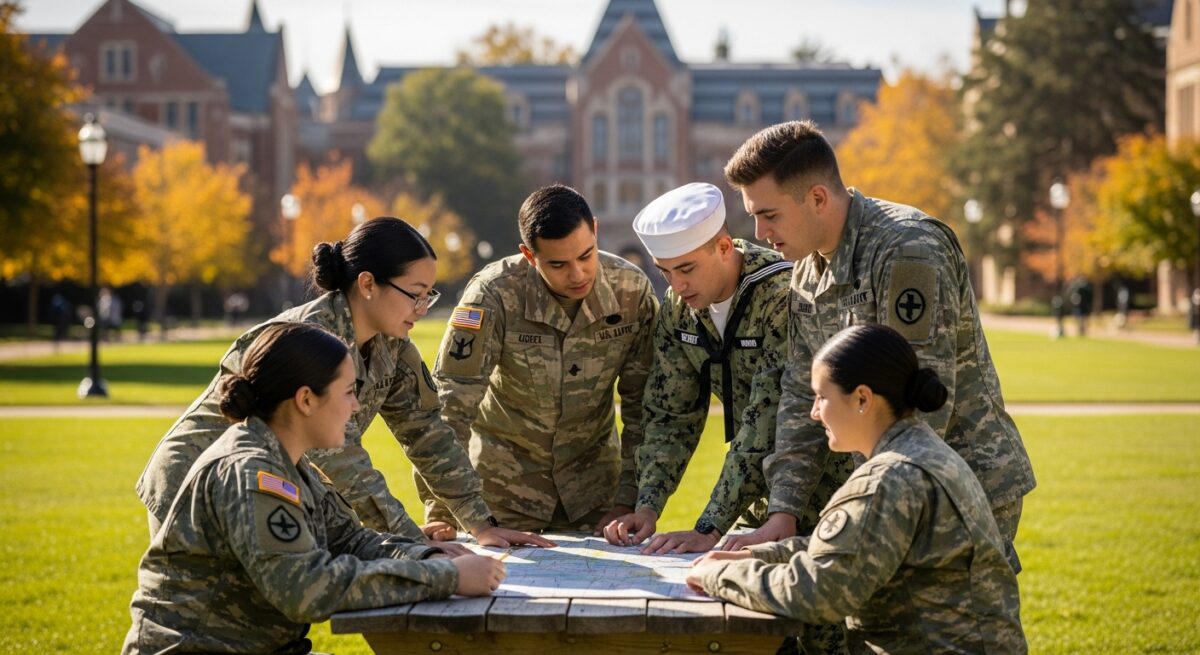
For students seeking a path to a college degree and a military commission, the Reserve Officers’ Training Corps (ROTC) offers a powerful, integrated solution. The best ROTC programs in top colleges provide a unique blend of rigorous academics, hands-on leadership training, and significant financial support, all while allowing students to experience a traditional campus life. These programs are not just about military instruction, they are about developing the next generation of leaders for the U.S. Army, Navy, Air Force, and Space Force. Choosing the right program means finding a school where a world-class education aligns seamlessly with a top-tier military training environment, setting the stage for a successful career as an officer and a civilian professional.
Understanding the ROTC Landscape and Its Benefits
ROTC is a college-based program that commissions officers into the United States Armed Forces. It exists as separate branches: Army ROTC, Navy ROTC (which includes the Marine Corps option), and Air Force ROTC (which also includes Space Force). Each branch partners with hundreds of colleges and universities across the country, creating a network of host institutions and cross-town affiliates. The core value proposition is multifaceted. Students receive a full, immersive college education in their chosen major while simultaneously undergoing military training. This includes classroom instruction on leadership, ethics, and military science, coupled with practical field exercises, physical training, and summer training camps.
The financial benefits are often a major draw. High-performing students can compete for scholarships that cover full tuition and fees, provide a monthly living stipend, and include an annual book allowance. Even without a scholarship, all contracted cadets and midshipmen receive the monthly stipend. Beyond the financial aspect, ROTC instills unparalleled leadership skills, time management, and discipline, traits highly valued in any career field. Graduates enter service as commissioned officers (Second Lieutenants or Ensigns) with a commitment to serve on active duty or in a reserve component. For a deeper look at how these programs fit into broader academic landscapes, our resource on exploring degree programs offered by colleges provides useful context on aligning military goals with academic majors.
Criteria for Evaluating Top ROTC Programs
Identifying the best ROTC programs requires looking beyond general college rankings. A top program is characterized by several key factors that contribute to student success and commissioning excellence. First, the strength and reputation of the host institution’s academic offerings are paramount. The best ROTC colleges are those where the academic rigor matches the military training. The specific ROTC unit’s performance metrics are also critical. This includes the unit’s production of distinguished graduates, its performance at national training exercises like the Army’s Advanced Camp or the Navy’s Summer Cruise, and its historical legacy and alumni network.
The level of integration and support from the university administration is another vital sign. Top schools have ROTC deeply embedded in campus culture, with dedicated facilities, strong relationships with academic departments, and visible support from the president’s office. The quality of the cadre (the active-duty officers and non-commissioned officers who run the program) is indispensable. Experienced, engaged instructors make a profound difference in mentorship and training. Finally, opportunities for advanced training, such as airborne school, air assault school, cyber training, or language immersion programs, can set elite programs apart. These elements combine to create an environment where cadets and midshipmen are challenged, supported, and prepared for the highest levels of responsibility.
Leading ROTC Programs at Prestigious Institutions
While many excellent ROTC programs exist nationwide, several consistently stand out due to their history, output, and integration with elite academic institutions. These programs represent the gold standard, producing a significant number of military leaders.
The United States Military Academy at West Point and the United States Naval Academy at Annapolis are service academies, not ROTC programs, and represent a separate path to a commission. Among traditional ROTC programs, several are renowned. The University of Texas at Austin hosts one of the largest and most decorated Army ROTC battalions in the country, known for its high scholarship rates and strong performance. Texas A&M University’s Corps of Cadets offers an unparalleled corps-centric culture for Army, Navy, and Air Force ROTC, with a massive alumni network and deep tradition.
On the East Coast, Norwich University, the birthplace of ROTC, maintains a rich legacy with a corps-based model. The Citadel and Virginia Military Institute (VMI) are senior military colleges where all students are part of a corps, offering a structured environment akin to the service academies but with ROTC commissions. For students at top-tier private universities, the cross-town agreements are key. For instance, students at Harvard, MIT, and Tufts participate in ROTC through consortiums at MIT (for Navy and Air Force) or Harvard (for Army), combining an Ivy League education with military training. Similarly, students at Stanford and other Bay Area schools train through units at Stanford or Berkeley. These partnerships allow access to the best ROTC programs in top colleges without sacrificing academic choice.
The Application and Commitment Process
Pursuing an ROTC scholarship at a top college is a competitive process that requires early planning. The journey typically begins in high school, with students applying for national scholarships during their junior or senior year. These applications are comprehensive, requiring strong academic transcripts (with a focus on math and science for technical scholarships), standardized test scores, demonstrated leadership in extracurricular activities, a physical fitness assessment, and an interview. Gaining a scholarship is a significant achievement and often ties the student to a specific school or list of schools.
For those who enroll in college first, the process is different. Most ROTC programs allow students to take the introductory courses without any obligation, typically for the first one to two years. This period is for the student to evaluate the military and for the program to evaluate the student. At the end of this time, students who wish to continue must contract and commit to serving as an officer upon graduation. The service obligation varies by branch but typically ranges from four to eight years of active duty, reserve duty, or a combination. It is a serious commitment that should be entered with full understanding. Students should also explore all their educational options, including accredited online degree info, to ensure their academic and career plans are fully aligned, though ROTC training itself is a highly in-person, hands-on experience.
Frequently Asked Questions
Can I participate in ROTC at any college?
Not every college hosts an ROTC unit, but many have cross-town agreements that allow students from a non-host school to participate in ROTC at a nearby host university. It requires extra coordination for transportation and schedule alignment.
Do I have to major in a specific field for ROTC?
No, you can major in any accredited degree program. However, certain scholarships, particularly for technical fields like engineering, nursing, or computer science, may be more plentiful. All branches value a diverse range of academic backgrounds.
What happens if I decide ROTC is not for me?
The first year (and often the second) is typically a non-commitment period. You can leave the program with no obligation. If you have received scholarship benefits and then decide to drop after contracting, you may be required to repay the funds or serve as an enlisted service member.
Can I go to graduate school after ROTC?
Yes. Many officers pursue graduate degrees later in their careers, often with financial support from the military. Some branches also have programs that allow for immediate graduate study after commissioning, though this is competitive and may add to your service obligation.
How does ROTC compare to enlisting or attending a service academy?
ROTC offers a traditional college experience while preparing for an officer commission. Enlisting is entering the military directly, often without a college degree. Service academies provide a full-ride education but within a highly structured, 24/7 military environment with a mandatory service obligation. ROTC strikes a balance between the two.
Choosing to pursue one of the best ROTC programs is a decision that shapes both your college experience and your professional future. It is a path defined by challenge, camaraderie, and the opportunity to serve. By carefully researching programs, understanding the commitment, and selecting a school that excels both academically and in its military training, students can embark on a journey that builds character, funds education, and launches a meaningful career of leadership and service. The investment of time and effort during college pays dividends for a lifetime, opening doors in the military and beyond.