Choosing where to study political science is one of the most consequential decisions for any aspiring analyst, policymaker, or scholar. The right program provides more than a prestigious name on a diploma, it offers a unique intellectual ecosystem, access to influential faculty, and pathways to internships and careers that shape global affairs. With hundreds of colleges offering political science degrees, identifying the best fit requires looking beyond generic rankings to understand each institution’s distinctive strengths, from its theoretical underpinnings to its practical connections in Washington D.C., state capitals, or international organizations. This guide examines the leading political science colleges and what makes their programs exceptional, helping you align your academic goals with the right university environment.
Defining Excellence in Political Science Education
What separates a good political science program from a truly great one? The answer lies in a combination of factors that extend far beyond simple reputation. First, faculty quality is paramount. The best universities for political science attract and retain leading scholars who are actively shaping the discipline through groundbreaking research. These professors bring cutting-edge questions into the classroom, offering students the chance to engage with ideas before they become textbook chapters. Furthermore, a low student-to-faculty ratio in upper-division courses ensures meaningful mentorship and opportunities for collaborative research.
Second, curriculum breadth and depth allow students to explore the discipline’s major subfields: American politics, comparative politics, international relations, political theory, and methodology. Top programs offer specialized courses in niche areas like political economy, security studies, constitutional law, or public opinion, often taught by experts in those specific domains. Third, resources and location create tangible advantages. Proximity to centers of political power, such as capitals or major NGOs, facilitates unparalleled internship and networking opportunities. Access to extensive research libraries, specialized institutes, and funding for student research projects further enriches the academic experience. Finally, successful outcomes for graduates, whether in elite graduate programs, government service, law, or think tanks, demonstrate a program’s effectiveness in preparing students for impactful careers.
Leading National Universities for Political Science
Several institutions consistently rank at the pinnacle of political science education, each with a distinctive character and approach. Harvard University’s Department of Government is renowned for its strength across all subfields, with particular depth in political theory and international relations. Its location in the Boston area provides access to a dense network of academic and policy institutions. Stanford University excels in quantitative methodology and political psychology, leveraging its Silicon Valley adjacency to explore technology’s role in politics. Princeton University’s Politics Department is celebrated for its rigorous theoretical training and its close-knit, research-intensive environment for undergraduates.
The University of Michigan, Ann Arbor, operates one of the largest and most comprehensive political science departments in the world, with special expertise in American political institutions and comparative politics. Its Michigan in Washington program is a standout feature for students seeking practical policy experience. The University of California, Berkeley offers a famously diverse and intellectually vibrant department with strong ties to the state’s political landscape and a focus on political economy and formal theory. For students interested in the interplay of media and politics, or the mechanics of Congress, our guide on Best Universities in Delaware highlights institutions with unique proximity to corporate and legal centers of power, which can be an asset for certain political science specializations.
When evaluating these top political science programs, prospective students should consider the following key differentiators:
- Research Opportunities: Availability of funded undergraduate research, honors theses, and work as research assistants for faculty projects.
- Career Pathways: Strength of career services dedicated to government, NGO, and public policy placements, along with an active alumni network in relevant fields.
- Methodological Training: Emphasis on quantitative skills, qualitative analysis, or formal modeling, depending on your academic interests.
- Global Perspective: Options for study abroad programs focused on political systems, international internships, and courses with a comparative focus.
- Interdisciplinary Links: Connections to other strong departments like economics, history, sociology, or philosophy that allow for a blended academic approach.
Beyond these national giants, numerous other public and private universities offer exceptional political science degrees tailored to specific interests or learning styles.
Exceptional Public Universities and Liberal Arts Colleges
For many students, the ideal political science education is found at a leading public university or a selective liberal arts college. The University of California, Los Angeles (UCLA) boasts a department with particular strengths in race, ethnicity, and politics, as well as international relations, benefiting from its location in a global city. The University of North Carolina at Chapel Hill has a storied department with excellent training in American politics and methodology, plus direct pathways to state and federal government. The University of Texas at Austin is a powerhouse in the study of legislatures, public policy, and Latin American politics.
Among liberal arts colleges, Williams College, Amherst College, and Swarthmore College provide an intimate, seminar-style political science education with unparalleled faculty access. These institutions often emphasize critical thinking, writing, and theoretical engagement over large lecture courses. Pomona College and Claremont McKenna College, part of the Claremont Colleges consortium, offer unique programs: Claremont McKenna’s Robert Day School of Economics and Finance and its government department create a potent blend for students interested in political economy. Davidson College’s strong honor code and focus on ethical leadership infuse its political science curriculum. For students navigating these options, seeking professional college degree guidance can help clarify how different institutional cultures align with personal learning preferences and career objectives.
Specialized Programs and Unique Opportunities
The landscape of top political science programs includes schools with distinctive, mission-driven approaches. Georgetown University’s School of Foreign Service and its Department of Government offer an unmatched focus on international affairs and practical diplomacy, with the nation’s capital as its campus. George Washington University similarly provides immersive access to federal institutions, internships, and policy workshops. For students dedicated to public service, the University of Virginia’s Woodrow Wilson Department of Politics emphasizes civic engagement and the study of democratic institutions, continuing a legacy tied to the nation’s founders.
Massachusetts Institute of Technology (MIT) houses a world-class political science department within its School of Humanities, Arts, and Social Sciences, known for its scientific, data-driven approach to political phenomena. Its strength in political economy and game theory is exceptional. Dartmouth College’s government department emphasizes a broad liberal arts foundation while offering deep expertise in political philosophy and comparative politics. Stanford University’s Institute for International Studies and its Center on Democracy, Development, and the Rule of Law provide undergraduates with rare research and conference opportunities. These specialized programs often have dedicated funding for student initiatives, policy competitions, and travel to present research, adding immense practical value to the degree.
Choosing the Right Program for Your Goals
Selecting among the best universities for political science degrees requires introspection about your own aspirations. A student aiming for a Ph.D. and an academic career should prioritize programs with a strong record of placing graduates into top doctoral programs, which often correlates with robust undergraduate research opportunities and faculty recommendations. An aspiring political operative or policy analyst should weight location and internship infrastructure more heavily, targeting schools with established pipelines to Capitol Hill, statehouses, or consulting firms. Future lawyers should look for political science programs that develop strong analytical and writing skills, and which may offer pre-law advising or combined degree programs.
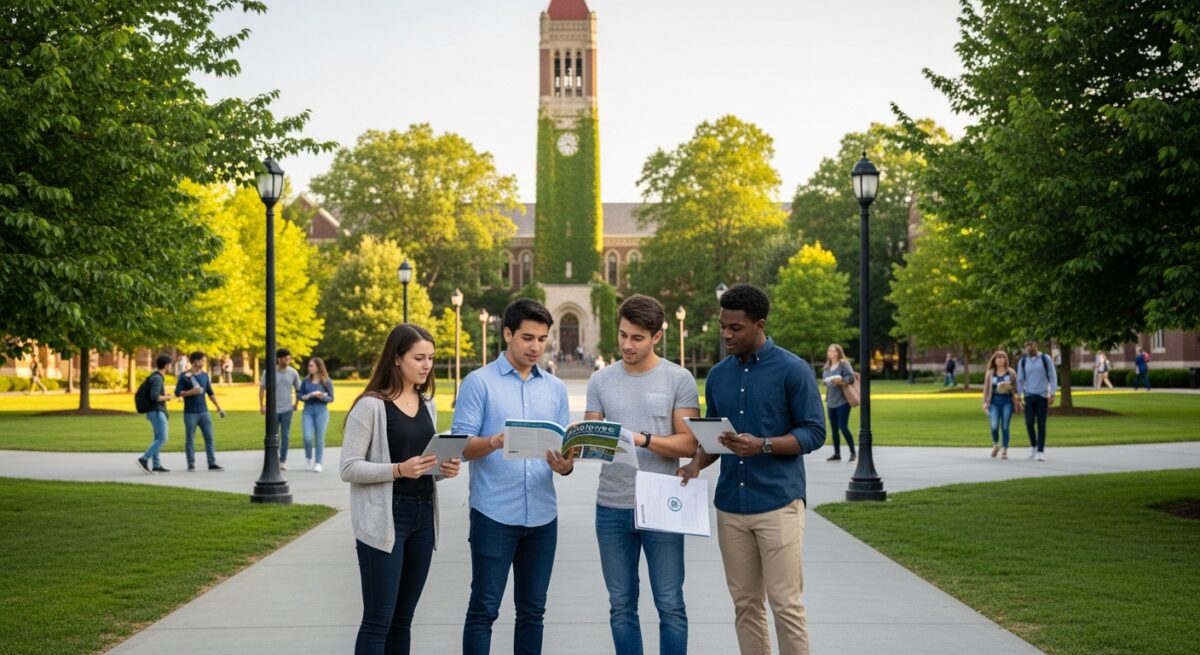
The campus visit, where possible, is invaluable. Sit in on an upper-level political science seminar, talk to current majors, and meet with a department advisor. Ask about the required methodology sequence, the availability of thesis supervision, and where recent graduates have found employment or continued their education. Evaluate whether the department’s intellectual climate matches your interests: is it more theoretical or applied? More qualitative or quantitative? Does it encourage normative questions about justice and power, or is it focused on empirical analysis of political behavior? The answers to these questions will point you toward the political science colleges where you will not just learn, but thrive.
Frequently Asked Questions
What can I do with a political science degree?
A political science degree opens doors to diverse careers in law, government service (local, state, federal), campaign management, policy analysis, journalism, international development, non-profit advocacy, business (especially in government relations or regulatory affairs), and academia. It develops critical thinking, research, writing, and analytical skills valued across sectors.
How important is a graduate degree in political science?
For many careers in policy analysis, advanced research, or academia, a master’s or doctoral degree is essential. However, for entry-level positions in government, campaigns, non-profits, or business, a bachelor’s degree from a strong program is sufficient. Many students use their undergraduate political science degree as a foundation for law school (JD) or a master’s in public policy (MPP) or public administration (MPA).
Should I choose a program based on general rankings or a specific subfield strength?
If you have a clear interest in a subfield like international security or political theory, a program with a top scholar or dedicated research center in that area may serve you better than a higher-ranked program with less depth in your interest. Always investigate faculty expertise and course offerings in your specific area of curiosity.
What is the difference between political science and public policy programs?
Political science is an academic discipline focused on understanding political systems, behavior, institutions, and theory. Public policy is an applied, interdisciplinary field that uses insights from political science, economics, and statistics to analyze and design solutions to public problems. Top universities often house both types of programs.
Are there strong online political science degree options?
Yes, several reputable universities now offer online bachelor’s and master’s degrees in political science or related fields. These can be excellent for working professionals or non-traditional students. The key is to ensure the program is accredited and offers meaningful interaction with faculty and peers, not just pre-recorded lectures.
Ultimately, the journey to finding the right political science program is a deeply personal one that balances academic rigor with professional preparation and personal growth. The best universities for political science degrees are those that challenge you intellectually, connect you to real-world applications of your knowledge, and provide a supportive community of scholars and practitioners. By carefully considering your long-term goals and thoroughly researching the distinctive strengths of each department, you can select a program that will serve as a powerful launchpad for a meaningful career engaged with the vital issues of our time.