Choosing the right university for a chemical engineering degree is a pivotal decision that shapes your technical foundation, research opportunities, and career trajectory. The best colleges for chemical engineering programs are distinguished not just by their rankings, but by a powerful combination of cutting-edge research facilities, renowned faculty, strong industry connections, and a curriculum that bridges fundamental science with real-world application. This guide delves into the key factors that define top-tier chemical engineering universities and provides a framework for evaluating programs to find the ideal fit for your academic and professional aspirations.
What Defines a Top Chemical Engineering Program?
Identifying the best colleges for chemical engineering requires looking beyond generic rankings. Elite programs share several core characteristics that contribute to an exceptional educational experience. First and foremost is academic rigor and curriculum depth. A robust program will offer a comprehensive core covering thermodynamics, transport phenomena, kinetics, and process design, while also providing ample electives or concentrations in emerging fields like biotechnology, nanomaterials, or sustainable energy systems. The curriculum should be continuously updated to reflect industry advancements and integrate computational tools and hands-on laboratory work from the early stages.
Another critical component is faculty expertise and research output. The leading chemical engineering universities are often hubs of innovation, where professors are actively pushing the boundaries of knowledge in areas like catalysis, biomolecular engineering, or electrochemical systems. This environment means undergraduate and graduate students have opportunities to participate in groundbreaking research, often leading to co-authorship on papers and presentations at major conferences. Furthermore, strong industry partnerships are a hallmark of top programs. These relationships facilitate internship and co-op programs, senior design projects sponsored by real companies, and a pipeline for recruitment upon graduation. When evaluating potential schools, consider the following pillars of excellence that separate good programs from truly great ones.
- Research Expenditure and Focus Areas: High levels of funded research indicate a dynamic, resource-rich environment. Look for specific research centers or institutes aligned with your interests.
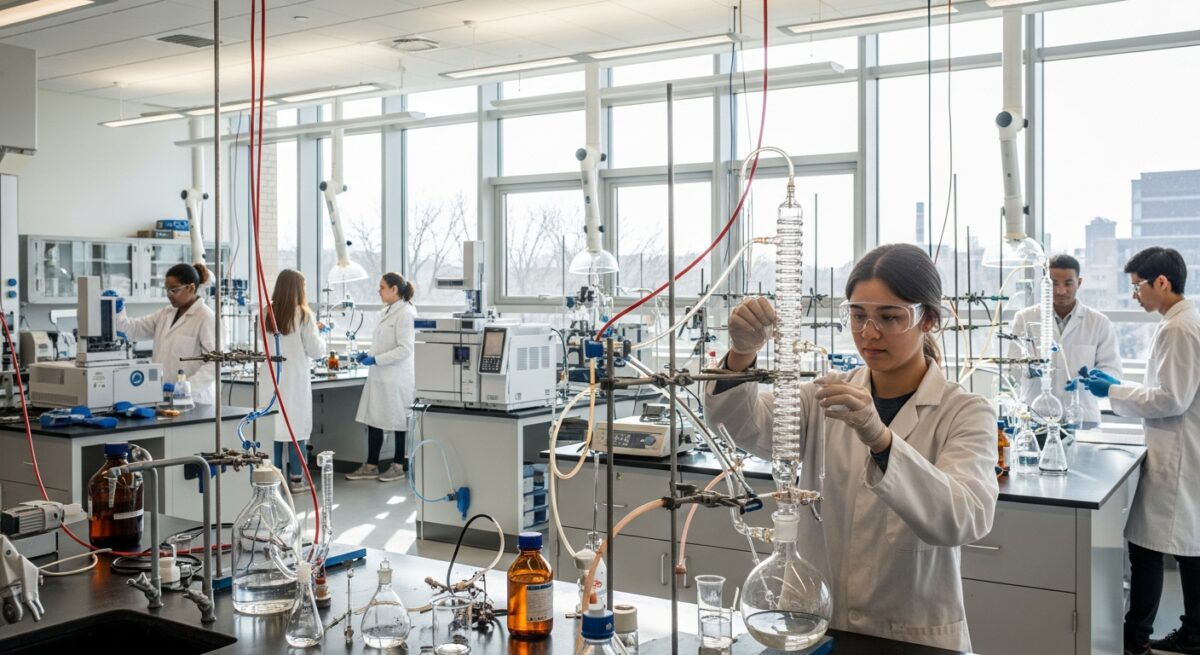
- Laboratory and Pilot-Scale Facilities: Access to modern, well-equipped labs for separations, reactions, and process control is non-negotiable for practical learning.
- ABET Accreditation: This ensures the program meets essential quality standards and is recognized by employers and graduate schools.
- Career Outcomes and Alumni Network: Strong placement rates in desired industries (petrochemicals, pharmaceuticals, semiconductors, etc.) and an active, supportive alumni network are invaluable assets.
- Student Support and Community: This includes academic advising, professional development workshops, and active student chapters of organizations like AIChE (American Institute of Chemical Engineers).
Leading Chemical Engineering Universities in the United States
The landscape of top engineering schools for chemical engineering is competitive and varied. A handful of institutions are consistently recognized for their preeminence, each with its own unique strengths and culture. The Massachusetts Institute of Technology (MIT) is often at the pinnacle, renowned for its foundational contributions to the field and its relentless focus on innovation across molecular engineering, energy, and health. Its curriculum emphasizes a deep molecular-level understanding of processes, and its research opportunities are virtually unparalleled. Similarly, the University of California, Berkeley, excels with its strong ties to the energy and biotechnology sectors in California and a curriculum that powerfully integrates chemistry with engineering principles.
Stanford University leverages its Silicon Valley location to foster interdisciplinary work at the intersection of chemical engineering, data science, and entrepreneurship, particularly in areas like sustainable technology and biomedicine. On the other hand, the University of Texas at Austin boasts one of the largest and most well-connected programs, with exceptional strength in traditional chemical process engineering, petroleum, and materials, supported by its proximity to a major industrial corridor. The Georgia Institute of Technology is celebrated for its rigorous, hands-on approach and strong focus on industrial application and process systems engineering, producing graduates highly sought after by a wide range of manufacturers and chemical companies.
It is crucial to understand that the “best” program is highly personal. A student passionate about pharmaceuticals might thrive at a school with strong bioengineering ties, while another interested in traditional process design might prefer a program with a vast pilot plant and deep oil & gas industry connections. This decision is similar to the process of choosing the right technology college degree programs, where aligning the program’s specialization with your career vision is paramount.
Specialized Strengths and Emerging Focus Areas
Modern chemical engineering is not a monolithic field. The best colleges for chemical engineering programs often develop areas of specialized excellence that can be a major draw for specific student interests. For instance, several top universities have built world-class research initiatives in sustainable engineering and circular economy principles. These programs focus on designing processes that minimize environmental impact, utilize renewable feedstocks, and address climate change, preparing graduates for careers in green technology and regulatory affairs.
Another rapidly growing domain is biomolecular and pharmaceutical engineering. Programs with this strength integrate biology, chemistry, and engineering to advance drug delivery systems, vaccine production, and tissue engineering. They often feature collaborations with medical schools and biotech startups. Furthermore, the intersection of chemical engineering with data science and machine learning is creating a new frontier. Leading departments are incorporating courses on process data analytics, computational modeling, and AI-driven materials discovery, equipping students with skills for the digital transformation of the chemical industry. For students whose circumstances require flexibility, exploring online academic pathways can reveal accredited options that offer foundational coursework, though the laboratory-intensive nature of advanced chemical engineering typically necessitates an on-campus experience for the full degree.
Evaluating Fit: Beyond the Rankings
While rankings provide a useful starting point, your personal evaluation should dive deeper. Campus culture and environment play a significant role in your success and satisfaction. Consider the size of the chemical engineering department: a large program may offer more course selections and research labs, while a smaller one might provide more intimate access to professors and a tight-knit cohort. Visit the campus if possible, sit in on a class, and speak with current students. Ask about the collaborative versus competitive nature of the student body, the accessibility of faculty, and the quality of teaching for undergraduate core courses.
Financial investment and return are also critical. Compare tuition costs, but also investigate the availability of scholarships, research assistantships (for graduate students), and work-study programs specific to the engineering department. Analyze the career services support: How active is the employer recruitment on campus? What is the average starting salary for chemical engineering graduates? The strength of a program’s industry advisory board can be a telling indicator of its relevance and the employment opportunities it fosters. This holistic approach to evaluation ensures you select a program that supports your goals.
Frequently Asked Questions
What is the difference between a chemistry degree and a chemical engineering degree?
Chemistry focuses on the composition, properties, and reactions of substances at the molecular level. Chemical engineering applies the principles of chemistry, physics, biology, and mathematics to solve problems involving the production or use of chemicals, fuel, drugs, food, and many other products, with a heavy emphasis on scaling processes from the lab to industrial manufacturing.
Are there strong chemical engineering programs at public universities?
Absolutely. Many public institutions, such as the University of California, Berkeley, the University of Texas at Austin, the University of Illinois Urbana-Champaign, and the Georgia Institute of Technology, are consistently ranked among the very best chemical engineering universities in the world and often provide exceptional value.
How important is graduate school for a chemical engineering career?
A Bachelor of Science (B.S.) is sufficient for many lucrative and rewarding process engineering, plant engineering, and production roles. A Master’s (M.S.) or Doctorate (Ph.D.) is typically required for advanced research and development positions, specialized technical consulting, or a career in academia.
What should I look for in a program’s facilities?
Key facilities include modern teaching labs for unit operations (distillation, filtration, reactors), analytical instrumentation labs (GC/MS, HPLC), computational labs with industry-standard simulation software, and often a pilot plant where students can work with scaled-down versions of industrial processes.
Can I specialize as an undergraduate?
Most top programs offer technical electives or optional concentrations/tracks that allow undergraduates to delve deeper into areas like biomolecular engineering, materials science, environmental engineering, or process systems engineering, often in their junior and senior years.
Selecting one of the best colleges for chemical engineering programs is an investment in a future defined by innovation and problem-solving. By thoroughly researching program strengths, evaluating cultural and financial fit, and aligning the curriculum with your professional vision, you can choose a university that will not only provide a world-class education but also serve as a launchpad for a impactful career. The ideal program is the one that challenges you, supports your growth, and connects you to the opportunities that will define your journey as a chemical engineer.