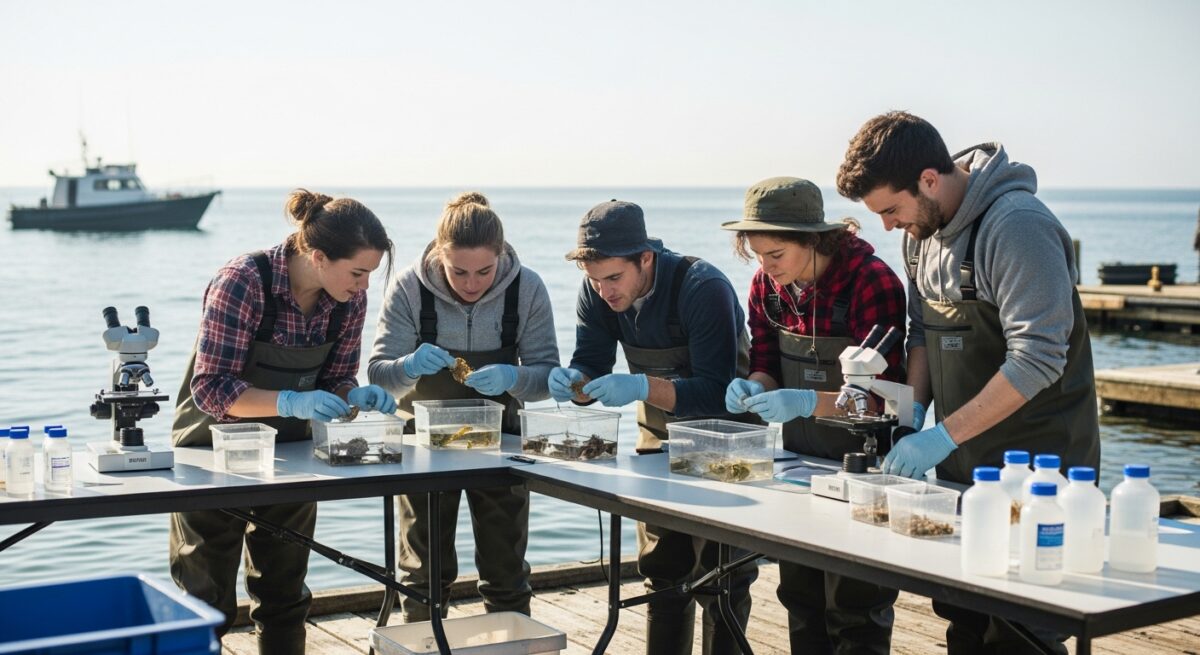
Choosing the right college is the first critical step for any student dreaming of a career in marine science. The field is vast, encompassing everything from marine ecology and conservation to oceanography and biotechnology, and the quality of your undergraduate education will profoundly shape your future research, career opportunities, and impact on our understanding of the ocean. The top marine biology colleges for future marine scientists are distinguished not just by their coastal locations, but by their access to cutting-edge research facilities, renowned faculty, and unparalleled hands-on field experiences. This guide delves into the key factors that define excellence in marine science education and highlights institutions that provide the rigorous academic foundation and practical training necessary to thrive in this competitive and vital field.
What Defines a Top-Tier Marine Biology Program?
Not all programs labeled “marine biology” offer the same depth or opportunities. The leading marine biology schools share several core characteristics that prospective students should prioritize. First and foremost is direct, consistent access to diverse marine environments. This means proximity to multiple marine habitats (e.g., coral reefs, estuaries, open ocean, deep-sea vents) and ownership of or partnerships with marine field stations and research vessels. A program’s strength is also measured by the research activity of its faculty. Look for departments where professors are actively publishing in prestigious journals, securing significant grants, and involving undergraduates in their projects.
Furthermore, the curriculum should offer a robust balance of foundational science and specialized marine courses. A strong program will require a core in biology, chemistry, physics, and mathematics before advancing into marine-specific classes like marine ecology, invertebrate zoology, oceanography, and marine conservation. The availability of specialized tracks or concentrations, such as marine mammalogy, fisheries science, or marine microbiology, is another indicator of program depth. Finally, a critical component is a clear pathway to experiential learning through required internships, independent research theses, or semester-long field programs. These experiences are invaluable for building a resume and confirming career interests.
Key Factors for Choosing Your Marine Science School
Beyond general prestige, your personal fit with a program is paramount. Consider your specific interests within marine science. A school located on the Gulf of Mexico may offer exceptional opportunities in coastal wetland and fisheries management, while a Pacific Northwest institution might specialize in kelp forest ecology or marine mammal research. The size of the program matters: larger departments may offer more course variety and research labs, while smaller programs can provide more personalized mentorship and earlier access to research.
Financial investment and return are also crucial. Evaluate the availability of scholarships, work-study positions in marine labs, and the program’s record of placing graduates into jobs or top-tier graduate schools. You should also investigate the campus culture and support systems, such as active marine science clubs, chapters of professional societies like the American Academy of Underwater Sciences (AAUS), and dive certification programs. For a comprehensive look at comparing different academic tracks and outcomes, our guide on Top Marine Biology Colleges for Aspiring Marine Scientists offers a detailed framework.
To systematically evaluate your options, focus on these essential criteria:
- Location & Field Access: Proximity to ocean, on-campus marine lab, affiliated field stations, and research fleet.
- Faculty & Research: Faculty expertise aligned with your interests, opportunities for undergraduate research participation.
- Curriculum & Specialization: Strength of core science requirements, variety of upper-level marine electives, available concentrations.
- Experiential Learning: Required internships, capstone research projects, study abroad/field semester programs.
- Career & Graduate Outcomes: Career services support for marine fields, graduate school placement rate, alumni network strength.
Leading Institutions for Marine Biology and Ocean Sciences
While many excellent programs exist, several institutions are consistently recognized for their comprehensive approach and exceptional resources in marine science. These schools serve as benchmarks for what aspiring marine scientists should seek.
Programs with Integrated Marine Laboratories
Some of the most immersive undergraduate experiences are found at colleges that operate their own world-class marine laboratories. These are not just remote outposts, but fully integrated into the undergraduate curriculum. Students often take semester-long courses at these labs, living and learning at the water’s edge. This model provides daily, hands-on interaction with the marine environment, from tide-pooling and specimen collection to operating oceanographic equipment. Faculty researchers at these labs frequently teach undergraduate courses, creating a seamless blend of education and ongoing scientific inquiry. The culture at these institutions is deeply field-oriented, fostering a close-knit community of budding scientists.
Large Research Universities with Marine Science Departments
Major research universities often house distinct, well-funded departments or schools of marine science, oceanography, or atmospheric and ocean science. These programs benefit from extensive resources, including large research vessels, advanced instrumentation (like remotely operated vehicles (ROVs) and mass spectrometers), and connections to global research initiatives. Undergraduates at these universities have the opportunity to engage in large-scale, multidisciplinary research projects addressing global ocean challenges like climate change, ocean acidification, and sustainable fisheries. The course offerings are typically vast, allowing for deep specialization. Furthermore, these universities often have strong pathways to their own graduate programs, offering motivated undergraduates a clear trajectory into advanced research careers. Exploring academic degree resources can help you understand how these specialized tracks fit within the broader landscape of higher education.
Beyond the Bachelor’s: Preparing for a Career in Marine Science
A bachelor’s degree from one of the top marine biology colleges opens doors to entry-level technician positions, conservation work, and education roles. However, most research and advanced policy positions require a graduate degree. Therefore, your undergraduate experience should be viewed as preparation for competitive graduate school applications. This means seeking out research experience early, even if it starts with simple lab tasks. Cultivate relationships with professors who can later provide strong letters of recommendation. Present your research at undergraduate symposia or regional scientific conferences, as this demonstrates communication skills and scientific rigor.
Develop a diverse skill set that includes not only biological field methods but also data analysis (statistics, coding in R or Python), scientific writing, and possibly technical diving or small boat operation. Seek summer internships at government agencies (like NOAA or the EPA), non-profit conservation organizations, or other universities to broaden your network and perspective. Remember, marine science is highly collaborative; demonstrating your ability to work effectively on team projects is as important as your individual academic achievements.
Frequently Asked Questions
Is marine biology a good major for pre-med or other health professions?
Yes, but with careful planning. A marine biology degree provides a strong foundation in the biological sciences, chemistry, and physics required for medical school. However, students must ensure they complete all specific pre-med prerequisites (often including sociology, psychology, and specific lab sequences) which may require additional coursework outside the major. The unique perspective of marine systems can make for a compelling application narrative.
How important is it to get SCUBA certified for a marine biology degree?
While not always a formal requirement for admission, SCUBA certification (especially advanced and scientific diving certifications) is extremely valuable. Many research projects and field courses require it. Some programs offer certification courses, but obtaining it beforehand can give you a significant advantage for securing research positions and internships as an undergraduate.
What is the difference between marine biology and oceanography?
Marine biology focuses specifically on the organisms in the ocean, their behaviors, interactions, and adaptations. Oceanography is a broader, interdisciplinary earth science that includes the study of the ocean’s physical properties (physical oceanography), chemical composition (chemical oceanography), geology of the seafloor (geological oceanography), and the biological aspects (biological oceanography). Many top programs offer degrees in both or allow for interdisciplinary study.
Are there strong marine science programs not located directly on a coast?
Yes. Several renowned institutions located inland have powerful marine science programs built around sophisticated laboratory systems (like flow-through seawater labs), strong partnerships with coastal field stations, and a focus on theoretical, computational, or biochemical aspects of marine science that do not require daily ocean access. These can be excellent choices for students interested in molecular marine biology, aquaculture, or ocean modeling.
Selecting the right undergraduate program is a foundational decision for any future marine scientist. By prioritizing hands-on field access, active research faculty, and a curriculum that balances breadth with depth, you can find a college that will not only educate you but inspire you. The journey through one of the nation’s top marine biology colleges is challenging and demanding, but for those passionate about unlocking the mysteries of the ocean and contributing to its stewardship, it is an unparalleled and rewarding path. Start by visiting campuses, talking to current students and faculty, and critically assessing how each program aligns with your specific ambitions in the vast, blue world of marine science.