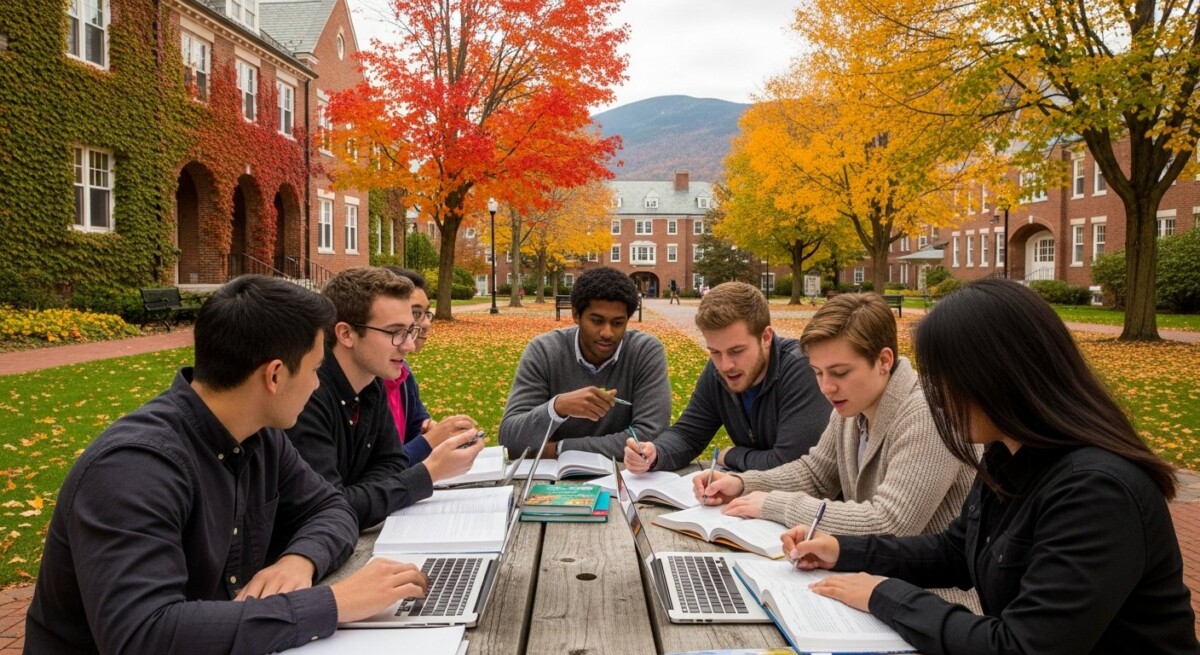
Vermont, known for its stunning Green Mountains, vibrant small towns, and deep commitment to community and sustainability, offers a distinctive and enriching environment for higher education. While the state’s public university system is robust, its collection of leading private universities located in Vermont provides a compelling alternative for students seeking a more intimate, focused, and often highly specialized academic experience. These institutions are characterized by low student-to-faculty ratios, innovative liberal arts curricula, and a strong emphasis on experiential learning that leverages the state’s unique natural and cultural landscape. For students and families navigating the complex college selection process, understanding the distinct identities, strengths, and opportunities at Vermont’s premier private colleges is a crucial step in finding the right academic and personal fit.
The Defining Characteristics of Vermont’s Private Universities
What sets the leading private universities in Vermont apart from larger public institutions or private schools in other regions? The answer lies in a powerful combination of scale, philosophy, and location. These schools typically enroll between 1,500 and 2,500 undergraduate students, fostering a close-knit community where professors know students by name and collaborative learning is the norm. The academic philosophy is deeply rooted in the liberal arts tradition, even within pre-professional programs, emphasizing critical thinking, ethical reasoning, and communication skills. This approach prepares graduates not just for a first job, but for a lifetime of adaptability and leadership.
Furthermore, the Vermont setting is not merely a backdrop; it is an integral part of the educational mission. Many of these institutions have strong commitments to environmental stewardship, social justice, and community engagement. The state’s natural beauty provides a living laboratory for fields like environmental science, sustainable agriculture, and outdoor leadership, while its small, resilient communities offer real-world contexts for studying economics, political science, and social work. This fusion of rigorous academics with purposeful, place-based learning creates graduates who are both broadly educated and specifically equipped to address complex challenges. For a broader perspective on how private universities foster student success, including factors like graduation rates and career support, you can explore our analysis of top private universities in Arkansas for student success.
Profiles of Premier Institutions
Vermont is home to several nationally recognized private universities, each with its own unique history, academic focus, and campus culture. The following profiles highlight the core identities of these leading schools.
Middlebury College
Middlebury College, located in the Champlain Valley town of Middlebury, is often the first name that comes to mind when considering elite private education in Vermont. Founded in 1800, it is one of the nation’s oldest liberal arts colleges and enjoys a global reputation, particularly for its programs in languages, international studies, and environmental science. Middlebury’s undergraduate college provides a rigorous and comprehensive liberal arts foundation. Its graduate and specialized programs, including the renowned Middlebury Institute of International Studies at Monterey (though located in California) and the Bread Loaf School of English, extend its academic reach. The college’s 350-acre campus is a blend of historic and modern architecture, and its endowment allows for significant financial aid, striving to meet 100% of demonstrated financial need for admitted students.
The student experience at Middlebury is intense and engaging, characterized by a strong honor code, a deep tradition of student self-governance, and a vibrant outdoor culture. The college’s Snow Bowl ski area and extensive trail networks support its active community. Academically, the January term (J-Term) allows for focused, often experimental study, including internships, research, and travel. Middlebury’s commitment to environmental sustainability is institutional, with a goal of carbon neutrality, making it a top choice for students passionate about climate issues.
University of Vermont (Private/Public Hybrid)
The University of Vermont (UVM) in Burlington occupies a unique space as a “public ivy” with historic private roots. Chartered in 1791, UVM blends the resources of a public research university with the feel of a smaller New England college. While it receives state funding and serves as Vermont’s primary public research institution, it retains a private corporation for its board of trustees and a significant portion of its student body comes from out-of-state. This hybrid model offers students the benefits of a large research university, including extensive program offerings in medicine, engineering, agriculture, and business, with the engaged community atmosphere typical of New England colleges.
UVM’s location in Burlington, Vermont’s largest and most vibrant city, is a major draw. The campus overlooks Lake Champlain and the Adirondack Mountains, providing unparalleled access to both urban amenities and outdoor recreation. The university is a leader in health sciences, environmental studies, and holistic health. Its Larner College of Medicine and Rubenstein School of Environment and Natural Resources are particularly notable. The UVM community is known for its progressive values, active student life, and strong connection to the dynamic city of Burlington.
Champlain College
Champlain College, also located in Burlington, takes a distinctly career-focused approach within the liberal arts framework. Founded in 1878, Champlain has built its reputation on innovative, forward-looking programs in fields like game design, cybersecurity, digital marketing, and forensic accounting. Its academic model is built on “Upside-Down Curriculum,” where students begin taking courses in their major field of study starting in their first year. This is complemented by a core curriculum in the liberal arts, ensuring students develop broad-based skills in critical thinking and communication.
Champlain’s emphasis on experiential learning is profound. Every student completes at least one internship, and many programs incorporate client-based projects, simulations, and portfolio development. The college’s housing model includes themed “Learning Communities” where students with similar academic interests live and collaborate together. For students seeking a private university education in Vermont that is tightly aligned with emerging industries and professional readiness, Champlain College offers a compelling and practical path. Students considering such career-focused paths often seek clear college degree information to understand how specific programs align with market opportunities.
Norwich University
Norwich University in Northfield holds the distinction of being the oldest private military college in the United States and the birthplace of the Reserve Officers’ Training Corps (ROTC). Founded in 1819, Norwich operates a Corps of Cadets program alongside a traditional civilian student body. This unique structure creates a campus culture built on leadership, discipline, service, and integrity. All students, whether in the Corps or not, benefit from this ethos, which permeates academic and campus life.
Norwich is particularly strong in engineering, nursing, architecture, criminal justice, and cybersecurity. Its National Security Agency (NSA)-designated Center of Academic Excellence in Cyber Defense is a significant asset. The university’s location in a central Vermont river valley supports its focus on leadership and outdoor challenges. Norwich graduates are known for their preparedness, work ethic, and leadership qualities, making them highly sought after in both public service and private sector careers.
Bennington College
Bennington College, in the southwestern town of Bennington, stands out for its radically student-centered and experimental approach to education. Established in 1932, Bennington was one of the first colleges to grant women degrees in the visual and performing arts. Its educational philosophy is encapsulated in the “Bennington Plan,” which places the student at the center of designing their own course of study. There are no traditional majors; instead, students create individualized plans with faculty guidance, drawing from disciplines across the curriculum.
A cornerstone of the Bennington experience is the annual Field Work Term, a seven-week winter term where every student completes a full-time internship or self-directed project related to their interests. This mandatory experiential component ensures that theoretical learning is constantly tested and refined in the world beyond campus. Bennington excels in the arts, writing, literature, and social sciences, attracting creative, independent, and intellectually daring students who thrive in a non-traditional academic structure.
Choosing the Right Vermont Private University
Selecting among these excellent institutions requires careful self-reflection and research. Prospective students should consider several key factors beyond academic rankings. First, assess the educational philosophy: Do you thrive in a structured, traditional liberal arts environment (Middlebury), a self-directed, plan-based model (Bennington), or a career-first, upside-down curriculum (Champlain)? Second, consider campus culture and size: Are you drawn to the discipline and leadership focus of a military tradition (Norwich), the vibrant energy of a college town in a small city (UVM, Champlain), or the secluded, intensive focus of a rural campus (Middlebury, Bennington)?
Financial planning is also paramount. While private university tuition is significant, these schools offer substantial financial aid packages, including grants, scholarships, and work-study opportunities. It is essential to use each school’s net price calculator and engage with their financial aid office early in the process. Finally, the visit is irreplaceable. Experiencing the campus atmosphere, sitting in on a class, and talking to current students can provide insights no brochure can match.
To aid in your comparison, here are some of the defining features that distinguish these leading private universities located in Vermont:
- Middlebury College: Global prestige in languages and environmental studies, strong honor code, deep endowment for financial aid, extensive outdoor programs.
- University of Vermont: Unique public/private hybrid model, wide range of research and pre-professional programs, vibrant location in Burlington, “public ivy” reputation.
- Champlain College: Career-focused “Upside-Down Curriculum,” strengths in game design, cybersecurity, and business, integrated internship model, urban Burlington campus.
- Norwich University: Nation’s oldest private military college, leadership and discipline core, strong engineering and cybersecurity programs, Corps of Cadets option.
- Bennington College: Student-designed academic plans, mandatory Field Work Term every year, exceptional for arts and writing, highly non-traditional and independent.
Frequently Asked Questions
Are private universities in Vermont more expensive than public ones?
While the published tuition and fees at private universities are typically higher than in-state tuition at public schools, the actual cost (net price) can be very different. Leading private universities in Vermont often have large endowments dedicated to financial aid. They frequently meet 100% of a student’s demonstrated financial need with grants and scholarships (which do not need to be repaid), not just loans. For many families, the net price of attending a private school can be comparable to, or sometimes even lower than, that of a public university, especially for out-of-state students.
What is the social scene like at these smaller private schools?
The social scene is largely shaped by the size and location of the campus. At schools like Middlebury and Bennington, campus life is central, with a dense calendar of student-organized events, performances, lectures, and club activities. At UVM and Champlain in Burlington, social life extends seamlessly into the city, with access to restaurants, music venues, and festivals. Norwich has a strong tradition of formal and informal events within the Corps and civilian populations. Greek life exists at some, like UVM, but is often less dominant than at large state schools. Overall, the social experience is more communal and participatory due to the smaller size.
How strong is career support at these institutions?
Career support is a major strength at Vermont’s private universities, though the approach varies. Champlain’s model is built around career preparation from day one. Middlebury, UVM, and Norwich have robust career centers offering extensive internship databases, alumni networking platforms, career counseling, and recruitment fairs. Bennington’s required Field Work Term ensures every student gains real-world experience annually. The close faculty relationships also mean professors are deeply invested in mentoring students and connecting them with professional opportunities in their fields.
Is the Vermont winter a major factor to consider?
Yes, prospective students should be prepared for a authentic New England winter with significant snow and cold temperatures from November through March. However, these universities are fully equipped for it, and most students embrace it. Campuses are designed for winter, with connected building tunnels, efficient snow removal, and a plethora of winter sports and activities, from skiing and snowboarding to ice skating and cozy campus events. The winter fosters a strong sense of community and offers unique seasonal beauty. If you enjoy seasonal changes and outdoor winter recreation, it’s a benefit, not a drawback.
Vermont’s leading private universities offer more than just a degree; they offer a transformative educational experience deeply connected to place, community, and purpose. From the global reach of Middlebury to the innovative career focus of Champlain, the leadership foundation of Norwich to the creative independence of Bennington, and the hybrid research power of UVM, these institutions provide pathways for a wide range of students. By carefully considering your academic goals, learning style, and personal values, you can identify the Vermont private university that will best challenge, support, and inspire you toward a meaningful future. The investment in this search is the first step toward an education that can shape not only your career but your character and contributions to the world.