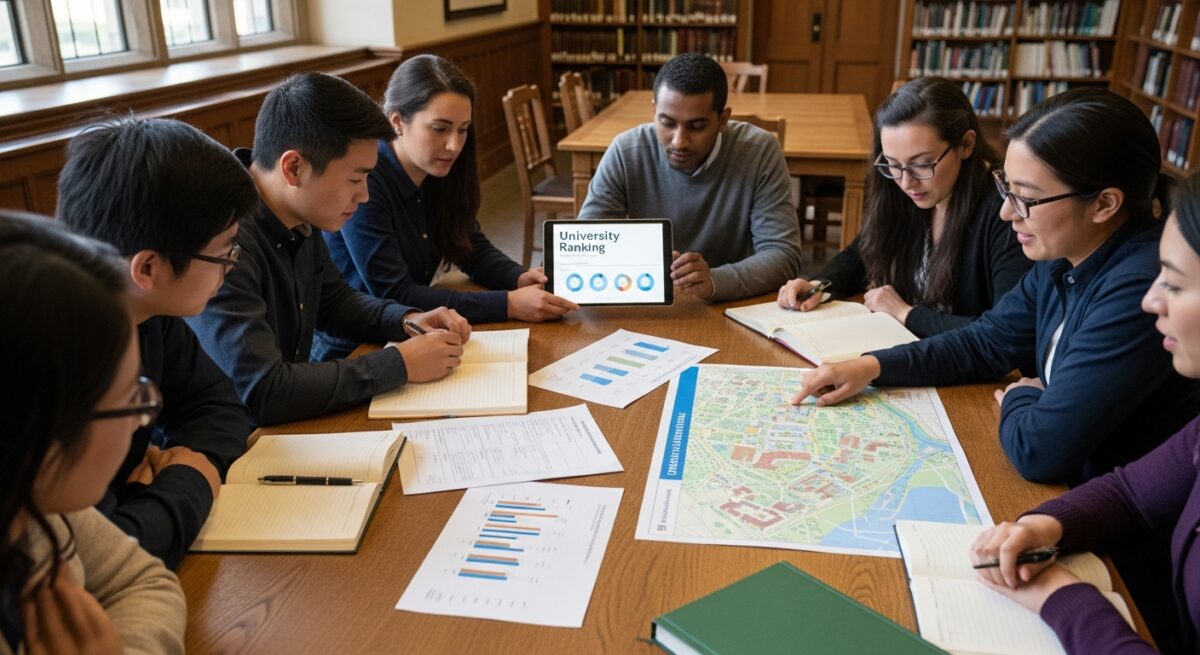
Choosing a university is one of the most consequential decisions a student or career changer can make. With thousands of institutions worldwide claiming excellence, the noise can be overwhelming. A well-structured top universities ranking guide cuts through that noise by providing a clear, data-driven framework for comparing institutions. Yet many prospective students misuse these rankings, focusing solely on a school’s position without understanding the methodology behind it. This article explains how to read, interpret, and apply ranking data so you can match a university’s strengths to your personal academic and career goals.
Why Rankings Matter and Where They Fall Short
University rankings serve as a starting point for research, not a final verdict. The best universities worldwide consistently appear near the top of major lists such as the QS World University Rankings, the Times Higher Education World University Rankings, and the Academic Ranking of World Universities. These systems evaluate factors like academic reputation, faculty research output, student-to-faculty ratios, and employer feedback. A high rank often signals strong resources, accomplished professors, and a globally recognized degree.
However, rankings have blind spots. They rarely account for the quality of undergraduate teaching, campus culture, or the availability of support services for first-generation college students. A university ranked 50th globally might offer a more supportive environment for a student who needs flexible online learning than a university ranked 10th. Additionally, many rankings favor large research institutions over smaller teaching-focused colleges. For a student seeking personalized mentorship or affordable tuition, a lower-ranked regional school could be a better fit. The key is to treat rankings as one tool among many, not as a definitive measure of fit.
How to Read a Top Universities Ranking Guide
Understand the Methodology First
Before looking at any list, find the methodology section. Different ranking organizations weigh factors differently. For example, QS gives 40% weight to academic reputation, while Times Higher Education gives 30% to teaching environment. Some guides emphasize research citations, while others prioritize graduate employment rates. A top universities ranking guide that values research output may not tell you much about the quality of undergraduate advising. Always ask: what does this ranking actually measure? A school that excels in research might still have large lecture classes and limited faculty interaction.
Consider your own priorities. If you plan to enter the workforce immediately after graduation, a ranking that weights employer reputation and alumni outcomes (like the U.S. News & World Report rankings for undergraduate business programs) will be more useful than one focused on Nobel laureates. If you are pursuing a PhD, research output and citation impact matter more. Write down your top three criteria before consulting any guide, then compare how each ranking system aligns with those criteria.
Look Beyond the Overall Score
Many guides offer subject-specific or regional breakdowns. A university that ranks 200th overall might rank 20th in engineering or nursing. This nuance is critical. The best universities worldwide for computer science may differ significantly from those for education or public health. A top universities ranking guide that only shows an aggregate number hides this variation. Dig into the subject tables and read the fine print about how each subject was evaluated.
Also examine the data points behind the score. Some guides provide raw statistics such as graduation rates, median starting salaries, or student loan default rates. These numbers often tell a more honest story than a composite score. For example, a university with a high overall rank but a low four-year graduation rate may not provide adequate support for timely degree completion. Use these granular metrics to build a profile of each candidate school.
Cross-Reference Multiple Sources
No single ranking is perfect. Each has biases based on its methodology and data sources. A wise approach is to compare two or three major guides and note where a university consistently appears. If a school ranks in the top 50 across QS, Times Higher Education, and ARWU, you can be confident in its global standing. If its rank varies wildly (e.g., 30th in one guide and 150th in another), investigate why. The discrepancy may indicate that the school excels in a narrow area that one guide values heavily.
You can also consult government databases such as the U.S. Department of Education’s College Scorecard, which provides official data on costs, graduation rates, and post-college earnings. These sources are free from commercial bias and focus on outcomes that matter to students. Combining ranking data with official metrics gives you a fuller picture.
Key Factors Rankings Overlook
While rankings capture some aspects of quality, they miss elements that directly affect student success. Here are four factors to investigate on your own:
- Affordability and financial aid: Rankings rarely include net price. A prestigious university with a high sticker price may still be affordable if it offers generous need-based aid. Conversely, a mid-ranked school with limited scholarships could leave you with heavy debt. Always run the net price calculator on each school’s website.
- Graduation rate by demographic: Some schools graduate wealthy students at high rates but struggle with low-income or first-generation students. Look for data on graduation rates broken down by Pell Grant eligibility. This reveals how well the institution supports all students.
- Career services and internship placement: A university may have a strong academic reputation but weak career counseling. Check whether the school publishes internship placement rates or has dedicated career advisors for your major. A top universities ranking guide that ignores career outcomes is incomplete.
- Online and flexible learning options: Many students now need the ability to study remotely or part-time. Rankings often focus on traditional residential programs. If you are a working adult or have family obligations, verify that the university offers accredited online degrees in your field. For more on this topic, see our Best Public Universities Ranking Guide for 2026 which includes tips for evaluating online program quality.
Each of these factors can dramatically affect your experience and outcome. A school that ranks lower overall but excels in these areas may provide a better return on investment than a higher-ranked institution that neglects them.
How to Use Rankings for Different Goals
Your purpose for pursuing a degree changes how you should use a top universities ranking guide. A high school student applying to undergraduate programs faces different considerations than a mid-career professional seeking an executive master’s degree. Let’s break down three common scenarios.

Scenario 1: Undergraduate applicants. For traditional undergraduates, consider rankings that emphasize teaching quality, student engagement, and retention rates. The National Survey of Student Engagement (NSSE) provides data on how actively students participate in learning activities. Look for universities where students report high levels of interaction with faculty and collaborative projects. Also consider geographic location and campus culture. Rankings cannot tell you whether you will feel at home in a large urban campus or a small liberal arts college. Visit campuses if possible, or attend virtual information sessions.
Scenario 2: Graduate and professional students. If you are applying to graduate school, prioritize rankings that measure research output, faculty expertise, and alumni placement in your field. For example, a law school ranking should include bar passage rates and job placement nine months after graduation. For a business school, look at average GMAT scores, post-MBA salary increases, and industry connections. A top universities ranking guide for graduate programs should also list faculty publications and grant funding.
Scenario 3: Career changers and adult learners. If you are returning to school after years in the workforce, flexibility and cost are often more important than prestige. Focus on rankings of online programs or part-time offerings. The U.S. News Best Online Programs rankings evaluate student engagement, faculty credentials, and technology infrastructure. Also investigate whether the university offers credit for prior learning or work experience. A school that recognizes your existing skills can shorten your time to degree and reduce cost. Scholarship and financial aid resources can further help you finance your education without taking on excessive debt.
Frequently Asked Questions
What is the most reliable university ranking?
No single ranking is universally reliable. The three most respected global rankings are QS World University Rankings, Times Higher Education World University Rankings, and the Academic Ranking of World Universities. Each uses a different methodology, so cross-referencing them gives a more balanced view.
Should I only apply to top 50 universities?
No. Many excellent universities outside the top 50 offer strong programs in specific fields, smaller class sizes, and lower tuition. A top universities ranking guide should be used to identify a range of schools, including safety and match schools, not just reach schools.
Do rankings matter for online degrees?
Yes, but use specialized rankings like U.S. News Best Online Programs or the Online Learning Consortium’s quality scorecard. General global rankings rarely evaluate online delivery quality. Look for programs that are accredited by recognized agencies such as the Higher Learning Commission or the Distance Education Accrediting Commission.
How often are rankings updated?
Most major rankings are released annually, typically between June and October. However, the underlying data may be two to three years old by the time it is published. Always check the data year listed in the methodology.
Can rankings help me choose a major?
Subject-specific rankings can help you identify universities with strong departments in your field of interest. But also consider faculty research interests, internship opportunities, and alumni networks in that major. A top-ranked department may still lack the specific courses or mentorship you need.
Making Your Final Decision
After gathering data from a top universities ranking guide, official sources, and campus visits, create a short list of five to eight schools. Rank them according to your personal criteria, not a magazine’s score. Consider total cost of attendance, expected financial aid, graduation rate in your intended major, and career placement statistics. Talk to current students or alumni through LinkedIn or university admissions events. Their lived experience often reveals details that no ranking can capture.
Remember that the goal is not to attend the highest-ranked university possible. The goal is to find a university that will help you grow academically, professionally, and personally. A thoughtful use of rankings as part of a broader research strategy will lead you to a school where you can thrive. The best decision is the one that aligns with your values, your budget, and your vision for the future.