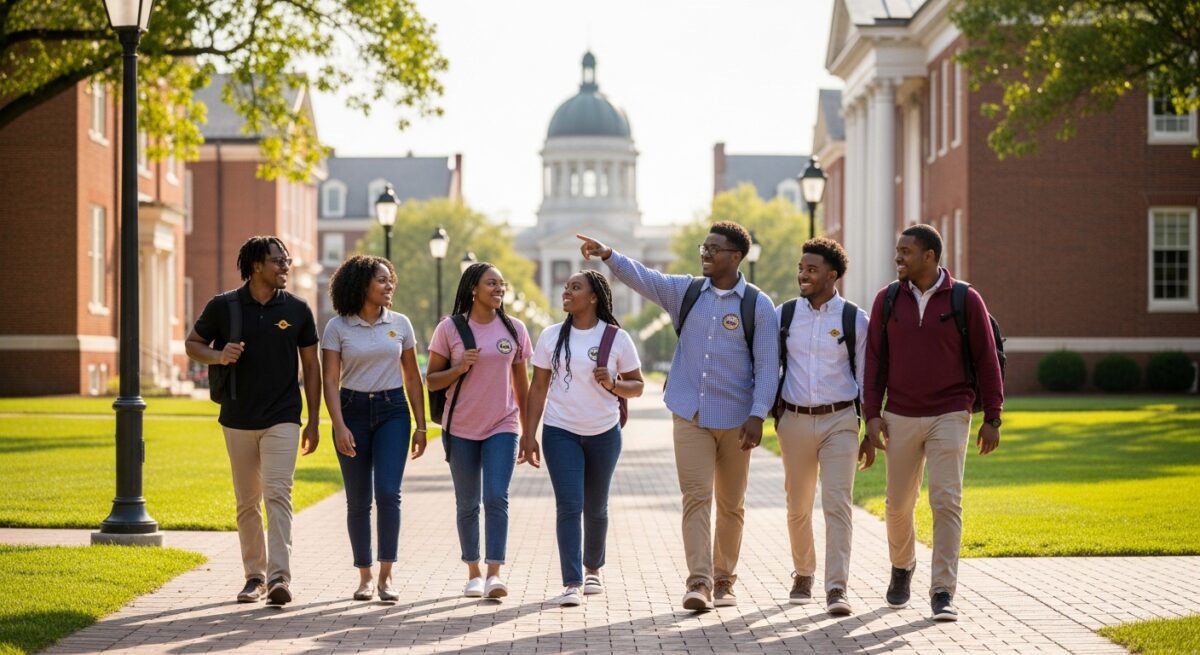
When exploring college options, many students look for institutions that offer strong academic programs, a supportive community, and a rich cultural history. Historically Black Colleges and Universities (HBCUs) provide all of this and more. With a legacy of empowering African American students, HBCUs have consistently produced leaders in every field. But with so many excellent choices, how do you identify the top HBCU schools? A reliable top HBCU schools ranking can guide your decision and help you find the institution that aligns with your goals. In our comprehensive ranking of top HBCU schools, we break down what makes these institutions stand out and how you can choose the best one for your future.
Understanding HBCUs and Their Unique Value
HBCUs were established before the Civil Rights Act of 1964 with the primary mission of educating African American students who were often denied admission to predominantly white institutions. Today, these schools serve a diverse student body while maintaining their commitment to inclusion, cultural pride, and academic excellence. The value of an HBCU education extends beyond the classroom. Students benefit from smaller class sizes, mentorship from faculty who understand their experiences, and a campus environment that fosters leadership and community engagement. Graduates of HBCUs have gone on to become CEOs, judges, scientists, artists, and public servants. When examining any HBCU rankings list, you will find institutions that consistently produce high graduation rates and competitive career outcomes.
Many students and parents ask whether HBCUs are still relevant. The answer is a clear yes. HBCUs continue to graduate a significant percentage of African American professionals in fields such as engineering, education, and healthcare. They also offer unique cultural experiences, including homecoming celebrations, step shows, and historically black Greek life. For students seeking a supportive environment that celebrates their identity, HBCUs are an excellent choice. The top HBCU schools ranking we provide reflects both academic rigor and the holistic development these institutions offer.
Criteria Used to Evaluate Top HBCU Schools
Ranking the best HBCUs requires looking at multiple factors that influence student success. No single metric tells the whole story, so a thorough evaluation considers both quantitative data and qualitative experiences. Here are the key criteria we use to determine the top HBCU schools ranking:
- Academic Reputation: Peer assessments, faculty qualifications, and the breadth of accredited degree programs.
- Graduation Rate: The percentage of students who complete their degrees within six years. A higher rate indicates effective support systems.
- Student-to-Faculty Ratio: Smaller ratios allow for personalized attention and mentoring, which are hallmarks of HBCU education.
- Affordability and Financial Aid: Tuition costs, availability of scholarships, and average debt upon graduation.
- Career Outcomes: Employment rates, graduate school placement, and starting salaries for alumni.
These factors together paint a picture of an institution’s ability to prepare students for long-term success. While some rankings emphasize selectivity or endowment size, our approach prioritizes outcomes and student experience. When you review a top HBCU schools ranking, look for schools that score well across these dimensions.
Top HBCU Schools Ranking Highlights
The following schools consistently appear near the top of any credible HBCU rankings list. Each offers distinct strengths, from research opportunities to affordable tuition. Here is a closer look at five leading institutions that define excellence in HBCU education.
- Spelman College (Atlanta, GA): A private women’s liberal arts college known for its high graduation rate and strong STEM programs. Spelman frequently ranks as the number one HBCU in national surveys.
- Howard University (Washington, D.C.): A comprehensive research university offering over 120 undergraduate and graduate programs. Howard is famous for its law, medical, and communications schools.
- North Carolina A&T State University (Greensboro, NC): The largest HBCU in the country, with top engineering and agricultural programs. It is a public research university with affordable in-state tuition.
- Morehouse College (Atlanta, GA): A private all-male liberal arts college that produces a disproportionate number of Rhodes Scholars and business leaders.
- Florida A&M University (Tallahassee, FL): A public university known for its pharmacy and business schools, as well as its renowned marching band.
These schools represent the diversity within HBCUs: small liberal arts colleges, large research universities, single-gender institutions, and land-grant public universities. Each offers a unique environment, but all share a commitment to academic excellence and cultural empowerment. When you explore any top HBCU schools ranking, these names will appear again and again.
How to Choose the Right HBCU for Your Goals
Selecting the best HBCU for your personal and academic needs requires careful thought. Beyond the ranking numbers, you must consider fit, location, and program offerings. Follow these steps to make an informed decision.

- Define your priorities: List what matters most to you: program strength, cost, campus size, location, extracurriculars, or career services.
- Research academic programs: Check whether the schools you are considering have accredited degrees in your intended major. Look into faculty research and internship partnerships.
- Visit campuses (virtual or in person): Attend information sessions, talk to current students, and get a feel for the culture and community.
- Compare financial aid packages: Use the net price calculators on each school’s website. Apply for HBCU-specific scholarships such as the UNCF, Gates Millennium, or Thurgood Marshall College Fund.
- Review graduation and career data: Look beyond the top HBCU schools ranking and dive into the school’s own outcomes reports. How many students graduate in four years? What companies recruit on campus?
Taking these steps will help you narrow your list and choose an HBCU where you can thrive. Remember that the best school for someone else may not be the best school for you. Your personal goals should drive the decision. For additional guidance on exploring degree programs at HBCUs and other institutions, you can find accredited programs and free resources at collegedegrees.school.
Frequently Asked Questions
What is the number one HBCU in America?
Spelman College often holds the top spot in national HBCU rankings due to its high graduation rate, strong academic reputation, and robust alumni network. However, other schools like Howard University and North Carolina A&T also claim top positions depending on the ranking methodology.
Are HBCUs only for African American students?
No. HBCUs were founded to serve African American students, but they admit students of all races and ethnicities. Today, many HBCUs have diverse student bodies. The inclusive environment is a major draw for students who want a culturally rich college experience.
How do I apply to an HBCU?
Most HBCUs accept the Common Application or their own institutional application. Check each school’s admission requirements, which typically include transcripts, test scores (if required), letters of recommendation, and a personal essay. Pay attention to deadlines, as some schools have early action or rolling admission.
Can I get a good job after graduating from an HBCU?
Yes. HBCU graduates are highly sought after by employers. Many corporations have dedicated HBCU recruitment programs. The career networks at top HBCU schools are strong, and alumni often support recent graduates with job leads and mentoring.
Choosing an HBCU is a decision that can shape your future in profound ways. The top HBCU schools ranking serves as a starting point, but your personal research and campus visits will reveal the right fit. Whether you pursue a degree in business, engineering, the arts, or healthcare, an HBCU can provide a foundation for lifelong success. Take the next step with confidence knowing you have the tools to make an informed choice.