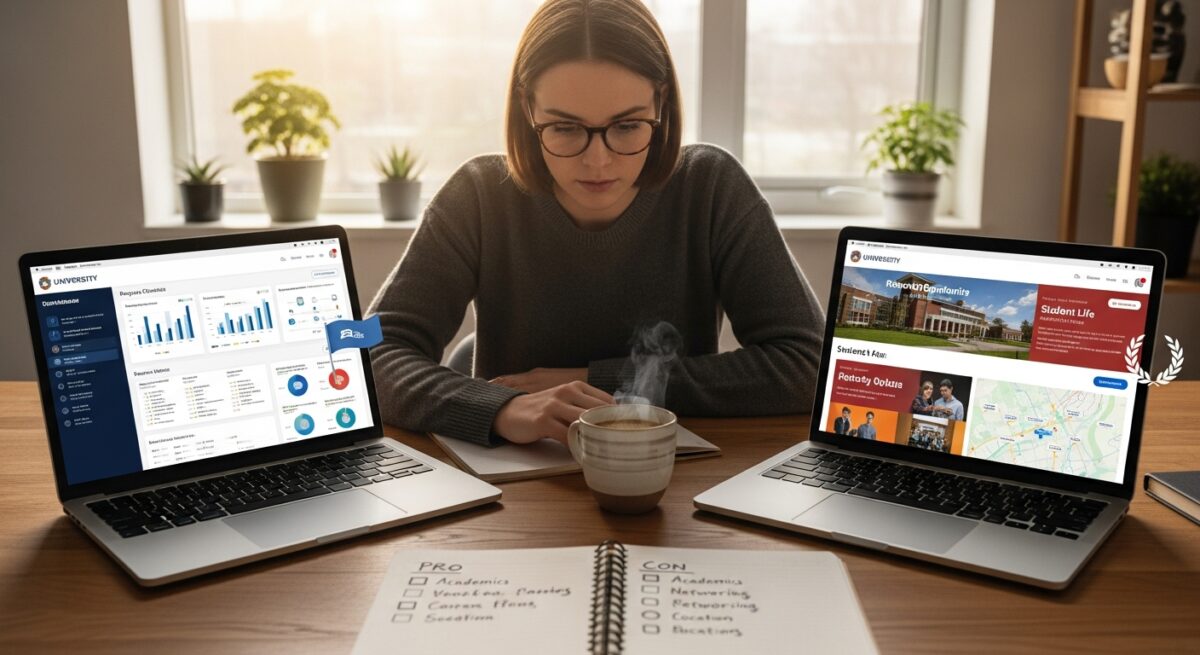
Choosing an online degree is a significant investment in your future, but the sheer number of programs can make the decision feel overwhelming. Unlike simply picking a major on a traditional campus, selecting an online degree requires evaluating a unique set of factors that directly impact your learning experience, finances, and career trajectory. A strategic, side-by-side comparison is not just helpful, it is essential to ensure you enroll in a program that offers legitimate value, fits your lifestyle, and delivers the credentials employers respect. This guide provides a comprehensive framework for comparing online college degrees, moving beyond superficial marketing to assess the critical elements that define educational quality and return on investment.
Establishing Your Personal Comparison Criteria
Before you even look at a single program website, you must define what success means for you. This personal framework will serve as your filter, helping you quickly identify programs that align with your goals and discard those that do not. Start by asking foundational questions about your career objectives. Are you seeking a promotion within your current field, a complete career change, or meeting the minimum educational requirement for a licensed profession? The answer will dictate whether you need a highly specialized degree or a broader, more flexible one.
Next, conduct an honest assessment of your learning style and life logistics. Online learning demands high self-discipline and time management. Do you prefer structured deadlines or a self-paced environment? How many hours per week can you realistically dedicate to coursework amidst work and family commitments? Also, consider your financial parameters. Determine your budget, including how much you can pay out-of-pocket and how much you may need in loans or scholarships. This upfront clarity transforms the comparison process from a passive review of brochures into an active, targeted search. For a deeper dive into finding quality programs that fit a budget, our resource on affordable accredited online colleges offers valuable strategies.
The Non-Negotiables: Accreditation and Institutional Reputation
In the world of online education, accreditation is the cornerstone of legitimacy. This is the first and most critical filter in your comparison. Accreditation means an independent agency has evaluated the institution or program and found it meets defined standards of quality. There are two primary types: institutional and programmatic. Institutional accreditation applies to the entire university and is essential for federal financial aid, credit transfer, and employer recognition. Always verify that an online college is accredited by an agency recognized by the U.S. Department of Education or the Council for Higher Education Accreditation (CHEA).
Programmatic accreditation is specific to certain fields, such as business (AACSB), engineering (ABET), nursing (CCNE or ACEN), and counseling (CACREP). If you are entering a licensed or regulated profession, programmatic accreditation is often a requirement for sitting for licensure exams. Comparing degrees without verifying accreditation is a high-risk endeavor. Alongside formal accreditation, investigate the institution’s overall reputation. Look beyond marketing claims and examine factors like graduation rates, student support services, and the university’s history and standing in the traditional academic world. A well-established brick-and-mortar university with a robust online division often carries a different weight than a purely online institution.
Dissecting the Program Structure and Curriculum
Once you have a list of accredited contenders, dive into the specifics of how each program operates. The “online” label can encompass vastly different delivery models. Synchronous programs require you to log in for live lectures or seminars at scheduled times, offering more real-time interaction but less flexibility. Asynchronous programs allow you to complete coursework on your own schedule within set deadlines, ideal for those with irregular work hours. Many programs use a hybrid of both. You must compare which model suits your lifestyle.
The curriculum itself requires careful analysis. Obtain the full course sequence or degree plan for each program you are comparing. Look for the following key elements:
- Core Competencies: Do the required courses align directly with the skills demanded in your target job market?
- Specializations or Concentrations: Can you tailor the degree to a niche area, such as cybersecurity within an IT degree or marketing within an MBA?
- Practical Application: Does the program include capstone projects, internships, virtual labs, or case studies that build a portfolio?
- Technology Integration: What learning management system (e.g., Canvas, Blackboard) is used, and is it intuitive? Are there requirements for proprietary software or high-end hardware?
This granular comparison reveals which program offers the most relevant and practical education for your goals, not just a collection of courses.
Evaluating Cost, Financial Aid, and Total Value
The sticker price of an online degree can be misleading. An effective comparison must look at the total cost of attendance and the financial aid landscape. Start by identifying all cost components: tuition per credit hour, technology fees, graduation fees, and costs for textbooks or software. Some institutions offer flat-rate tuition for full-time online students, which can provide significant savings if you can handle a heavier course load. A crucial step is to calculate the total degree cost by multiplying the credit hour cost by the total credits required.
Financial aid availability is a major differentiator. Determine if the institution participates in federal financial aid programs (requiring the FAFSA). Compare scholarship opportunities specifically for online students, graduate assistantships, or employer tuition reimbursement partnerships. Furthermore, investigate the potential for transfer credits, which can dramatically reduce cost and time. Some universities are generous with accepting credits from prior learning assessments, community colleges, or other accredited institutions. The true value of a degree is a ratio of its total cost to the quality and marketability of the education it provides. The most expensive program is not automatically the best, nor is the cheapest always a bargain.
Assessing Student Support and Career Outcomes
The quality of an online program is profoundly reflected in the support systems it provides to distance learners. When comparing programs, proactively research the dedicated resources for online students. This is a critical area where programs diverge significantly. Look for access to academic advising, technical support (available 24/7), online tutoring, a digital library, and writing centers. A strong program will facilitate community through discussion forums, group projects, and virtual student organizations.
Perhaps the most telling comparison point is career support and outcomes. Investigate whether the online program’s career services department is available to remote students. Services to look for include virtual career counseling, resume reviews tailored to your field, online job fairs, and networking opportunities with alumni. Ask the admissions office for data on graduate outcomes: job placement rates, average salaries for graduates, and notable employers who hire from the program. This data, when available, provides concrete evidence of the degree’s return on investment. For example, if you are considering a psychology degree, understanding these support structures and outcomes is vital, as detailed in our article on selecting the best online colleges for a psychology degree.
Frequently Asked Questions
How do I know if an online degree will be respected by employers?
Employer respect hinges primarily on accreditation and institutional reputation. Degrees from regionally accredited, well-known non-profit universities are widely accepted. Increasingly, employers focus on the skills and competencies you gain rather than the delivery method.
Is it better to choose a program from a public or private university?
Both can be excellent. Public universities often offer lower tuition, especially for in-state online students. Private universities may offer more specialized programs or unique scheduling flexibility. The decision should come down to cost, program fit, and accreditation, not simply the public/private designation.
What is the most overlooked factor when comparing online degrees?
The level of faculty interaction and their credentials. Research who teaches the courses. Are they the same professors who teach on-campus? Do they have relevant industry experience? The quality of instructor engagement is a major driver of learning satisfaction.
Can I transfer credits between online programs?
Transferability is never guaranteed and is always at the discretion of the receiving institution. However, credits from a regionally accredited online program are far more likely to transfer than those from a nationally accredited or unaccredited school. Always get transfer credit pre-approval in writing.
How important is the technology platform used by the online college?
Very important. A clunky, unreliable learning management system can hinder your education. Many colleges offer demo courses or tours. If possible, test the platform’s interface on your devices to ensure it is user-friendly and stable.
Comparing online college degrees is a deliberate process that pays long-term dividends. By methodically evaluating accreditation, curriculum, cost, support, and outcomes, you move from a position of uncertainty to one of informed confidence. The right program is not merely the one with the most appealing website, but the one that demonstrably connects your current situation to your future aspirations. Use this framework to ask pointed questions, demand clear data, and ultimately select an online degree that is a strategic stepping stone in your career journey, providing not just a credential, but a transformative educational experience.