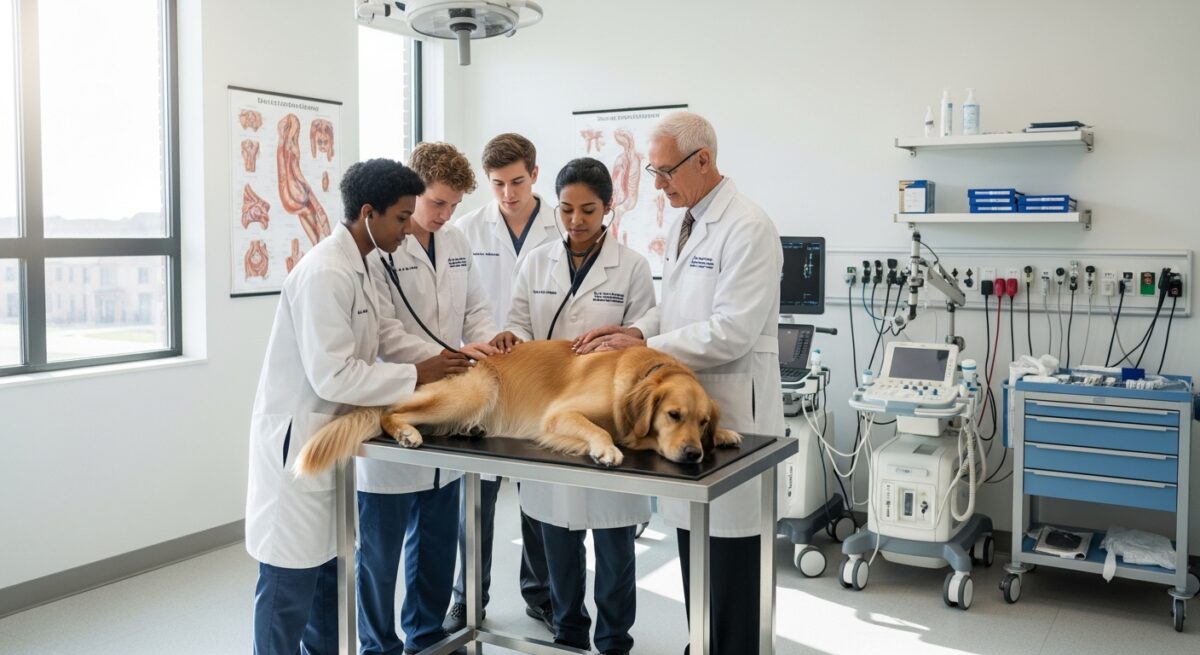
Choosing the right veterinary school is one of the most consequential decisions a future veterinarian will make. With dozens of accredited programs across the United States, each offering unique strengths in clinical training, research opportunities, and specialization tracks, the selection process can feel overwhelming. This ranking guide for top veterinary schools is designed to simplify that decision by breaking down what matters most: accreditation standards, admissions competitiveness, curriculum quality, and career outcomes. Whether you are a high school student mapping out a pre-vet pathway or a career changer seeking a second degree, understanding how to evaluate these programs will put you on a faster, more confident path to becoming a veterinarian.
The veterinary profession demands rigorous academic preparation, clinical endurance, and a deep commitment to animal health. Veterinary schools are not one-size-fits-all. Some excel in large animal medicine, others in small animal practice, wildlife conservation, or biomedical research. By examining the key factors that define program excellence, you can match your personal interests and career goals with the institution that will best support your growth. This guide covers the leading programs, admission strategies, financial considerations, and answers to frequently asked questions to help you navigate this important journey.
What Defines a Top Veterinary School?
Rankings can be helpful, but they are only one piece of the puzzle. A truly top veterinary school is one that aligns with your professional ambitions and provides the resources, faculty expertise, and clinical caseload necessary to develop competent, compassionate veterinarians. Several core criteria separate the best programs from the rest:
- Accreditation by the AVMA Council on Education (COE): This is non-negotiable. Graduation from an AVMA-accredited school is required to sit for the North American Veterinary Licensing Examination (NAVLE) and practice in the United States.
- Clinical training opportunities: Look for schools with a teaching hospital that sees a high volume and wide variety of cases, including small animals, equine, food animals, and exotics.
- Board certification pass rates: High pass rates on specialty board exams indicate strong didactic and clinical preparation.
- Research funding and facilities: Programs with robust research programs offer more opportunities for students interested in academic or industry careers.
- Student support and wellness resources: Veterinary school is demanding. Schools with strong mental health services, mentoring programs, and academic advising help students thrive.
Accreditation is the foundational requirement. The AVMA COE evaluates schools on a nine-year cycle, ensuring that curricula, facilities, faculty, and student services meet national standards. A school that loses or is at risk of losing accreditation should be approached with extreme caution, as it may jeopardize your ability to obtain licensure. For a broader perspective on how academic program rankings work across different fields, you can explore our analysis of top architecture schools ranking guide 2026, which applies similar evaluation principles to another competitive discipline.
Leading Veterinary Schools in the United States
Cornell University College of Veterinary Medicine
Cornell consistently ranks among the top vet schools globally. Located in Ithaca, New York, it offers a rigorous DVM program with strong emphasis on research and clinical excellence. The college operates the Cornell University Hospital for Animals, which handles over 100,000 patient visits annually, providing students with unmatched hands-on experience. Cornell also offers combined degree programs (DVM/PhD, DVM/MPH) for those pursuing dual careers in research and public health. Admission is highly competitive, with an acceptance rate typically below 10 percent. In-state tuition is available to New York residents through a contract college arrangement, while out-of-state students pay significantly higher rates.
University of California, Davis School of Veterinary Medicine
UC Davis is another perennial leader, particularly known for its large animal and equine programs. The school’s veterinary teaching hospital is one of the largest in the world, and its proximity to California’s diverse agricultural industry offers exceptional training in food animal medicine. UC Davis also excels in wildlife health and conservation medicine through its Karen C. Drayer Wildlife Health Center. The school admits approximately 120 students per year from over 600 applicants, making it one of the most selective programs. California residents benefit from substantially lower tuition, but non-residents can establish residency after one year under certain conditions.
Colorado State University College of Veterinary Medicine and Biomedical Sciences
Colorado State is renowned for its integrated approach to veterinary education, combining strong clinical training with cutting-edge research. The James L. Voss Veterinary Teaching Hospital sees over 40,000 cases annually, and the school’s oncology, orthopedics, and neurology programs are nationally recognized. CSU also offers a unique Professional Veterinary Medicine (PVM) program that emphasizes team-based learning and early clinical exposure. The school is particularly attractive to students interested in biomedical research, as it houses the Center for Companion Animal Studies and the Flint Animal Cancer Center. Out-of-state tuition is high, but the school offers several merit-based scholarships and a resident tuition waiver for high-achieving non-residents.
University of Pennsylvania School of Veterinary Medicine
Penn Vet is the only veterinary school located in the Ivy League and benefits from its affiliation with the University of Pennsylvania Health System, fostering strong collaborations in comparative medicine and translational research. The school operates two campuses: the Philadelphia campus focusing on small animals and equine, and the New Bolton Center campus specializing in large animal medicine and field service. Penn Vet’s DVM program is rigorous, with a strong emphasis on problem-based learning and clinical reasoning. The school also offers a unique VMD-PhD program for students committed to academic careers. Admission is highly selective, and tuition is among the highest in the nation, though generous financial aid packages are available for qualifying students.
North Carolina State University College of Veterinary Medicine
NC State has risen rapidly in national rankings due to its innovative curriculum and state-of-the-art facilities. The Randall B. Terry, Jr. Companion Animal Veterinary Medical Center is a model of modern veterinary care, and the school’s emphasis on interprofessional education prepares students for collaborative practice. NC State also offers strong programs in zoological medicine and aquatic animal health. The school admits about 100 students per year, with a preference for North Carolina residents. Out-of-state students can apply and may qualify for a limited number of non-resident seats. The school’s location in the Research Triangle provides additional opportunities for internships and collaborations with pharmaceutical and biotech companies.
How to Evaluate Veterinary Schools Beyond Rankings
Rankings from sources like U.S. News & World Report and the National Research Council provide a useful starting point, but they do not tell the whole story. When building your personal ranking guide for top veterinary schools, consider these additional factors:
- Clinical rotation requirements: How many weeks of clinical rotations are required? Are there opportunities for externships at private practices or specialty hospitals?
- Specialty tracks and electives: Does the school offer formal tracks in areas like shelter medicine, public health, or laboratory animal medicine?
- Student-to-faculty ratio: Lower ratios generally mean more individualized mentorship and hands-on lab time.
- Career placement services: What percentage of graduates secure employment or internships within six months of graduation? Does the school host a career fair?
- Location and cost of living: Veterinary school is expensive. Factor in rent, transportation, and other living expenses when comparing total cost of attendance.
Financial aid is another critical consideration. Many top veterinary schools offer scholarships, grants, and work-study programs. Some also have loan forgiveness programs for graduates who enter public service or underserved areas. Be sure to complete the Free Application for Federal Student Aid (FAFSA) as early as possible and inquire about school-specific aid opportunities. Additionally, some states participate in the Veterinary Medicine Loan Repayment Program (VMLRP), which provides up to $25,000 per year in loan repayment for veterinarians working in designated shortage areas.
Admissions Tips for Competitive Veterinary Programs
Gaining admission to a top veterinary school requires strategic planning and a strong application. Here are key steps to strengthen your candidacy:
First, focus on your academic foundation. Most top vet schools require prerequisites in biology, chemistry, physics, and math, often with laboratory components. A strong GPA, typically 3.5 or higher on a 4.0 scale, is expected for competitive programs. However, grades alone are not enough. Veterinary schools use a holistic review process that considers animal experience, veterinary experience, research experience, letters of recommendation, and your personal statement.
Second, accumulate meaningful animal and veterinary experience. This can include shadowing a veterinarian, volunteering at an animal shelter, working on a farm, or participating in wildlife rehabilitation. Schools want to see that you have a realistic understanding of the profession and a demonstrated commitment to animal care. Aim for at least 200-400 hours of veterinary experience under the supervision of a licensed veterinarian.

Third, prepare thoroughly for the Graduate Record Examination (GRE) or the Veterinary College Admission Test (VCAT), depending on the schools you are applying to. While some programs have moved away from standardized test requirements, many still consider them. A competitive score can strengthen your application, especially if your GPA is slightly below average.
Finally, craft a compelling personal statement that explains your motivation for becoming a veterinarian and why you are drawn to specific schools. Be specific about the programs, faculty, or clinical opportunities that align with your goals. Generic statements are easily spotted and rarely impress admissions committees.
Financial Planning for Veterinary Education
The cost of veterinary school has risen significantly over the past decade. Tuition and fees at top veterinary schools range from approximately $25,000 per year (in-state, public) to over $60,000 per year (out-of-state or private). When you add living expenses, books, equipment, and travel, the total cost of a four-year DVM program can exceed $300,000.
To manage these costs, start with in-state public schools, which typically offer the lowest tuition. If you are willing to relocate, consider states with reciprocal tuition agreements or schools that offer resident tuition after the first year. Scholarships from the American Veterinary Medical Foundation (AVMF), the American Association of Equine Practitioners (AAEP), and state veterinary medical associations can also help. Many students also take advantage of federal Direct Unsubsidized Loans and Grad PLUS loans, though these should be used judiciously.
Loan repayment assistance programs (LRAPs) are available through the National Institutes of Health (NIH) for veterinarians pursuing research careers, as well as through the U.S. Department of Agriculture (USDA) for those in food animal practice. Some states also offer their own loan repayment programs for veterinarians working in underserved areas. Research these options early so you can factor them into your decision.
For students seeking additional financial support and educational resources, exploring external funding sources can be valuable. One such resource is scholarship.education, which provides information on various scholarship opportunities for students in health professions and other fields.
Frequently Asked Questions
What is the hardest veterinary school to get into?
Admission difficulty varies, but schools like Cornell, UC Davis, and the University of Pennsylvania consistently report the lowest acceptance rates, often below 10 percent. These programs attract many applicants with stellar GPAs and extensive experience, making them extremely competitive.
Can you become a veterinarian without going to a top-ranked school?
Absolutely. Any AVMA-accredited veterinary school provides the education necessary to become a licensed veterinarian. Many successful veterinarians graduated from mid-tier or regional programs. What matters most is your clinical skills, board exam performance, and professional network. A top-ranked school may offer more research opportunities or prestige, but it does not guarantee success.
How long does it take to become a veterinarian?
Typically, it takes eight years: four years of undergraduate study (often with a pre-veterinary focus) followed by four years of veterinary school. Some students complete undergraduate prerequisites in three years, and some veterinary programs offer accelerated tracks. After graduation, many veterinarians complete a one-year internship before entering practice or pursuing a residency.
What is the difference between a DVM and a VMD?
Both degrees are equivalent and qualify graduates to practice veterinary medicine. DVM stands for Doctor of Veterinary Medicine, while VMD stands for Veterinariae Medicinae Doctoris. The VMD is awarded only by the University of Pennsylvania School of Veterinary Medicine. Both degrees require the same NAVLE examination for licensure.
Are online veterinary degrees legitimate?
No accredited veterinary school offers a fully online DVM degree. Veterinary medicine requires extensive hands-on clinical training that cannot be replicated online. However, some schools offer online master’s degrees or certificate programs in veterinary-related fields such as public health or animal science. Always verify accreditation before enrolling in any program.
Choosing the right veterinary school is a deeply personal decision that balances academic excellence, financial reality, and career aspirations. Use the criteria in this ranking guide to create a shortlist of programs that match your goals, then visit campuses, talk to current students, and evaluate each school’s culture and resources. The investment of time and money is substantial, but with careful planning and a clear sense of purpose, you can find a top veterinary school that sets you up for a rewarding career caring for animals and advancing the field of veterinary medicine.