The choice to pursue an online degree is a major investment in your future, offering unprecedented flexibility and access. However, the sheer volume of programs can be overwhelming, turning opportunity into uncertainty. A strategic and thorough assessment of online degree options is the critical first step to ensure your investment aligns with your professional goals, learning style, and financial reality. This process moves beyond a simple program search; it is a deliberate evaluation of institutional reputation, program design, support structures, and long-term value. By learning how to properly assess these components, you can confidently select a program that not only grants a credential but effectively propels your career forward.
Establishing Your Personal Success Criteria
Before diving into catalogs and college websites, you must define what success means for you. This personal framework will serve as your filter, helping you quickly eliminate mismatched options and focus on programs with genuine potential. Start by articulating your primary goal. Are you seeking a promotion within your current field, a complete career change, or the foundational knowledge to launch your own venture? Your answer will dictate the level of degree (associate, bachelor’s, master’s, doctorate), the specific discipline, and the desired skillset.
Next, conduct a realistic audit of your current lifestyle and resources. How many hours per week can you genuinely dedicate to coursework, accounting for work, family, and other commitments? What is your total budget, including tuition, fees, books, and potential lost income? Be brutally honest. Overestimating your available time or underestimating costs is a common pitfall that leads to stress and attrition. Finally, reflect on your learning preferences. Do you thrive in structured, deadline-driven environments with weekly assignments, or do you prefer self-paced, competency-based models where you progress upon mastery? Understanding these personal parameters is the non-negotiable foundation of a smart assessment.
The Cornerstone of Credibility: Accreditation and Quality
In the realm of online education, accreditation is not just a checkbox; it is the bedrock of quality and legitimacy. Attending a properly accredited institution ensures that your degree will be recognized by employers, other academic institutions, and professional licensing bodies. The most important distinction is between regional and national accreditation. Regional accreditation is the older, more prestigious standard held by most traditional nonprofit universities, including their online divisions. National accreditation is often held by for-profit and vocational institutions. While both are valid, credits from nationally accredited schools do not always transfer to regionally accredited ones, a crucial consideration if you plan to pursue further education.
Beyond institutional accreditation, many specific programs hold specialized or professional accreditation from industry bodies. For example, a business school may be accredited by the AACSB, an engineering program by ABET, or a counseling program by CACREP. This specialized stamp of approval signals that the curriculum meets rigorous industry standards. When you assess online degree options, verifying accreditation status should be your first objective. You can typically find this information in the “About Us” or “Accreditation” section of a university’s website, and it should be verifiable through the Council for Higher Education Accreditation (CHEA) database. Never proceed with a program that is vague or evasive about its accreditation status.
Deconstructing the Program Structure and Curriculum
Once you’ve established a list of accredited contenders, drill down into the specifics of how each program operates. The “classroom” experience in online education varies widely. Investigate the delivery format: is it primarily asynchronous (learn on your own schedule via pre-recorded lectures and discussion boards) or synchronous (required live login for virtual classes at set times)? Many programs use a hybrid model. Assess which format aligns with your schedule and learning style. Then, examine the curriculum in detail. Look beyond the degree name and read the course descriptions. Do the classes teach the specific, up-to-date skills you need? A strong curriculum balances theoretical foundations with practical, applied projects.
Pay close attention to faculty credentials. Are courses taught by the same professors who teach on campus, or by adjunct instructors? While both can be excellent, understanding who your instructors will be offers insight into the academic rigor and industry connections of the program. Furthermore, investigate the technology platform used (e.g., Canvas, Blackboard, proprietary systems) and the technical support available. You’ll want a platform that is intuitive and reliable, with 24/7 tech support to minimize frustrations. This deep dive into program mechanics will reveal whether a program’s design supports or hinders your path to completion. For example, if you are exploring business fields, our analysis of the best online universities for business highlights how program structures can differ significantly between institutions.
Evaluating Student Support and Career Outcomes
The isolation of online learning can be a significant challenge, making robust student support services not a luxury, but a necessity for success. A high-quality online program invests in replicating the support ecosystem of a physical campus. As you assess online degree options, proactively research the support structures in place. Does the program assign you a dedicated academic advisor from enrollment to graduation? Is there proactive tutoring, writing center support, and library services tailored for distance learners? Perhaps most importantly, what is the strategy for fostering interaction and community? Look for programs that facilitate virtual study groups, peer networking events, and accessible professor office hours.
Perhaps the most critical evaluation metric is career outcomes. A credible program is transparent about how it prepares graduates for the workforce. Scrutinize the career services offered to online students. Do they provide virtual career counseling, resume reviews, mock interviews, and exclusive job boards? Ask for data on graduate employment rates, average salary increases, and notable employer partners. If a program cannot or will not provide this information, consider it a red flag. Your goal is to emerge with more than a diploma; you want a tangible career advantage. This focus on outcomes is a key factor in guides that evaluate specific fields, such as when determining the best online colleges for a psychology degree, where licensure preparation and practicum support are paramount.
Conducting a Comprehensive Cost-Benefit Analysis
The financial commitment of an online degree requires a clear-eyed analysis that looks beyond the advertised tuition rate. Start by calculating the total direct cost: tuition per credit hour, mandatory fees, technology fees, and the cost of textbooks or software. Be sure to understand the payment structure. Some programs charge a flat rate per term, while others charge per credit. This distinction can make a significant difference if you plan to take more or fewer credits in a given semester.
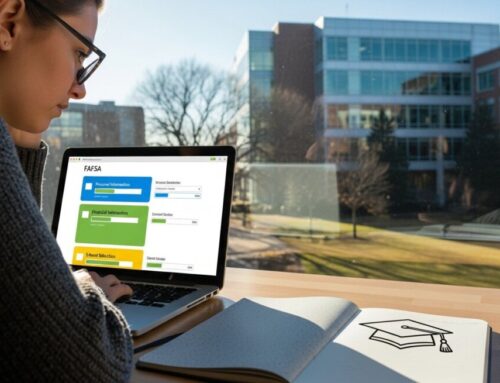
Next, explore all avenues to reduce this net cost. Investigate financial aid eligibility by completing the FAFSA. Research institutional scholarships and grants specifically for online or adult learners. Many employers offer tuition reimbursement programs, which can be a major benefit. Additionally, look for programs that offer credit for prior learning through portfolio assessments or standardized exams like CLEP, which can save you both time and money. To make a final comparison, create a simple spreadsheet for your top programs, listing total cost, potential financial aid, and the estimated time to completion. The true value of a degree is measured by the return on investment: the career advancement and earning potential it unlocks versus the total cost incurred. For those seeking efficient pathways, exploring 2-year online degrees that pay well can be an excellent starting point for this cost-benefit exercise.
Taking the Final Steps: Verification and Enrollment
After narrowing your choices to one or two finalists, transition from research to verification. This is the stage where you move from published information to personal interaction. The most important step is to speak directly with an admissions counselor for the online program. Prepare a list of specific questions that were not answered on the website. Ask about typical weekly time commitments for courses, the profile of your potential classmates, and the details of the application process. Request to speak with a current student or a recent graduate. Their firsthand perspective on the program’s challenges, support, and real-world impact is invaluable.
If possible, request access to a demo course or a recording of a typical lecture to experience the learning platform firsthand. Finally, meticulously review all enrollment agreements and financial aid offers before committing. Ensure you understand withdrawal policies, transfer credit acceptance, and any conditional admission requirements. By taking these proactive verification steps, you confirm your assessment and enter the program with confidence, fully prepared for the journey ahead.
Choosing an online degree is a profound decision with lasting implications. A methodical assessment, grounded in your personal goals and extending to every facet of program quality, support, and cost, transforms uncertainty into a strategic plan. By investing time in this due diligence process, you empower yourself to select a program that is not merely convenient, but transformative, providing the knowledge, credentials, and network to achieve your definition of career success. The right program is out there; a disciplined approach is your map to finding it.