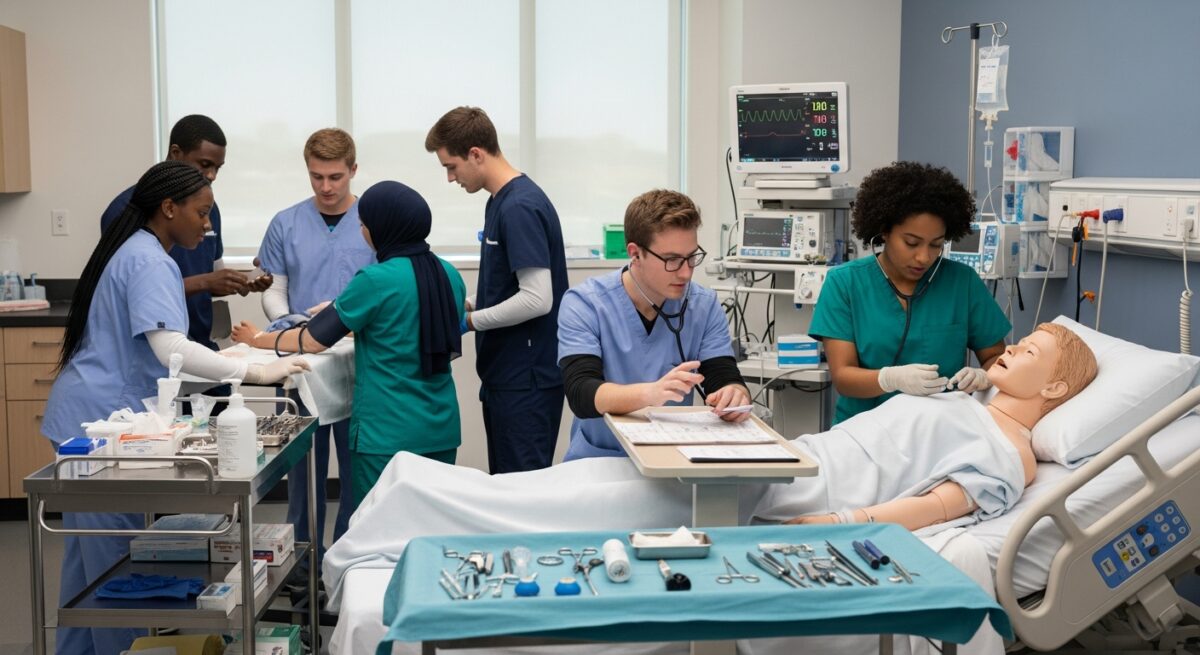
Choosing the right nursing college is one of the most critical decisions a future healthcare professional will make. It sets the foundation for clinical skills, critical thinking, and career trajectory in a field that demands both compassion and competence. With hundreds of accredited nursing programs across the country, prospective students face a complex landscape of options, from prestigious research universities to specialized teaching hospitals and flexible online pathways. The best nursing colleges in the US for future nurses are distinguished not just by rankings, but by their outcomes: NCLEX-RN pass rates, clinical placement success, faculty expertise, and the career readiness of their graduates. This guide delves into the essential criteria for evaluating top nursing programs and provides a framework for selecting a school that aligns with your professional aspirations and learning style.
Defining Excellence in Nursing Education
What truly makes a nursing college “top-tier”? Beyond name recognition, several concrete factors determine the quality of education and the value of the degree you will earn. Accreditation is the non-negotiable starting point. Programs should hold accreditation from either the Commission on Collegiate Nursing Education (CCNE) or the Accreditation Commission for Education in Nursing (ACEN). This ensures the curriculum meets national standards and is a prerequisite for federal financial aid and, crucially, for sitting for the NCLEX-RN licensure exam. A consistently high NCLEX-RN first-time pass rate (well above the national average) is the most direct indicator of a program’s effectiveness in preparing students for real-world nursing practice.
Equally important is the depth and diversity of clinical experiences. The best nursing schools have strong partnerships with major medical centers, community hospitals, clinics, and public health organizations. This provides students with hands-on training across various specialties, from pediatrics and oncology to mental health and critical care. Faculty credentials are another key differentiator. Look for programs where instructors are not only advanced-degree holders but also actively engaged in clinical practice or nursing research, bringing current, real-world insights into the classroom. Finally, consider support structures: robust academic advising, dedicated NCLEX preparation resources, career placement services, and support for students navigating the intense demands of nursing school. For those comparing different academic tracks, from ADN to BSN and beyond, comprehensive school-level degree guidance can be an invaluable resource in understanding the long-term career implications of each pathway.
Key Factors in Selecting Your Nursing Program
Your personal goals, circumstances, and learning preferences must guide your choice among the top nursing colleges. A one-size-fits-all approach does not work in nursing education. The first major decision point is program type and entry level. Are you seeking a traditional four-year Bachelor of Science in Nursing (BSN), which is increasingly becoming the industry standard for hospital roles? Are you a college graduate in another field looking for an accelerated BSN (ABSN) program? Or perhaps you are starting with an Associate Degree in Nursing (ADN) at a community college with plans to later pursue an RN-to-BSN online completion? Each path has distinct advantages in terms of time, cost, and career entry points.
Location and format are also paramount. Do you thrive in a hands-on, immersive campus environment, or do you require the flexibility of a hybrid or online nursing program? Many top nursing colleges now offer reputable online RN-to-BSN or even direct-entry MSN programs, but ensure any online program includes robust arrangements for in-person clinical rotations in your geographic area. Financial investment is a serious consideration. Compare tuition rates, but also look holistically at the total cost of attendance and the availability of scholarships, grants, and work-study programs specifically for nursing students. Some hospitals offer tuition reimbursement or loan forgiveness in exchange for a service commitment after graduation, which can significantly offset costs.
To systematically evaluate your options, consider these core components:
- Accreditation Status: Confirm active CCNE or ACEN accreditation.
- NCLEX Pass Rates: Seek programs with a consistent 3-year average pass rate of 90% or higher.
- Clinical Partnerships: Research the variety and prestige of clinical sites used by the program.
- Student Support Metrics: Investigate graduation rates, job placement rates, and availability of tutoring or counseling.
- Program Fit: Assess curriculum focus, class size, faculty accessibility, and alignment with your career interests (e.g., research, public health, acute care).
Profiles of Leading Nursing Programs and Their Distinctions
While rankings fluctuate, certain institutions are perennially recognized for their leadership in nursing education, research, and clinical innovation. It is important to examine what makes each of these top nursing programs unique. The University of Pennsylvania School of Nursing, for instance, is consistently ranked at the very top for its research funding, its focus on healthcare leadership, and its global health initiatives. Students benefit from direct access to the Hospital of the University of Pennsylvania, a premier academic medical center. Johns Hopkins School of Nursing is synonymous with evidence-based practice and public health innovation, with unparalleled opportunities in international nursing and health policy.
On the West Coast, the University of California, San Francisco (UCSF) School of Nursing stands out for its graduate-level focus (it offers only master’s and doctoral degrees) and its deep integration with one of the world’s leading health sciences campuses. For students seeking a world-class education within a large public university system, the University of Washington School of Nursing and the University of Michigan School of Nursing offer exceptional BSN and advanced practice programs with strong ties to regional healthcare networks and a emphasis on community health. Duke University School of Nursing is renowned for its accelerated BSN and advanced practice programs, particularly its nurse anesthesia and oncology specialties, leveraging the resources of the Duke University Health System.
These schools represent just a sample of the excellence available. Many outstanding public regional universities and private colleges offer exceptionally strong, accredited nursing colleges that may provide smaller cohorts, more personalized attention, and lower student debt, all while achieving superb NCLEX pass rates and graduate outcomes. The “best” school is ultimately the one that best fits the individual student’s professional vision and practical constraints.
Navigating Admissions and Preparing for Success
Admission to top nursing programs is highly competitive. Preparation should begin early. For traditional BSN programs, a strong high school transcript with advanced courses in sciences (biology, chemistry, physics) and mathematics is essential. Most programs require a minimum GPA, often 3.5 or higher, for serious consideration. Standardized test scores (SAT/ACT) may be required, though many schools are moving toward test-optional policies. Beyond academics, admissions committees look for demonstrated empathy, leadership, and commitment to service. Meaningful volunteer work in a healthcare setting, such as a hospital, hospice, or clinic, is a significant advantage.
For accelerated second-degree or direct-entry MSN programs, the undergraduate GPA, particularly in prerequisite science courses (anatomy, physiology, microbiology, statistics), is critically important. These programs often require a prior bachelor’s degree with a minimum 3.0 GPA and specific prerequisite completion with grades of B or better. All applicants should craft a compelling personal statement that articulates a clear, authentic motivation for pursuing nursing, reflecting on specific experiences that shaped this decision. Strong letters of recommendation from science professors or healthcare supervisors who can attest to your work ethic, character, and aptitude for the field are vital components of a successful application.
Frequently Asked Questions
Is a BSN really necessary, or can I start with an ADN?
While you can become a licensed RN with an ADN, the healthcare industry strongly favors the BSN degree. Many major hospital systems, especially Magnet-recognized hospitals, require or strongly prefer BSN-prepared nurses for hire. An ADN can be a cost-effective starting point, but you should plan to enroll in an RN-to-BSN program shortly after beginning your career.
How important is the prestige of the nursing school for my career?
While graduating from a highly-ranked school can open doors, especially for competitive graduate programs or research roles, your licensure (NCLEX pass), clinical skills, and experience are ultimately more important to most employers. A graduate from a well-regarded regional program with a high NCLEX pass rate and strong clinical training will be very competitive in the job market.
What is the difference between CCNE and ACEN accreditation?
Both are nationally recognized accreditors for nursing programs. CCNE typically accredits bachelor’s and graduate degree programs, while ACEN accredits all levels, including associate degrees. There is no significant quality difference from an employer or licensure perspective; the key is that the program holds one of these accreditations.
Can I work while in a top nursing program?
It is extremely challenging, especially in accelerated or rigorous traditional BSN programs with demanding clinical schedules. Most programs strongly advise against full-time work. Some students manage part-time, flexible jobs, but your primary focus must be on the academic and clinical rigor of the program.
What are the key questions to ask on a nursing school tour?
Ask about student-to-faculty ratios in clinical settings, how clinical placements are assigned, what NCLEX preparation resources are provided, what the typical graduate’s student debt load is, and what specific support services exist for students who are struggling academically.
The journey to becoming a nurse begins with a strategic choice in education. By prioritizing accredited programs with proven outcomes, strong clinical partnerships, and a supportive learning environment, you invest in more than a degree, you invest in your future capacity to provide exceptional patient care. Thorough research and honest self-assessment will lead you to the nursing college where you can best develop the knowledge, skills, and resilience required for this rewarding profession.