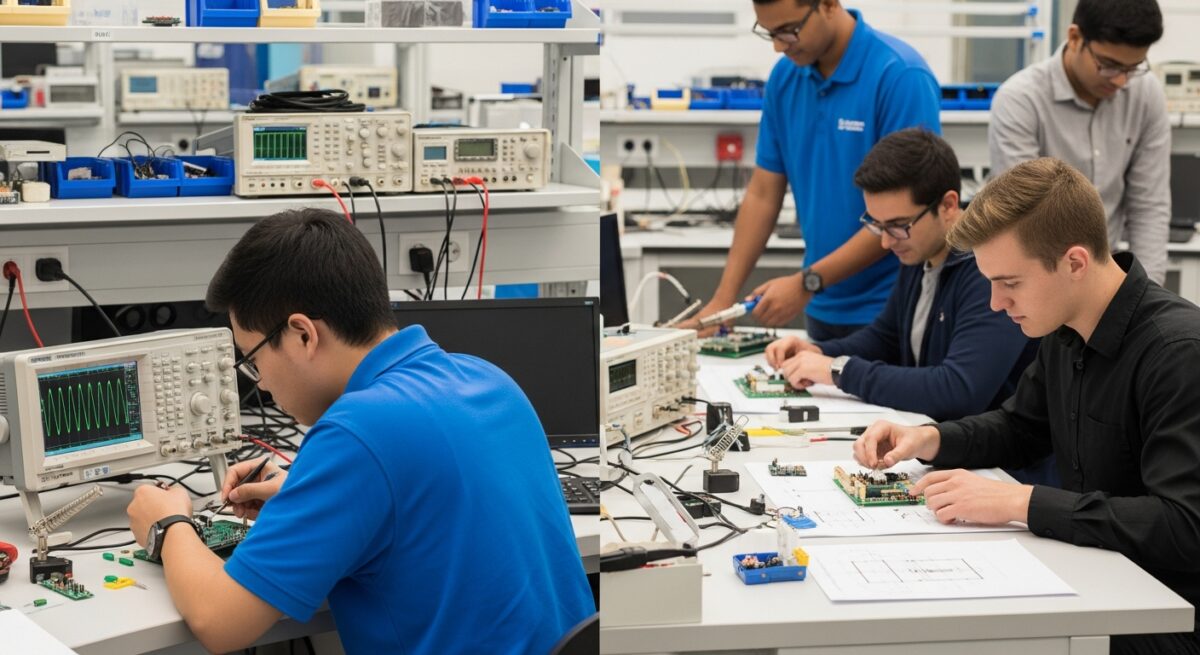
Choosing the right university for electronic engineering is one of the most important decisions a student can make. This field drives innovation in everything from consumer electronics to aerospace systems. With so many options available, prospective students need clear, reliable information to compare programs. This article provides a detailed look at the best universities for electronic engineering programs, focusing on academic reputation, research opportunities, and career outcomes. Whether you are a high school student planning your applications or a career changer seeking a new path, this guide will help you understand what makes a program stand out.
What Defines a Top Electronic Engineering Program?
Not all electronic engineering programs are created equal. The best universities for electronic engineering share several key characteristics. First, they offer a curriculum that balances theoretical foundations with hands-on laboratory experience. Students should expect to study circuit analysis, signal processing, embedded systems, and electromagnetic theory. Second, top programs have faculty who are active researchers, often publishing in leading journals and securing patents. Third, strong industry connections provide internship and job placement opportunities. Finally, accreditation from ABET (Accreditation Board for Engineering and Technology) is essential, as it ensures the program meets rigorous professional standards.
When evaluating electronic engineering colleges, look for programs that offer specialization tracks. Common areas include microelectronics, communications systems, control systems, and power electronics. A program that allows you to tailor your studies to your interests will better prepare you for a specific career. Additionally, consider the university’s location. Schools in technology hubs like Silicon Valley, Boston, or Austin often provide easier access to internships at leading companies such as Intel, Texas Instruments, and Qualcomm.
Top Ranked Universities for Electronic Engineering
Massachusetts Institute of Technology (MIT)
MIT consistently ranks as one of the best universities for electronic engineering programs globally. The Department of Electrical Engineering and Computer Science (EECS) is renowned for its rigorous curriculum and groundbreaking research. Students benefit from world-class labs like the Microsystems Technology Laboratories and the Research Laboratory of Electronics. MIT’s strong ties to industry mean that many graduates secure positions at top tech firms or pursue entrepreneurial ventures. The program emphasizes project-based learning, with students building real devices from their first year.
Stanford University
Located in the heart of Silicon Valley, Stanford University offers an exceptional electronic engineering program. The School of Engineering provides a flexible curriculum that encourages interdisciplinary study. Students can combine electronic engineering with computer science, mechanical engineering, or even business. Stanford’s research output is immense, covering areas like nanoelectronics, photonics, and energy systems. The university’s location gives students unparalleled access to internships and jobs at companies like Apple, Google, and Hewlett-Packard. For those interested in entrepreneurship, Stanford’s StartX accelerator helps students launch their own companies.
University of California, Berkeley
UC Berkeley’s College of Engineering is another top choice for electronic engineering. The Department of Electrical Engineering and Computer Sciences (EECS) is known for its strong theoretical foundation and its emphasis on social impact. Research areas include robotics, wireless communications, and integrated circuits. Berkeley’s location in the San Francisco Bay Area provides excellent career opportunities. The program also offers a unique partnership with nearby Lawrence Berkeley National Laboratory, giving students access to advanced research facilities. Graduates are highly sought after by both startups and established corporations.
California Institute of Technology (Caltech)
Caltech offers a smaller, more intimate environment for studying electronic engineering. The Division of Engineering and Applied Science focuses on fundamental science and innovation. With a low student-to-faculty ratio, students receive personalized attention and mentorship. Caltech is particularly strong in areas like quantum electronics, optics, and microelectromechanical systems (MEMS). The Jet Propulsion Laboratory (JPL), which Caltech manages for NASA, provides unique opportunities for students to work on space missions and advanced robotics projects. This makes Caltech one of the top engineering universities for students interested in aerospace and defense.
Georgia Institute of Technology
Georgia Tech is a public research university that offers outstanding value for electronic engineering students. The School of Electrical and Computer Engineering (ECE) is one of the largest and most respected in the United States. The program offers numerous specializations, including digital signal processing, computer systems, and telecommunications. Georgia Tech’s cooperative education (co-op) program is among the best in the nation, allowing students to alternate semesters of study with paid work experience at companies like Delta Air Lines, AT&T, and Lockheed Martin. The university’s Atlanta location provides a vibrant tech scene with many job opportunities.
In our guide on Top Computer Engineering Programs: Best Universities Ranked, we explain how to compare these disciplines. For students weighing both fields, that resource offers additional context.
Specialized Programs and Emerging Fields
Beyond the traditional top universities, several schools excel in specialized areas of electronic engineering. Here are some notable examples:
- University of Illinois at Urbana-Champaign: Known for its power electronics and semiconductor research, this program is ideal for students interested in energy systems and chip design.
- University of Michigan, Ann Arbor: Offers a strong program in integrated circuits and microsystems, with excellent facilities for nanofabrication.
- Carnegie Mellon University: Combines electronic engineering with computer science and robotics, perfect for students interested in autonomous systems and artificial intelligence.
- Purdue University: A leader in communications and signal processing, with strong ties to the defense and aerospace industries.
These institutions represent some of the best electronic engineering colleges for students with specific research interests. When applying, consider the faculty members working in your area of interest and whether they are accepting graduate students. Visiting campus and speaking with current students can also provide valuable insights into the program’s culture and strengths.
Online and Flexible Options for Electronic Engineering
For students who need flexibility, many top engineering universities now offer online or hybrid programs. Arizona State University (ASU) provides a fully online Bachelor of Science in Electrical Engineering that is ABET-accredited. The program uses interactive labs and virtual simulations to provide hands-on experience. University of Florida also offers an online Master of Science in Electrical and Computer Engineering, allowing working professionals to advance their careers. These programs are ideal for career changers or students who cannot relocate. However, it is important to verify that the online program has the same accreditation and faculty as the on-campus version. For more information on affordable online degrees, you can visit College and Tuition, a resource that helps students compare costs and program quality.
Career Outcomes and Salary Expectations
Graduates from the best universities for electronic engineering programs enjoy strong career prospects. According to the U.S. Bureau of Labor Statistics, employment of electrical and electronics engineers is projected to grow at an average rate over the next decade. Median annual wages for electrical engineers are around $110,000, with top earners in the semiconductor and aerospace industries making significantly more. Graduates from top programs often command higher starting salaries. For example, MIT and Stanford graduates in electronic engineering frequently receive offers exceeding $120,000 per year, not including signing bonuses and stock options. Common employers include Apple, Amazon, Boeing, Northrop Grumman, and Tesla. Career changers who complete a master’s degree from a reputable program can also expect a substantial salary increase.
Frequently Asked Questions (FAQ)
What is the difference between electrical engineering and electronic engineering?
Electrical engineering is a broader field that includes power systems, motors, and large-scale electrical infrastructure. Electronic engineering focuses more on smaller-scale circuits, semiconductors, and devices like computers and smartphones. However, many university programs combine both disciplines into a single Electrical and Electronic Engineering (EEE) degree.
Do I need a master’s degree to work in electronic engineering?
Many entry-level positions require only a bachelor’s degree. However, a master’s degree can open doors to more advanced roles in research and development, as well as higher salaries. Some specialized fields, such as microelectronics or RF engineering, strongly prefer candidates with graduate degrees.
How important is ABET accreditation for an electronic engineering program?
ABET accreditation is very important. It ensures that the program meets quality standards and is recognized by employers and professional licensing boards. Graduating from a non-accredited program can make it difficult to obtain a Professional Engineer (PE) license or be considered for certain jobs.
Can I study electronic engineering online?
Yes, several accredited universities offer online electronic engineering programs. These programs are ideal for working professionals or students who need flexibility. Be sure to choose a program that is ABET-accredited and offers the same curriculum as the on-campus version.
What skills are most important for success in electronic engineering?
Strong analytical and problem-solving skills are essential. Proficiency in mathematics, especially calculus and differential equations, is required. Practical skills in circuit design, programming (C, Python, MATLAB), and familiarity with simulation tools like SPICE and LabVIEW are also highly valued. Good communication skills are important for working in teams and presenting technical information.
Choosing the right school is a personal decision that depends on your academic goals, career aspirations, and financial situation. Each of the universities discussed offers unique strengths. By focusing on accredited programs with strong industry ties and research opportunities, you can position yourself for a successful and rewarding career in electronic engineering. Take the time to visit campuses, speak with faculty and students, and review program details carefully. The investment in your education will pay dividends for decades to come.