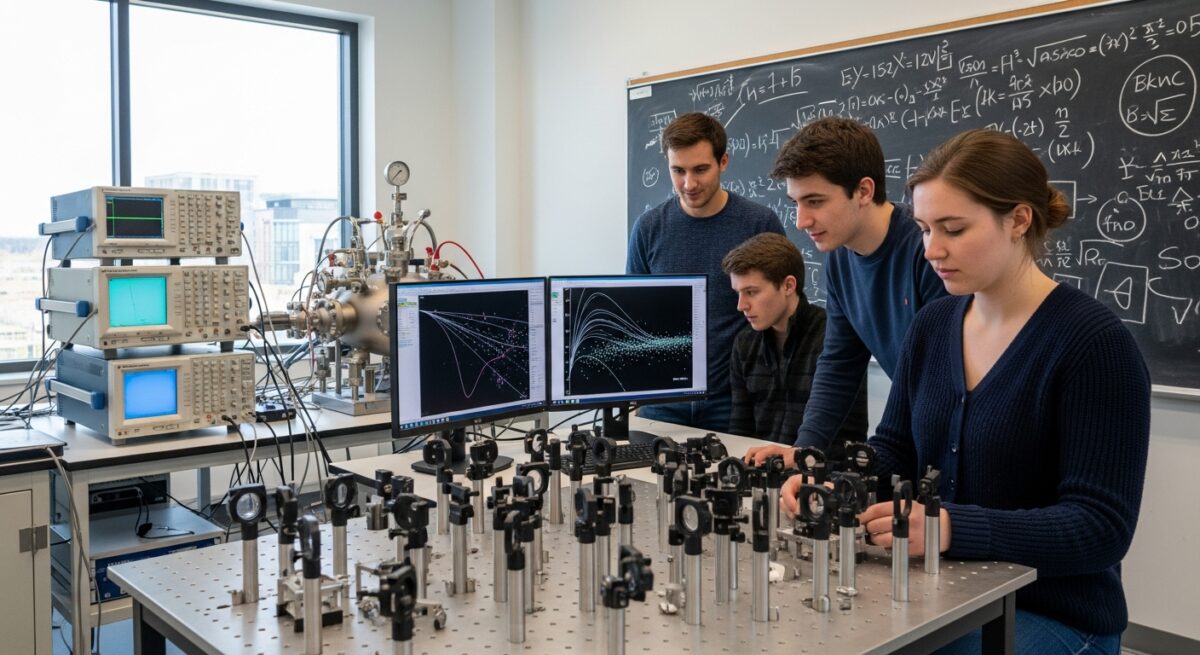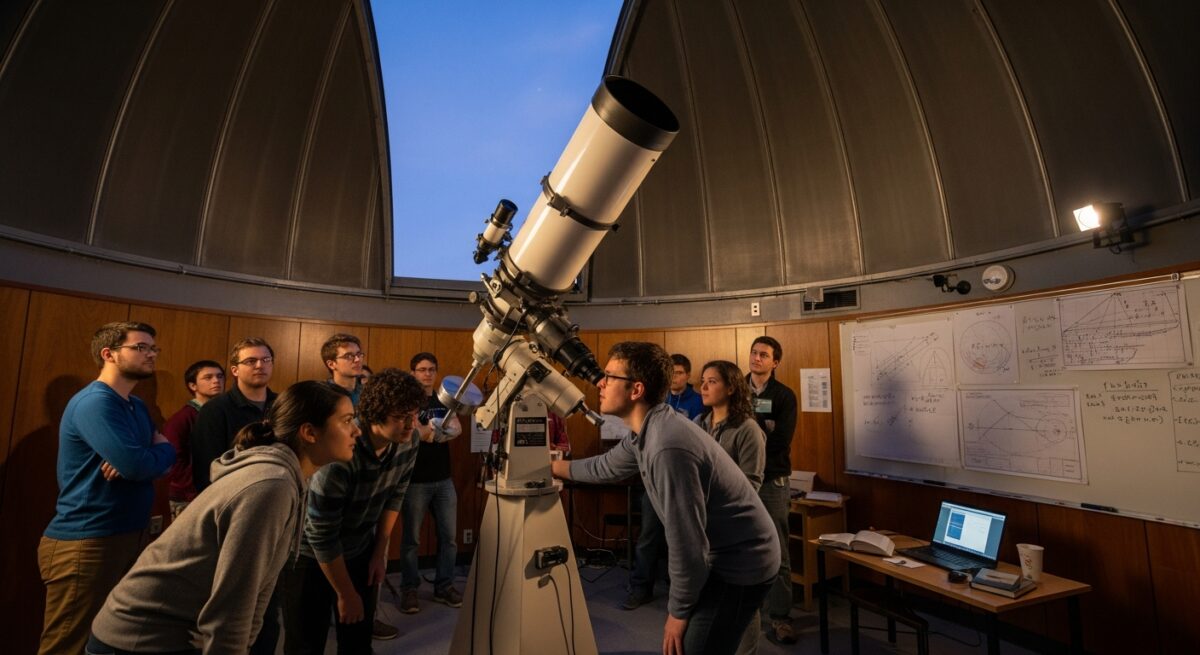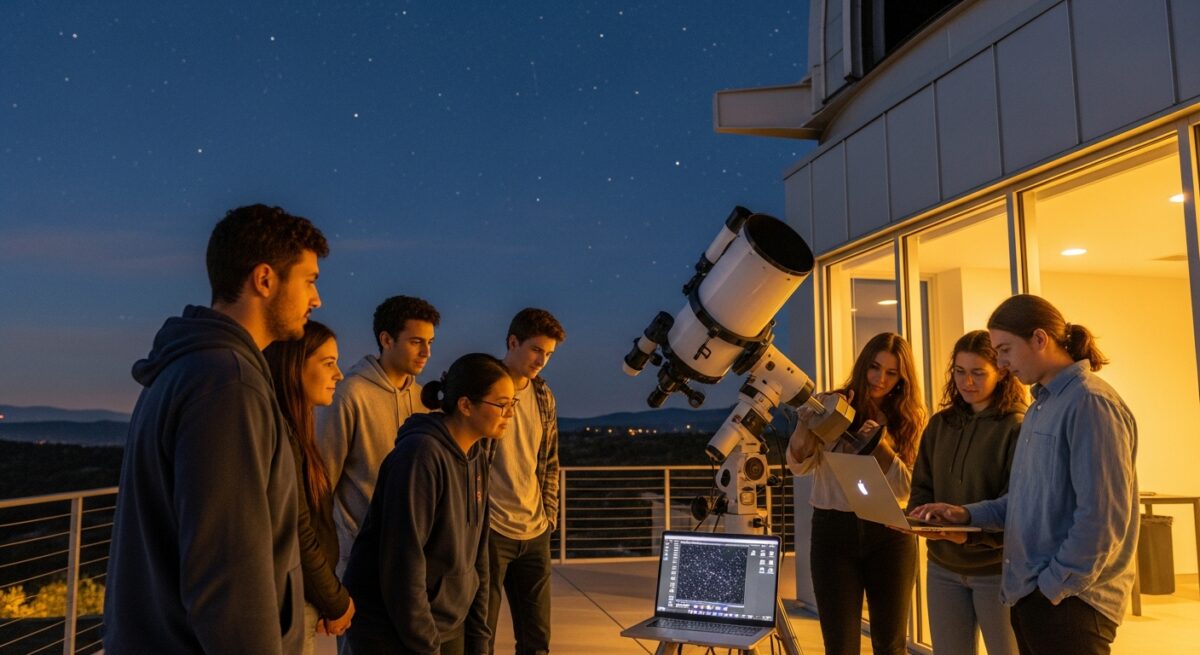
The universe has always called to humanity, drawing our gaze upward to the stars, planets, and galaxies beyond. For students who feel that pull, choosing the right institution is the first critical step toward a career in astronomy and space science. Whether you dream of discovering exoplanets, designing spacecraft, or researching black holes, the best universities for astronomy and space science offer rigorous academic programs, cutting-edge research facilities, and access to world-renowned faculty. This article explores the top universities globally that excel in these fields, providing detailed insights into what makes each program exceptional and how you can position yourself for success.
Astronomy and space science are interdisciplinary fields that combine physics, mathematics, engineering, and computer science. The leading programs not only teach theoretical knowledge but also provide hands-on experience with telescopes, satellites, and data analysis tools. As the space industry grows rapidly, driven by both government agencies like NASA and private companies like SpaceX and Blue Origin, the demand for skilled astronomers and space scientists is increasing. Selecting a university with strong industry connections and research output can significantly enhance your career prospects.
What Defines a Top Astronomy Program?
Before diving into specific universities, it is important to understand the criteria that make a program stand out. The best universities for astronomy share several common characteristics. First, they have faculty members who are active researchers publishing regularly in top-tier journals. Second, they provide access to observatories, laboratories, and computational resources that enable students to conduct original research. Third, they offer a curriculum that balances core physics with specialized astronomy courses. Fourth, they have strong placement records, with graduates securing positions in academia, research institutes, and the space industry.
Additionally, many top programs offer undergraduate research opportunities from the first year. This hands-on experience is invaluable for building skills and strengthening graduate school applications. Internships at observatories, planetariums, or space agencies also provide real-world exposure. Finally, consider the size of the program. Smaller programs may offer more personalized mentorship, while larger programs provide a wider range of research areas and networking opportunities.
Top Universities in the United States
The United States is home to many of the world’s leading astronomy and space science programs. These institutions benefit from proximity to NASA centers, national observatories, and a robust space industry. Below are some of the top choices.
California Institute of Technology (Caltech)
Caltech is synonymous with space science. Its Jet Propulsion Laboratory (JPL), which Caltech manages for NASA, is a hub for robotic space exploration. Students have opportunities to work on missions to Mars, the outer planets, and beyond. The astronomy faculty includes Nobel laureates and pioneers in exoplanet research, gravitational wave astronomy, and cosmology. The undergraduate program is small and intensely focused, with many students publishing papers before graduation. Caltech’s strong emphasis on physics and mathematics ensures a deep theoretical foundation.
Massachusetts Institute of Technology (MIT)
MIT’s Department of Physics and its Kavli Institute for Astrophysics and Space Research offer exceptional programs. MIT has a long history of space science, from the Apollo program to current missions like TESS (Transiting Exoplanet Survey Satellite). Students can engage in hands-on projects through the MIT Space Lab and the Lincoln Laboratory. The curriculum integrates engineering and physics, making it ideal for those interested in instrumentation and spacecraft design. MIT also has strong connections with industry and government labs.
University of Arizona
The University of Arizona is a powerhouse in astronomy and planetary science. Its Steward Observatory and Lunar and Planetary Laboratory are world-class facilities. The university operates multiple observatories, including the Mount Lemmon SkyCenter and the Large Binocular Telescope. Students have direct access to these telescopes for research. The undergraduate program offers concentrations in astronomy, astrophysics, and planetary science. The university’s strength in optical and infrared astronomy, as well as its involvement in the James Webb Space Telescope, provides unparalleled research opportunities.
University of California, Berkeley
UC Berkeley’s Astronomy Department is consistently ranked among the best. The university is home to the Space Sciences Laboratory, which builds instruments for NASA missions and conducts research in heliophysics, astrophysics, and planetary science. Berkeley also benefits from its proximity to the SETI Institute and Lawrence Berkeley National Laboratory. The faculty includes experts in dark energy, galaxy formation, and exoplanet characterization. Students can participate in the Berkeley Astronomy Summer Research Program and the Undergraduate Research Apprentice Program.
Top Universities in Europe
Europe also has several world-renowned institutions for astronomy and space science. Many of these universities collaborate with the European Space Agency (ESA) and operate major observatories.
University of Cambridge (UK)
The University of Cambridge’s Institute of Astronomy is one of the oldest and most prestigious in the world. Its faculty includes leading figures in cosmology, stellar evolution, and planetary science. The Cavendish Laboratory, which covers physics, also contributes to astrophysics research. Cambridge students benefit from the university’s extensive library resources and the nearby Mullard Radio Astronomy Observatory. The undergraduate program in natural sciences allows specialization in astrophysics in the later years.
University of Oxford (UK)
Oxford’s Department of Physics includes a strong astrophysics group. The university is involved in major international projects like the Square Kilometre Array (SKA) and the Euclid mission. Oxford’s tutorial system provides personalized attention, and students have access to the Oxfordshire countryside’s dark skies for observational projects. The program emphasizes theoretical astrophysics, computational modeling, and data analysis.
Leiden University (Netherlands)
Leiden University’s Leiden Observatory is the oldest university observatory in the world, founded in 1633. It remains a leading center for astronomical research, particularly in galaxy formation, black hole physics, and astrochemistry. The university has strong ties with ESA and the Netherlands Institute for Space Research (SRON). Instruction is in English, making it accessible to international students. Leiden’s small class sizes foster close mentorship.
Top Universities in Asia and Australia
The Asia-Pacific region is investing heavily in space science, with several universities emerging as global leaders.
University of Tokyo (Japan)
The University of Tokyo’s Department of Astronomy and its Research Center for the Early Universe are at the forefront of Japanese space science. Japan’s space agency, JAXA, collaborates closely with the university. Students can work on missions like Hayabusa2 and the SPICA space telescope. The curriculum covers observational astronomy, space engineering, and theoretical astrophysics.
For students who want to explore more options, our guide on Top Astrophysics Colleges for Space Science Degrees provides a broader list of excellent programs across the United States, including many that offer strong financial aid packages.
Australian National University (ANU)
ANU’s Research School of Astronomy and Astrophysics is located at the Mount Stromlo Observatory. The university operates the Siding Spring Observatory, which hosts several major telescopes. ANU is a key partner in the Giant Magellan Telescope project. The program is research-intensive, and students often begin contributing to real projects in their first year. The environment is collaborative, with a strong focus on optical and infrared astronomy.
Specialized Programs and Emerging Fields
Beyond traditional astronomy, several specialized programs are gaining prominence. Astrobiology, which studies the potential for life elsewhere in the universe, is offered at universities like the University of Washington and Penn State. Space engineering programs, such as those at Embry-Riddle Aeronautical University and the University of Colorado Boulder, combine astronomy with aerospace engineering. Data science is also becoming integral, as modern astronomy generates massive datasets that require sophisticated computational analysis.
When evaluating programs, consider your specific interests. If you are fascinated by exoplanets, look for universities with active research in that area, such as the University of Geneva (Switzerland) or the University of Texas at Austin. If you are drawn to space policy and exploration, consider programs that offer internships with NASA or ESA.
Financial Considerations and Scholarships
Pursuing a degree in astronomy and space science can be expensive, but many universities offer generous financial aid. In the United States, need-based aid is available at top private universities like Caltech and MIT. Public universities like the University of Arizona and UC Berkeley also offer merit-based scholarships for out-of-state and international students. In Europe, tuition fees are often lower, and many countries offer scholarships for international students. For example, the Dutch government provides the Holland Scholarship, and the UK offers the Chevening Scholarship for graduate students.
For a comprehensive overview of how to fund your education, our student funding & tuition guide covers everything from federal loans to private scholarships and payment plans.
Frequently Asked Questions
What is the difference between astronomy and astrophysics?
Astronomy is the broader study of celestial objects and phenomena, focusing on observation and classification. Astrophysics is a branch of astronomy that applies the laws of physics to understand the physical properties and processes of these objects. Most modern astronomy programs incorporate both, but some universities offer separate degrees. For example, a Bachelor of Science in Astronomy may emphasize observation and data analysis, while an Astrophysics degree focuses more on theoretical modeling.
What kind of career can I expect with a degree in astronomy?
Graduates find careers in academia (professors and researchers), government agencies (NASA, ESA, national observatories), the private space industry (SpaceX, Blue Origin, Planet Labs), and data science. Many also work in science communication, planetariums, and education. The analytical and problem-solving skills learned are highly valued in finance and technology sectors.
Are there online programs for astronomy and space science?
While most top programs are on-campus due to the need for laboratory and observatory access, several universities offer online astronomy courses and even master’s degrees. For example, the University of Colorado Boulder offers an online Master of Science in Astronomy. However, for undergraduate degrees, on-campus programs are strongly recommended for networking and research opportunities.
How important is research experience for graduate school?
Research experience is extremely important for admission to top graduate programs. Admissions committees look for evidence of independent research, such as a senior thesis or a published paper. Participating in summer research programs, like the Research Experiences for Undergraduates (REU) program in the United States, can significantly strengthen your application.
What high school subjects should I focus on?
Focus on mathematics (through calculus), physics, and computer science. Chemistry and English are also important for writing reports and communicating findings. Taking advanced placement (AP) or International Baccalaureate (IB) courses in these subjects can give you a head start.
Choosing the right university is a personal decision that depends on your academic interests, career goals, and financial situation. The best universities for astronomy and space science offer a combination of strong academics, research opportunities, and supportive communities. By carefully evaluating each program’s strengths and aligning them with your own aspirations, you can find the perfect launchpad for your journey into the cosmos. The stars are waiting, and the right education will help you reach them.