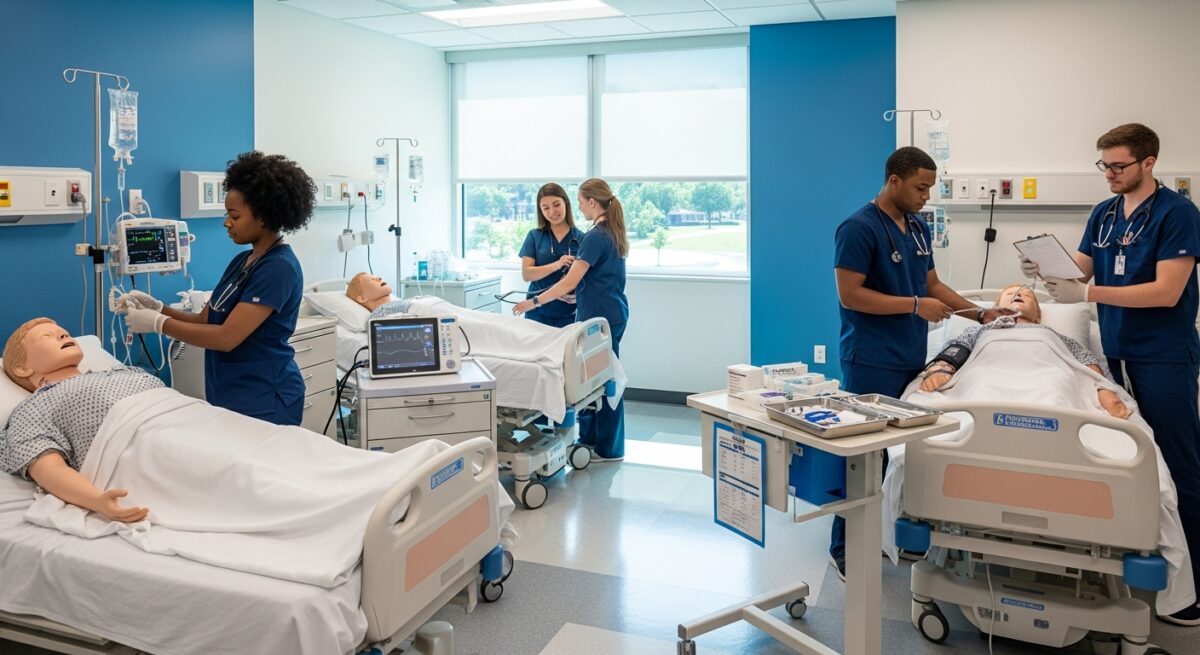
Choosing the right nursing school is one of the most consequential decisions you will make for your career. The best undergraduate nursing programs combine rigorous academics, hands-on clinical training, and high NCLEX pass rates to prepare you for a rewarding profession. But with hundreds of options available, how do you identify the programs that truly stand out? This guide breaks down what makes a nursing program exceptional, how to evaluate your choices, and which schools consistently rank among the best.
What Defines the Best Undergraduate Nursing Programs?
When we talk about the best undergraduate nursing programs, we are looking at more than just prestige. A top-tier program must demonstrate excellence in several key areas that directly affect your education and career trajectory. These factors include accreditation, NCLEX pass rates, clinical placement quality, faculty credentials, and graduation rates.
Accreditation is non-negotiable. Look for programs accredited by the Commission on Collegiate Nursing Education (CCNE) or the Accreditation Commission for Education in Nursing (ACEN). These accreditations ensure the curriculum meets national standards and that you will be eligible for licensure and advanced study. The NCLEX pass rate is another critical metric. This exam is your gateway to becoming a registered nurse, and a high first-time pass rate indicates the program adequately prepares its students for the rigors of the exam.
Clinical training is where theory meets practice. The best programs have strong partnerships with hospitals and healthcare facilities, allowing you to rotate through diverse settings like medical-surgical units, pediatrics, maternity, and critical care. These rotations are not just hours to log; they are opportunities to develop your clinical judgment and professional identity under the guidance of experienced preceptors. Furthermore, consider the faculty. Are they active practitioners or researchers in their field? Do they bring real-world insights into the classroom? A faculty that is both knowledgeable and accessible can transform your learning experience.
Graduation rates and employment outcomes are also telling. Programs with high graduation rates often have robust student support services, such as tutoring, advising, and mental health resources. Employment rates within six months of graduation, while not always published, are a strong indicator of employer trust in the program’s graduates. As you compare schools, use these criteria as your checklist to move beyond rankings and find a program that fits your personal and professional goals.
For a deeper look at how clinical training factors into college selection, you can explore our guide on top colleges with good nursing programs and clinical training.
Top Ranked Schools for Nursing in 2026
While rankings vary between publications, certain universities consistently appear at the top due to their comprehensive strengths. These institutions offer a blend of academic excellence, cutting-edge research, and extensive clinical networks. Here are some of the most frequently cited leaders in undergraduate nursing education.
University of Pennsylvania (Penn Nursing)
Penn Nursing is often ranked as the number one undergraduate nursing program in the United States. Its location in Philadelphia provides students with access to prestigious medical centers like the Hospital of the University of Pennsylvania. The curriculum emphasizes a strong foundation in the sciences and liberal arts, with opportunities for research and global health experiences. Their BSN program is highly selective, attracting top students from across the country. Penn’s faculty includes leaders in nursing research, and students benefit from a collaborative, interdisciplinary learning environment.
Duke University
Duke’s School of Nursing is consistently ranked among the top in the nation. The program is known for its commitment to advancing health equity and its strong emphasis on simulation-based learning. Students at Duke benefit from the school’s close ties to Duke University Hospital and the broader Duke Health system, which offers diverse clinical placements. The curriculum integrates technology and case-based learning, preparing graduates to be critical thinkers and leaders. Duke also offers accelerated options for students who already hold a bachelor’s degree in another field.
Emory University
Emory’s Nell Hodgson Woodruff School of Nursing is another powerhouse, particularly strong in global health and emergency preparedness. Located in Atlanta, the program leverages its connections with the Centers for Disease Control and Prevention (CDC) and Emory Healthcare. Students have unique opportunities for public health integration and international clinical experiences. The school’s commitment to innovation in education is evident in its state-of-the-art simulation labs and its focus on interprofessional education, where nursing students learn alongside medical, public health, and other health professions students.
University of Michigan-Ann Arbor
The University of Michigan School of Nursing offers a top-ranked BSN program that is part of a large, research-intensive public university. Students benefit from a vast alumni network and access to the University of Michigan Health System, a leading academic medical center. The curriculum is known for its focus on evidence-based practice and leadership development. Michigan also offers a unique residential community and a strong commitment to diversity and inclusion in nursing.
Other Notable Programs
Beyond these leaders, several other schools deserve recognition for their standout nursing programs. The University of North Carolina at Chapel Hill offers a highly respected BSN with a strong focus on public health nursing. The Ohio State University combines a robust curriculum with extensive clinical opportunities across its large medical center. For students seeking a faith-based environment, Creighton University in Nebraska offers an excellent nursing program with a strong emphasis on service. Additionally, public institutions like the University of Washington and the University of California, Los Angeles (UCLA) offer top-tier programs that are accessible to in-state students and offer exceptional clinical training.
How to Choose the Right Program for You
Rankings are a useful starting point, but the best undergraduate nursing programs for you will depend on your individual circumstances, learning style, and career aspirations. A school’s prestige will not matter if you are not a good fit. Here is a practical framework to help you narrow down your options.

- Define Your Career Goals: Do you aspire to work in a fast-paced hospital setting, or are you drawn to community health? Are you interested in research or leadership? Some programs have specific strengths in areas like critical care, pediatrics, or health policy. Aligning your goals with a program’s focus can provide a significant advantage.
- Evaluate the Clinical Experience: Look beyond the number of clinical hours. Find out where those hours take place. Are they at a level one trauma center or a small community hospital? What is the student-to-faculty ratio during clinical rotations? Do you get to practice skills like starting IVs and administering medications? Ask about the variety of clinical sites and the level of hands-on responsibility you will have.
- Consider Location and Cost: This includes not just tuition but also cost of living. Attending a local public university can significantly reduce debt. Also, consider the local job market. Is the area known for hiring new graduates from the local program? Your network and internship opportunities often stem from the geographic location of your school.
- Review NCLEX Pass Rates and Resources: Most programs publish their NCLEX pass rates. A pass rate above 90% is a good sign. Also, investigate what support services are available for NCLEX preparation. Does the program offer review courses, practice exams, or mentorship? These resources can be invaluable as you approach graduation.
- Visit and Ask Questions: If possible, schedule a campus tour and sit in on a class. Talk to current students about their experiences. Ask about the rigor of the program, the level of faculty support, and the overall culture. This firsthand perspective can be more revealing than any brochure or website.
After this evaluation, you will likely have a shortlist of schools that meet your criteria. The next step is to prepare a strong application that highlights your academic record, relevant experience, and dedication to the nursing profession.
Accelerated and Online Options
Not all students follow the traditional four-year path. For those who have already completed a bachelor’s degree in another field, Accelerated Bachelor of Science in Nursing (ABSN) programs are a popular choice. These programs typically take 12 to 18 months of intensive, full-time study to complete. They are highly demanding but offer a fast track to a career in nursing. The best accelerated programs are those that maintain the same high standards as their traditional BSN programs, including clinical hours and NCLEX preparation. Examples include programs at Johns Hopkins University and Boston College.
Online BSN programs are also becoming more common, but they are not for everyone. Nursing requires substantial hands-on practice, so fully online programs are rare. Most online options are hybrid, combining online coursework with in-person clinical rotations that you arrange with local healthcare facilities. This model offers flexibility for students who need to work or who live in remote areas. However, you must be proactive in arranging clinical placements and be comfortable with a high degree of self-directed learning. When considering online options, ensure they hold the same accreditations and produce graduates with comparable NCLEX pass rates as traditional programs. For a comprehensive review of online degree options, you can refer to resources like Degrees Online to compare accredited programs.
Financial Aid and Return on Investment
Nursing school is a significant investment, but it is also one with a strong return. The median annual wage for registered nurses was over $80,000 in 2023, and the field is projected to grow much faster than average. However, tuition costs can vary dramatically between private and public institutions. It is crucial to understand the total cost of attendance, including tuition, fees, books, living expenses, and other supplies. Do not be afraid to ask about financial aid packages, scholarships, and work-study opportunities. Many hospitals also offer tuition reimbursement programs in exchange for a commitment to work for them after graduation.
When evaluating your return on investment, look beyond the starting salary. Consider the program’s reputation among employers. Graduating from a highly ranked program can open doors to competitive residency positions and prestigious healthcare systems. Strong alumni networks can also provide mentorship and job leads throughout your career. As you weigh your options, view the cost of your education as an investment in your long-term earning potential and professional satisfaction.
Frequently Asked Questions
What is the easiest way to get into a top nursing program?
There is no easy way. Top programs are highly selective, and you will need a strong high school GPA, competitive SAT or ACT scores (if required), and a compelling personal statement. Relevant volunteer experience in a healthcare setting can also strengthen your application. Focus on excelling in your science prerequisites and demonstrating your commitment to nursing.
How important is NCLEX pass rate when choosing a school?
It is very important. It is the most direct measure of a program’s ability to prepare you for the licensure exam. A high first-time pass rate (above 90%) indicates that the program’s curriculum and support systems are effective. Always verify this statistic with the school, as they are required to report it to state boards of nursing.
Can I become a nurse with an associate degree?
Yes, an Associate Degree in Nursing (ADN) is a viable path to becoming a registered nurse. ADN programs typically take two to three years and are often offered at community colleges, making them a more affordable option. However, many employers now prefer or require a BSN, and BSN-prepared nurses often have more opportunities for advancement and higher pay. Many ADN-prepared nurses choose to pursue an RN-to-BSN bridge program later in their careers.
What is the difference between a BSN and an entry-level MSN?
A BSN is a bachelor’s degree, while an entry-level MSN (ELMSN) is a master’s degree for individuals who have a bachelor’s degree in another field. An ELMSN is an accelerated path that allows you to become a nurse while also earning a graduate degree. These programs are more intensive and often focus on leadership or specialized clinical roles. They are a good option if you are certain you want to advance beyond a staff nurse position early in your career.
Making Your Final Decision
Choosing among the best undergraduate nursing programs is a personal decision. You should feel confident that your chosen school will not only provide you with a top-tier education but also support you as an individual. Look for a program that challenges you academically, provides diverse clinical experiences, and has a supportive community. Trust your instincts after visiting campuses and talking to students and faculty. Remember that your success in nursing is ultimately determined by your own dedication, resilience, and passion for patient care. The program you choose is the foundation, but you are the architect of your career.
As you move forward, keep in mind that the landscape of nursing education is always evolving. New programs emerge, and existing ones expand their offerings. Stay informed, ask questions, and be proactive in your search. By doing so, you will find a program that not only ranks highly but also feels like the right place for you to grow into the nurse you aspire to be.