Choosing the right doctoral program in brain science is one of the most consequential decisions a future researcher will make. The field of neuroscience has expanded rapidly over the past decade, driven by advances in imaging technology, computational modeling, and molecular biology. For students who want to contribute to this exciting frontier, identifying the best neuroscience PhD programs and research universities is the critical first step toward a successful academic career. This guide provides a comprehensive overview of top-tier programs, key factors to consider during your search, and actionable advice for strengthening your application.
What Makes a Neuroscience PhD Program Stand Out?
Not all doctoral programs are created equal. The best neuroscience PhD programs share several defining characteristics that set them apart from the rest. First and foremost, faculty expertise matters more than any other factor. You should look for departments where professors are actively publishing in high-impact journals and securing substantial research funding from agencies like the National Institutes of Health (NIH) or the National Science Foundation (NSF).
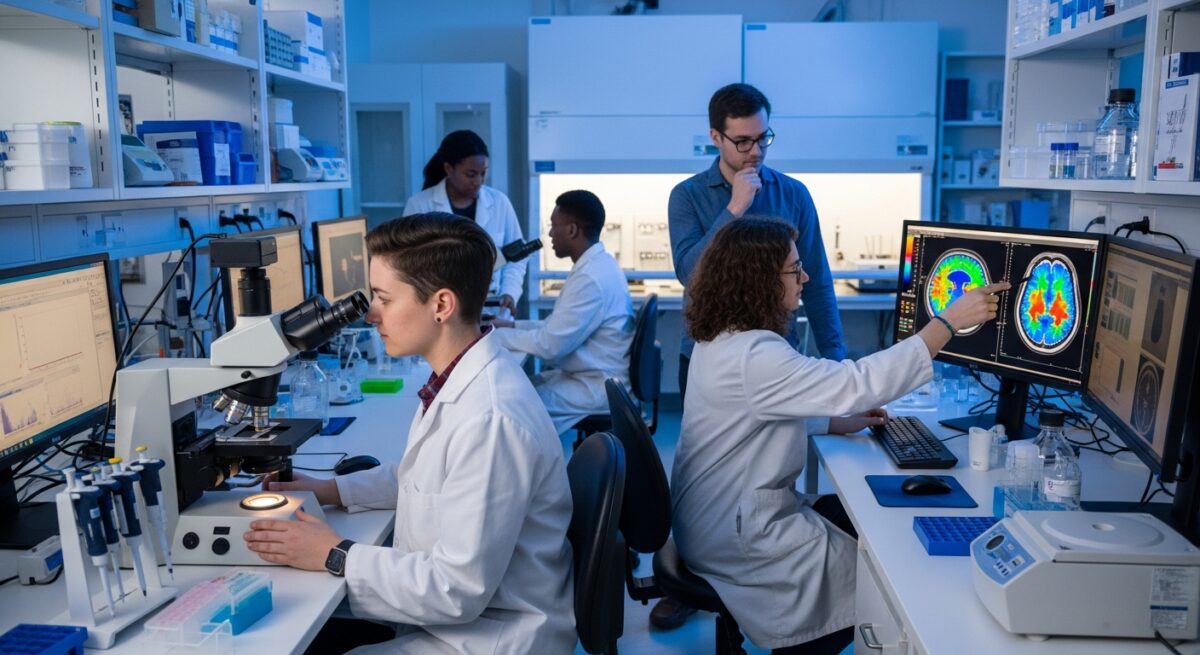
Second, the program’s infrastructure and resources play a vital role. Top-tier programs offer state-of-the-art core facilities for imaging, electrophysiology, genomics, and behavioral testing. They also provide dedicated career development offices that help students navigate the transition from graduate school to postdoctoral positions or industry roles. Finally, the collaborative culture within a program can make or break your graduate experience. Programs that encourage cross-disciplinary collaboration between neuroscientists, psychologists, engineers, and clinicians tend to produce more innovative research and better-trained graduates.
When evaluating neuroscience doctoral programs, pay close attention to the curriculum structure. Some programs offer a highly structured first year with core courses in cellular neuroscience, systems neuroscience, and computational methods. Others allow more flexibility, letting students design an individualized plan of study from day one. Both approaches have merits, but the key is finding a match for your learning style and research interests.
Top Research Universities for Neuroscience Doctoral Studies
Harvard University (Program in Neuroscience)
Harvard’s Program in Neuroscience consistently ranks among the world’s best. With over 100 faculty members spanning departments from molecular biology to cognitive science, students have access to an extraordinary breadth of expertise. The program emphasizes interdisciplinary training, and students often rotate through labs in the Medical School, the Faculty of Arts and Sciences, or affiliated hospitals like Massachusetts General Hospital and McLean Hospital. Harvard’s strong funding packages and extensive alumni network make it a top choice for aspiring neuroscientists.
Stanford University (Neurosciences Program)
Stanford’s Neurosciences Program is renowned for its strengths in systems and computational neuroscience. Located in the heart of Silicon Valley, the program benefits from close ties to the Stanford Artificial Intelligence Laboratory and the Bio-X initiative, which fosters collaboration between biologists, engineers, and computer scientists. Students can take advantage of the Wu Tsai Neurosciences Institute, a hub for cutting-edge research on brain function and dysfunction. Stanford’s culture of innovation and entrepreneurship also opens doors for students interested in neurotechnology startups.
University of California, San Francisco (Neuroscience Graduate Program)
UCSF is a powerhouse in translational neuroscience, with a focus on linking basic research to clinical applications. The program is unique because it is entirely graduate-focused, meaning there are no undergraduate neuroscience students competing for lab resources. UCSF’s faculty includes Nobel laureates and members of the National Academy of Sciences, and the program boasts exceptional training in molecular, cellular, and systems neuroscience. For students interested in neurodegenerative diseases, psychiatric disorders, or neural repair, UCSF is an outstanding choice among brain science PhD programs.
Massachusetts Institute of Technology (Department of Brain and Cognitive Sciences)
MIT’s Department of Brain and Cognitive Sciences offers a rigorous PhD program that integrates neuroscience with cognitive science and artificial intelligence. The department is home to the Picower Institute for Learning and Memory and the McGovern Institute for Brain Research, both of which provide world-class facilities and collaborative research environments. MIT’s emphasis on quantitative approaches makes it particularly attractive for students with strong backgrounds in mathematics, physics, or computer science who want to apply computational methods to neuroscience questions.
Johns Hopkins University (Neuroscience Department)
Johns Hopkins has one of the oldest and most respected neuroscience departments in the United States. The PhD program offers training across all major subfields, from molecular and cellular neuroscience to systems, cognitive, and computational neuroscience. Students benefit from the university’s strong medical school affiliation and its location in Baltimore, which provides access to diverse clinical populations for research. The program’s alumni have gone on to lead labs at top universities and research institutions worldwide.
How to Choose the Right Program for Your Career Goals
Selecting from the best neuroscience PhD programs requires careful self-assessment. Start by identifying your primary research interests. Do you want to study the molecular mechanisms of memory, the neural circuits underlying decision-making, or the computational principles that govern brain function? Different programs have different strengths, so matching your interests to a program’s faculty expertise is essential.
Next, consider the program’s training philosophy and career outcomes. Some programs are designed primarily to produce academic researchers, while others have stronger ties to industry and government labs. Look at where recent graduates have gone for postdoctoral positions or jobs. If you are interested in a non-academic career, check whether the program offers internships, industry partnerships, or career counseling for alternative paths.
Location and lifestyle also matter. Graduate school is a demanding multi-year commitment, and the environment where you live can significantly impact your well-being and productivity. Visit the campus if possible, talk to current students, and get a feel for the departmental culture. A supportive, collaborative environment can make the difference between a fulfilling graduate experience and a stressful one.
For a broader perspective on how neuroscience doctoral programs fit into the larger landscape of graduate education, you can explore our guide to college degree programs by field and career path, which discusses how advanced degrees align with various professional trajectories.
Application Strategies for Competitive Neuroscience PhD Programs
Admission to top neuroscience PhD programs is extremely competitive, with acceptance rates often below 10%. To stand out, you need a strong application that demonstrates both academic excellence and research potential. Here are key components to focus on:
- Research experience: Most successful applicants have at least two years of undergraduate research experience, often including a senior thesis or a summer internship. Ideally, you should have contributed to a project that resulted in a publication, a conference presentation, or a substantial poster.
- Letters of recommendation: These are arguably the most important part of your application. Choose recommenders who know you well and can speak to your research skills, intellectual curiosity, and perseverance. A glowing letter from a well-known scientist can carry significant weight.
- Personal statement: Your statement should articulate a clear research question that excites you and explain why the specific program you are applying to is the best place to pursue that question. Avoid generic statements; instead, mention specific faculty members and their work.
- GRE scores: Many programs have moved away from requiring the GRE, but some still consider it. Check each program’s requirements carefully. If the GRE is optional, focus your energy on other parts of the application.
- Grades and coursework: A strong GPA in relevant science courses (biology, chemistry, physics, math) is expected, but admissions committees often prioritize research experience over perfect grades.
After submitting your applications, prepare for interviews. Most top programs invite shortlisted candidates for a multi-day interview event where you will meet faculty, current students, and tour the facilities. Treat the interview as a two-way conversation: you are evaluating the program just as much as they are evaluating you. Ask thoughtful questions about mentorship style, funding stability, and student outcomes.
Funding and Financial Considerations
One of the most attractive aspects of top neuroscience PhD programs is that they typically provide full funding for all admitted students. Funding packages usually include a tuition waiver, health insurance, and a stipend for living expenses. Stipends vary by location and institution, but they generally range from $30,000 to $45,000 per year. Keep in mind that cost of living in cities like Boston, San Francisco, or New York is higher, so the real value of the stipend depends on local housing costs.
In addition to university funding, many students secure external fellowships such as the NSF Graduate Research Fellowship, the NIH Ruth L. Kirschstein Predoctoral Fellowship, or private foundation awards. These fellowships not only provide financial support but also add prestige to your CV. If you are interested in exploring additional educational opportunities or comparing different funding models, you can find helpful resources at scholarship.education, which offers information on various scholarship and funding options for graduate students.
It is also wise to consider the long-term financial implications of your graduate school choice. While the stipend during graduate school is modest, the earning potential after graduation varies significantly by career path. Academic postdoctoral positions typically pay less than industry jobs, but they offer valuable training and independence. A PhD from a top program can open doors to high-paying roles in biotech, pharmaceuticals, or neurotechnology, where starting salaries for neuroscientists with a PhD often exceed $100,000 per year.
Frequently Asked Questions
What undergraduate majors are best for neuroscience PhD programs?
Most successful applicants have backgrounds in neuroscience, biology, psychology, chemistry, physics, or engineering. Programs value interdisciplinary training, so courses in statistics, programming, and mathematics are also beneficial. Some students come from computer science or mathematics backgrounds and apply computational approaches to neuroscience questions.
How long does a neuroscience PhD typically take?
The average time to completion is 5 to 6 years. The first two years usually involve coursework and lab rotations, followed by 3 to 4 years of dissertation research. Some students finish in 5 years, while others take 6 or 7 if their projects are complex or encounter unexpected challenges.
Is it possible to switch research areas during graduate school?
Yes, many programs encourage exploration during the first year through lab rotations. By the second year, students typically choose a thesis lab, but it is not uncommon for students to shift their focus within a lab or even change labs if their interests evolve. However, major shifts late in the program can delay graduation.
What career options are available after a neuroscience PhD?
Graduates pursue careers in academic research (as postdocs and faculty), industry (biotech, pharmaceuticals, neurotechnology), government research labs (NIH, NASA), science communication, science policy, consulting, and teaching. The skills acquired during a PhD, including data analysis, critical thinking, and project management, are highly transferable.
Final Thoughts on Pursuing a Neuroscience Doctorate
Embarking on a PhD in neuroscience is a demanding but deeply rewarding journey. The best neuroscience PhD programs and research universities offer not only world-class training but also a supportive community of scholars who share your passion for understanding the brain. As you evaluate your options, prioritize programs that align with your research interests, provide strong mentorship, and offer a healthy work-life balance. Remember that the goal is not just to get into a prestigious program but to find an environment where you can thrive intellectually and personally. With careful planning and a strong application, you can join the next generation of scientists working to unravel the mysteries of the mind.