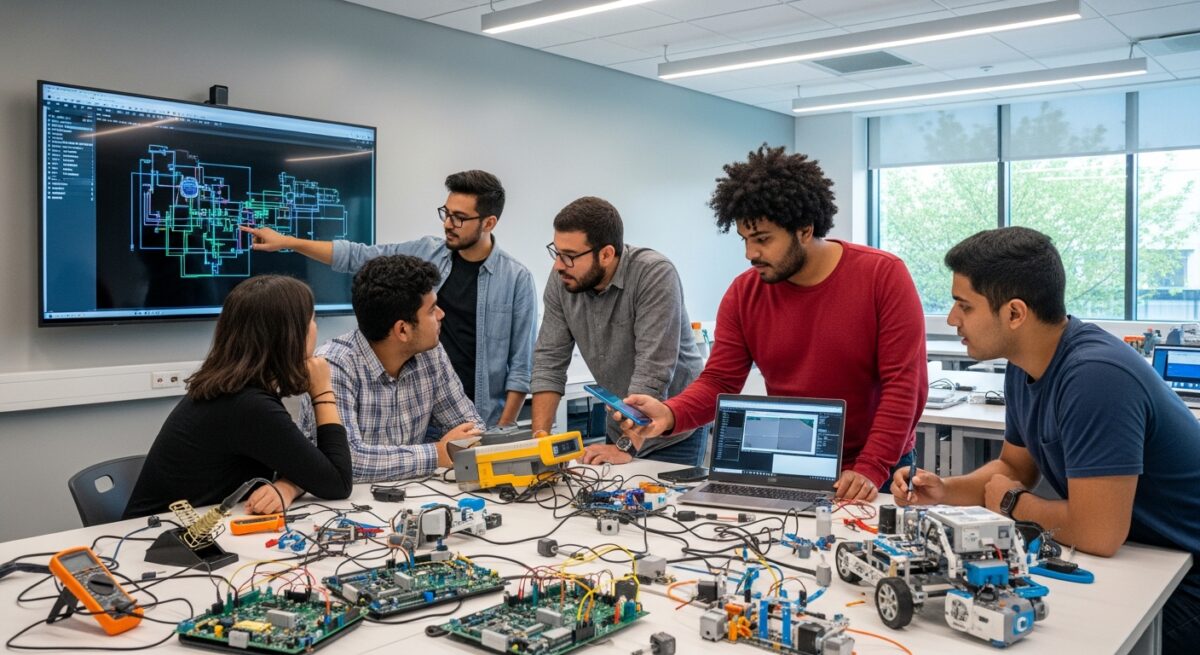
Choosing the right university is one of the most critical decisions a STEM student can make. With thousands of programs across the United States, finding an institution that offers strong research opportunities, experienced faculty, and modern laboratories can feel overwhelming. The goal is not just to earn a degree but to build a foundation for a career in science, technology, engineering, or mathematics. Whether you are a high school student planning your applications or a career changer looking to pivot into a technical field, understanding which universities excel in STEM education is essential. This guide breaks down the best science universities for STEM students, highlighting what makes each program stand out and how to match your goals with the right institution.
The landscape of STEM education has evolved significantly in recent years. Universities now offer interdisciplinary programs, hands-on learning experiences, and strong industry partnerships that prepare graduates for high-demand roles. When evaluating schools, consider factors such as graduation rates, research output, internship placements, and alumni success. The best science universities do not just teach theory; they immerse students in real-world problem solving. For example, institutions with strong ties to tech hubs or medical centers often provide direct pathways to employment after graduation. Understanding these nuances will help you make an informed choice.
What Defines a Top STEM University?
A top STEM university is more than a collection of science buildings and lab coats. It is a vibrant ecosystem where students collaborate on groundbreaking research, access state-of-the-art equipment, and learn from leaders in their fields. Key indicators of a strong STEM program include faculty publication records, the number of patents filed, and the percentage of graduates who pursue advanced degrees or secure jobs in STEM fields. Accreditation also matters; programs accredited by organizations like ABET (Accreditation Board for Engineering and Technology) ensure that the curriculum meets industry standards.
Another critical factor is the availability of undergraduate research opportunities. The best science universities for STEM students often allow freshmen to work alongside professors on projects, publishing papers and presenting at conferences before graduation. This early exposure builds confidence and strengthens graduate school applications. Additionally, look for schools that offer dedicated career services for STEM majors, including resume workshops, job fairs, and alumni networking events. These resources can significantly reduce the time it takes to find a job after graduation.
Top National Research Universities for STEM
When discussing the best science universities, names like MIT, Stanford, and Caltech often come to mind. These institutions consistently rank at the top due to their massive research budgets, Nobel laureate faculty, and cutting-edge facilities. For instance, the Massachusetts Institute of Technology (MIT) offers unparalleled resources in fields like artificial intelligence, robotics, and bioengineering. Students at MIT have access to the MIT Media Lab, the Lincoln Laboratory, and countless startup incubators. Similarly, Stanford University, located in the heart of Silicon Valley, provides STEM students with direct connections to tech giants like Google, Apple, and venture capital firms. The university’s entrepreneurial culture encourages students to launch their own companies, often while still enrolled.
California Institute of Technology (Caltech) takes a different approach, focusing intensely on pure science and engineering with a small student body that allows for close mentorship. Caltech manages the Jet Propulsion Laboratory (JPL) for NASA, giving students the chance to work on space exploration projects. For students interested in public research universities, the University of California, Berkeley, and the University of Michigan, Ann Arbor, offer world-class STEM programs with a broader range of majors and more affordable in-state tuition options. These universities excel in fields like computer science, mechanical engineering, and environmental science. They also have strong partnerships with national labs and local industries, providing internship opportunities that are hard to match.
Specialized STEM Institutions and Their Strengths
Beyond the well-known giants, several specialized institutions deserve attention for their focused STEM curricula. Georgia Institute of Technology (Georgia Tech) is a powerhouse in engineering and computing, with a strong emphasis on experiential learning. Its co-op program is one of the largest in the nation, allowing students to alternate semesters of study with paid work experience at companies like Delta Air Lines, Microsoft, and Home Depot. This structure helps students graduate with up to two years of professional experience, a huge advantage in the job market.
Another standout is the Massachusetts-based Worcester Polytechnic Institute (WPI), which requires all students to complete a project-based curriculum that includes a humanities capstone and a global project experience. This approach ensures that STEM graduates also develop communication and teamwork skills. For students passionate about biological sciences or pre-medical tracks, Johns Hopkins University in Baltimore is a top choice. Its School of Medicine and Bloomberg School of Public Health are globally recognized, and undergraduates can participate in medical research from day one. The university also offers unique programs in biomedical engineering and neuroscience.
For those interested in technology and applied sciences, the Illinois Institute of Technology (IIT) in Chicago provides a strong urban campus with connections to the city’s thriving tech scene. IIT’s Armour College of Engineering offers specialized tracks in aerospace, chemical, and civil engineering. Similarly, Rensselaer Polytechnic Institute (RPI) in New York is known for its cutting-edge research in materials science, computer gaming, and electronic arts. These specialized schools often have higher acceptance rates for STEM majors compared to the Ivy League, making them accessible options for strong students.
Affordable STEM Options and Online Programs
Cost is a major concern for many STEM students, but affordable pathways exist. Many public universities offer excellent STEM programs at a fraction of the cost of private institutions. For example, the University of Florida, the University of Texas at Austin, and the University of Washington all have highly ranked engineering and computer science programs with reasonable in-state tuition. Additionally, several universities now offer fully online STEM degrees, which can reduce costs related to housing and commuting. If you are exploring flexible learning options, you might find value in online degree programs in science and technology that allow you to study while working.
Scholarships and financial aid can also make top STEM schools more accessible. Many universities offer merit-based scholarships specifically for STEM students, especially those who demonstrate strong math and science backgrounds. For instance, the University of Alabama offers substantial scholarships for National Merit finalists and students with high test scores. Furthermore, community colleges provide a low-cost entry point for STEM courses, and many have transfer agreements with four-year universities. Starting at a community college for general education requirements and then transferring to a top science university can save thousands of dollars while still earning a degree from a prestigious institution.
How to Evaluate STEM Programs for Your Career Goals
Selecting from the best science universities for STEM students requires aligning your personal interests with the strengths of each program. Start by identifying the specific STEM field you want to pursue. Are you drawn to computer science, environmental engineering, biotechnology, or physics? Once you narrow down your field, research which universities have dedicated centers or labs in that area. For example, if you are interested in renewable energy, look for universities with solar energy research institutes or partnerships with energy companies.
Another important step is to examine the curriculum and graduation requirements. Some programs are very theoretical, while others emphasize hands-on design projects. Look at the course catalog and see if there are opportunities for independent study, capstone projects, or internships. Also, consider the location. Universities near major tech hubs, medical centers, or aerospace facilities often provide better internship and job placement opportunities. For instance, students at the University of California, San Diego, benefit from its proximity to the biotech cluster in La Jolla, while those at Carnegie Mellon University in Pittsburgh have access to a growing robotics and AI industry.
Finally, talk to current students and alumni. Many universities host virtual information sessions and open houses. You can also use LinkedIn to connect with graduates and ask about their experiences. In our guide on top computer science universities for high-paying tech careers, we discuss how networking and program reputation directly impact starting salaries. The same principle applies to all STEM fields. A strong alumni network can open doors to research collaborations, job referrals, and mentorship opportunities that last a lifetime.
Frequently Asked Questions
What is the number one STEM university in the US?
There is no single answer, as rankings vary by field. However, MIT, Stanford, and Caltech consistently appear at the top of most lists for overall STEM strength. For specific fields like engineering, MIT often ranks first, while Stanford leads in computer science and entrepreneurship.
Can I get a good STEM education at a public university?
Absolutely. Many public universities, such as the University of California, Berkeley, the University of Michigan, and the University of Illinois Urbana-Champaign, offer world-class STEM programs. They often have larger class sizes but provide extensive research opportunities and strong industry connections.
Are online STEM degrees respected by employers?
Yes, especially when the degree comes from an accredited, well-known university. Many top schools now offer online bachelor’s and master’s degrees in fields like computer science and data analytics. Employers value the skills and knowledge gained, regardless of the delivery method.
How important is research experience for STEM students?
Research experience is extremely valuable. It helps students develop critical thinking skills, learn laboratory techniques, and build relationships with faculty. For students planning to attend graduate school, research experience is often a requirement for admission.
What financial aid is available for STEM students?
STEM students can access federal grants, scholarships, work-study programs, and private loans. Many universities offer special scholarships for students pursuing STEM degrees. Additionally, organizations like the National Science Foundation provide funding for undergraduate research and graduate fellowships.
Choosing among the best science universities for STEM students is a personal journey that depends on your academic interests, career goals, and financial situation. Whether you attend a large research university, a specialized institute, or an online program, the key is to engage deeply with the material, seek out hands-on experiences, and build a network of mentors and peers. STEM fields offer exciting opportunities to solve real-world problems and make a lasting impact. By carefully evaluating your options and taking advantage of available resources, you can find a university that sets you up for a successful and fulfilling career.