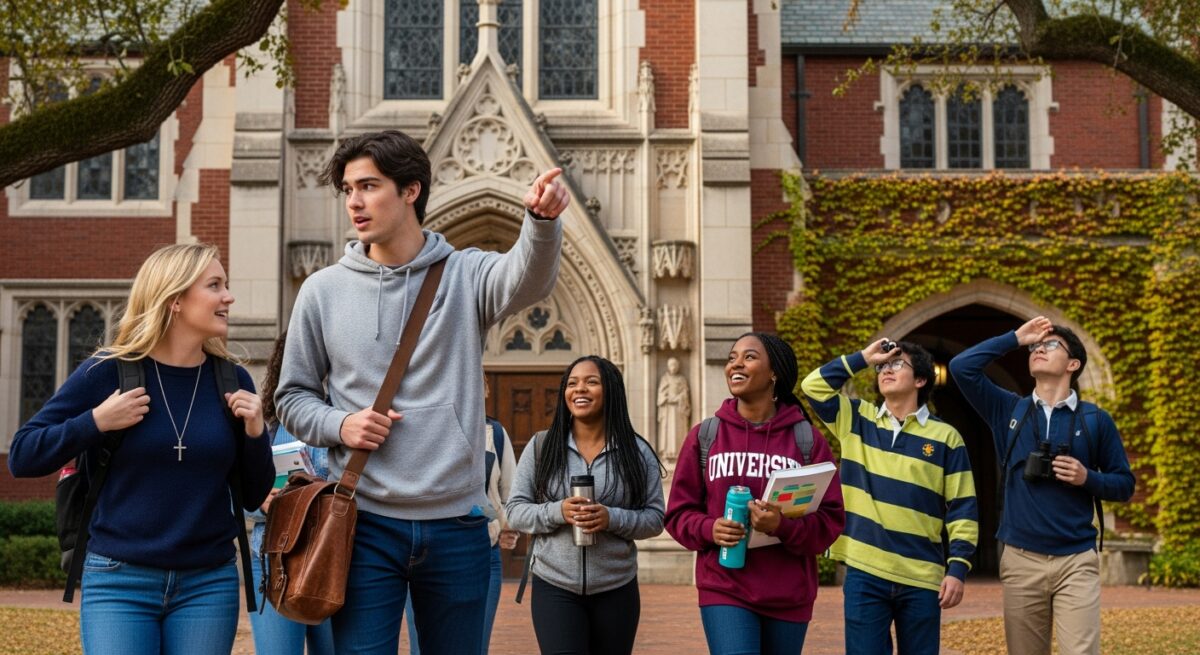
Choosing a college is one of the most consequential decisions a student and their family can make. For those who value a holistic education that integrates intellectual rigor with spiritual formation, Catholic colleges and universities offer a distinctive path. These institutions strive to create an environment where faith and reason dialogue productively, preparing graduates not only for successful careers but also for lives of service and purpose. With hundreds of options across the United States, finding the right fit requires careful research. This Best Catholic Colleges Ranking Guide provides a clear framework for evaluating your options, highlighting key factors like academic reputation, campus culture, financial aid, and post-graduate outcomes. Whether you are a high school student beginning your search or a parent helping a child navigate this process, this guide will help you identify schools that align with your priorities.
What Defines a Catholic College or University?
Before diving into rankings and specific institutions, it is helpful to understand what makes a college Catholic. These schools are not simply secular universities with a chapel on campus. They operate under the guidance of the Catholic Church and typically adhere to the teachings and traditions of the faith. This foundation shapes everything from the curriculum to campus life. Many Catholic universities require students to take theology or philosophy courses, and they often offer opportunities for Mass, retreats, and service learning.
However, the Catholic identity of a school can vary significantly. Some institutions maintain a strong, orthodox Catholic character, while others embrace a more progressive interpretation of the faith. When researching, look into the school’s mission statement, the presence of a campus ministry program, and the types of speakers and events hosted on campus. For a deeper look at how different types of colleges compare, you can review our Top 20 Colleges Ranking and Comparison Guide which examines a broader range of institutional types. Understanding this spectrum of Catholic identity is crucial because it directly affects the daily experience of students. A university that actively promotes its Catholic heritage will feel markedly different from one where the religious affiliation is primarily historical.
Key Factors in Ranking Catholic Colleges
When developing this Best Catholic Colleges Ranking Guide, several core criteria must be considered. Academic strength is paramount, but it is not the only measure. The following factors provide a comprehensive view of what a particular Catholic college offers.
Academic Excellence and Program Offerings
The academic reputation of a Catholic university is often its primary draw. Look for schools with strong programs in your intended major, low student-to-faculty ratios, and high retention and graduation rates. Many top Catholic universities are nationally recognized for their research output, particularly in fields like medicine, law, and business. For example, the University of Notre Dame is renowned for its Mendoza College of Business, while Georgetown University excels in international relations and public policy. However, smaller Catholic liberal arts colleges like the College of the Holy Cross or Providence College offer rigorous academics with a focus on undergraduate teaching. When evaluating academics, consider not just overall rankings but also the specific department you are interested in. A school strong in engineering might not have the same depth in the humanities.
Spiritual Life and Campus Ministry
The vibrancy of campus ministry is a critical differentiator among Catholic colleges. A robust campus ministry office provides opportunities for daily Mass, confession, adoration, retreats, and service trips. Some schools, like Franciscan University of Steubenville and the University of St. Thomas (Houston), are known for their deeply spiritual atmospheres and enthusiastic student participation in religious life. Others may offer a more low-key approach. Visiting campus and attending a Mass or a campus ministry event can give you a real feel for the faith life of the community. This is an area where the school’s stated mission meets lived reality.
Cost and Financial Aid
The cost of attendance at private Catholic universities can be high, but it is important to look beyond the sticker price. Most Catholic colleges offer substantial financial aid packages, including merit-based scholarships, need-based grants, and work-study opportunities. Many institutions are committed to making education accessible, and families should use the Net Price Calculator on each school’s website to get a personalized estimate. Some Catholic universities have also implemented tuition freezes or increased their endowment for scholarships to reduce student debt. Comparing the net cost after aid is more important than comparing tuition figures alone. Remember that an expensive school with generous aid may end up costing less than a public university with limited scholarship opportunities.
Post-Graduate Success and Alumni Network
A college education is an investment, and understanding the return on that investment is essential. Look at the career services office, internship placement rates, and graduate school acceptance rates. Strong Catholic universities often have powerful alumni networks that can help graduates secure jobs in competitive industries. For instance, Boston College and Villanova University have particularly strong networks in finance and consulting. Check if the school publishes post-graduate outcome data, including median starting salaries and the percentage of graduates employed or in graduate school within six months of graduation. This data provides a concrete measure of the value a degree from that institution provides.
Top Tier Catholic Universities: A Closer Look
While dozens of excellent Catholic colleges exist, a few consistently rank at the top of national lists. These institutions combine world-class academics with a strong Catholic identity. The University of Notre Dame is often considered the flagship of Catholic higher education in the United States, known for its rigorous academics, storied football program, and strong sense of community. Georgetown University, located in Washington D.C., offers unparalleled opportunities for students interested in politics, international affairs, and law. Boston College, situated in Chestnut Hill, Massachusetts, provides a rigorous Jesuit education with a strong focus on liberal arts and service. Villanova University, near Philadelphia, is renowned for its business and engineering programs and its vibrant campus life. These schools are highly selective and competitive, but they offer an education that is both intellectually challenging and spiritually enriching.
Another group of excellent Catholic universities includes the University of Dayton, known for its engineering and business programs and its strong commitment to research; Loyola University Chicago, which excels in healthcare and social sciences; and Saint Louis University, a leader in health sciences and law. Santa Clara University, in the heart of Silicon Valley, offers exceptional opportunities in technology and business. These universities may have slightly lower name recognition than the top tier, but they provide outstanding academics and a supportive Catholic environment. They often offer a more balanced mix of selectivity and accessibility, making them excellent choices for strong students who may not have the top 1% test scores required by the most elite schools.
Hidden Gems: Smaller Catholic Colleges Worth Your Attention
Beyond the nationally recognized universities, many smaller Catholic colleges and liberal arts schools offer an exceptional education. These institutions often provide a more intimate learning environment and a stronger sense of community. The College of the Holy Cross in Worcester, Massachusetts, is a Jesuit liberal arts college that consistently ranks among the best in the nation. Providence College in Rhode Island, run by the Dominican order, is known for its strong liberal arts curriculum and its commitment to the intellectual tradition of St. Thomas Aquinas. Thomas Aquinas College, with campuses in California and Massachusetts, offers a unique Great Books curriculum that is deeply rooted in the Catholic intellectual tradition. Franciscan University of Steubenville is a hub for Catholic culture and spirituality, attracting students from across the country who want a deeply faith-filled college experience. These smaller schools often have higher student satisfaction rates and a more focused academic mission than larger universities.
When considering a smaller Catholic college, think about the advantages of close faculty mentorship, tight-knit residential communities, and a curriculum that is deliberately integrated with Catholic teaching. Students at these schools often report feeling known and supported by their professors and peers. The trade-off can be fewer research opportunities and a smaller alumni network compared to large universities. However, for students who thrive in a more personalized academic setting, these hidden gems can be the perfect fit. They prove that a school does not need to be large or famous to provide a world-class Catholic education.

How to Use This Guide in Your College Search
This Best Catholic Colleges Ranking Guide is a starting point, not a final verdict. Begin by identifying what matters most to you. Is it academic reputation in a specific field? The strength of the campus ministry? The location? The cost? Rank these priorities and then use them to filter the list of schools. Next, visit the websites of your top 5 to 10 schools. Look at their academic programs, admissions requirements, and financial aid offerings. Read the student newspaper and follow the school’s social media accounts to get a feel for campus culture.
The most crucial step is visiting the campuses. Nothing replaces the experience of walking around a college campus, attending a class, and talking to current students. When you visit, pay attention to how you feel. Do you feel welcomed? Can you picture yourself living and learning there for four years? Ask students about the spiritual life on campus, the quality of teaching, and the career support they receive. These conversations will give you insights that no website or brochure can provide. Finally, apply to a balanced list of schools: a couple of reach schools, several target schools, and at least one safety school. This strategy ensures you have options and can choose the school that is the best fit for you academically, spiritually, and financially.
As you refine your list, consider the broader context of higher education. The landscape of college rankings is vast, and understanding where Catholic schools fit within it can be helpful. For a wider perspective on how these schools compare to other top institutions, the Top 20 Colleges Ranking and Comparison Guide can provide additional context and help you see the full picture of your options.
Frequently Asked Questions
Are Catholic colleges only for Catholics? No. While Catholic colleges are rooted in the Catholic faith, they welcome students of all religious backgrounds. Many non-Catholic students attend these schools and find the community welcoming and the values universal. The schools aim to create an environment of respectful dialogue and intellectual exploration.
Do I have to take theology classes at a Catholic college? Most Catholic colleges require students to take at least one or two theology or religious studies courses as part of the core curriculum. These courses are often designed to be academic and exploratory, not catechetical. They introduce students to the Bible, Catholic doctrine, and moral philosophy.
Are Catholic colleges more expensive than public universities? The sticker price is often higher, but the net cost after financial aid can be competitive. Many Catholic colleges offer generous merit and need-based aid. It is essential to use the Net Price Calculator on each school’s website to determine your actual cost before making a decision.
What is the difference between a Jesuit university and a Catholic university? All Jesuit universities are Catholic, but not all Catholic universities are Jesuit. The Jesuits are a specific religious order within the Catholic Church, the Society of Jesus. Jesuit education is known for its emphasis on intellectual rigor, social justice, and the formation of the whole person. Other orders, like the Dominicans or Franciscans, also sponsor universities with their own distinct charisms.
How do I find the campus ministry at a Catholic college? Visit the college’s website and search for “Campus Ministry” or “Spiritual Life.” You can also contact the admissions office and ask to speak with a current student involved in campus ministry. When you visit campus, attend a Mass or a prayer group to experience the faith life of the community firsthand.
Choosing a Catholic college is a journey that requires prayer, research, and reflection. The right school will challenge you academically, support you spiritually, and prepare you for a life of purpose. For those seeking flexible and accredited degree options, online programs from Catholic universities are also available, offering the same values in a different format.
Ultimately, the best Catholic college for you is the one where you can grow intellectually, spiritually, and personally. This Best Catholic Colleges Ranking Guide is designed to equip you with the knowledge to find that perfect fit. Take your time, ask the right questions, and trust the process. Your college years are a gift, and a Catholic education can help you unwrap that gift in a community of faith and learning. We hope this guide empowers you to make a confident and informed decision on your path to higher education.