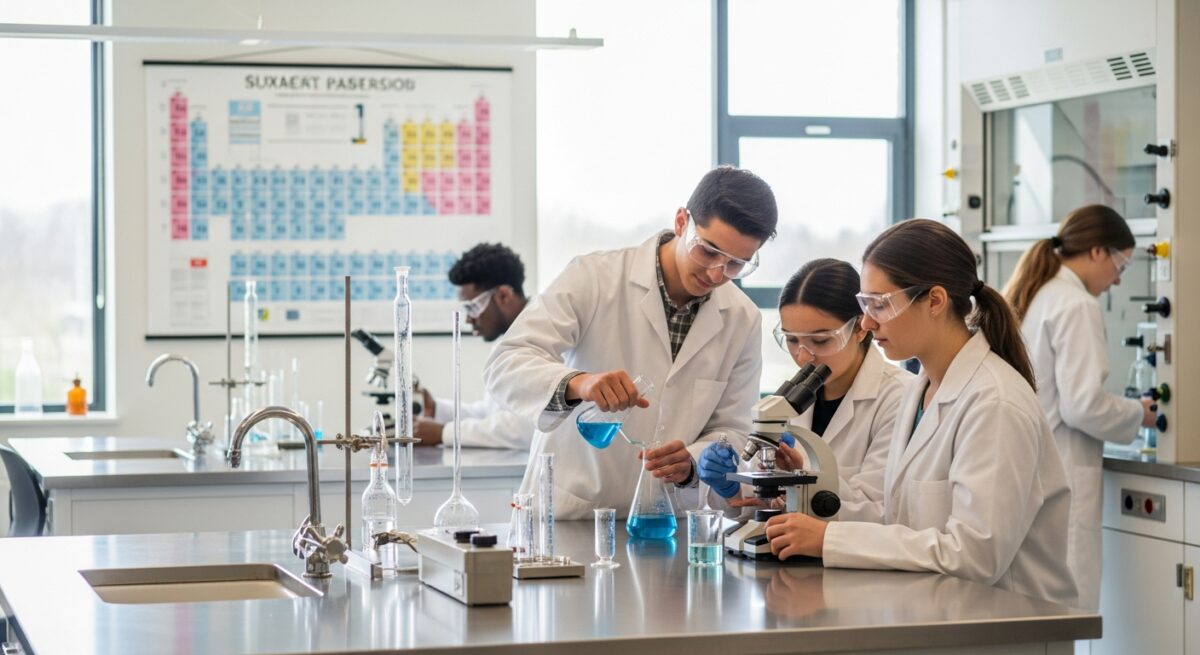
Chemistry is often called the central science because it connects physics with other natural sciences like biology and geology. If you are drawn to the periodic table, fascinated by molecular interactions, or eager to solve global challenges through material science, then selecting the right undergraduate program is a pivotal decision. The best colleges for chemistry programs do more than teach reactions and equations; they cultivate critical thinking, offer hands-on research opportunities, and open doors to diverse careers in medicine, industry, and academia. In this guide, we will explore what makes a chemistry program exceptional, highlight some of the leading institutions, and provide a roadmap for making a choice that aligns with your goals.
Choosing where to study chemistry involves more than comparing rankings. You need to consider factors like faculty expertise, laboratory facilities, research funding, class size, and the availability of specialized tracks. A program that excels in polymer chemistry might not be the best fit for someone interested in atmospheric chemistry. Therefore, we have analyzed a range of institutions to help you identify where you can thrive. Whether you are a high school student starting your college search or a career changer looking to pivot into a science field, this article will give you a clear framework for evaluating your options.
What Defines a Top Chemistry Program
A leading chemistry program is characterized by a combination of rigorous coursework, active research culture, and strong student support. The best colleges for chemistry programs typically have faculty who are not only excellent teachers but also active researchers publishing in prestigious journals. This ensures that students are exposed to the latest discoveries and techniques. Additionally, these programs offer modern laboratory equipment, from nuclear magnetic resonance (NMR) spectrometers to high-resolution mass spectrometers, which are essential for hands-on learning.
Beyond facilities, the structure of the curriculum matters. Top programs provide a solid foundation in analytical, organic, physical, and inorganic chemistry, but they also allow flexibility for electives and cross-disciplinary study. For example, if you are interested in biochemistry, you might look for programs that offer joint majors or research groups that bridge chemistry and biology. Similarly, if environmental science is your passion, you would want a department with strengths in environmental chemistry. The best chemistry colleges also emphasize undergraduate research, often allowing students to join a lab as early as their freshman year. This experience is invaluable for graduate school applications and for building a professional network.
Another critical element is career support. The best programs have dedicated staff who help students find internships, co-ops, or post-graduate positions. They maintain strong ties with industry partners, national laboratories, and graduate programs. When you compare chemistry colleges, ask about their job placement rates and the types of companies that recruit their graduates. A program that actively supports your career goals from day one will give you a significant advantage in the competitive job market.
Leading Institutions for Chemistry Degrees
When discussing the best colleges for chemistry programs, several names consistently rise to the top. These institutions are renowned for their research output, faculty credentials, and the success of their alumni. While this list is not exhaustive, it represents a diverse set of options that cater to different interests and preferences.
Research-Intensive Universities
Large research universities, such as MIT, Stanford, and Caltech, are often the first to come to mind. These schools offer extensive resources, including state-of-the-art facilities and substantial research funding. At MIT, for example, the Department of Chemistry is consistently ranked among the best in the world, with strengths in areas like chemical biology and energy research. Similarly, Stanford’s chemistry department is known for its interdisciplinary approach, encouraging collaboration across engineering and medicine. These institutions provide an unparalleled environment for students who are certain they want to pursue a Ph.D. and a career in research.
However, these elite universities are highly competitive and may not be the right fit for everyone. They often have large lecture classes, and the pressure can be intense. If you are a student who thrives in a more collaborative, less cutthroat environment, you might prefer a smaller liberal arts college or a mid-sized university with a strong chemistry program. For instance, Williams College and Amherst College are known for their exceptional undergraduate teaching and research opportunities, despite not having the same research scale as MIT. These schools offer small class sizes and close mentorship, which can be transformative for your academic development.
Public Universities with Strong Chemistry Departments
Public universities also offer outstanding chemistry programs, often at a more affordable cost. The University of California, Berkeley, for example, has one of the top chemistry departments in the world, with a strong emphasis on both foundational and applied research. The University of Michigan and the University of Texas at Austin also boast excellent programs with diverse research opportunities. These institutions are particularly appealing because they combine the resources of a large research university with the value of a public education, especially for in-state students.
When exploring public options, look at the specific research centers and institutes within the chemistry department. For instance, the University of Illinois at Urbana-Champaign has a renowned program in chemical biology, while the University of North Carolina at Chapel Hill is known for its environmental chemistry. By aligning your interests with a department’s strengths, you can get the most out of your undergraduate years. Additionally, public universities often have larger and more diverse student bodies, which can enrich your learning experience through collaboration and networking.
Specialized Chemistry Tracks and Interdisciplinary Options
The best colleges for chemistry programs understand that chemistry is not a monolithic field. Therefore, they offer specialized tracks that allow you to tailor your degree to your career goals. Some of the most common specializations include:
- Chemical Biology: This track combines chemistry and biology, focusing on the molecular mechanisms of life. It is ideal for students interested in pharmaceutical research or drug discovery.
- Materials Chemistry: This area studies the synthesis and properties of new materials, such as polymers, ceramics, and nanomaterials. It is perfect for those interested in technology and engineering.
- Environmental Chemistry: This specialization examines chemical processes in the environment, including pollution and climate change. It is a great fit for students passionate about sustainability.
- Forensic Chemistry: This track applies chemical analysis to legal investigations. It is a practical option for those who enjoy hands-on problem-solving in a legal context.
When evaluating programs, ask whether they offer these tracks and how flexible the curriculum is. Some schools allow you to design your own major, which is a huge advantage if you have a unique interdisciplinary interest. For example, if you want to combine chemistry with computer science, you could explore computational chemistry programs that focus on modeling molecular systems. Similarly, if you are interested in the business side of science, schools like the University of Pennsylvania offer joint degrees in chemistry and business. These options allow you to stand out in the job market with a unique skill set.
Another trend in higher education is the integration of research into the undergraduate curriculum. Many top programs now have dedicated research courses where you can earn credit for working in a lab. Some even offer a year-long senior thesis project. This is a significant advantage because it gives you a taste of what a career in research is like. For students considering graduate school, having a substantial research project under your belt is almost essential. Therefore, when comparing chemistry colleges, strongly consider the availability of these research experiences.
How to Evaluate and Choose the Right Program
Choosing from the best colleges for chemistry programs requires careful consideration of your personal and academic needs. Here is a step-by-step framework to guide your decision:
- Define your career goals: Are you aiming for a Ph.D. and a research career, or do you want to enter the workforce after a bachelor’s degree? The answer will determine whether you need a program with extensive research opportunities or one with strong industry connections.
- Assess the curriculum: Look at the required courses and electives. Does the program offer the specializations you are interested in? Are there opportunities for independent study or thesis projects?
- Research the faculty: Explore the research interests of the professors. Are there at least two or three faculty members whose work excites you? If so, you are likely to find mentorship opportunities.
- Consider class size and teaching style: Do you prefer large lecture halls or small seminars? Visit classes if possible to get a feel for the teaching approach.
- Evaluate financial aid and scholarships: The cost of education is a major factor. Look into merit-based scholarships, need-based aid, and research stipends. Many top programs offer generous financial packages for outstanding students.
- Visit the campus and talk to current students: There is no substitute for experiencing the campus culture. Talk to chemistry majors about their experiences, both in and out of the classroom.
This process may seem overwhelming, but it is an investment in your future. Take your time to research each institution thoroughly. Use online resources, such as the American Chemical Society’s directory of approved programs, which provides a list of departments that meet high standards. Also, don’t underestimate the value of networking. Reach out to alumni or professors in your field of interest to get insider perspectives.

If you are also considering a related field, you might find our guide on best universities for biochemistry programs in 2026 helpful, as it covers similar considerations for a closely related discipline. Many of the same institutions appear on both lists, but the specific strengths may differ.
Financial Considerations and Scholarships
The cost of a chemistry degree can vary dramatically between institutions. Private universities often have higher sticker prices, but they also tend to offer generous financial aid. Public universities, especially for in-state students, are often more affordable. When comparing offers, look at the net price after scholarships and grants, not just the list price. Many chemistry departments also offer paid research positions or teaching assistantships for undergraduates, which can offset costs while providing valuable experience.
Additionally, there are numerous external scholarships specifically for chemistry students. The American Chemical Society offers several scholarships, and many companies in the pharmaceutical and chemical industries fund undergraduate research awards. Be proactive in searching for these opportunities. You can also use online scholarship databases, such as scholarship.education, to find funding that matches your profile. These resources can significantly reduce the financial burden of your education.
When considering your budget, also factor in the cost of living in the area. Attending a school in a major city might be more expensive than one in a college town. However, urban campuses may offer more internship opportunities with nearby companies. Weigh these trade-offs carefully to make a financially sustainable decision.
Career Pathways After Graduation
A degree from one of the best colleges for chemistry programs opens doors to a wide range of careers. Many graduates go on to pursue advanced degrees in chemistry, medicine, pharmacy, or law. Others enter the workforce directly in industries such as pharmaceuticals, biotechnology, environmental science, and materials manufacturing. The skills you develop, including problem-solving, data analysis, and laboratory techniques, are highly valued across many sectors.
According to the U.S. Bureau of Labor Statistics, the median annual wage for chemists was over $80,000 in 2023, with higher earnings for those with advanced degrees. The job outlook is stable, with particular growth in areas like pharmaceutical research and environmental compliance. Your program should provide you with resources to explore these pathways, such as career fairs, alumni networks, and internship placements. A strong program will have a dedicated career counselor who understands the unique opportunities in the chemical sciences.
If you are considering a career change, a chemistry degree can also serve as a stepping stone to other fields. For example, a background in chemistry is excellent preparation for patent law, science journalism, or teaching. The analytical skills you develop are transferable to many professions. Therefore, even if you are not sure what you want to do after graduation, a chemistry degree is a versatile choice.
Frequently Asked Questions
What is the difference between a BA and a BS in chemistry?
A Bachelor of Arts (BA) in chemistry typically requires fewer chemistry courses and more liberal arts electives. It is a good option if you are interested in interdisciplinary studies or a career in education, law, or business. A Bachelor of Science (BS) in chemistry is more rigorous, with more advanced chemistry and mathematics courses. It is designed for students planning to pursue graduate school or a career as a professional chemist.
How important is research experience for a chemistry major?
Research experience is crucial, especially if you plan to attend graduate school. It demonstrates your ability to work independently, think critically, and apply classroom knowledge to real problems. Many top programs require or strongly encourage undergraduate research. It also helps you build relationships with faculty who can write strong letters of recommendation.
Can I become a chemist with an online degree?
While online degrees in chemistry are less common because of the laboratory requirements, some hybrid programs are emerging. However, a traditional on-campus program is generally preferred for chemistry because of the hands-on nature of the field. If you are considering an online program, ensure it includes in-person lab components and is accredited. For other fields, online degrees are a great option, and you can explore many resources on this site for online degree options.
What are the best colleges for chemistry programs for undergraduate research?
Many liberal arts colleges, like Carleton College and Harvey Mudd College, are known for their exceptional undergraduate research programs. They offer small class sizes and significant faculty interaction. Among research universities, MIT, Caltech, and Berkeley also provide extensive research opportunities for undergraduates, though the environment can be more competitive.
In summary, the best chemistry program for you is one that aligns with your academic interests, career aspirations, and personal learning style. By carefully evaluating the factors discussed above, you can make an informed choice that sets you up for success.
Remember that the journey is as important as the destination. Chemistry is a challenging field, but with the right support and resources, you can thrive. Take advantage of every opportunity to learn, collaborate, and grow. Whether you dream of discovering a new medicine, developing sustainable materials, or solving environmental crises, your education will be the foundation of your achievements.