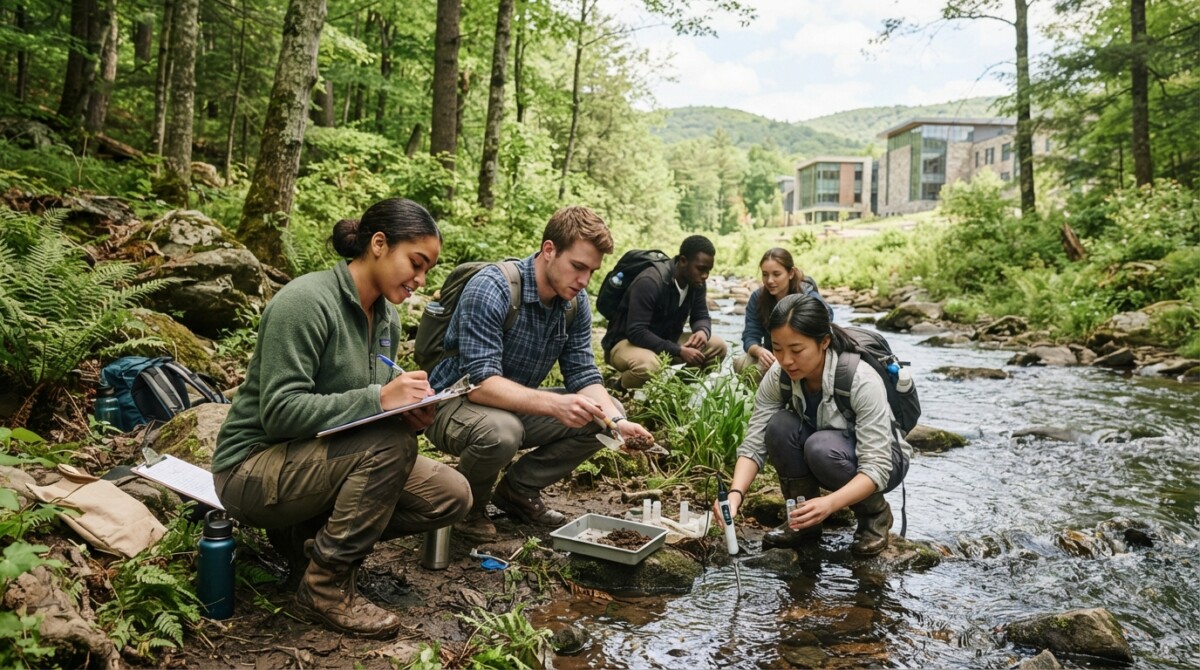
Choosing where to study environmental science is a decision that shapes not only your career but also your impact on the planet. With climate change accelerating and sustainability becoming a global priority, the demand for skilled environmental scientists has never been higher. However, not all programs are created equal. The best colleges for environmental science offer more than just lectures; they provide hands-on research, access to unique ecosystems, and strong industry connections. This guide evaluates top institutions based on academic rigor, research opportunities, faculty expertise, and career outcomes to help you find the right fit.
What Makes an Environmental Science Program Stand Out?
When evaluating schools, look beyond rankings. A strong environmental science program combines interdisciplinary coursework with field experience. You want a curriculum that covers ecology, geology, chemistry, policy, and data analysis. But the real differentiator is access: access to labs, field stations, internships, and professors who are active researchers.
For example, programs located near national parks, coastal reserves, or urban environmental challenges give students real-world contexts. Similarly, schools with strong ties to government agencies like the EPA or NOAA offer pipelines to federal careers. The best environmental science schools also emphasize skills in GIS, remote sensing, and environmental modeling, which are increasingly essential in the job market.
Another critical factor is the availability of undergraduate research. Top programs allow students to work alongside faculty on funded projects, often leading to co-authored papers or conference presentations. This experience is invaluable for graduate school applications or job interviews. Finally, consider the school’s sustainability commitment. Institutions that practice what they teach, through green campuses and carbon neutrality goals, often provide richer learning environments.
Top Tier National Universities for Environmental Science
These institutions are consistently ranked among the best for environmental science due to their comprehensive resources, esteemed faculty, and global research impact. They are ideal for students seeking a traditional four-year university experience with extensive opportunities.
Stanford University (Stanford, California)
Stanford’s School of Earth, Energy & Environmental Sciences offers a highly interdisciplinary program. Students can major in Earth Systems, which integrates natural sciences with policy and economics. The program’s strength lies in its proximity to Silicon Valley innovation and partnerships with the Jasper Ridge Biological Preserve. Undergraduates frequently engage in climate modeling, renewable energy research, and conservation biology projects. Stanford also boasts a strong alumni network in environmental consulting and clean technology.
University of California, Berkeley (Berkeley, California)
UC Berkeley’s College of Natural Resources provides a rigorous environmental science curriculum with a focus on policy and social justice. The Berkeley Environmental Law Center and the Energy and Resources Group are world-renowned. Students benefit from the university’s location near the San Francisco Bay, a hub for environmental activism and green startups. Research opportunities include studying wildfire ecology, water resource management, and urban sustainability. Berkeley’s emphasis on public service prepares graduates for leadership roles in government and non-profits.
University of Michigan, Ann Arbor (Ann Arbor, Michigan)
The School for Environment and Sustainability (SEAS) at Michigan is a top choice for students interested in conservation and ecosystem management. The program features the Biostation, a 10,000-acre research facility on Douglas Lake, which offers immersive field courses. Students can pursue concentrations in environmental justice, sustainable systems, or geospatial data science. Michigan’s strong corporate partnerships, including with Ford and General Motors, provide unique internship opportunities in industrial sustainability.
Specialized Colleges and Institutes
For students who want a focused, career-oriented education, specialized colleges offer distinct advantages. These schools often have smaller class sizes, dedicated career services, and curricula tailored directly to environmental professions.
One standout is the Colorado School of Mines (Golden, Colorado). While traditionally an engineering school, its Environmental Engineering and Science program is top-tier. Students focus on remediation, water quality, and renewable energy systems. The school’s location in the Rocky Mountains provides direct access to mining and energy industry partners. Graduates are highly sought after for roles in environmental consulting and resource extraction compliance.
Another excellent option is the SUNY College of Environmental Science and Forestry (ESF) in Syracuse, New York. ESF is one of the few colleges in the U.S. dedicated entirely to environmental studies. The curriculum is deeply integrated with the surrounding Adirondack Park and Great Lakes ecosystems. Programs in environmental biology, chemistry, and policy are all offered within a focused, mission-driven environment. ESF’s career placement rate in environmental fields is exceptionally high.
For students interested in marine science, University of California, Santa Barbara (UCSB) is a premier choice. The Bren School of Environmental Science & Management offers a rigorous undergraduate program alongside world-class research at the Marine Science Institute. UCSB’s location on the Pacific coast allows for direct study of coastal ecosystems, ocean acidification, and marine conservation. The program emphasizes quantitative skills and data analysis.
Liberal Arts Colleges with Strong Environmental Programs
Liberal arts colleges offer a different value proposition: small classes, close mentorship, and a broad education that develops critical thinking. Several liberal arts colleges have exceptional environmental science programs.
Middlebury College (Middlebury, Vermont) is a leader in this space. Its environmental studies program is one of the oldest and most respected in the country. The college owns the Bread Loaf Campus and the Middlebury Organic Farm, which serve as living laboratories. Middlebury’s focus on sustainability is campus-wide, and the school is a national model for carbon neutrality. Students often pursue dual degrees with the Yale School of the Environment through a 3+2 program.
Williams College (Williamstown, Massachusetts) offers a robust environmental science major within its Geosciences department. The program emphasizes field geology and hydrology, with courses held in the nearby Berkshire Mountains. The Williams-Mystic Maritime Studies Program provides a unique semester-long experience studying the ocean and coastal environments. Small class sizes ensure that students receive personalized attention from faculty who are leading researchers.

Colby College (Waterville, Maine) has invested heavily in environmental science, building the state-of-the-art Davis Science Center. The college’s location in central Maine provides access to forests, lakes, and the coast. Colby’s program is known for its strong emphasis on undergraduate research, with many students presenting at national conferences. The college also has a dedicated Office of Sustainability that integrates academics with campus operations.
Affordable Online and In-State Options
Cost is a major factor for many students. Fortunately, several excellent and affordable programs exist, particularly at public universities. If you want to explore more options for veterans or those seeking flexible learning, see our guide on Best Colleges for Veterans and Military Students in 2026 for additional pathways.
For example, University of Washington, Seattle offers a strong environmental science program through its College of the Environment. In-state tuition is relatively low, and the school has partnerships with NOAA’s Pacific Marine Environmental Laboratory. The program is highly ranked for research output and graduate school placement.
University of North Carolina, Chapel Hill has a well-regarded Department of Environmental Sciences and Engineering. The curriculum combines lab work with policy coursework. UNC’s location in the Research Triangle provides access to numerous environmental consulting firms and government agencies. In-state students benefit from significantly reduced tuition.
For online learners, Oregon State University offers a fully online Bachelor of Science in Environmental Sciences. This program is designed for working adults and career changers. The curriculum covers the same material as the on-campus program and includes virtual labs and field experiences. OSU is a recognized leader in online science education. When considering these options, remember that the best colleges for environmental science are not always the most expensive; they are the ones that provide the best fit for your learning style, career goals, and budget.
How to Choose the Right Program for You
Selecting from the best environmental science schools requires careful self-assessment. Here are key factors to consider during your search:
- Academic Focus: Do you prefer a broad, interdisciplinary degree (e.g., Environmental Studies) or a specialized, technical one (e.g., Environmental Chemistry)?
- Research Opportunities: Does the school offer undergraduate research grants? Are faculty projects aligned with your interests (e.g., climate change, conservation, energy)?
- Location and Environment: Do you want to study in a specific biome (e.g., coastal, forest, desert) or urban setting?
- Career Services: What is the school’s placement rate for environmental jobs? Are there internship pipelines with government or industry?
- Cost and Financial Aid: What is the total cost of attendance? What scholarships or assistantships are available?
Visit campuses, attend virtual information sessions, and talk to current students and alumni. A program that looks great on paper may not be the right fit for your personality or learning style. The best colleges for environmental science are those that align with your personal and professional aspirations.
Frequently Asked Questions
What is the difference between Environmental Science and Environmental Studies?
Environmental Science is a technical, STEM-focused field that uses biology, chemistry, and physics to study environmental problems. Environmental Studies is broader, combining natural sciences with social sciences, policy, and humanities. Many schools offer both tracks.
Can I get a job with a bachelor’s in environmental science?
Yes. Entry-level roles exist in environmental consulting, government agencies (e.g., EPA, state departments), non-profits, and industry (e.g., sustainability, compliance). A bachelor’s degree is sufficient for many technician and field scientist positions.
Do I need a graduate degree for environmental science?
Not always, but it helps. A master’s degree is often required for senior scientist roles, policy analysis, or academic research. Many top programs offer accelerated BS/MS pathways.
What skills are most important for environmental science students?
Key skills include data analysis (statistics, GIS, remote sensing), scientific writing, field sampling techniques, and communication. Employers also value project management and interdisciplinary thinking.
To further explore your options, consider visiting CollegeDegree.Education for additional resources on degree planning and program comparisons.
Your Path to an Environmental Career Starts Here
Selecting a college is a major milestone, especially in a field as vital as environmental science. The institutions highlighted here represent the best colleges for environmental science across different categories: large research universities, specialized institutes, and liberal arts colleges. Each offers unique strengths, from cutting-edge research to immersive field experiences. As you evaluate your options, prioritize programs that offer hands-on learning, strong mentorship, and clear career pathways. The right program will not only educate you but also empower you to make a tangible difference in the world. Start your research early, visit campuses, and trust your instincts.