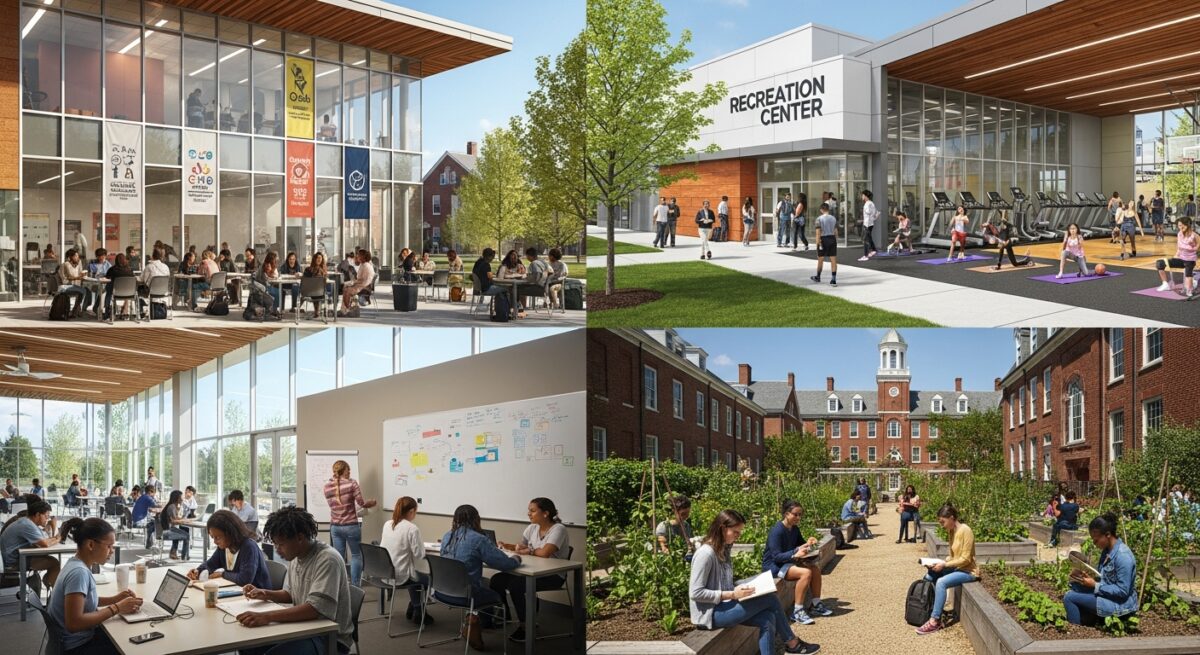
For over a century, women’s colleges have carved out a distinctive space in the landscape of higher education, offering an alternative to the coeducational model. Once the primary option for women seeking a college degree, these institutions now represent a deliberate and often deeply considered choice. The decision to attend a women’s college is not merely about selecting a school, it’s about choosing a specific type of educational philosophy and campus culture. This article will provide a comprehensive analysis of women only colleges pros and cons, examining the tangible benefits and potential drawbacks to help prospective students and their families make an informed decision. We’ll move beyond stereotypes to explore the academic, social, and career implications of this unique collegiate experience.
The Historical Context and Modern Mission
The origins of women’s colleges in the United States are rooted in necessity. In the 19th and early 20th centuries, most prestigious universities were closed to women. Pioneering institutions like the Seven Sisters colleges (Barnard, Bryn Mawr, Mount Holyoke, Radcliffe, Smith, Vassar, and Wellesley) were founded to provide women with an education equal to that offered to men at Ivy League schools. Their mission was explicitly feminist, aiming to prove women’s intellectual capabilities and prepare them for leadership roles at a time when societal norms severely limited their opportunities. While the legal barriers to women’s education have largely fallen, the mission of women’s colleges has evolved rather than become obsolete.
Today, the mission focuses on creating an environment where women are the default leaders, the primary voices in the classroom, and the central focus of institutional resources. This is not about excluding men from the conversation, but about centering women’s experiences and development in a way that coeducational institutions often fail to do, even unintentionally. The modern argument is that this environment allows students to build confidence and skills free from the gendered dynamics that can sometimes influence classroom participation, club leadership, and even faculty mentorship in mixed-gender settings. This foundational purpose underpins many of the pros and cons we will explore.
Advantages of Attending a Women’s College
The benefits of a women’s college education are well-documented by both alumni outcomes and educational research. These advantages often extend far beyond the undergraduate years, shaping career trajectories and personal development in lasting ways. The core argument is that by removing gender from the social and competitive equation, these colleges allow students to focus wholly on their intellectual and personal growth.
One of the most significant and frequently cited benefits is the development of unparalleled leadership confidence. In a women’s college, every student government president, every editor of the newspaper, every club founder, and every lead in the theater production is a woman. This visible representation normalizes female authority and ambition. There is no implicit question of whether a woman can or should hold a particular position. This environment actively counters what researchers call the “confidence gap,” where women, even high-achieving ones, are less likely to put themselves forward for leadership roles. The practice of leading becomes routine, building a muscle memory of confidence that graduates carry into graduate programs and workplaces.
The academic environment is similarly transformative. Studies consistently show that students at women’s colleges participate more actively in class, report higher levels of faculty interaction, and are more likely to pursue majors in traditionally male-dominated STEM (Science, Technology, Engineering, and Mathematics) fields. Without the potential for unconscious bias or the social pressure that can sometimes silence female students in coed classrooms, women feel empowered to speak up, debate, take intellectual risks, and claim their expertise. Faculty mentorship is often particularly strong, with professors who are specifically dedicated to the mission of educating women.
The alumnae network is another powerful asset. Graduates of women’s colleges often demonstrate fierce loyalty and a deep sense of connection to their alma maters and to each other. These networks can be incredibly effective for career mentoring, internship placement, and job opportunities. The bond is frequently described as a “sisterhood” that provides both professional support and personal community throughout one’s life. Furthermore, the focus on women’s success translates into robust career services tailored to address specific challenges women may face in the workforce, such as salary negotiation and navigating male-dominated industries.
Key Academic and Professional Benefits
To crystallize the advantages, consider these key points that often define the women’s college experience. These benefits are interconnected, each reinforcing the others to create a powerful educational model.
- Unfiltered Leadership Opportunities: From day one, students fill every leadership role on campus, building resume experience and executive presence that outpaces many peers at larger coed universities.
- Focused Academic Support: Pedagogy and student support services are designed with the latest research on how women learn best, often leading to higher retention rates in challenging majors.
- Strong Sense of Community: The shared identity can foster a close-knit, supportive campus culture where collaboration is emphasized over competition.
- Empowerment and Identity Development: The environment encourages students to explore their ambitions and identities without the constraints of traditional gender expectations.
- Proven Post-Graduate Outcomes: Data shows graduates of women’s colleges are disproportionately represented in leadership positions, graduate school enrollments, and fields like engineering and the physical sciences.
These benefits create a compelling case. The value of a degree from a women’s college is often reflected in strong graduate school acceptance rates and career placement statistics, a point of consideration for any student focused on long-term return on investment. For those exploring various pathways to maximize their future prospects, understanding the financial implications of any degree is crucial. Our analysis of affordable degrees and high-ROI programs provides a useful framework for evaluating the economic aspect of this and other college choices.
Potential Drawbacks and Considerations
While the benefits are significant, an honest evaluation of women only colleges pros and cons must also address the potential limitations and challenges. These are not necessarily reasons to avoid a women’s college, but they are critical factors that may influence a student’s personal fit and happiness. The very features that create a empowering environment for some can feel restrictive or artificial to others.
The most obvious consideration is the limited social environment regarding gender. For students who thrive on day-to-day interactions with a diverse range of peers, including men, the single-gender campus can feel isolating or unnatural. While most women’s colleges have partnerships with nearby coeducational institutions for cross-registration and social events, the core daily experience is single-gender. This can be a particular concern for students interested in dating or forming a wide variety of platonic friendships during their college years. The social life is what you make it, but it requires more proactive effort to engage with a broader community compared to a fully coed campus.
Another consideration is the potential lack of diversity in perspectives. Although women’s colleges are often highly diverse in terms of race, ethnicity, socioeconomic background, and nationality, the absence of male viewpoints in classroom discussions, especially in fields like political science, sociology, or literature, can be seen as a limitation. Some argue that preparing for the “real world” involves learning to collaborate and compete with all genders in real time. Proponents counter that the confidence built in a supportive environment better equips women to handle those dynamics later, but it remains a valid point of debate.
There is also the challenge of perceived relevance. Some students, families, and even future employers may hold outdated stereotypes about women’s colleges, viewing them as antiquated or overly sheltered. While this perception is fading, especially among graduate school admissions officers and forward-thinking companies, it can occasionally require a graduate to explain or advocate for the value of her educational choice. Furthermore, the range of academic programs at smaller women’s colleges, while deep, may not be as broad as at a large research university, potentially limiting options for highly specialized interests.
Making the Decision: Is a Women’s College Right for You?
Evaluating the pros and cons is not a purely academic exercise, it’s a personal one. The right choice depends entirely on the individual student’s personality, goals, and preferences. A student who is naturally outgoing, seeks a traditional “big college” social experience with fraternities and sororities, and values a vast array of in-person male friendships might find the adjustment challenging. Conversely, a student who is intellectually driven, wants to immerse herself in leadership, and prefers a collaborative, tight-knit community may find it to be a perfect fit.
The decision-making process should involve deep self-reflection and firsthand investigation. Prospective students should ask themselves key questions: Do I want my college experience to be primarily about academic and leadership development, or is a conventional mixed-gender social life equally important? Do I feel my voice is sometimes overshadowed in group settings? Am I interested in a STEM field where female representation is still low? Would I benefit from an environment explicitly designed to bolster my confidence? Visiting campuses, both women’s colleges and coed schools, is essential. Sit in on classes, talk to current students about their daily lives, and assess the overall vibe.
It is also vital to look at outcomes. Research the career placement centers, study the alumnae networks, and look at graduate school acceptance rates for your intended field. A women’s college is not a monolithic category, institutions like Smith, Scripps, Spelman (a historically Black women’s college), and St. Mary’s College all offer different cultures, locations, and strengths. Your choice should align with your specific academic and professional aspirations. For comprehensive guidance on navigating all types of degree programs and institutional models, a wealth of academic degree resources can provide further clarity and comparison tools.
Frequently Asked Questions
Are women’s colleges still relevant today?
Yes. While their original purpose of providing access to education has been met, their modern mission of fostering female leadership, confidence, and success in all fields remains highly relevant. Data on graduate outcomes in leadership and STEM fields continues to support their effectiveness.
Is the social life at a women’s college limited?
It is different, not necessarily limited. Most women’s colleges have active partnerships with nearby coed universities, allowing for social events, dating, and friendships. The on-campus social life is often built around clubs, traditions, and a strong sense of community rather than Greek life or gender-focused activities.
Do employers and graduate schools value degrees from women’s colleges?
Generally, yes. Graduate programs and employers often recognize the leadership experience and academic rigor associated with these institutions. The powerful alumnae networks also actively help with career advancement and graduate school connections.
Can transgender or non-binary students attend women’s colleges?
Admissions policies are evolving. Many women’s colleges now have inclusive policies that consider applications from transgender women and, in some cases, non-binary students. It is crucial to check the specific policy of each institution directly.
What is the biggest misconception about women’s colleges?
The biggest misconception is that they are sheltered, anti-male, or academically inferior. In reality, they are highly rigorous, focused on empowerment rather than exclusion, and their graduates are specifically prepared to succeed in a coed world.
The choice to attend a women’s college is a deeply personal one with the potential to shape a student’s trajectory profoundly. By carefully weighing the pros and cons, from the powerful leadership training and academic focus against considerations about social life and perspective, each student can determine if this unique environment aligns with her vision for growth. The ideal college is the one where a student will feel challenged, supported, and inspired to become her most capable self. For many, the distinct community and mission-driven focus of a women’s college provide precisely that foundation.