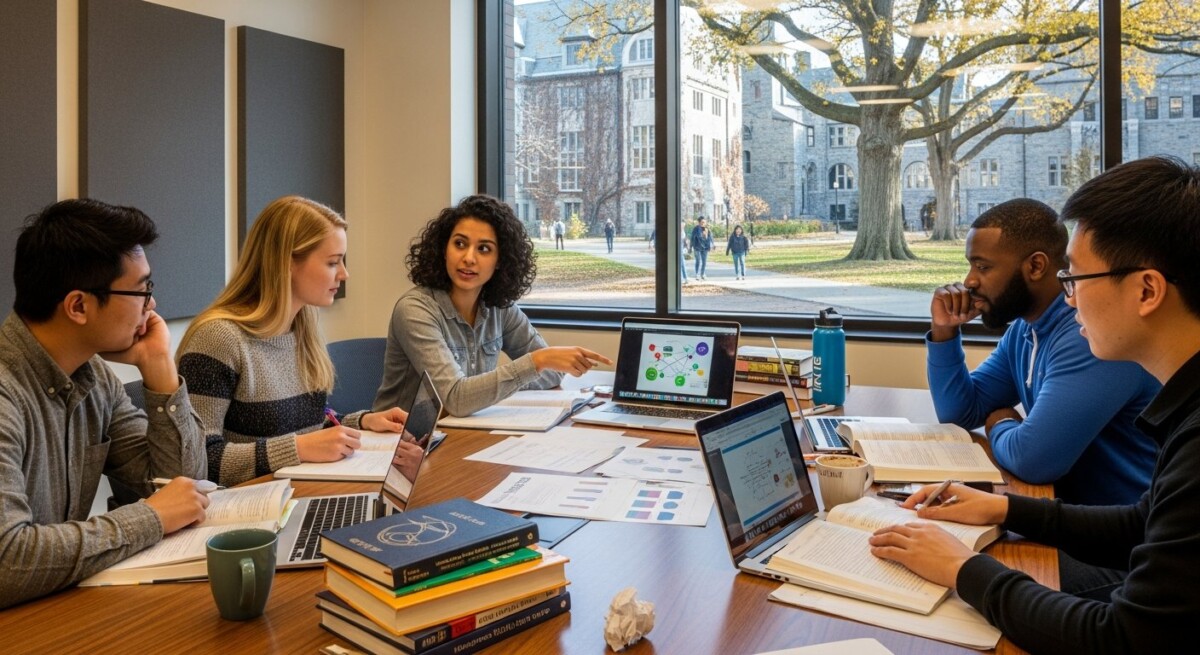
For many students, the promise of a personalized education is the single most important factor in their college search. They seek an environment where they are more than just a student ID number, where professors know their name and their aspirations, and where their academic journey is tailored to their unique strengths and interests. This deep, individualized approach to education is not the hallmark of massive lecture halls; it is the defining characteristic of the best small colleges. These institutions, often small liberal arts colleges, are built on a foundation of close mentorship, flexible curricula, and a community-centric model that places the student at the very center of the learning experience. If you are looking for an undergraduate education designed around you, exploring the top small universities dedicated to personalized learning is the essential first step.
What Defines a Personalized Learning College?
Personalized learning is more than a marketing slogan at these institutions. It is an educational philosophy embedded in their structure and culture. At its core, it means the academic experience is adapted to fit the student, not the other way around. This manifests in several key characteristics that distinguish these best small colleges from their larger counterparts. First, and most fundamentally, is an exceptionally low student-to-faculty ratio. This isn’t just about small class sizes (though that is a major benefit), but about ensuring meaningful, ongoing access to professors who are dedicated teachers and mentors. These educators have the time and institutional support to work with students one-on-one, guiding research projects, discussing career paths, and providing detailed feedback on work.
Second, these colleges offer remarkable curricular flexibility. Rather than forcing students into rigid, pre-set majors, they encourage exploration and interdisciplinary study. Many have open curricula or distribution requirements that allow students, with faculty guidance, to design their own course of study. This empowers students to connect disparate fields, like computer science and philosophy or biology and art, in ways that reflect their personal intellectual passions. Third, the pedagogy itself is often hands-on and experiential. Learning extends far beyond the textbook through undergraduate research opportunities, internships integrated into the curriculum, study abroad programs, and community-based projects. Students don’t just learn about concepts; they apply them in real-world contexts, often from their first year.
Finally, the entire campus ecosystem supports individual growth. Academic advising is a profound, developmental relationship. Campus resources, from writing centers to career services, are highly accessible and proactive. The community is collaborative, not cutthroat, fostering an environment where students feel safe to take intellectual risks. This holistic model is what makes the search for the best small colleges for personalized learning so valuable for students who thrive with individual attention and a custom-built education.
Key Benefits of Choosing a Small College for Personalized Learning
Opting for a top small university that prioritizes individualized education confers advantages that resonate throughout a student’s academic and professional life. The benefits are both immediate, impacting the daily college experience, and long-term, shaping career readiness and personal development.
One of the most significant benefits is the depth of mentorship. Professors at these institutions are not distant researchers but accessible mentors who invest in their students’ success. They write detailed, personalized recommendation letters for graduate school or jobs because they know the student’s work and character intimately. They often involve undergraduates in their research, providing a level of hands-on experience typically reserved for graduate students at larger universities. This mentorship extends to academic advising, where advisors help students navigate not just course selection, but also how to weave their interests into a coherent and compelling academic narrative.
Another major advantage is the development of essential soft skills. In small seminar-style classes, students cannot remain passive. They learn to articulate their ideas clearly, defend their positions in discussions, and collaborate effectively with peers. This constant engagement hones critical thinking, communication, and leadership abilities in a low-stakes, supportive environment. Furthermore, the flexibility of these programs allows students to pivot and adapt their academic focus as their interests evolve. A student might enter thinking they are a pre-med biology major but discover a passion for environmental policy through an elective, and the structure of a personalized learning college can accommodate that intellectual journey seamlessly.
To understand the practical application of these benefits, consider the following common features that facilitate personalized learning:
- First-Year Seminars or Tutorials: Small, writing-intensive classes that introduce students to college-level discourse and close faculty interaction from day one.
- Student-Designed Majors or Concentrations: Formal pathways that allow students to combine courses from different departments to create a unique major.
- Mandatory Undergraduate Research or Senior Capstone Projects: Culminating experiences that require independent work under direct faculty supervision.
- Comprehensive Academic Advising Systems: Often involving both a faculty advisor and a peer mentor to provide layered support.
- Experiential Learning Funding: Grants specifically for students to pursue unpaid internships, research, or creative projects.
The long-term payoff is substantial. Graduates from these environments often possess a strong sense of intellectual identity, the ability to tackle complex, unstructured problems, and a network of deep, supportive relationships with faculty that can open doors for decades. For those navigating the financial aspects of this personalized path, exploring dedicated resources for college degree information on scholarships and aid is a crucial step in the planning process.
Exemplary Small Colleges Championing Personalized Education
While many small liberal arts colleges promote close-knit communities, some have institutionalized personalized learning to an extraordinary degree. These institutions serve as benchmarks for what is possible when student agency is the highest priority. It is important to note that this is not a ranked list, but a highlight of distinctive models. One prominent example is Hampshire College in Massachusetts, which famously has no traditional majors or grades. Students design their own entire course of study across disciplines, working with faculty committees to create a personalized academic plan. Evaluation is based on detailed narrative assessments, fostering a focus on growth and mastery rather than letter grades.
Another standout is Brown University, an Ivy League institution that operates with a true Open Curriculum. Brown has no core requirements, allowing students unparalleled freedom to shape their education. This model demands a high degree of student initiative and intellectual curiosity, supported by robust advising to help students make intentional choices. Similarly, Colorado College employs a unique Block Plan, where students take one intensive course at a time for three-and-a-half weeks. This immersive format allows for deep focus, field study travel, and close daily collaboration with professors and classmates, creating a powerfully personalized learning rhythm.
On the more structured but equally personalized end, schools like St. John’s College (with campuses in Annapolis and Santa Fe) offer a prescribed, all-required Great Books curriculum. The personalization here comes not from choice of texts, but from the intimate, seminar-based method of instruction. Every student reads the same foundational works, but the discussion-driven pedagogy ensures each student’s voice and interpretation are central to the learning process. These examples illustrate that personalized learning can take many forms, from radical curricular freedom to a shared, deeply discussed canonical journey. The common thread is an unwavering commitment to the individual student’s intellectual engagement.
How to Identify the Right Personalized Learning College for You
Finding the best small college for your personalized learning journey requires moving beyond prestige and name recognition to assess institutional fit deeply. The process is itself an exercise in personalization: you must reflect on your own learning style, goals, and needs before evaluating schools. Start by conducting a self-assessment. Ask yourself: Do I thrive with high levels of autonomy, or do I need more guided structure? Am I a multidisciplinary thinker, or do I have a single, deep passion I want to explore? How important is hands-on, experiential learning versus theoretical study? Your answers will guide you toward the appropriate model, whether it’s an open curriculum, a structured interdisciplinary program, or a traditional major with strong research opportunities.
When researching colleges, go beyond the admissions website. Look for specific programs and policies that operationalize personalization. Investigate the academic advising model: is it a quick registration check, or a sustained mentoring relationship? Scour the curriculum for requirements like first-year seminars, independent study options, and capstone projects. A valuable resource in this digital age is understanding how technology can enhance personalization. For instance, in our guide on How Can Personalized Learning Platforms AI Improve Education, we explore how data and adaptive tools are shaping modern learning, a trend some forward-thinking small colleges are integrating to support their human-centric models.
The campus visit (or virtual tour) is critical. Prepare questions that probe the reality of personalized learning. Ask current students: “How often do you meet with your advisor?” “Can you describe a time a professor went out of their way to help you?” “How easy is it to get involved in research?” Speak to professors in your areas of interest and ask about their approach to mentoring undergraduates. Finally, evaluate the outcomes. Look at career placement data, graduate school acceptance rates, and alumni stories. Do graduates speak about the transformative nature of their relationships with faculty? Does the career center provide personalized support? Choosing a college is a major investment, and for the student seeking a tailored education, ensuring the institution’s promises match its practices is the most important step.
Frequently Asked Questions
Are the best small colleges for personalized learning also the most expensive?
Not necessarily. While many top private liberal arts colleges have high tuition, they also often have the most generous financial aid and endowment resources to meet demonstrated need. Furthermore, exceptional public liberal arts colleges (like the University of Minnesota Morris or St. Mary’s College of Maryland) offer similar personalized models at a lower cost. It is essential to look at net price after aid, not just sticker price.
Do personalized learning colleges prepare students for specific careers, or are they only for generalists?
This is a common misconception. These colleges excel at teaching students how to think, communicate, and solve problems, which are the ultimate career-ready skills. Many have strong pre-professional advising tracks for medicine, law, and engineering (often through 3-2 dual-degree programs). The ability to design your own major can also create a highly specific, interdisciplinary skill set that is attractive to employers in innovative fields.
Is a personalized learning environment right for every student?
No. Students who prefer clear, predefined paths, large lecture formats, or a high degree of anonymity may find the constant engagement and expectation of self-direction in these environments challenging. It is ideal for motivated, curious students who want to take ownership of their education and build close relationships with mentors.
How can I demonstrate in my application that I am a good fit for a personalized learning college?
Highlight your intellectual curiosity, initiative, and desire for mentorship. In your essays, discuss specific programs or pedagogical approaches at the college that excite you. Showcase projects where you pursued a topic independently or collaboratively. Your application should tell the story of a student who will actively use and contribute to a close-knit, interactive academic community.
The pursuit of higher education is one of the most significant personal investments you will make. For those who learn best through connection, dialogue, and tailored challenge, the best small colleges for personalized learning offer an unparalleled environment. These institutions prove that scale is not a prerequisite for excellence; in fact, their small size is their greatest strength, enabling a form of education that is responsive, relational, and relentlessly focused on the individual student’s growth. By carefully seeking out the college whose model aligns with your own vision for learning, you are not just choosing a school, you are choosing to become the primary author of your intellectual and professional future.