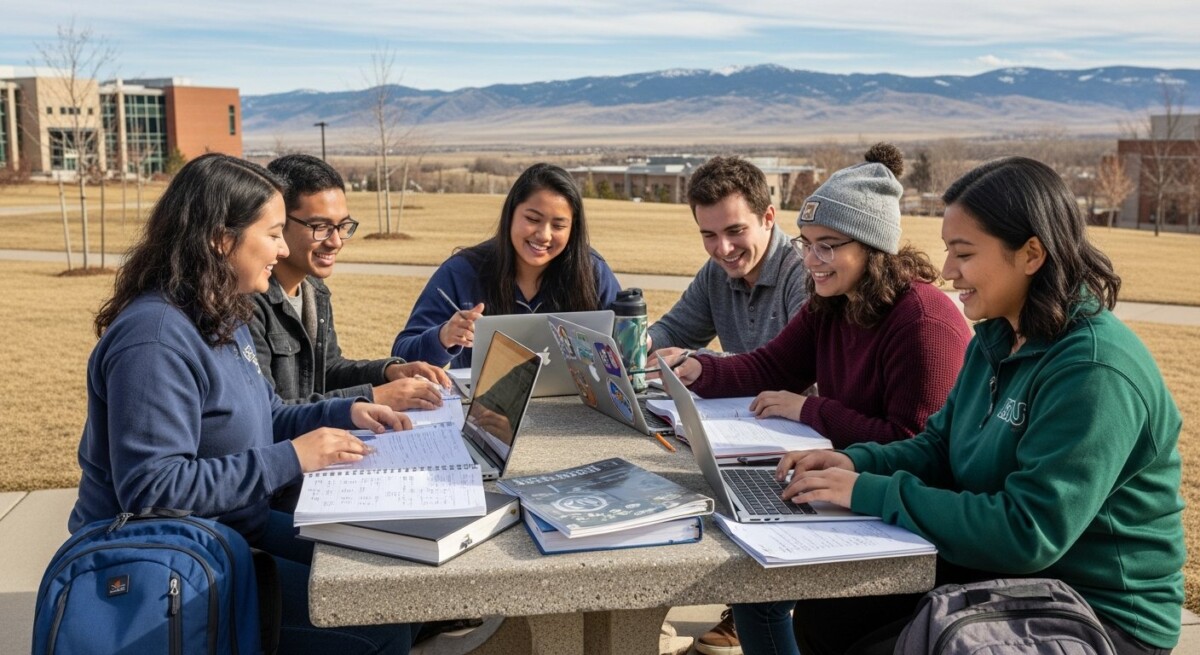
When prospective students consider higher education in the American West, Wyoming’s unique academic landscape offers a distinct and valuable experience. Unlike states with dozens of large research institutions, Wyoming’s approach to post-secondary education is characterized by accessibility, strong community ties, and specialized programs that leverage its geographic and economic identity. The conversation about top ranked universities in Wyoming is inherently different from discussions about larger states, focusing on institutional quality, return on investment, and specialized excellence rather than sheer volume of options. This guide provides a comprehensive analysis of Wyoming’s premier public university and its leading private and community colleges, offering clarity for students navigating their choices in the Equality State.
Understanding Wyoming’s Higher Education Ecosystem
Wyoming’s higher education system is designed to serve a relatively small, dispersed population with efficiency and focus. The state has a clear flagship public research university, a network of community colleges that provide critical access and workforce training, and a small number of private institutions offering niche programs. This structure means that identifying the top ranked universities in Wyoming involves evaluating institutions on different but equally important scales: research output and national reputation for the flagship, and community impact, affordability, and program-specific strength for other institutions. For students, this means the “best” school is highly dependent on individual goals, whether that is pursuing groundbreaking research in energy or environmental sciences, obtaining a cost-effective associate degree or certificate, or engaging in a tight-knit liberal arts environment.
When evaluating these institutions, key metrics include graduation rates, student-to-faculty ratios, average debt upon graduation, and career outcomes specific to Wyoming’s economy. The state’s funding model, which includes the Wyoming Hathaway Scholarship Program for eligible residents, also significantly influences affordability and access, making in-state attendance a particularly compelling financial proposition. Understanding this ecosystem is the first step in making an informed decision that aligns academic aspirations with practical outcomes.
The University of Wyoming: The Flagship Institution
As the state’s sole four-year public university, the University of Wyoming (UW) in Laramie anchors the list of top ranked universities in Wyoming. Founded in 1886, UW is a land-grant institution with a mission deeply tied to the state’s needs. It consistently ranks among the top public universities in the nation for value and is recognized for its low student debt levels. UW’s stature comes from its role as the primary driver of research in the state, with particular excellence in areas like energy (including petroleum engineering, geology, and renewable energy research), agriculture, environmental sciences, and atmospheric science. Its College of Law and College of Engineering and Applied Science are particularly well-regarded.
Beyond academics, UW offers the quintessential collegiate experience in a unique setting. The campus combines historic buildings with modern facilities, all against the backdrop of the Laramie Range. Student life is vibrant, with over 200 student organizations, NCAA Division I athletics (competing in the Mountain West Conference), and extensive outdoor recreation opportunities. The university’s low tuition, especially for Wyoming residents, and its robust financial aid programs make it an accessible flagship. For a broader perspective on how flagship universities compare across states, including their rankings and specializations, our analysis of top ranked universities in New York highlights the different scales and opportunities present in larger systems.
Leading Community Colleges and Private Options
While the University of Wyoming stands as the premier public university, Wyoming’s community college system is integral to its educational framework and includes several top-tier institutions. These colleges are essential for workforce development, providing affordable associate degrees, career and technical education (CTE), and seamless transfer pathways to UW. Key standouts in this sector include Laramie County Community College (LCCC) in Cheyenne, which is known for its health sciences, cybersecurity, and wind energy technology programs, and Casper College, the state’s oldest and largest community college, renowned for its music, theatre, and nursing programs.
For students seeking private education, Wyoming Catholic College in Lander offers a unique, Great Books-based liberal arts curriculum integrated with outdoor leadership and equestrian programs. While small, it attracts students nationwide seeking a distinctive educational philosophy. Another notable mention is the University of Wyoming at Casper, a branch campus that offers select four-year and graduate degrees from UW in a more intimate setting. When considering these options, students should weigh factors like program accreditation, transfer agreements, campus culture, and direct career placement rates. For many, starting at a top community college before transferring to UW is a strategic and financially savvy pathway to a bachelor’s degree.
Key Factors for Choosing a Wyoming University
Selecting the right institution among the top ranked universities in Wyoming requires a personalized assessment. The decision extends beyond national magazine rankings, especially in a state-centric system. Prospective students should conduct a thorough evaluation based on several concrete criteria.
First, examine academic program strength and accreditation. Ensure the institution holds regional accreditation (like the Higher Learning Commission) and that specific programs have relevant professional accreditation (e.g., ABET for engineering, AACSB for business). Second, analyze cost and financial aid. Calculate the total net price after scholarships and grants, not just the sticker tuition. Wyoming residents must explore the Hathaway Scholarship requirements. Third, consider career outcomes and support. Investigate the career services center, internship placement rates (particularly with Wyoming industries like energy, tourism, and government), and alumni network strength. Fourth, evaluate campus life and fit. For some, the vibrant, traditional campus in Laramie is ideal; for others, the commuter-friendly, career-focused environment of a community college is a better match.
To aid in this evaluation, here is a list of critical questions to ask during your research:
- What is the six-year graduation rate for full-time students in my intended major?
- What percentage of students receive financial aid, and what is the average debt at graduation?
- Does the college have strong articulation agreements for transfer if I start at a two-year school?
- What are the job placement rates for graduates, and which employers actively recruit on campus?
- What support services are available, such as tutoring, counseling, and disability support?
Answering these questions will provide a much clearer picture than a simple ranking. Furthermore, comprehensive school‑level degree guidance can help you navigate these factors in the context of your long-term career and educational goals, ensuring your investment in higher education yields the desired return.
Frequently Asked Questions
What is the #1 ranked university in Wyoming?
The University of Wyoming in Laramie is universally considered the top-ranked university in the state. It is the only public four-year institution and is classified as an R2: Doctoral University with “High Research Activity” by the Carnegie Classification. It leads in research expenditures, program breadth, and national recognition.
Are there any Ivy League or nationally top-ranked universities in Wyoming?
Wyoming does not have an Ivy League university. The University of Wyoming is its most prominent institution and is ranked highly for value, affordability, and specific programs like geology and atmospheric science. Its ranking differs from Ivy League schools, which are older, private, and focus intensely on undergraduate liberal arts alongside research.
Is the University of Wyoming hard to get into?
The University of Wyoming has a moderately selective admissions process, with an acceptance rate typically around 96%. This high rate reflects its mission as the state’s accessible public flagship. Admission is generally guaranteed for Wyoming residents who meet the assured admission criteria (a specified GPA and/or test score). Out-of-state students may face slightly more competition but the process is still considered accessible.
What are the best community colleges in Wyoming?
Casper College and Laramie County Community College (LCCC) are consistently highlighted as top community colleges in Wyoming. Casper College is praised for its arts and nursing programs, while LCCC is known for its technical and health science programs. Central Wyoming College in Riverton is also notable for its Native American advocacy and outdoor education programs.
What majors and programs are Wyoming universities best known for?
Wyoming institutions excel in programs tied to the state’s economy and environment. The University of Wyoming is nationally recognized for Petroleum Engineering, Geology, Atmospheric Science, Renewable Energy, Agriculture, and Law. Community colleges are known for Nursing, Wind Energy Technology, Criminal Justice, Welding, and Outdoor Education.
Choosing a university is a significant decision that shapes your academic and professional trajectory. In Wyoming, the landscape is defined by quality over quantity, with each institution serving a clear and vital purpose. The top ranked universities in Wyoming, from the comprehensive research offerings of the University of Wyoming to the targeted career training of its community colleges, provide pathways to success that are deeply connected to the community and the evolving needs of the region. By carefully considering your personal goals, financial situation, and desired campus environment, you can identify the Wyoming institution that will best serve as the foundation for your future.