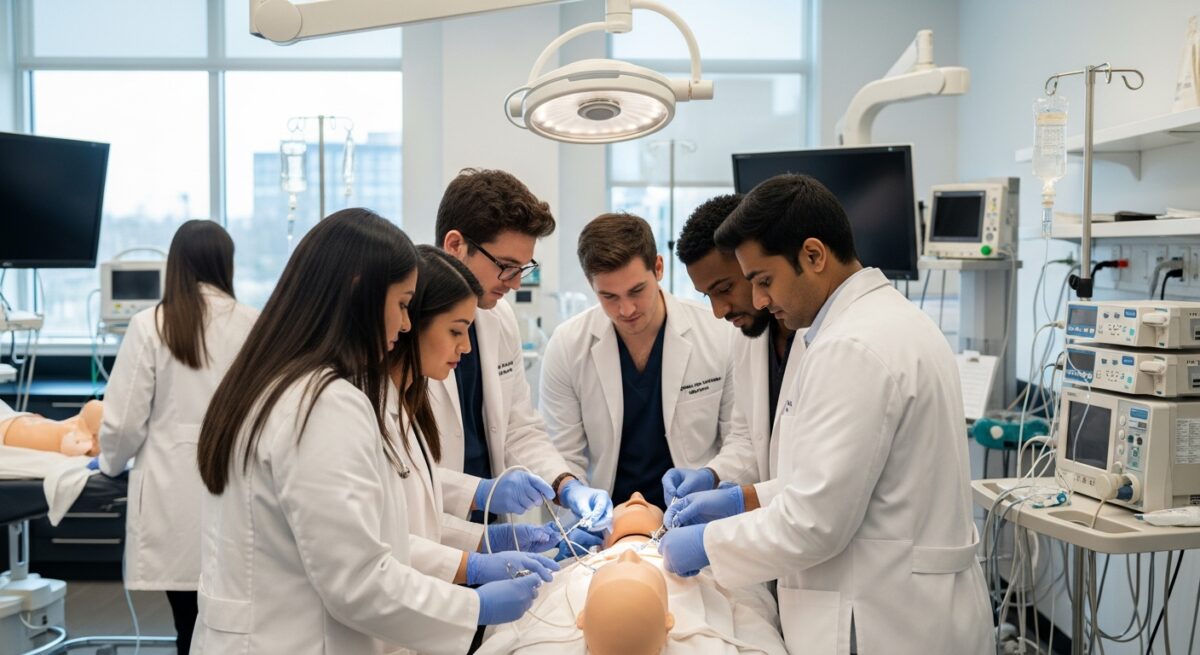
Choosing the right college for a pharmacy degree is a critical decision that shapes your entire career trajectory, from the depth of your scientific knowledge to your professional network and licensure success. The path to becoming a pharmacist is rigorous, requiring a Doctor of Pharmacy (Pharm.D.) degree from an accredited program, which typically follows two to four years of undergraduate pre-pharmacy coursework. With over 140 accredited programs in the United States alone, prospective students must look beyond generic rankings to find the institution that aligns with their academic goals, clinical interests, and personal circumstances. This guide delves into the key factors that define the best colleges for pharmacy, helping you navigate this significant educational investment.
Defining Excellence in Pharmacy Education
What truly makes a pharmacy college “best” is multifaceted and highly personal. While national rankings offer a starting point, they often aggregate data that may not reflect individual student needs. A top-tier pharmacy school excels in several core areas simultaneously. First and foremost is accreditation by the Accreditation Council for Pharmacy Education (ACPE). This non-negotiable seal ensures the program meets rigorous standards for curriculum, faculty, and resources, and is essential for licensure. Beyond accreditation, excellence is demonstrated through a curriculum that balances robust biomedical and pharmaceutical sciences with extensive, hands-on clinical rotations. The best programs integrate patient care experience early and often, preparing students for the realities of modern pharmacy practice in diverse settings, from community pharmacies to hospital systems and specialized industry roles.
Faculty quality is another cornerstone. Programs distinguished by active researchers and practicing clinicians bring cutting-edge knowledge and real-world insights directly into the classroom. Furthermore, student support services, including dedicated career advising and high North American Pharmacist Licensure Examination (NAPLEX) pass rates, are strong indicators of a program’s commitment to graduate success. Ultimately, the best pharmacy colleges for you will be those where these elements of excellence intersect with your specific career aspirations, whether in clinical practice, pharmaceutical industry research, managed care, or public health.
Key Factors to Evaluate in a Pharmacy Program
Selecting among the best colleges for pharmacy requires a detailed evaluation checklist. Prospective students should investigate several program characteristics beyond the basic admissions requirements. The structure of the Pharm.D. program itself is crucial: is it a traditional four-year program post-baccalaureate, or does the institution offer a competitive, integrated 0-6 program (allowing entry directly from high school)? Each model has distinct advantages regarding timeline and educational continuity.
Clinical training opportunities represent perhaps the most critical differentiator. Examine the breadth and quality of a school’s affiliated rotation sites. Leading programs have partnerships with major medical centers, specialized clinics, community health organizations, and pharmaceutical companies. This network provides students with exposure to various specialties, such as oncology, infectious disease, pediatrics, and ambulatory care. Research opportunities for Pharm.D. students are another vital factor, especially for those considering a career in industry or academia. Schools with strong research programs in areas like pharmacology, medicinal chemistry, or health outcomes often provide pathways for student involvement.
Finally, consider the tangible outcomes. Investigate the program’s first-time NAPLEX pass rates, which are publicly available and a direct measure of how well a curriculum prepares graduates for licensure. Similarly, examine graduation rates and post-graduation employment or residency placement statistics. A program that transparently shares this data and has a track record of strong outcomes is likely providing a high-quality education. For a broader perspective on evaluating academic programs, our resource on leading colleges and universities outlines similar decision-making frameworks applicable across disciplines.
Profiles of Leading Pharmacy Colleges and Schools
While a definitive ranked list is subjective, several institutions are consistently recognized for their comprehensive excellence in pharmacy education. These schools set benchmarks in research, clinical training, and student success. It is important to remember that many excellent regional programs may also be the perfect fit, offering strong local networks and focused support.
The University of California, San Francisco (UCSF) School of Pharmacy is perennially at the forefront, renowned for its groundbreaking research in drug development and its deep integration with one of the nation’s premier medical centers. Its curriculum emphasizes scientific inquiry and leadership in patient care. Similarly, the University of North Carolina at Chapel Hill Eshelman School of Pharmacy is celebrated for its innovative educational model, which includes immersive clinical rotations and a strong focus on translational science. In the Midwest, the University of Michigan College of Pharmacy and Purdue University College of Pharmacy are powerhouses, known for their research output, extensive industry connections, and strong community pharmacy networks.
Other notable mentions include The Ohio State University College of Pharmacy, with its strong residency match rates and health system partnerships, and the University of Texas at Austin College of Pharmacy, recognized for its pharmacotherapy expertise and outcomes research. When researching these and other top pharmacy colleges, prospective students should delve into each program’s unique strengths, such as specific research institutes, dual-degree options (like Pharm.D./MBA or Pharm.D./Ph.D.), and unique certificate programs in areas like pharmacogenomics or managed care.
The Admissions Landscape for Pharmacy Schools
Gaining admission to a top pharmacy program is highly competitive, requiring strategic preparation years in advance. The process is holistic, but centers on several key components. Academic preparedness is foundational, with most programs requiring specific prerequisite courses in biology, general and organic chemistry, physics, calculus, and statistics. A strong cumulative and science GPA, often a minimum of 3.0 but significantly higher for competitive programs, is essential. Standardized testing, primarily the Pharmacy College Admission Test (PCAT), is still required by many schools, though a growing number are moving to test-optional policies. A high PCAT score can strengthen an application significantly.
Beyond numbers, admissions committees seek evidence of a genuine commitment to the pharmacy profession. This is demonstrated through relevant experience, such as working or volunteering in a pharmacy setting, shadowing practicing pharmacists, or involvement in healthcare-related community service. These experiences not only bolster an application but are crucial for writing a compelling personal statement and for interviews. The personal statement should articulate a clear understanding of the pharmacist’s role, reflect on meaningful experiences, and connect personal motivations to the specific program’s offerings. Many programs also require letters of recommendation, ideally from science professors who can attest to academic ability and from a pharmacist who can speak to professional potential.
Finally, the interview is a critical hurdle. Many top schools use a Multiple Mini-Interview (MMI) format, which assesses ethical reasoning, communication skills, and critical thinking through a series of short, scenario-based stations. Thorough preparation, including mock interviews and a deep familiarity with current issues in healthcare and pharmacy, is indispensable for success in this phase.
Career Pathways and Outcomes for Pharmacy Graduates
A Pharm.D. degree from one of the best colleges for pharmacy opens doors to a surprisingly diverse array of careers, far beyond the traditional community pharmacy counter. The clinical knowledge and patient-care skills acquired are in high demand across the healthcare spectrum. The most common path is still community pharmacy, but this field itself has diversified into patient care services like immunizations, medication therapy management, and chronic disease monitoring. Hospital and health-system pharmacy is another major pathway, where pharmacists work as integral members of medical teams, managing complex medication regimens, ensuring safety, and often specializing in areas like critical care or oncology.
For those interested in the science behind medications, the pharmaceutical industry offers roles in drug development, medical affairs, clinical research, and regulatory affairs. Managed care pharmacy, working with insurance companies and pharmacy benefit managers, focuses on population health, formulary management, and ensuring cost-effective medication use. Other growing fields include informatics, specializing in pharmacy-related data and technology, and academia, which involves teaching and conducting research. Many graduates also pursue post-graduate residency training (PGY1 and PGY2) to gain specialized skills and enhance their qualifications for these advanced roles.
The financial and professional outlook remains strong. According to the Bureau of Labor Statistics, pharmacists earn a median annual wage significantly above the national average for all occupations. While job growth is projected at an average pace, opportunities are excellent for those with specialized training, residency experience, or a willingness to work in underserved areas. The evolving healthcare landscape continues to create new roles for pharmacists as medication experts, ensuring the value of a degree from a top program remains high.
Frequently Asked Questions
What is the difference between a Pharm.D. and a Ph.D. in Pharmaceutical Sciences?
A Pharm.D. (Doctor of Pharmacy) is a professional practice doctorate designed to train patient-care ready pharmacists. It is a clinical degree requiring rotations and leading to licensure. A Ph.D. in Pharmaceutical Sciences is a research doctorate focused on the discovery and development of new drugs, involving deep laboratory research and a dissertation. It prepares graduates for careers in academic or industrial research.
How important is attending a “top-ranked” pharmacy school?
While attending a highly-ranked program can offer advantages in research opportunities, national reputation, and alumni networks, it is not the only path to a successful career. Many excellent regional schools have superb clinical networks and high NAPLEX pass rates. The “best” school is the one that is a good fit for your learning style, career goals, and financial situation.
Can I work while completing a Pharm.D. program?
The Pharm.D. curriculum is extremely demanding, with rigorous coursework and required experiential rotations. Many programs strongly discourage or prohibit full-time employment. Some students work part-time, often as pharmacy interns, but managing time effectively is crucial. It’s essential to discuss workload expectations with current students during your program research.
What are the costs associated with a pharmacy degree, and what financial aid is available?
Pharmacy school is a significant investment, with tuition varying greatly between public and private institutions. Total cost can exceed $200,000. Financial aid is available through federal loans, institutional scholarships, grants, and work-study programs. Many students also secure graduate assistantships or scholarships from state pharmacy associations or national organizations. Careful financial planning is a critical part of the decision process. For comprehensive guidance on navigating these financial decisions, seeking clear college degree information from trusted educational resources is highly recommended.
Are there accelerated pharmacy programs?
Yes, some schools offer accelerated Pharm.D. programs that can be completed in three calendar years instead of the traditional four. These programs typically have the same number of credit hours but use a condensed schedule with shorter breaks. They are intensely fast-paced and require a major time commitment, but allow for earlier entry into the workforce.
Your journey to becoming a pharmacist begins with informed research and self-reflection. The best colleges for pharmacy degrees are those that will challenge you, support you, and ultimately connect your passion for healthcare with the scientific expertise to make a tangible difference in patient lives. By carefully weighing factors like curriculum design, clinical opportunities, career support, and cultural fit, you can identify the program that will serve as the strongest foundation for your professional future. Start early, engage deeply with your options, and prepare to embark on one of the most rewarding paths in healthcare.