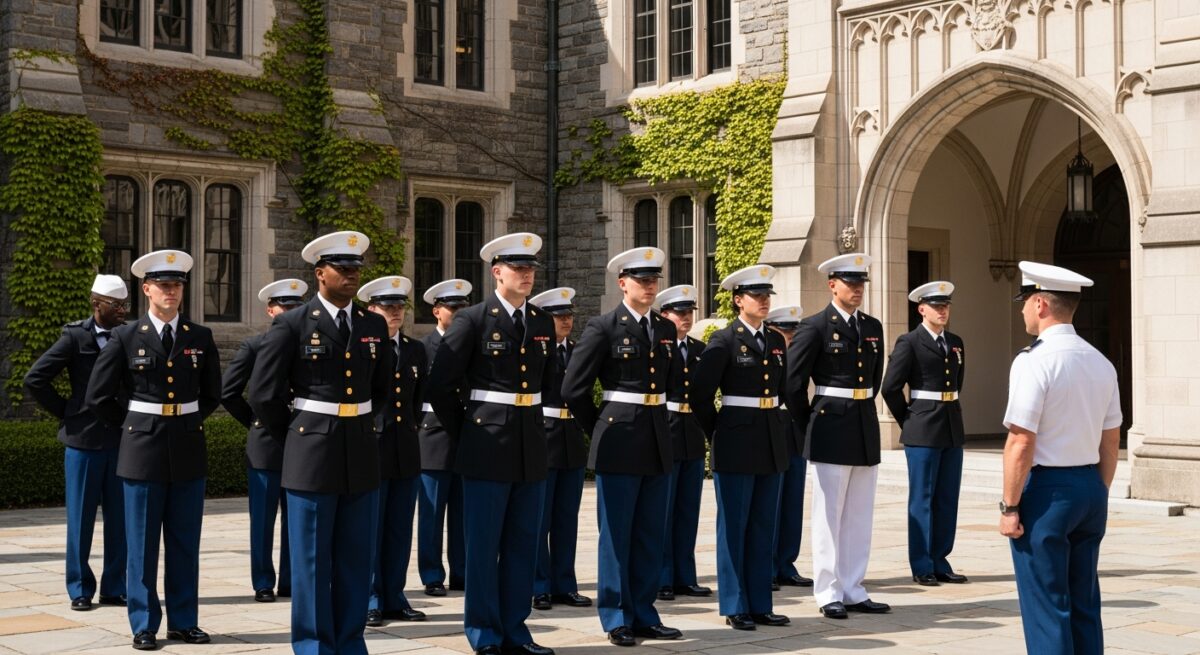
For students seeking a college education that combines rigorous academics, unparalleled leadership development, and a clear path to a meaningful career, top military colleges offer a unique and powerful alternative to traditional civilian institutions. These schools are not just about discipline and uniforms, they are premier educational establishments that provide a fully funded degree in exchange for a service commitment, forging leaders of character for both military and civilian sectors. Whether your goal is to commission as an officer in the U.S. Armed Forces or to gain the exceptional structure and values these institutions provide, understanding the landscape of military higher education is the first critical step.
Understanding the Two Primary Pathways: Service Academies and Senior Military Colleges
The world of top military colleges for students is broadly divided into two distinct models: the federal service academies and the senior military colleges (SMCs). Each offers a deeply immersive military experience but with different structures, obligations, and post-graduation outcomes. The service academies, like West Point and Annapolis, are federal institutions where students are members of the armed forces from day one. Their education, room, and board are fully funded by the U.S. government, and upon graduation, they receive a commission as an officer and must serve a minimum number of years on active duty. The environment is total, with every aspect of life, from academics to athletics to personal conduct, governed by a strict honor code and military regimen.
In contrast, senior military colleges are public universities that host a Corps of Cadets alongside a traditional civilian student body. Examples include Texas A&M University, Virginia Tech, and The Citadel. At these institutions, students in the Corps live a military lifestyle, wear uniforms, and participate in leadership training, but they are not on active duty during school. They typically commission through the Reserve Officers’ Training Corps (ROTC) program. A key difference is that while many receive ROTC scholarships, they may also pay tuition like other students, and their service obligation is tied to their ROTC contract. This model offers a blend of a classic “college town” experience with the structured leadership development of a military academy. Choosing between these paths depends on a student’s desire for a fully federally-funded and mandated service path versus a more traditional university setting with a parallel military track.
A Closer Look at the U.S. Service Academies
The five U.S. service academies represent the most selective and intensive option for students pursuing top military colleges. Admission is a congressional-level process, requiring a nomination from an authorized source (like a U.S. Representative, Senator, or the Vice President) in addition to demonstrating exceptional academic, physical, and leadership potential. The competition is fierce, and the commitment is substantial, but the education and career launch are unparalleled.
The United States Military Academy (USMA) in West Point, New York, is the academy for the U.S. Army. It emphasizes leadership, character, and academic excellence in fields like engineering, sciences, and humanities. Graduates commission as Second Lieutenants in the Army. The United States Naval Academy (USNA) in Annapolis, Maryland, prepares officers for the U.S. Navy and Marine Corps. Its location on the Chesapeake Bay underscores its focus on naval warfare, engineering, and maritime leadership. The United States Air Force Academy (USAFA) in Colorado Springs, Colorado, focuses on air, space, and cyber power. It offers cutting-edge programs in aeronautical engineering, astronautical engineering, and political science, commissioning officers for the Air Force and Space Force.
The United States Coast Guard Academy (USCGA) in New London, Connecticut, is unique in that it does not require a congressional nomination. Admission is based on a nationwide merit competition. It focuses on maritime safety, security, and environmental stewardship, commissioning officers directly into the Coast Guard. The United States Merchant Marine Academy (USMMA) in Kings Point, New York, prepares officers for the U.S. Merchant Marine and the armed forces. Graduates earn a Coast Guard license and can choose to commission into any branch of the military or work in the civilian maritime industry. Each academy instills a specific service culture but shares the core mission of developing leaders of integrity.
The Role and Value of Senior Military Colleges and ROTC
For students who want the leadership training and commissioning potential of a military academy but within a broader university environment, Senior Military Colleges and ROTC programs at hundreds of universities nationwide are ideal. The six federally designated Senior Military Colleges (The Citadel, Virginia Military Institute, Texas A&M University, University of North Georgia, Virginia Tech, and Norwich University) provide a Corps of Cadets experience that is often as rigorous as the academies. Graduates of these programs who complete ROTC requirements have an expedited path to a commission. The blend here is powerful: access to massive university research facilities, diverse academic majors beyond a typical academy’s scope, major college athletics, and a large civilian peer network, all while being part of a close-knit, disciplined cadet battalion.
The Reserve Officers’ Training Corps (ROTC) is the largest source of commissions for the U.S. military and is available at over 1,700 colleges. Students enroll as regular college students, major in any subject the school offers, and simultaneously take military science classes and participate in leadership labs and physical training. ROTC scholarships, which are highly competitive, can cover full tuition and fees, plus provide a monthly stipend. This pathway offers maximum flexibility: a student can participate for a year or two without obligation, and the service commitment (typically four years active duty) only begins upon accepting a scholarship for junior and senior year or upon commissioning. It allows for a true dual-identity as a college student and a future officer. For comprehensive financial planning that includes exploring ROTC and other aid options, our guide on navigating financial help for college students provides a detailed roadmap.
Key Factors in Choosing the Right Military College
Selecting among the top military colleges requires careful self-assessment and research. It is a decision that will shape your daily life for four years and your career for many years after. Prospective students must weigh several critical factors beyond just academic ranking.
First, consider the service branch culture and career opportunities. Each military branch has a distinct mission, lifestyle, and career fields. A student fascinated by aviation and space should look to the Air Force Academy or Air Force ROTC. Someone drawn to ground combat, engineering, and leading soldiers might thrive at West Point or in Army ROTC. Aspiring naval aviators or submarine officers should target Annapolis or Naval ROTC. The commitment is to a branch of service, so passion for its mission is essential. Second, evaluate the academic programs. While all these institutions offer strong STEM curricula, their strengths vary. Some are renowned for engineering (e.g., West Point, USAFA), others for international relations or business. Ensure the school offers majors that align with your intellectual interests and long-term goals, whether within the military or as a foundation for a second career.
Third, understand the lifestyle and environment. Service academies are all-consuming, with limited personal freedom, intense physical demands, and a highly structured schedule. Senior Military Colleges offer more autonomy but still require cadets to adhere to strict rules within the Corps. ROTC at a large public university provides the most “normal” college experience. Be honest about which environment will allow you to succeed and grow. Finally, consider the financial model and service obligation. Service academies offer a free education with a longer mandatory service commitment (typically five years active duty). ROTC scholarships also provide significant financial aid but with a shorter obligation. Paying your own way at an SMC or in ROTC without a scholarship offers more flexibility but at a higher upfront cost. This decision intertwines finances, career timing, and personal commitment, making professional school‑level degree guidance particularly valuable for navigating these complex trade-offs.
Preparing for Admission and Success
Gaining admission to a top military college, especially a service academy, is a multi-year preparation process. It requires a holistic build-up of your candidacy, focusing on more than just grades and test scores.
Start by building a strong academic foundation early in high school. Pursue a challenging curriculum heavy in math, science, and English. Strong performance in Advanced Placement or International Baccalaureate courses demonstrates college readiness. Standardized test scores (SAT/ACT) are crucial, so prepare diligently. Simultaneously, develop your leadership and extracurricular profile. Seek out positions of responsibility in student government, clubs, sports teams, or community organizations. Military academies and ROTC boards look for demonstrated initiative, teamwork, and the ability to influence others. Athletic participation is highly valued as it demonstrates physical fitness, discipline, and teamwork. A captaincy or earned varsity letter is a significant plus.
Physical fitness is non-negotiable. Begin a regular fitness regimen that includes running, push-ups, sit-ups, and pull-ups. The Candidate Fitness Assessment (CFA) for academies and the ROTC fitness test are pass/fail gates that eliminate otherwise qualified candidates. Get involved in your community through sustained volunteer work. Finally, for service academies, begin the process of seeking a nomination from your members of Congress during the spring of your junior year. This involves another application, often including essays and interviews. The entire process tests your perseverance and organizational skills, which are precisely the traits these institutions seek to cultivate.
Frequently Asked Questions
What is the main difference between a military academy and a senior military college?
The main difference lies in structure and obligation. Military academies are federal institutions where all students are on active duty, receive a fully funded education, and have a mandatory service commitment upon graduation. Senior military colleges are public universities with a Corps of Cadets program alongside civilian students; cadets are not on active duty during school and typically commission via ROTC, with obligations tied to their ROTC contract.
Can I go to a military college if I don’t want to be in the military?
Yes, but with caveats. At senior military colleges, some students participate in the Corps for the leadership training but do not contract with ROTC and thus have no service obligation (they are called “non-contract” cadets). However, at the federal service academies, all students commit to military service upon acceptance. The culture and lifestyle are intrinsically military.
Are there military colleges for graduate studies?
The service academies primarily focus on undergraduate education. For graduate-level military education, officers attend specialized schools like the Naval Postgraduate School or the Air Force Institute of Technology. Some senior military colleges offer graduate degrees, which civilians or military personnel can pursue.
How competitive is admission to a top military college?
Extremely competitive, especially for the service academies. Acceptance rates are typically between 10% and 20%, and candidates must excel academically, physically, and in demonstrated leadership. They also require a nomination (for academies) or a separate scholarship board review (for ROTC).
What happens if I leave a military academy or ROTC program early?
Departing a service academy or a contracted ROTC program before completion can have serious consequences, including potentially repaying tuition costs. Policies vary, but it is a significant decision with financial and legal implications. It is crucial to understand the commitment fully before accepting an appointment or scholarship.
The decision to attend a top military college is a profound commitment to a lifestyle of discipline, service, and leadership development. These institutions offer far more than a degree, they forge character and purpose. For the right student, the challenges of plebe year, morning formations, and honor codes translate into unparalleled opportunities for growth, a debt-free education, and a career of meaningful leadership from day one. By thoroughly researching the pathways, understanding the commitments, and preparing diligently, students can determine if this unique and rewarding educational journey is the right fit for their ambitions and values.