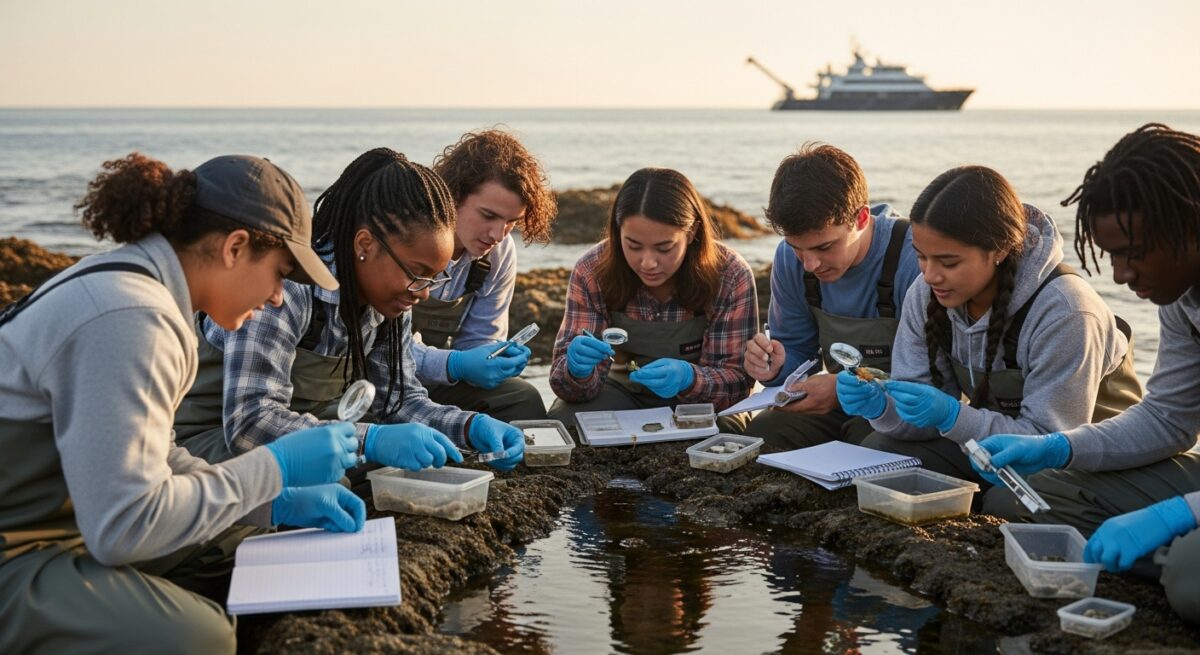
Choosing the right university for a marine biology degree is a pivotal decision that shapes your scientific perspective, research opportunities, and career trajectory. This field, dedicated to understanding life in our oceans and coastal ecosystems, demands rigorous academic training paired with unparalleled hands-on experience. The best universities for marine biology programs are distinguished not just by their curriculum, but by their direct access to diverse marine habitats, cutting-edge research vessels, renowned faculty, and strong connections to conservation and governmental agencies. This guide explores the key factors that elevate a marine biology program and highlights institutions that exemplify these qualities, providing a roadmap for aspiring ocean scientists to find their ideal academic home.
What Defines a Premier Marine Biology Program
Not all life science programs are created equal, and marine biology has specific requirements that separate good programs from exceptional ones. The top ocean science programs provide a synergistic blend of foundational knowledge and immersive, practical application. At the undergraduate level, a robust program will offer a core curriculum in biology, chemistry, physics, and calculus, progressively specializing into marine-specific courses like oceanography, marine ecology, invertebrate zoology, and fisheries science. However, the classroom is just the starting point.
The defining characteristic of elite marine biology colleges is their emphasis on experiential learning. This includes mandatory field courses, access to on-campus marine labs and aquaria, and opportunities for undergraduate research. Proximity to varied marine environments (e.g., coral reefs, kelp forests, estuaries, open ocean) is a massive advantage, allowing students to study ecosystems firsthand. Furthermore, strong programs are embedded within departments or schools that also offer advanced degrees (M.S. and Ph.D.), creating a research-intensive environment where undergraduates can contribute to meaningful scientific discovery. When evaluating programs, prospective students should look for these hallmarks of quality, which are better indicators of value than general reputation alone.
Leading Institutions for Marine Biology Studies
The following universities are consistently recognized for their excellence in marine science education and research. Each offers a unique combination of location, resources, and academic focus, catering to different student interests within the broad field of marine biology.
University of California, San Diego (Scripps Institution of Oceanography)
Scripps Institution of Oceanography at UC San Diego is arguably the world’s premier center for ocean and earth science research. As a graduate department, its resources and faculty profoundly benefit undergraduate marine biology majors at UCSD. Students have access to Scripps’s state-of-the-art research vessels, the Birch Aquarium for hands-on learning, and a faculty comprising leading figures in climate science, marine biodiversity, and oceanography. The program’s strength lies in its deeply interdisciplinary and research-driven approach, preparing students for high-level graduate work or technical careers in ocean science.
University of Miami (Rosenstiel School of Marine, Atmospheric, and Earth Science)
Located on a subtropical island campus on Virginia Key, the University of Miami’s Rosenstiel School offers an immersive marine science experience. Undergraduates benefit from direct waterfront access, a living coral reef tract, and one of the largest oceanographic research fleets in the U.S. The program is particularly strong in tropical marine ecology, coastal zone management, and atmospheric science. Its location provides a natural laboratory for studying coral reef ecosystems, marine megafauna (like sea turtles and sharks), and the impacts of climate change on coastal regions.
University of Washington (School of Aquatic and Fishery Sciences & College of the Environment)
The University of Washington provides a powerhouse marine biology education focused on the ecosystems of the Pacific Northwest and beyond. Its strengths are in fisheries biology, oceanography, and marine conservation. Students can utilize the renowned Friday Harbor Laboratories on San Juan Island for intensive field courses. UW’s integration with NOAA’s Northwest Fisheries Science Center and other federal agencies creates exceptional pathways for internships and employment in applied marine science and policy, a key consideration for those seeking career-focused degrees.
Other notable institutions with exceptional programs include:
- Boston University (BUMP): Offers a Marine Program (BUMP) with a strong semester-by-the-sea at the Marine Biological Laboratory in Woods Hole, Massachusetts.
- University of Hawaii at Manoa: Provides unparalleled access to tropical Pacific ecosystems and is a global leader in coral reef and pelagic research.
- Eckerd College: A smaller liberal arts college with a renowned undergraduate-focused program, its own waterfront campus and marina in Florida, and an emphasis on immediate field and research involvement.
- University of North Carolina at Chapel Hill (Institute of Marine Sciences): Features a robust program with a coastal field site in Morehead City for hands-on research in estuarine and nearshore oceanography.
Key Considerations for Prospective Students
Selecting among the best universities for marine biology requires introspection about your career goals and learning style. A major research university like UCSD or UW offers vast resources and name recognition but may involve larger class sizes initially. A dedicated marine science school like Rosenstiel or a liberal arts college like Eckerd often provides smaller, more intimate learning environments with earlier access to professors and research. Your geographic preference matters immensely: do you want to study temperate, polar, or tropical systems? The local ecosystem will define much of your field experience.
Financial planning is also crucial. Investigate each school’s scholarship opportunities, particularly those earmarked for STEM or marine science students. Look for work-study positions in departmental labs or at the campus marine station. Furthermore, consider the career support and alumni network. Strong programs will have dedicated advisors for marine science majors and a track record of placing graduates into prestigious graduate programs or jobs with agencies like NOAA, the EPA, or leading conservation NGOs. For students balancing other commitments, exploring hybrid or fully online foundational science courses can be a strategic part of academic planning, though the core marine biology curriculum will always require in-person lab and field work. Those interested in digital learning pathways for prerequisite courses can find accredited options through various online degree resources.
Academic Pathways and Career Trajectories
A degree in marine biology opens doors to diverse careers, but the pathway often dictates the destination. A Bachelor of Science is typically the entry point, qualifying graduates for technical roles such as research assistant, aquarium or marine park specialist, fisheries observer, or environmental consultant. However, many of the most sought-after research and leadership positions require advanced degrees. A Master’s degree can lead to more specialized project management or policy roles, while a Ph.D. is essential for leading independent research, securing tenure-track university positions, or holding high-level scientific director posts.
Prospective students should view their undergraduate choice as the first step in this longer journey. Attending a university with strong graduate programs in marine science can facilitate a smoother transition, as you may have the chance to work in a lab where you could later pursue a thesis. It is also wise to complement your marine biology core with skills in data science, statistics, geographic information systems (GIS), or scientific communication, as these are increasingly critical in the modern job market. For a broader look at flexible educational options that can support such a specialized path, our guide on Exploring the Best Online Degrees in the UK discusses how global institutions structure advanced programs.
Frequently Asked Questions
What is the difference between marine biology and oceanography?
Marine biology focuses specifically on the organisms that live in marine environments, their behaviors, and their interactions with ecosystems. Oceanography is a broader field that includes the physical, chemical, and geological aspects of the ocean. Many top programs offer courses in both, and the fields are highly interconnected.
Are there strong marine biology programs not located directly on a coast?
Yes. Several excellent programs are located near large lakes or have established satellite campuses and field stations on coasts. These programs often organize intensive summer or semester-long field courses at marine labs to provide the necessary hands-on experience.
What high school preparation is best for a marine biology major?
Excel in biology, chemistry, physics, and mathematics (through pre-calculus, at minimum). Courses in environmental science, computer science, and writing are also valuable. Seek out volunteer opportunities at local aquariums, nature centers, or with conservation groups.
Is marine biology a competitive field?
Yes, it can be highly competitive, especially for research-oriented positions. This underscores the importance of attending a program that provides substantial research experience, strong faculty recommendations, and a network of alumni in the field.
What are some alternative or related degree paths?
Consider degrees in environmental science, fisheries and wildlife, zoology, ocean engineering, or marine policy. These can offer slightly different angles on working with marine systems and may have different job market dynamics.
The journey to becoming a marine biologist begins with choosing an academic environment that fuels your curiosity and provides the tools for discovery. The best universities for marine biology programs are those that connect textbook principles to the living ocean, fostering the next generation of scientists tasked with understanding and preserving our planet’s most vital ecosystem. By carefully weighing factors like location, research opportunities, and program focus, you can find a school that will not only educate you but inspire a lifelong career beneath the waves.