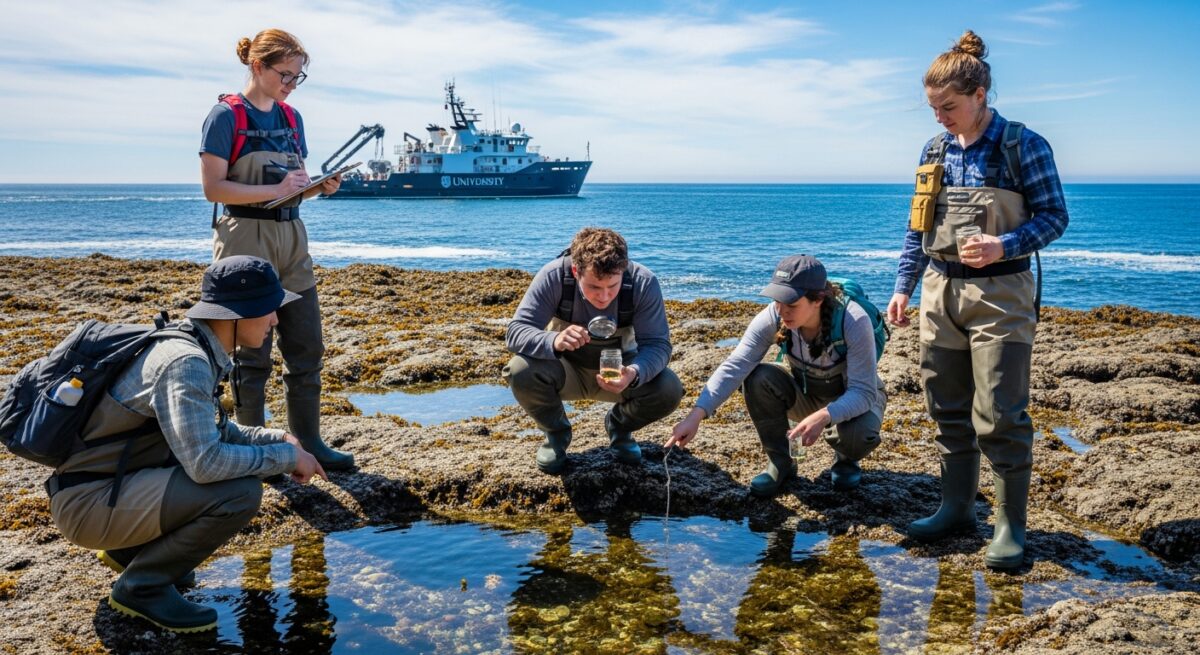
Choosing the right marine biology program is a pivotal decision for any aspiring ocean scientist. It’s not just about finding a school with a good reputation, it’s about aligning your specific interests in marine ecosystems, conservation, or biotechnology with the unique strengths, facilities, and field opportunities a program offers. The best marine biology colleges provide a powerful blend of rigorous classroom instruction, hands-on laboratory research, and direct access to the ocean, whether it’s the Pacific coast, the Gulf of Mexico, or a unique tropical reef system. This guide will help you navigate the key factors that distinguish elite programs and identify the institutions that can best launch your career in understanding and protecting our blue planet.
What Defines a Premier Marine Biology Program?
Not all programs labeled “marine biology” are created equal. The top-tier institutions distinguish themselves through a combination of tangible resources, academic excellence, and student outcomes. First and foremost is direct access to diverse marine habitats. A program located on a coast with its own research vessels, marine stations, and protected study areas offers an irreplaceable advantage. This proximity allows for weekly, or even daily, field trips that transform textbook concepts into lived experience. Students might be collecting plankton samples in the morning, analyzing them in an on-site lab in the afternoon, and discussing findings with a professor who is a leading expert in that very ecosystem.
Beyond location, the quality of faculty is paramount. Look for programs where professors are actively engaged in groundbreaking research, publishing in prestigious journals, and securing grants for major projects. These faculty members don’t just teach, they mentor undergraduates in their labs, offering invaluable hands-on research experience that is critical for graduate school applications and future employment. Furthermore, the curriculum should offer depth and specialization. While a solid foundation in general biology, chemistry, and physics is essential, the best programs allow students to branch into focused areas like marine mammalogy, fisheries science, coral reef ecology, marine microbiology, or oceanography. This specialization is often supported by advanced coursework, dedicated research centers, and partnerships with government agencies like NOAA or conservation NGOs.
Finally, consider the pathways a program creates for its graduates. Strong marine biology departments have robust networks for internships, co-ops, and post-graduate employment. They facilitate connections with alumni working in academia, government research, aquaculture, environmental consulting, and marine policy. A program’s success is ultimately measured by where its students go, whether to top PhD programs, medical schools (for those interested in marine veterinary medicine or health), or directly into impactful careers.
Key Factors to Evaluate When Comparing Programs
As you research potential schools, move beyond rankings and look at specific, actionable criteria. Your ideal program should be a strong match across several dimensions that align with your personal goals and learning style.
Start with the academic structure and requirements. Is marine biology a dedicated major, a concentration within a general biology degree, or an interdisciplinary track? Each has implications for your course load and flexibility. Examine the required courses and electives. Do they align with your interests? Look for required field courses, senior thesis or capstone projects, and opportunities for independent study. These are often the most rewarding and career-defining parts of the curriculum. Also, investigate the program’s emphasis on quantitative skills. Modern marine biology relies heavily on statistics, data modeling, and sometimes coding (e.g., in R or Python). Programs that integrate these skills into the curriculum prepare students for the realities of contemporary research.
Next, scrutinize the research and facility infrastructure. This is where the best marine biology programs truly shine. Key assets to look for include:
- On-campus marine labs with running seawater systems for maintaining live specimens.
- University-owned research vessels, from small boats for coastal work to larger ships for offshore expeditions.
- Access to dedicated marine field stations, often in distinct biomes (e.g., a tropical station in the Caribbean or a cold-water station in Alaska).
- Specialized instrumentation for genetics work, water chemistry analysis, underwater acoustics, or remote sensing.
- Aquaculture facilities or public aquariums used for research and education.
Financial considerations and support are also critical. In-state public universities often provide exceptional value, especially if they are located on a coast with strong marine science programs. Look for programs that offer specific scholarships for marine science students, funded undergraduate research positions, or work-study jobs in department labs. These opportunities can significantly offset costs and provide professional experience simultaneously. For a broader perspective on structuring your educational journey, including financial planning, our resource on the best marine biology colleges for aspiring ocean scientists offers detailed insights into aligning your academic choices with long-term career goals.
Leading Marine Biology Programs and Their Distinct Strengths
The United States is home to several world-class marine biology programs, each with its own geographic and academic niche. While this is not an exhaustive ranking, the following institutions are consistently recognized for their excellence and provide excellent examples of how program strengths can vary.
The University of California, Santa Barbara (UCSB) leverages its spectacular location on the California coast. Its Department of Ecology, Evolution, and Marine Biology is renowned for its research in kelp forest ecology, coastal processes, and marine conservation. The campus is adjacent to the UCSB Marine Science Institute, which provides direct access to research facilities and the Channel Islands National Marine Sanctuary. Similarly, the University of Washington’s School of Aquatic and Fishery Sciences and Department of Oceanography offer unparalleled strength in the marine systems of the Pacific Northwest, with a strong focus on fisheries management, oceanography, and climate change impacts. Its Friday Harbor Laboratories on San Juan Island is a premier marine biological field station for intensive coursework and research.
On the East Coast, the University of Miami’s Rosenstiel School of Marine, Atmospheric, and Earth Science stands out for its subtropical and tropical focus. With its own waterfront campus on Virginia Key, it operates a fleet of research vessels and has extensive coral reef research programs. For students interested in the unique ecosystems of the Gulf of Mexico and the Atlantic, the University of North Carolina at Chapel Hill’s Institute of Marine Sciences and Duke University’s Nicholas School of the Environment (with its Duke Marine Lab in Beaufort, NC) offer rigorous programs with deep connections to coastal and estuarine science. These programs highlight that the “best” choice is deeply personal, depending on whether you are drawn to polar seas, coral reefs, or temperate rocky shores.
Career Pathways with a Marine Biology Degree
A common misconception is that a marine biology degree leads to a narrow set of jobs. In reality, the skill set developed, including systems thinking, data analysis, fieldwork, and scientific communication, is highly transferable. The career landscape is broad and evolving. Traditional research roles remain vital. Many graduates pursue PhDs to become principal investigators at universities or government research labs, such as those within NOAA, the US Geological Survey, or the Environmental Protection Agency. Here, they conduct fundamental and applied research on everything from deep-sea biodiversity to the effects of pollution on marine life.
Applied and conservation-focused careers are a major pathway. Graduates work as fisheries biologists, managing sustainable fish populations. They become marine conservationists with non-profits like The Nature Conservancy or Oceana, developing policy and managing protected areas. Roles in environmental consulting are also prevalent, where scientists assess the potential impacts of coastal development, offshore energy projects, or shipping activities on marine ecosystems. The growing field of marine biotechnology offers opportunities in pharmaceutical companies searching for novel compounds in marine organisms, or in aquaculture firms improving sustainable seafood production. For those interested in the intersection of technology and the ocean, careers in underwater robotics, oceanographic instrumentation, and data science for satellite oceanography are increasingly important. Exploring degree planning for students can be a helpful step for those considering how to structure an undergraduate path that might include minors or double majors in complementary fields like computer science, engineering, or policy to enhance these career prospects.
Frequently Asked Questions
Is marine biology a competitive field?
Yes, it can be highly competitive, particularly for coveted research positions and PhD program slots. This underscores the importance of attending a strong undergraduate program where you can gain research experience, build relationships with mentors for strong letters of recommendation, and maintain a high GPA. Diversifying your skill set with statistics, technical writing, and scuba certifications can make you more competitive.
Do I need a graduate degree to work in marine biology?
It depends on the career. Technician roles, aquarium positions, some environmental consulting jobs, and education/outreach roles may be accessible with a bachelor’s degree from one of the best marine biology programs. However, most independent research, leadership roles in conservation, and university teaching positions require a master’s or, more commonly, a PhD.
How important is it to get scuba certified?
While not required for all specializations (e.g., microbiology, modeling, some marine mammal work), scuba certification is a significant asset. Many field research projects and even some undergraduate courses require it. Getting certified before or during your undergraduate studies can open doors to more hands-on opportunities.
What if I don’t live near the ocean?
You can still prepare for a career in marine biology. Focus on excelling in your core science and math classes in high school. Many excellent undergraduate programs are located inland but have strong ties to marine stations elsewhere. The key is to seek out those programs that facilitate summer field courses or semester-by-the-sea experiences to get the essential coastal exposure.
Selecting the right marine biology program is the first major expedition in your career as an ocean scientist. By prioritizing hands-on field access, faculty mentorship, and a curriculum that matches your passions, you can find an academic home that will not only educate you but also inspire you. The journey requires careful navigation, but the reward is an education that plunges you into the wonder of the marine world and equips you with the tools to become its steward. Start by visiting campuses, talking to current students and professors, and imagining where you can best begin your own voyage of discovery.