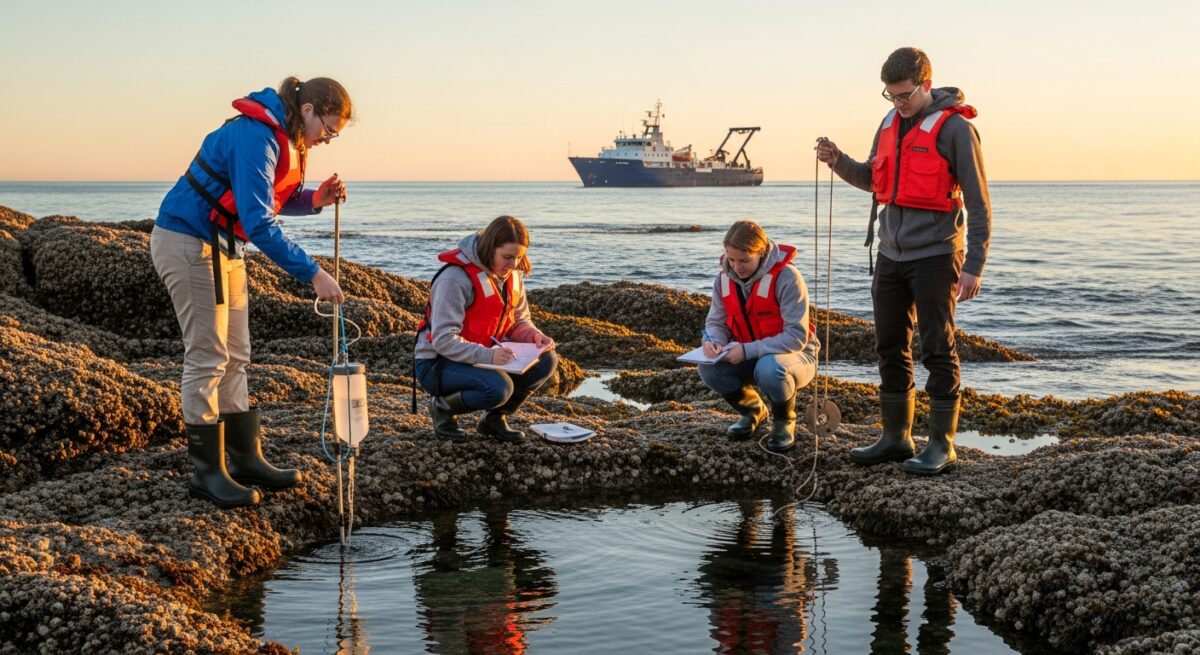
Choosing the right college is the first critical step for any student dreaming of a career in marine science. The ocean covers over 70% of our planet, and understanding its complex ecosystems is more vital than ever. For future marine biologists, oceanographers, and conservationists, selecting an institution isn’t just about a degree, it’s about finding a launchpad for discovery. The best marine biology colleges for future marine scientists offer far more than classroom lectures, they provide direct access to the sea, cutting-edge research opportunities, and a curriculum designed to tackle real-world oceanic challenges. This guide explores the leading programs that can turn a passion for the ocean into a meaningful profession.
What Defines a Premier Marine Biology Program?
Not all marine biology degrees are created equal. The top-tier programs share several distinguishing characteristics that set them apart and provide students with an unparalleled educational experience. First and foremost is proximity and access to diverse marine environments. A program located directly on a coast, especially near multiple marine habitats (like coral reefs, estuaries, kelp forests, and open ocean), offers a living laboratory that cannot be replicated inland. This allows for frequent, hands-on field work from the very first year, transforming abstract concepts into tangible skills.
Beyond location, the quality of a program is deeply tied to its research output and faculty expertise. Leading institutions are hubs of active discovery, where professors are engaged in groundbreaking work on climate change impacts, marine biotechnology, deep-sea exploration, or conservation policy. Students at these schools don’t just learn about science, they participate in it. This often means opportunities for undergraduates to assist in labs, join research cruises, and even co-author published papers. Furthermore, a strong program will have robust partnerships with government agencies (like NOAA), renowned marine laboratories, and conservation NGOs, creating a pipeline for internships and future employment. When evaluating the best marine biology colleges, prospective students should look for a curriculum that balances core biological principles with specialized marine science courses and emphasizes quantitative skills, such as statistics and data analysis, which are essential in modern research.
Leading Institutions for Marine Biology Studies
The United States boasts several world-class institutions that consistently rank at the top for marine biology and oceanographic studies. These schools are often characterized by their dedicated marine science departments, on-campus research facilities, and fleet of research vessels.
One iconic example is the University of California, Santa Barbara, which benefits from its location at the edge of the Pacific Ocean and is affiliated with the renowned Marine Science Institute. Similarly, the University of Washington’s School of Oceanography offers exceptional programs in the Pacific Northwest, with access to both coastal and freshwater systems. On the East Coast, the University of Miami’s Rosenstiel School of Marine, Atmospheric, and Earth Science stands out for its tropical marine focus and extensive research portfolio. Another powerhouse is Oregon State University, known for its Hatfield Marine Science Center in Newport, a collaborative facility that provides students with direct access to state and federal scientists.
It is crucial for students to understand that the “best” program is highly subjective and depends on their specific interests. A student fascinated by coral reef ecology might thrive at a Florida-based institution, while someone drawn to polar marine life might look towards universities in Alaska or those with strong Arctic research programs. Therefore, aligning a school’s geographic and research strengths with your personal passions is a key part of the selection process. For broader insights on how specific majors translate into career trajectories, our resource on career ladders by college major offers valuable perspective.
Key Factors in Choosing Your Marine Biology College
Selecting the right marine biology degree college requires careful consideration of several practical and academic factors. A thoughtful evaluation will ensure your investment in education aligns with your long-term professional goals.
First, scrutinize the curriculum structure. Does the program offer a Bachelor of Science (B.S.) or a Bachelor of Arts (B.A.)? A B.S. typically requires more intensive coursework in chemistry, physics, and calculus, providing a stronger foundation for graduate-level research. Look for required and elective course sequences in areas like marine ecology, invertebrate zoology, oceanography, and marine policy. Second, investigate the facilities. Does the school have its own marine lab, aquarium, or research vessels? Can undergraduates access these resources? The presence of a flowing seawater system or a dedicated field station is a strong indicator of a program’s commitment to hands-on learning.
Financial considerations and career support are equally important. Compare tuition costs, but also look into the availability of specific scholarships for marine science students and paid research positions (like work-study in a lab). A strong career services office with connections to marine industries can be invaluable for securing internships and jobs post-graduation. Finally, consider the campus culture and student outcomes. Talk to current students and alumni about their experiences. What percentage of graduates go on to advanced degrees or find employment in the field? A supportive community of like-minded peers and faculty mentors can make all the difference in a demanding scientific discipline.
When planning your academic journey, comprehensive college degree information is essential for making informed decisions across all disciplines, including specialized fields like marine science.
Beyond the Bachelor’s: Preparing for a Career in Marine Science
A bachelor’s degree from one of the best marine biology colleges opens many doors, but the path to becoming a lead researcher or senior scientist almost always requires further education. Understanding this trajectory is vital for undergraduate planning.
Many rewarding technical and support positions in aquaculture, marine education, or government monitoring are accessible with a B.S. However, positions involving independent research, project leadership, or university teaching typically require a Ph.D. A Master’s degree can serve as a valuable intermediate step, offering specialization and making candidates competitive for higher-level management or policy roles. Therefore, prospective students should view their undergraduate institution as a springboard to graduate school. Key preparation includes engaging in undergraduate research to gain technical skills and build a relationship with faculty who can provide strong letters of recommendation. Excelling in core science and math courses is non-negotiable, as graduate programs have stringent GPA and course prerequisite requirements.
Furthermore, students should use their undergraduate years to build a diverse skill set. Marine science is increasingly interdisciplinary and tech-driven. Proficiency in areas like scientific diving (if physically able), GIS (Geographic Information Systems), statistical programming (e.g., R or Python), and remote sensing can make a candidate stand out. Seeking out internships every summer, whether with a university lab, a conservation NGO, or a state wildlife agency, provides critical real-world experience and professional networking opportunities that are just as important as academic grades.
Frequently Asked Questions
What is the difference between marine biology and oceanography?
Marine biology is a subset of marine science focused specifically on the organisms that live in the ocean, their behaviors, and their interactions with the environment. Oceanography is a broader field that includes the physical, chemical, and geological aspects of the ocean itself (e.g., currents, chemistry, seafloor geology). Many strong programs offer coursework in both.
Are there strong marine biology programs not located directly on a coast?
Yes. Some excellent inland universities have robust marine biology programs through partnerships with coastal field stations and marine laboratories. These programs often bring students to the coast for intensive summer or semester-long field courses. However, direct and frequent access to the ocean during the regular academic year is a significant advantage offered by coastal institutions.
What can I do with a marine biology degree besides research?
Career paths are diverse and include marine conservation and policy, aquarium and zoo science, marine education and outreach, environmental consulting, fisheries management, biotechnology, and science communication. The analytical and problem-solving skills gained are highly transferable.
How important is it to attend a college with a dedicated marine biology major versus a general biology major with a marine focus?
Both paths can be successful. A dedicated major often provides a more structured sequence of marine-specific courses and a built-in community of marine-focused peers and faculty. A general biology major with a marine focus offers more flexibility and may be a good option at a university without a formal marine biology department, as long as you can secure relevant research and internship experiences.
What should I look for in a college’s marine science faculty?
Look for faculty whose research areas align with your interests. Check their publication records and see if they actively involve undergraduates in their work. The opportunity to conduct senior thesis research under a faculty mentor is one of the most valuable experiences an undergraduate can have.
The journey to becoming a marine scientist begins with a deliberate choice in undergraduate education. By selecting a program that combines rigorous academics, unparalleled field access, and active research opportunities, you lay a solid foundation for a career dedicated to exploring and preserving our planet’s final frontier. The investment in finding the right fit among the best marine biology colleges for future marine scientists will pay dividends throughout your professional life, fueling a lifelong passion for the sea with the skills and knowledge needed to make a difference.