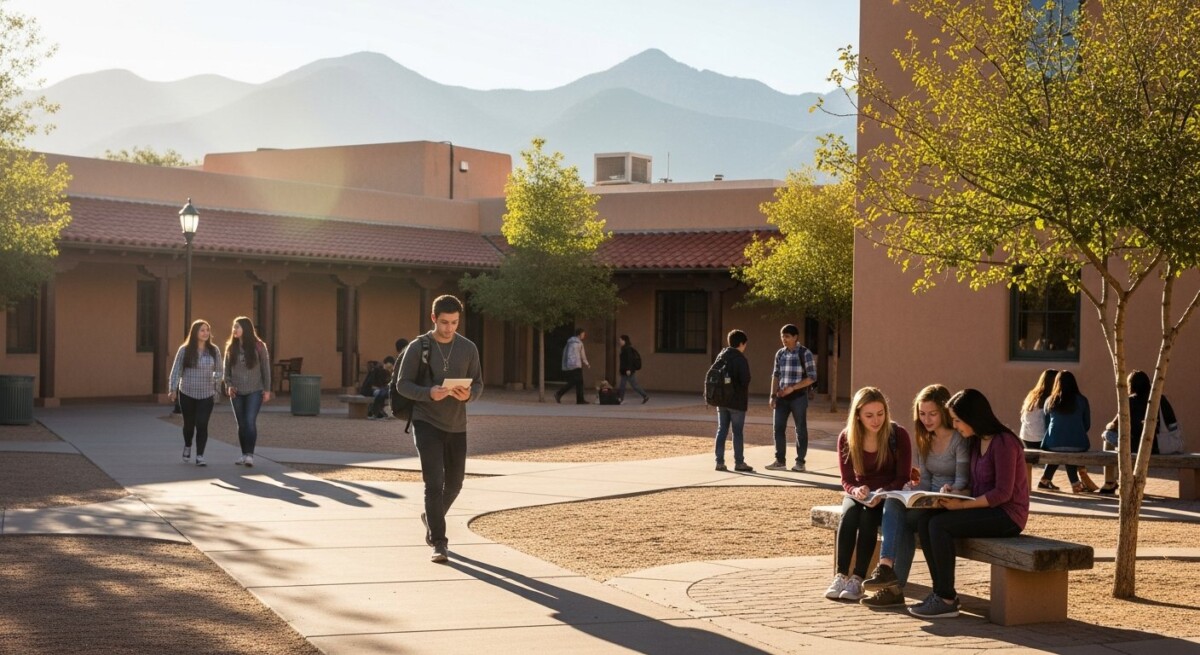
Finding the right school is a defining moment for any student. In New Mexico, families often weigh the benefits of public universities against the personalized attention and specialized programs offered by private institutions. The landscape of private education in the Land of Enchantment is diverse, ranging from faith-based colleges to nationally recognized research universities. For students seeking smaller class sizes, robust financial aid packages, and a tight-knit community, the leading private institutions for students in New Mexico provide compelling options that can shape both academic and professional futures. Understanding what these schools offer, how they compare to public alternatives, and what makes each unique is essential for making an informed decision.
This article explores the premier private colleges and universities in New Mexico, detailing their academic strengths, campus cultures, and financial aid opportunities. Whether you are a high school junior beginning your college search or a parent helping your child navigate the admissions process, this guide will equip you with the knowledge to identify which institution aligns best with your goals. We also discuss how to leverage these schools’ resources and connect with programs that support long-term career success. For additional insight into how these schools rank nationally, you can refer to our comprehensive analysis of top ranked universities in New Mexico to see how private options stack up against public ones.
Why Consider a Private Institution in New Mexico?
Private colleges often distinguish themselves through smaller student-to-faculty ratios, which can lead to more meaningful mentorship and collaborative learning. In New Mexico, private institutions also tend to offer generous merit-based scholarships and need-based grants that can make tuition more affordable than the sticker price suggests. Many families assume private colleges are out of reach financially, but with the right research, these schools can actually become more cost-effective than out-of-state public universities.
Another advantage is the focus on undergraduate teaching. At private institutions, faculty members are typically more accessible, and classes are often discussion-based rather than lecture-heavy. This environment can be especially beneficial for students who thrive on personal interaction and hands-on learning. Additionally, private colleges in New Mexico frequently have strong ties to local industries, including healthcare, technology, and the arts, providing students with internship and networking opportunities that directly feed into career pathways.
For students who value a specific philosophical or religious foundation, many private schools in New Mexico offer curricula integrated with Catholic, Protestant, or other spiritual traditions. This can create a supportive community where academic and personal growth go hand in hand. However, even secular private institutions in the state maintain a strong sense of identity and purpose, often centered around social justice, environmental stewardship, or cultural preservation.
Leading Private Institutions for Students in New Mexico
New Mexico is home to several outstanding private colleges and universities, each with its own character and strengths. Below we examine the most prominent ones, highlighting what makes them stand out for prospective students.
University of New Mexico (UNM) , A Public Powerhouse with Private-Style Programs
While UNM is a public research university, it operates several programs and colleges that function with a private-school feel, such as the Honors College and the Anderson School of Management. However, for the purpose of this article, we focus on institutions classified as private, nonprofit, four-year schools. UNM is included here only as a contextual reference point for comparison.
St. John’s College (Santa Fe)
St. John’s College in Santa Fe is one of the most distinctive private institutions in the country. Known for its Great Books curriculum, the college offers no majors, no lectures, and no textbooks. Instead, students read original works of philosophy, literature, mathematics, and science, then discuss them in small seminars. This approach fosters critical thinking, writing skills, and intellectual independence. The Santa Fe campus is smaller than its Annapolis counterpart but offers a close-knit community set against the beautiful backdrop of the New Mexico high desert.
St. John’s is ideal for students who are curious, self-motivated, and eager to engage in rigorous dialogue. The college provides generous financial aid, and many students graduate with less debt than the national average. For those seeking a truly unique educational experience that emphasizes how to think rather than what to think, St. John’s is a top contender among leading private institutions for students in New Mexico.
Santa Fe University of Art and Design (Now Closed)
Although this institution closed in 2018, its legacy continues to influence the private education landscape in New Mexico. The College of Santa Fe, as it was originally known, was a hub for creative students. Today, prospective art and design students often look to other private options in the state, such as the Institute of American Indian Arts (IAIA), which is a public tribal college but offers a private-school atmosphere with small classes and a focus on Native American arts.
College of the Holy Cross (Not in NM) , A Clarification
Some sources mistakenly list Holy Cross as a New Mexico institution, but it is located in Massachusetts. The only Catholic college in New Mexico is the University of the Southwest, which we cover below.
University of the Southwest (Hobbs)
Located in southeastern New Mexico, the University of the Southwest (USW) is a private, Christian university offering undergraduate and graduate degrees. With an average class size of 15 students, USW emphasizes personalized attention and faith-based learning. Programs in business, education, and nursing are particularly strong. The university also offers online degrees, making it accessible for working adults and distance learners.
USW is known for its affordable tuition and high percentage of students receiving financial aid. The campus culture is welcoming and community-oriented, with many students participating in athletics, student government, and service projects. For students who want a private, Christian education in a rural setting, USW is a solid choice among leading private institutions for students in New Mexico.
Southwestern College (Santa Fe)
Southwestern College is a private, nonprofit institution focused on adult learners and graduate education. It offers master’s degrees in counseling, art therapy, and education, among others. The college uses a low-residency model, combining online coursework with intensive on-campus sessions. This format appeals to working professionals who need flexibility. Southwestern College is accredited by the Higher Learning Commission and is known for its progressive, student-centered approach.
Navajo Technical University (Crownpoint)
While technically a tribal land-grant university, Navajo Technical University (NTU) operates with many characteristics of a private institution, including small class sizes and a strong cultural identity. NTU offers associate, bachelor’s, and master’s degrees in STEM fields, business, and Navajo studies. The university is a leader in integrating Indigenous knowledge with modern technology. For Native American students and those interested in cross-cultural education, NTU provides a unique and supportive environment.
Key Factors to Evaluate When Choosing a Private College
Selecting among the leading private institutions for students in New Mexico requires careful consideration of several factors beyond tuition cost. Here are the most important ones to weigh:
- Accreditation and Academic Reputation: Ensure the institution is regionally accredited, which guarantees that credits transfer and degrees are recognized by employers and graduate schools. Check program-specific accreditations for fields like nursing, business, and education.
- Financial Aid and Net Price: Use the net price calculator on each college’s website to estimate your actual cost after grants and scholarships. Private schools often have large endowments that fund merit aid.
- Graduation and Retention Rates: High retention rates indicate student satisfaction. Look for schools where at least 70% of first-year students return for sophomore year.
- Campus Culture and Location: Consider whether you prefer an urban campus (like Albuquerque or Santa Fe) or a rural setting (like Hobbs or Crownpoint). Visit if possible, or attend virtual tours and information sessions.
- Career Services and Alumni Network: Strong career counseling and internship placement can significantly impact your job prospects after graduation. Ask about alumni mentorship programs and employer partnerships.
Evaluating these factors systematically will help you narrow down your options and find the institution that best fits your academic and personal needs. Remember that the “best” school is not always the most prestigious one but the one where you will thrive.
Financial Aid and Scholarships at Private New Mexico Schools
One of the biggest misconceptions about private colleges is that they are unaffordable. In reality, many private institutions in New Mexico offer substantial financial aid packages that can make them cheaper than public universities. For example, St. John’s College meets 100% of demonstrated financial need for all admitted students, and the University of the Southwest awards scholarships to nearly every student.
To maximize your aid, follow these steps:
- File the FAFSA (Free Application for Federal Student Aid) as early as possible after October 1. This determines your eligibility for federal grants, loans, and work-study.
- Complete the CSS Profile if required by the college (St. John’s College requires it). This form is used by many private schools to award institutional aid.
- Apply for outside scholarships from local organizations, such as the New Mexico Educational Assistance Foundation or the Hispanic Scholarship Fund.
- Contact the financial aid office directly to ask about merit-based scholarships that do not require a separate application.
Private colleges often have more flexibility to negotiate aid packages than public universities. If you receive a better offer from one school, you can respectfully ask another school to match it. This is called a financial aid appeal, and it can result in thousands of dollars in additional grant money.
For more detailed guidance on financing your education, explore resources on college degree information that break down tuition costs, loan options, and scholarship strategies. Understanding the full picture of college affordability is crucial before making a commitment.
Career Outcomes and Graduate Success
Ultimately, the value of a college education is measured by the opportunities it creates after graduation. The leading private institutions for students in New Mexico have strong track records of placing graduates in competitive jobs and graduate programs. St. John’s College graduates, for instance, are accepted into top law and medical schools at rates far above the national average. University of the Southwest nursing graduates pass the NCLEX exam at high rates, leading to immediate employment in New Mexico’s growing healthcare sector.
Career preparation at private schools often includes required internships, capstone projects, and portfolio reviews. Faculty advisors work closely with students to identify career paths and connect them with alumni in relevant fields. Many schools also host career fairs and employer networking events exclusively for their students, giving them a leg up in the job market.
When researching a college, ask for its career outcomes report. This document should show the percentage of graduates employed or enrolled in graduate school within six months of graduation, as well as average starting salaries. Transparency in these metrics is a sign of a school that is confident in its ability to prepare students for success.
Frequently Asked Questions
Are private colleges in New Mexico more expensive than public ones?
Not necessarily. While the sticker price is higher, private schools often offer generous scholarships and grants that bring the net cost down. Many families find that after aid, a private college costs the same or less than a public university.
Can I get a full scholarship to a private college in New Mexico?
Yes, some private schools offer full-tuition scholarships for top students. For example, St. John’s College has a merit scholarship program that covers full tuition for a small number of exceptional candidates. Check each school’s website for details.
Do private colleges in New Mexico offer online degrees?
Yes, several do. University of the Southwest and Southwestern College both offer online and hybrid programs, especially at the graduate level. These options are ideal for working adults.
What is the smallest private college in New Mexico?
By enrollment, St. John’s College in Santa Fe is the smallest, with around 400 undergraduate students. This creates an intimate learning environment where every student is known by name.
How do I apply to a private college in New Mexico?
Most use the Common Application or their own institutional application. Deadlines vary, but many have early action and regular decision dates. Check each college’s admissions page for specific requirements.
Choosing among the leading private institutions for students in New Mexico is a decision that deserves time and research. Each school offers a distinct educational philosophy, community, and set of opportunities. By evaluating your priorities, visiting campuses, and understanding financial aid, you can find a college that not only meets your academic needs but also supports your personal growth and career aspirations.
Whether you are drawn to the Great Books curriculum at St. John’s College, the Christian environment at University of the Southwest, or the flexibility of Southwestern College’s graduate programs, New Mexico’s private institutions provide excellent pathways to success. Take the next step by reaching out to admissions offices, attending virtual information sessions, and exploring the resources available on CollegeDegree.School to guide you through the process.