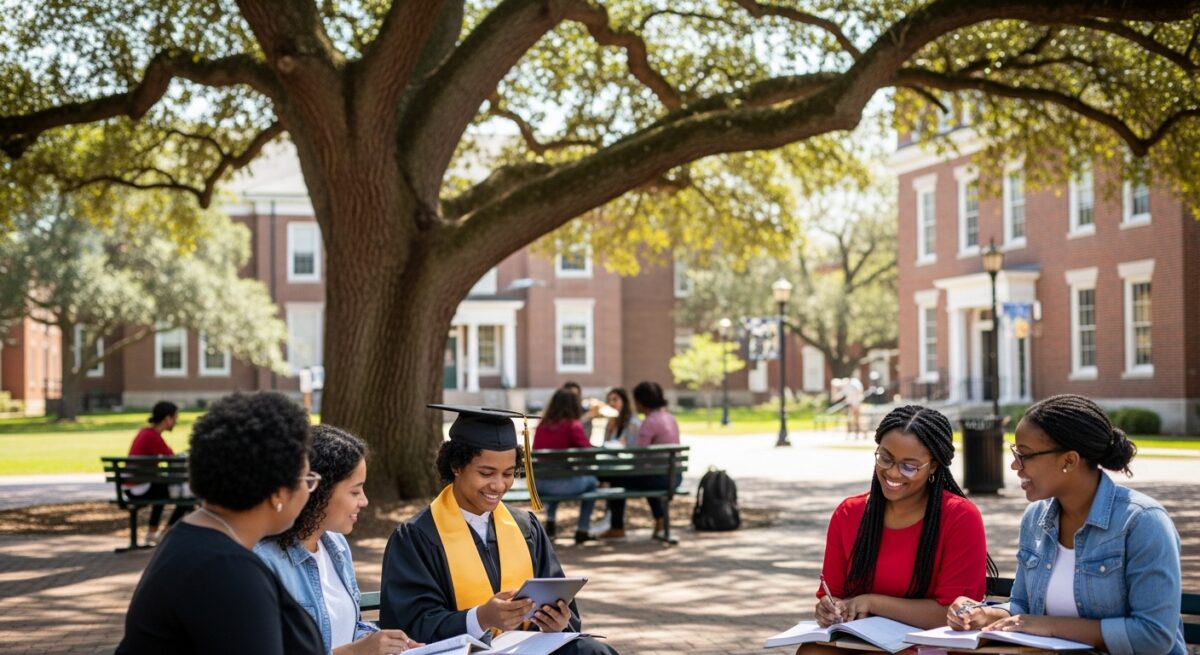
For generations, Historically Black Colleges and Universities (HBCUs) have stood as pillars of academic excellence, cultural empowerment, and professional opportunity. These institutions, born from a necessity to provide access to higher education during segregation, have evolved into some of the nation’s most vibrant and consequential centers of learning. Choosing an HBCU is about more than selecting a school, it’s about joining a legacy. This guide explores the top HBCU colleges, examining what makes them exceptional and how they continue to shape leaders across every field.
Defining Excellence at HBCU Institutions
Ranking HBCUs requires looking beyond conventional metrics. While graduation rates, research funding, and selectivity are important, the true measure of an HBCU’s impact lies in its ability to foster a supportive environment that cultivates talent often overlooked by other institutions. Excellence at an HBCU is demonstrated through high-impact mentorship, a curriculum that frequently incorporates cultural relevance, and a profound success rate in propelling graduates into graduate programs and competitive careers. The value is both tangible, in the form of strong alumni networks and career outcomes, and intangible, found in the unparalleled sense of community and identity affirmation.
When evaluating the top HBCU colleges, several key factors consistently emerge. Academic rigor in STEM (Science, Technology, Engineering, and Mathematics), business, and the arts is paramount. Many top HBCUs are classified as research institutions, offering undergraduates rare opportunities to participate in groundbreaking projects. Furthermore, a commitment to student support services, from comprehensive tutoring to dedicated career counseling, is a hallmark of these schools. Finally, the strength and engagement of the alumni network cannot be overstated, as it directly translates into internship placements, job opportunities, and lifelong professional connections.
Leading HBCUs Across Key Disciplines
The landscape of top HBCU colleges is diverse, with different institutions leading in various academic and professional arenas. Some have gained national recognition for their engineering programs, while others are famed for producing the majority of the nation’s Black doctors, lawyers, or corporate executives. This specialization allows prospective students to align their career aspirations with an institution’s proven track record.
For instance, several HBCUs are consistently highlighted for STEM leadership. These schools not only provide rigorous technical education but also actively work to close the diversity gap in fields like engineering and computer science. Their success is built on a model that combines challenging coursework with robust support systems, ensuring students are not just admitted but are retained and graduated. Similarly, in the liberal arts, top HBCUs offer a rich, culturally informed education that prepares critical thinkers and effective communicators. For a deeper understanding of the foundational role and enduring value of these institutions, our guide on HBCU history and value provides essential context.
Top Tier Research and Comprehensive Universities
A subset of HBCUs are designated as R2 or R1 research universities, indicating high or very high research activity. These institutions offer a unique blend of intimate, supportive HBCU culture and the vast resources of a major research university. Students at these schools can work in state-of-the-art laboratories, contribute to federally funded research, and learn from faculty who are leaders in their fields, all within the nurturing HBCU environment. This combination is powerful and rare, making these universities particularly attractive for students aiming for PhDs, medical school, or careers in tech and innovation.
The benefits extend beyond the sciences. These comprehensive universities also host top-ranked schools of business, education, and the arts. They attract a wide range of corporate recruiters and often have the largest endowments among HBCUs, which translates to more scholarship opportunities, better facilities, and expanded study abroad programs. The campus life at these larger institutions is typically vibrant, with a rich array of student organizations, renowned marching bands, and competitive athletic programs that contribute to the iconic HBCU experience.
Financial Considerations and Value Proposition
One of the most compelling arguments for attending an HBCU is the exceptional return on investment. Many top HBCU colleges offer a high-quality education at a cost significantly lower than comparable predominantly white institutions (PWIs). Furthermore, they are often exceptionally effective in securing financial aid for their students. The mission of access is alive in their financial aid offices, which work diligently to package scholarships, grants, and work-study opportunities to make attendance feasible.
Prospective students should actively explore several financial avenues. Federal Pell Grants and state aid are foundational. Importantly, many HBCUs have specific endowed scholarships funded by alumni and corporate partners aimed at supporting students in particular majors or from certain regions. Additionally, programs like the Thurgood Marshall College Fund and the United Negro College Fund (UNCF) provide billions in scholarships specifically for HBCU attendees. When planning your investment in higher education, it is wise to consult comprehensive academic degree resources to compare tuition models and scholarship strategies across institutions.
To illustrate the point, here is a list of common financial resources prospective HBCU students should investigate:
- Institution-Specific Merit and Need-Based Scholarships
- The Thurgood Marshall College Fund (TMCF) Scholarships
- United Negro College Fund (UNCF) Scholarships and Programs
- Federal Work-Study and Federal Supplemental Educational Opportunity Grants (FSEOG)
- Corporate Partnership Scholarships (e.g., from Apple, Google, Bank of America)
The Alumni Network and Career Outcomes
The ultimate test of any university is the success of its graduates. HBCUs punch far above their weight in this category. Despite enrolling a relatively small percentage of Black college students, HBCUs produce a disproportionately high percentage of Black graduates who go on to earn PhDs in STEM, become doctors, and ascend to leadership roles in law, business, and public service. This success is not accidental, it is engineered through a culture of expectation and support.
The HBCU alumni network is famously loyal and active. This network functions as a powerful career accelerator. It is common for alumni to directly recruit from their alma maters, create internship pipelines, and offer mentorship to current students. This interconnected community lowers the barrier to entry in competitive fields. For example, a single top HBCU might have hundreds of alumni in executive positions at a major tech firm or within a federal government agency, creating a clear pathway for new graduates. The career services departments at these schools are adept at leveraging these relationships, resulting in strong post-graduation employment statistics that rival those of any top-tier national university.
Frequently Asked Questions
What is the difference between a top HBCU and a top national university?
The core difference lies in mission and environment. Top national universities focus on broad prestige and research output. Top HBCU colleges deliver comparable academic rigor and outcomes but within a culturally affirming environment specifically designed to support and elevate Black students. The mentorship, community support, and focus on overcoming systemic barriers are integral and unique to the HBCU experience.
Are HBCUs only for Black students?
No. HBCUs are open to all students. While their primary mission is to educate Black Americans, they have always enrolled students of all races and ethnicities. These institutions offer a diverse and inclusive environment where all students can benefit from the unique cultural and academic perspective an HBCU provides.
How do I choose the right HBCU for me?
Start by aligning your academic and career goals with institutional strengths. Research which schools have leading programs in your intended major. Consider the campus environment: do you prefer a large, research-intensive university or a smaller, liberal arts-focused campus? Finally, factor in location, cost, and financial aid offerings. Visiting campuses, either virtually or in person, is the best way to gauge the community feel.
Do HBCUs offer strong programs in fields like engineering and computer science?
Absolutely. Many of the top HBCU colleges are national leaders in producing Black engineering and computer science graduates. Schools like North Carolina A&T State University, Howard University, and Florida A&M University have renowned, accredited engineering programs with deep ties to industry and government agencies, leading to exceptional job placement rates.
Is the social life at an HBCU different?
The social and cultural life at an HBCU is often described as more cohesive and vibrant. Traditions like homecoming, step shows, and Greek life (originating at HBCUs) are central to the experience. There is a pervasive sense of shared culture and history that fosters strong bonds among students, creating a network that lasts a lifetime.
Selecting from among the top HBCU colleges is a decision that shapes both your professional trajectory and personal development. These institutions offer a proven pathway to leadership, grounded in a legacy of resilience and excellence. By focusing on academic alignment, financial fit, and that intangible sense of community, you can find an HBCU that will not only educate you but also empower you to excel.