Choosing a degree that blends physical science, social science, and real-world problem-solving is a powerful decision. Geography and Environmental Studies programs equip students to understand complex issues like climate change, urban development, resource management, and sustainable planning. With growing demand for professionals who can analyze spatial data and address environmental challenges, selecting the right institution is critical for career success. This article explores the best universities for geography and environmental studies, highlighting what makes each program distinctive and how they prepare graduates for impactful careers.
What Makes a Geography or Environmental Studies Program Stand Out?
Not all geography degree colleges are created equal. The strongest programs share several key characteristics that ensure students receive a rigorous, relevant, and well-rounded education. First, they offer a curriculum that balances human geography (population patterns, economic systems, cultural landscapes) with physical geography (climatology, geomorphology, biogeography) and technical skills like Geographic Information Systems (GIS) and remote sensing.
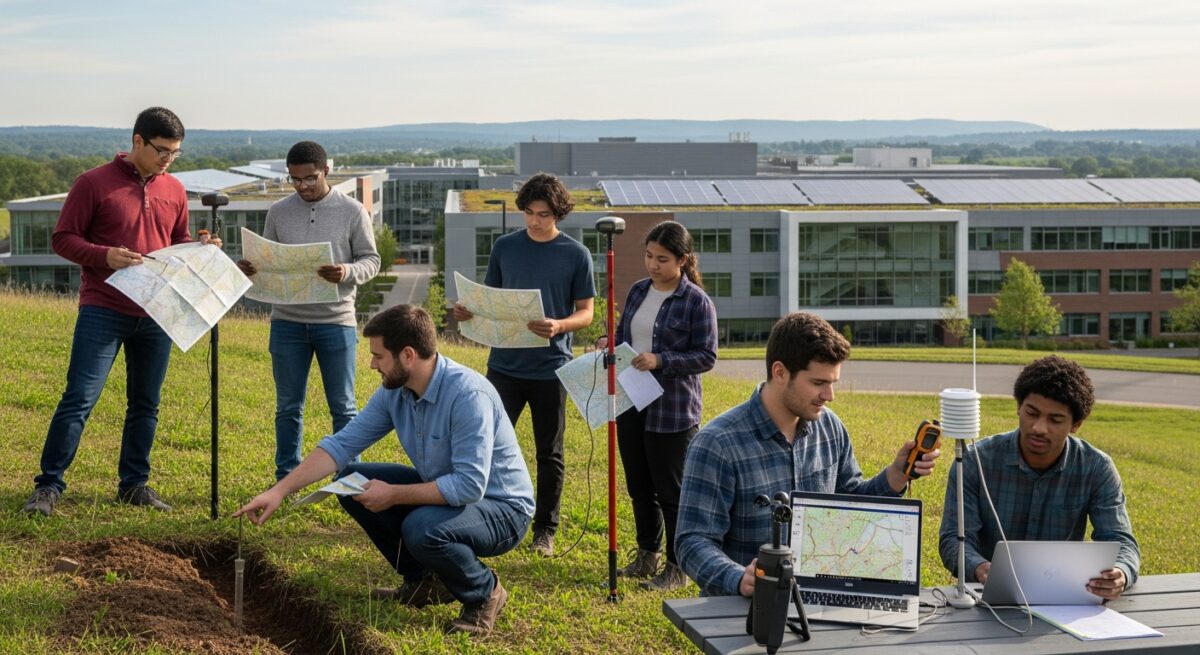
Second, top environmental geography universities provide hands-on learning opportunities. This includes field research, laboratory work, internships with government agencies or non-profits, and capstone projects that tackle real community problems. Third, they have faculty who are active researchers and recognized experts in their fields. Finally, robust career services and alumni networks help students translate their academic experiences into jobs in planning, conservation, education, and technology.
Leading Universities for Geography and Environmental Studies
When evaluating the best universities for geography and environmental studies, several institutions consistently rise to the top based on academic reputation, research output, faculty expertise, and student outcomes. These programs offer a blend of theoretical depth and practical application that is hard to match.
University of California, Berkeley
UC Berkeley’s Department of Geography is one of the oldest and most respected in the world. The program emphasizes critical human geography, environmental politics, and spatial analysis. Students benefit from Berkeley’s location in the San Francisco Bay Area, which serves as a living laboratory for studying urbanization, environmental justice, and technological innovation. The department offers a Bachelor of Arts (BA) in Geography and a Bachelor of Science (BS) in Environmental Sciences. Research strengths include climate change adaptation, political ecology, and critical GIS. Berkeley also houses the Space Sciences Laboratory and the Berkeley Atmospheric Sciences Center, giving geography students access to cutting-edge research facilities.
University of Oxford
The School of Geography and the Environment at Oxford is globally recognized for its interdisciplinary approach. It combines natural sciences, social sciences, and humanities to address pressing environmental challenges. The undergraduate program (BA in Geography) covers a broad range of topics from landscape systems to globalization and development. Oxford’s tutorial system provides personalized academic support, and students have access to extensive field courses in the UK and abroad. Research centers within the school focus on climate change, biodiversity conservation, and sustainable urban futures. Oxford’s reputation and network make it a top choice for students seeking careers in academia, policy, and international development.
University of Cambridge
Cambridge’s Department of Geography is one of the largest and most diverse in the UK. The undergraduate Tripos in Geography offers a flexible structure, allowing students to explore physical geography, human geography, and specialized topics like Arctic studies, glaciology, and geopolitics. The department is home to the Scott Polar Research Institute and the Cambridge Conservation Initiative, providing unique research opportunities. Fieldwork is a core component, with trips to locations such as the Alps, Morocco, and the Caribbean. Cambridge’s strong emphasis on independent research and critical thinking prepares graduates for leadership roles in environmental consulting, academia, and public service.
University of Washington
The University of Washington (UW) in Seattle offers a highly regarded Department of Geography, known for its strength in GIS, remote sensing, and environmental modeling. The program offers BA and BS degrees in Geography, as well as a BS in Environmental Studies through the Program on the Environment. UW’s location in the Pacific Northwest provides access to diverse ecosystems, from old-growth forests to coastal shorelines, ideal for field-based learning. The department collaborates closely with the College of the Environment and the eScience Institute, giving students exposure to big data analysis and computational geography. Graduates frequently find work in tech companies, government agencies like NOAA, and environmental non-profits.
Arizona State University
Arizona State University (ASU) has built a reputation as a leader in sustainability and environmental social science. The School of Geographical Sciences and Urban Planning offers a BA in Geography, a BS in Geography (with concentrations in GIS, urban planning, or environmental studies), and a BS in Sustainability. ASU emphasizes transdisciplinary research, meaning students work across departments to solve complex problems. The university’s location in the Sonoran Desert offers a unique setting for studying arid environments, water management, and urban heat islands. ASU is also a top producer of GIS professionals, with strong industry partnerships and a focus on career readiness. The school’s faculty includes leading voices in climate adaptation and sustainable urban design.
Specialized Program Types and Career Paths
Geography and environmental studies degrees lead to a wide range of careers. The best choice often depends on a student’s specific interests. Below is a breakdown of common program types and the career paths they support.
- GIS and Spatial Analysis: Programs that emphasize GIS, remote sensing, and spatial data science prepare students for roles as GIS analysts, cartographers, and data scientists. Careers exist in urban planning, emergency management, logistics, and environmental consulting.
- Environmental Policy and Management: These programs focus on the intersection of science, law, and policy. Graduates work as environmental analysts, policy advisors, and sustainability coordinators for government agencies, non-profits, and corporations.
- Physical Geography and Climate Science: Students who focus on climatology, hydrology, or geomorphology can pursue careers in climate modeling, water resource management, and environmental monitoring. Many go on to graduate school or work for research institutes.
- Human Geography and Urban Planning: This track explores how people interact with space and place. Careers include urban planner, community development specialist, transportation analyst, and market researcher.
Each path requires a solid foundation in research methods, critical thinking, and communication skills. The best universities for geography and environmental studies provide elective tracks or concentrations that allow students to tailor their degree to their career goals. For example, a student interested in online degree programs in geography can find flexible options that still offer rigorous training in GIS and environmental analysis.
How to Choose the Right Program for You
Selecting among the best universities for geography requires careful consideration of multiple factors. Location matters because it influences access to field sites, internship opportunities, and job networks. A university near a coastline, for instance, offers advantages for studying marine geography or coastal management. Similarly, a program located in a major city provides opportunities for urban planning internships and connections to government agencies.
Curriculum flexibility is another key factor. Some programs require a broad survey of geography, while others allow early specialization. Look for programs that offer hands-on coursework in GIS, statistics, and fieldwork. Check whether the department has dedicated labs, computing clusters, or field stations. Faculty expertise is also critical. Review faculty research areas to see if they align with your interests. Many departments list recent publications and ongoing projects on their websites.
Cost and financial aid should not be overlooked. Public universities often offer lower tuition for in-state students, while private universities may provide generous scholarships. For students who need flexibility, many accredited geography degree colleges now offer online or hybrid programs. These can be a great option for working professionals or those who cannot relocate. In our guide on top premier private colleges and universities in Oklahoma, we explain how to evaluate private institutions for geography and environmental programs.
Frequently Asked Questions
What is the difference between geography and environmental studies?
Geography is a broad discipline that studies the Earth’s physical features, human societies, and the relationships between them. It includes both physical geography (landforms, climate, ecosystems) and human geography (cities, culture, economics). Environmental studies is an interdisciplinary field that examines environmental issues from scientific, social, and policy perspectives. While geography often provides the spatial and analytical tools, environmental studies applies them to solving environmental problems. Many programs combine both fields, and the best universities for geography and environmental studies often offer joint degrees or concentrations.
What jobs can I get with a geography degree?
A geography degree opens doors to many careers. Common roles include GIS analyst, urban planner, environmental consultant, cartographer, climatologist, and sustainability manager. Geography graduates also work in education, government, non-profits, and the private sector. The skills learned including spatial analysis, data interpretation, and critical thinking are highly valued in fields like real estate, logistics, and market research. Many geography degree colleges report strong job placement rates, especially for students with GIS training.
Do I need a graduate degree for environmental work?
Not always, but a master’s degree can significantly enhance career prospects and earning potential. Many entry-level positions in environmental consulting, planning, and government agencies accept a bachelor’s degree. However, leadership roles, research positions, and specialized fields like climate modeling or environmental law often require a graduate degree. The best environmental geography universities offer accelerated bachelor’s-to-master’s programs that allow students to earn both degrees in five years.
What skills are most important for geography students?
Technical skills like GIS, remote sensing, and statistical analysis are crucial. Equally important are critical thinking, writing, and communication skills. Geography students must be able to analyze complex data, synthesize information from multiple sources, and present findings clearly. Fieldwork requires physical stamina and adaptability. Many programs also emphasize teamwork and project management, as students often work on collaborative research projects. The best universities for geography and environmental studies integrate these skills throughout their curriculum.
Building a Career with a Geography or Environmental Degree
Choosing the right program is the first step toward a rewarding career. Whether you are drawn to mapping ecosystems, designing sustainable cities, or shaping environmental policy, the best universities for geography and environmental studies provide the knowledge, skills, and networks to succeed. As you research options, consider visiting campuses, talking to current students and faculty, and reviewing alumni outcomes. With the right foundation, you can turn your passion for the planet into a meaningful and impactful profession.