Choosing the right educational institution is the single most critical decision for an aspiring fashion designer. It is a choice that shapes your technical skills, creative voice, professional network, and career trajectory. The world’s best fashion universities for design students are more than just schools, they are gateways to the industry, incubators for talent, and communities that foster innovation. This guide delves into the key factors that define a top-tier fashion design education and provides a detailed look at the institutions that consistently set the global standard, helping you make an informed decision for your future.
What Defines a Top Fashion Design University?
Not all fashion schools are created equal. The institutions that consistently rank as the best fashion universities for design students share a constellation of attributes that contribute to their prestigious reputations. First and foremost is an unparalleled faculty composed of industry veterans, working designers, and renowned artists who provide not just instruction, but mentorship and real-world connections. These educators bridge the gap between academic theory and the fast-paced reality of the fashion world.
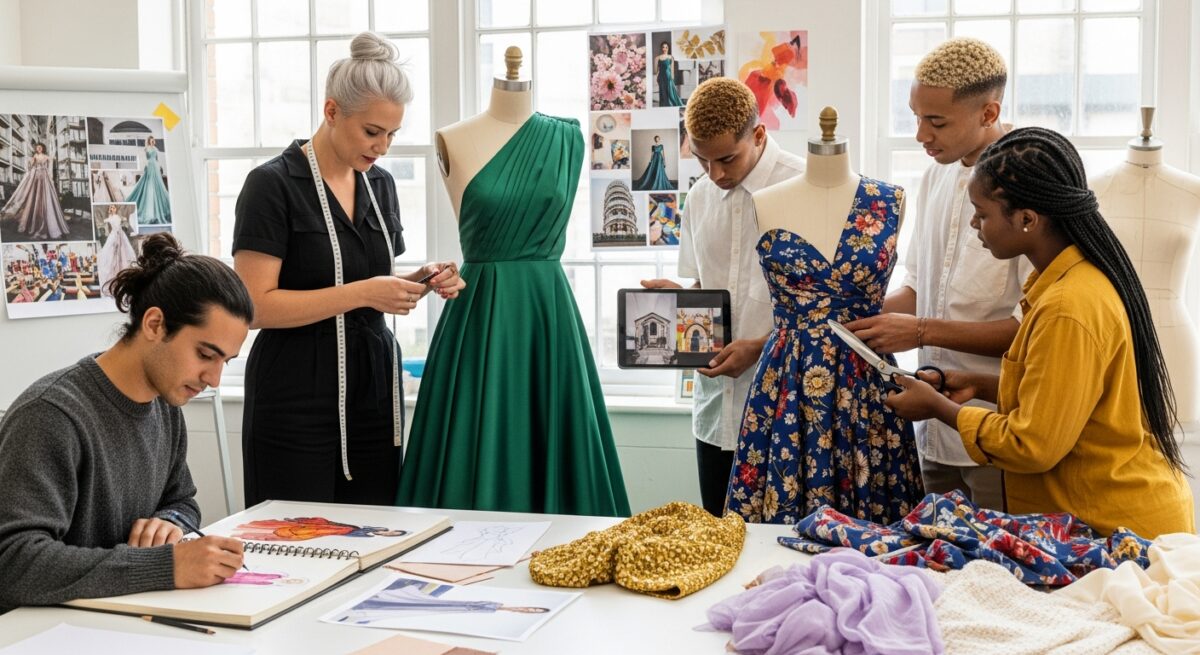
Another critical component is a curriculum that balances foundational artistry with cutting-edge technology. While mastering draping, pattern-making, and illustration remains essential, leading programs now deeply integrate digital design, 3D prototyping, sustainable practices, and business entrepreneurship. Furthermore, access to state-of-the-art facilities, from industrial sewing labs and textile libraries to digital print studios, is non-negotiable for hands-on learning. Perhaps the most significant advantage offered by top fashion colleges is their industry integration. This manifests through mandatory internships, guest lectures from major brand executives, annual graduate fashion shows attended by press and recruiters, and strong alumni networks that actively support new graduates. For students navigating these complex program choices, external degree planning resources can offer valuable frameworks for comparing curricula and outcomes.
Leading Fashion Design Schools in the United States
The United States hosts several of the world’s most influential fashion design schools, each with a distinct philosophy and area of excellence. These institutions are known for producing designers who lead major fashion houses and launch successful independent labels.
The Fashion Institute of Technology (FIT) in New York City is renowned for its intensely practical and industry-focused approach. Its location in the heart of the garment district provides students with immediate access to internships and professional opportunities. FIT’s strengths lie in its specialized programs, from intimate apparel and knitwear to fashion business management, making it a powerhouse for students with clear, career-oriented goals.
Parsons School of Design, part of The New School in New York, emphasizes conceptual thinking and design as a force for social change. Its curriculum encourages students to develop a strong personal aesthetic and intellectual framework for their work. Parsons is famous for its rigorous first-year program that builds foundational skills across design disciplines, followed by deep specialization. Alumni like Marc Jacobs and Tom Ford underscore its impact on global fashion.
Across the country, the Fashion Institute of Design & Merchandising (FIDM) in Los Angeles offers a unique West Coast perspective, with strong ties to the entertainment, activewear, and denim industries. Its programs are highly specialized and career-focused, often incorporating direct project work with companies. Savannah College of Art and Design (SCAD) provides a vast, resource-rich environment with exceptional facilities and a focus on preparing students for the evolving digital landscape of fashion, including UX design for wearable technology.
Premier European Institutions for Fashion Design
Europe, with its deep fashion history and luxury brand headquarters, is home to legendary institutions. These schools often emphasize a combination of haute couture craftsmanship, avant-garde conceptualism, and luxury brand management.
Central Saint Martins (CSM), part of the University of the Arts London, is arguably the most famous fashion school in the world, known for cultivating iconic, boundary-pushing designers like Alexander McQueen and Stella McCartney. The environment is highly competitive and conceptually driven, focusing on developing a designer’s unique voice and artistic vision. The Royal College of Art (RCA) in London offers postgraduate-only programs (MA, MPhil, PhD), providing an intense, research-led environment for designers who already possess a strong foundation and wish to engage in deep, innovative practice or theoretical exploration.
In Italy, Istituto Marangoni offers a distinctly Italian approach centered on luxury, impeccable craftsmanship, and brand creation. With campuses in Milan, Florence, and other fashion capitals, it provides immersion in the Italian fashion system and direct pathways to internships with legendary houses. Similarly, Polimoda in Florence combines Italian craftsmanship with international vision, known for its strong ties to the Ferragamo family and a curriculum that seamlessly blends design, business, and marketing.
Key Factors to Consider in Your Selection
Selecting the right school is a personal decision that must align with your individual aspirations, learning style, and circumstances. Beyond prestige, you must evaluate several practical and philosophical elements. The program’s specializations are crucial, do you want a broad-based BFA, a technically focused associate degree, or a conceptual MA? Investigate the specific courses and whether they align with your interests, be it sustainable design, menswear, or fashion technology.
Location is another significant factor. Being in a global hub like New York, London, or Milan offers unmatched access to industry events, museums, internships, and a vibrant creative community. However, schools in other cities may offer lower costs of living, tight-knit communities, and unique local industry connections. The culture and teaching methodology of the school are equally important. Some programs thrive on cutthroat competition, while others foster collaborative environments. Some focus heavily on technical precision, others on conceptual narrative. Visiting campuses, attending virtual open houses, and speaking with current students and alumni are the best ways to gauge this fit.
Finally, the financial investment cannot be ignored. Tuition at top fashion universities for design students is substantial. It is essential to research scholarships, financial aid packages, work-study opportunities, and the potential return on investment. Consider the school’s career services statistics, job placement rates, and the long-term career paths of its graduates.
Building Your Application Portfolio
The application portfolio is the cornerstone of your admission to a competitive fashion design program. It is not merely a collection of finished garments, it is a curated narrative of your creativity, process, and potential. Admissions panels look for a strong conceptual foundation, technical skill, and a unique point of view. Your portfolio should demonstrate your ability to develop an idea from initial research and inspiration through sketches, fabric selection, and technical flats, to a final realized product. Include process pages that show your thinking, mistakes, and evolution. Diversity in mediums, such as drawing, painting, photography, or 3D work, can also showcase your broader artistic sensibility. Remember, quality always trumps quantity, it is better to have eight exceptional, well-documented projects than fifteen mediocre ones.
Frequently Asked Questions
Is it necessary to attend a prestigious fashion school to succeed in the industry?
While not an absolute requirement, attending a top fashion college provides immense advantages: a powerful network, industry-recognized credentials, access to recruitment, and high-level training. Many successful designers are self-taught or come from other fields, but they often face a steeper, longer path to recognition without that structured foundation and network.
What is the difference between a fashion design degree and a fashion merchandising or marketing degree?
Fashion design degrees focus on the creation of apparel and accessories, covering design, construction, pattern-making, and textiles. Fashion merchandising and marketing degrees focus on the business side: buying, retail management, branding, promotion, and sales. Some schools offer blended programs, but the core focus is distinct.
How important are internships during fashion school?
Critically important. Internships provide real-world experience, help you build a professional resume, and can often lead directly to job offers. They are a mandatory component of most reputable programs and are essential for understanding industry workflows and making professional connections.
Should I get an associate degree or a bachelor’s degree in fashion design?
An associate degree (typically 2 years) is often highly technical and focused on immediate job-ready skills for roles like pattern-maker or technical designer. A bachelor’s degree (4 years) provides a broader education, including liberal arts, more advanced conceptual development, and greater depth in design theory, better preparing students for leadership or entrepreneurial roles.
What are the emerging specializations in fashion design education?
Leading programs are rapidly expanding into areas like sustainable and circular design, digital fashion and NFT wearables, smart textiles and wearable technology, inclusive and adaptive design, and data analytics for fashion forecasting. Prospective students should look for schools investing in these future-focused fields.
The journey to becoming a fashion designer begins with strategic education. By thoroughly researching the best fashion universities for design students, understanding what each excels in, and honestly assessing your own goals, you can select a program that will not only teach you skills but also help you find your unique voice in the vast world of fashion. This decision is the first, and most important, step in designing your future career.