Choosing the right university for an environmental science degree is a pivotal decision that shapes your academic foundation, research opportunities, and future career impact. With climate change, biodiversity loss, and sustainability challenges defining our era, the demand for skilled environmental scientists has never been greater. The best universities for environmental science programs distinguish themselves through rigorous interdisciplinary curricula, cutting-edge research facilities, strong industry and governmental partnerships, and a profound commitment to solving real-world ecological problems. This guide explores the leading institutions globally and in the United States, examining what makes their programs exceptional and how they prepare graduates to become leaders in conservation, policy, research, and environmental technology.
What Defines a Top-Tier Environmental Science Program?
Before listing specific institutions, it’s crucial to understand the criteria that separate good programs from truly great ones. A premier environmental science college offers more than just a collection of courses, it provides an integrated ecosystem for learning and discovery. The core pillars include a robust, interdisciplinary curriculum that blends natural sciences like ecology, geology, and chemistry with social sciences, policy, and economics. This holistic approach is essential because environmental problems are rarely confined to a single discipline.
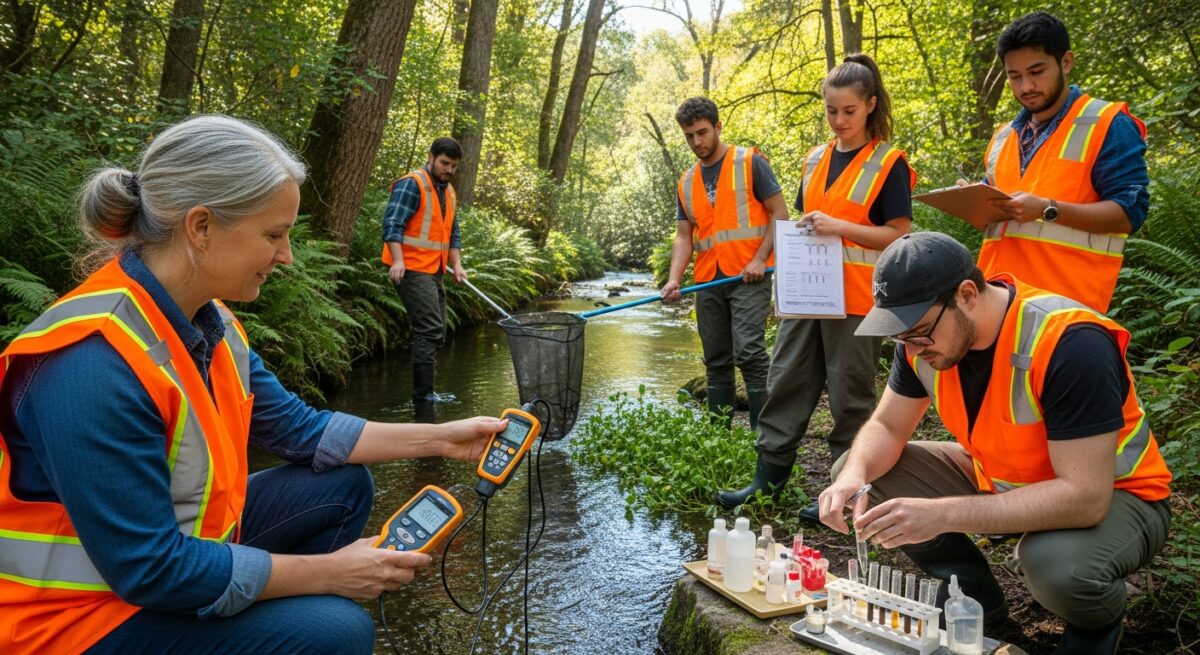
Furthermore, access to undergraduate and graduate research is a non-negotiable hallmark. The top environment programs embed students in faculty-led research projects from early on, often focusing on pressing issues like climate modeling, renewable energy systems, or watershed management. These institutions also boast exceptional field stations, marine labs, environmental observatories, and analytical laboratories. Strong connections to government agencies (like the EPA or NOAA), non-profits, and industry leaders provide unparalleled internship and career pathways. Finally, a global perspective, often through study abroad programs focused on comparative environmental issues, rounds out a world-class education. For students comparing different academic tracks, comprehensive college degree information can be invaluable in understanding how these program elements align with long-term career goals.
Leading Global Universities for Environmental Science
Environmental science is a global endeavor, and several universities outside the U.S. have built internationally renowned centers of excellence. These institutions often benefit from unique geographic settings and strong national commitments to environmental sustainability, offering distinct perspectives and research opportunities.
The University of Oxford’s Environmental Change Institute and its School of Geography and the Environment are powerhouses in climate science, biodiversity, and environmental policy research. Its strength lies in coupling deep scientific inquiry with governance and economic analysis. Similarly, the University of Cambridge offers exceptional programs through its Department of Geography and the Cambridge Conservation Initiative, the largest cluster of conservation organizations in the world. In continental Europe, ETH Zurich (Swiss Federal Institute of Technology) is a global leader in environmental systems science, particularly in climate physics, ecological systems design, and sustainable resource management. Its technical and quantitative rigor is unmatched.
In Canada, the University of British Columbia (UBC) leverages its stunning Pacific Northwest location to offer profound expertise in forestry, fisheries, oceanography, and climate impacts on coastal systems. UBC’s research on temperate rainforests and marine ecosystems is globally influential. For students interested in remote learning options that maintain academic rigor, exploring the best online degrees can provide valuable flexibility, as detailed in our resource on Exploring the Best Online Degrees in the UK. Australia’s Australian National University (ANU) is another standout, with leading research on dryland ecology, coral reef science, and environmental policy in the Asia-Pacific region, a critical zone for understanding climate change impacts.
Top-Ranked Environmental Science Programs in the United States
The United States is home to a diverse array of exceptional environmental science colleges, each with its own strengths and specializations. These programs consistently top national rankings due to their faculty expertise, research expenditures, and graduate outcomes.
Stanford University’s School of Earth, Energy & Environmental Sciences is arguably the most influential. Its interdisciplinary approach, known as “Earth Systems,” integrates human and natural systems. Students engage in problem-based learning focused on grand challenges like global food security, climate solutions, and sustainable cities. The Doerr School of Sustainability, a recent major investment, further amplifies its impact. The University of California, Berkeley offers equally prestigious programs through its College of Natural Resources, including the Environmental Sciences, Policy, and Management (ESPM) major. Berkeley’s strength is its fusion of hard science with law, policy, and environmental justice, all within a public university framework.
On the East Coast, the Massachusetts Institute of Technology (MIT) excels in the engineering and technological aspects of environmental science. Its Department of Civil and Environmental Engineering and the MIT Environmental Solutions Initiative focus on data-driven analysis, climate modeling, and developing novel technologies for pollution mitigation and renewable energy. For a more traditional liberal arts approach with deep scientific training, Dartmouth College’s Environmental Studies Department stands out. Its curriculum requires a focus area within the sciences coupled with a thematic focus in the humanities or social sciences, producing graduates who are both scientifically literate and skilled communicators.
Other notable U.S. institutions include the University of Michigan’s School for Environment and Sustainability (SEAS), which offers specialized “cognates” allowing for deep dives into areas like conservation ecology or environmental policy. The University of California, Santa Barbara’s Bren School of Environmental Science & Management is a graduate-level leader, renowned for its professional master’s program that blends science, management, and law.
Key Specializations and Emerging Focus Areas
The field of environmental science is rapidly evolving. The best universities for environmental science programs are not just teaching established knowledge, they are pioneering new sub-disciplines. Understanding these specializations can help you choose a program aligned with your interests.
Climate Science and Renewable Energy is a dominant focus. Programs strong in this area offer courses in atmospheric chemistry, climate modeling, carbon capture technologies, and the policy frameworks of energy transition. Environmental Data Science and Geospatial Analysis is another critical growth area. This involves using GIS (Geographic Information Systems), remote sensing, and big data analytics to monitor deforestation, track wildlife populations, or model pollution dispersion. Universities with strong computer science and statistics departments alongside their environmental programs often lead here.
Conservation Biology and Restoration Ecology remains a core passion for many students. Top programs in this niche have direct ties to land trusts, national parks, and wildlife agencies, providing hands-on field experience. Environmental Justice and Policy is an increasingly vital specialization, examining how environmental burdens and benefits are distributed across different communities and how equitable policies can be designed. Finally, Corporate Sustainability and Environmental Economics prepares graduates to drive change within the private sector, focusing on life-cycle analysis, sustainable supply chains, and green finance.
Evaluating Programs: A Step-by-Step Framework for Students
With so many excellent options, how should a prospective student decide? Moving beyond rankings requires a personalized evaluation. Follow this framework to identify the best environmental science colleges for your specific goals.
First, audit the curriculum structure. Look for the balance between required core courses and elective flexibility. Does the program allow you to create a concentration or pursue a dual major? Second, investigate faculty research. Browse department websites and read about professors’ ongoing projects. Are they working on issues that excite you? Can undergraduates participate? Third, assess facilities and resources. Does the university have a dedicated field station, a marine lab, or state-of-the-art analytical equipment like mass spectrometers or DNA sequencers? Fourth, examine career outcomes. Request data on where graduates work (e.g., government agencies, consulting firms, NGOs, PhD programs) and what percentage secure relevant employment within six months of graduation.
To organize your research, consider these key factors in a checklist:
- Curriculum Flexibility and Specialization Tracks
- Undergraduate Research Opportunities and Funding
- Quality and Accessibility of Fieldwork Locations
- Strength of Career Services and Alumni Network in Environmental Sectors
- Campus Culture and Student Organizations (e.g., sustainability clubs, environmental policy groups)
Finally, consider the intangibles: campus culture, location, and size. Do you thrive in a large research university with thousands of students, or a smaller liberal arts college with close faculty mentorship? Is access to specific ecosystems (mountains, oceans, forests, urban environments) important for your interests? Visiting campuses, if possible, or connecting with current students via virtual events can provide irreplaceable insights.
Frequently Asked Questions
What is the difference between Environmental Science and Environmental Studies?
Environmental Science is rooted in the natural sciences (biology, chemistry, physics, geology) and uses the scientific method to understand and solve environmental problems. Environmental Studies typically incorporates more social sciences, humanities, policy, and economics to examine the human dimensions of environmental issues. The best universities for environmental science programs often offer both, allowing students to choose their emphasis.
Are top environmental science programs heavily math-intensive?
Yes, a strong foundation in mathematics and statistics is essential. Core coursework usually includes calculus, statistics, and sometimes linear algebra. Quantitative skills are necessary for data analysis, modeling ecological systems, and understanding scientific literature.
What career paths are most common for graduates of these top programs?
Graduates pursue diverse roles including environmental consultant, sustainability specialist, conservation scientist, environmental policy analyst, water quality specialist, climate data analyst, and environmental educator. Many also proceed to graduate school for a Master’s or Ph.D. to specialize further or enter academia.
How important is accreditation for environmental science programs?
While there is no universal specialized accreditation for environmental science akin to engineering, attending a regionally accredited university is critical. Some programs may have endorsements from professional organizations, which can signal quality and alignment with industry standards.
Should I prioritize a program with a specific focus (like marine science) even if it’s not the overall top-ranked general program?
Absolutely. If you have a clear passion for a specific area like marine ecology, atmospheric science, or environmental engineering, a program that is a leader in that niche, even if smaller, will provide superior research opportunities, specialized faculty, and a targeted alumni network compared to a higher-ranked but more general program.
Selecting the right university for your environmental science education is an investment in your ability to effect meaningful change. The programs highlighted here represent the vanguard of the field, where scientific inquiry meets practical application on a global scale. By carefully considering your academic interests, career aspirations, and personal learning style against the strengths of these institutions, you can find a program that will not only educate you but also empower you to contribute to a more sustainable and resilient future. The journey begins with thorough research and a clear vision of the impact you wish to make.