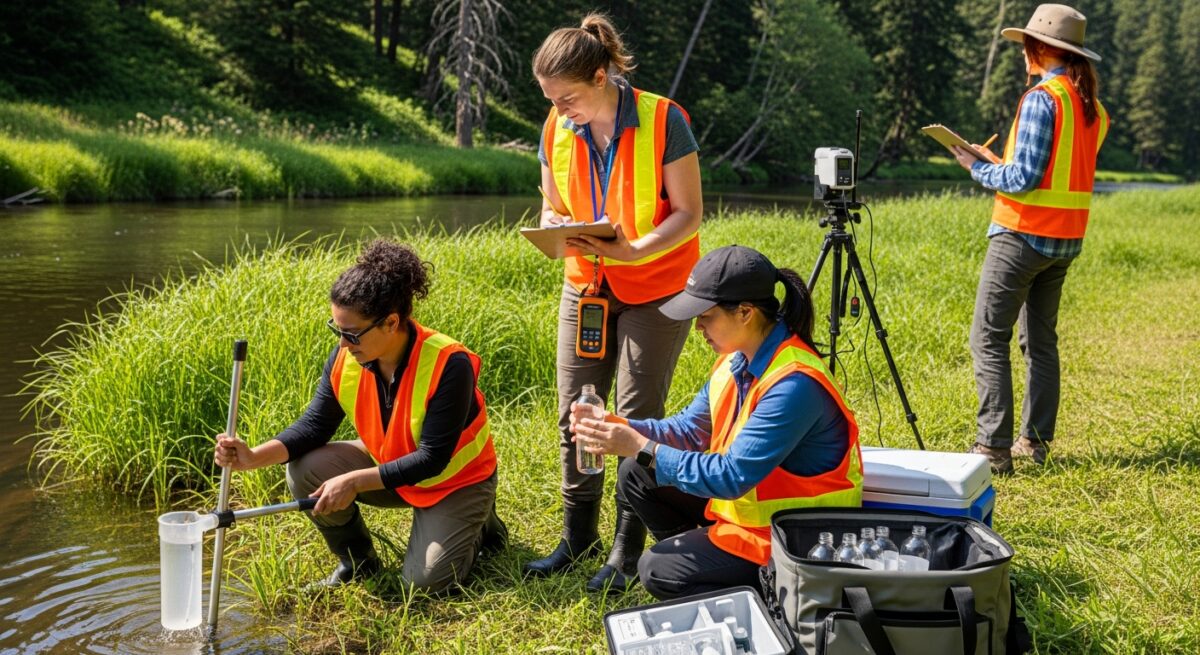
Choosing the right college for an environmental science degree is a pivotal decision that shapes your academic foundation, research opportunities, and career trajectory in a field critical to our planet’s future. The best colleges for environmental science offer more than a strong curriculum, they provide immersive fieldwork, cutting-edge research projects, and connections to a network of professionals tackling climate change, conservation, and sustainability. This guide explores the key factors that distinguish top-tier environmental science schools and highlights programs that excel in preparing students to become leaders in this interdisciplinary and urgent field.
Defining Excellence in Environmental Science Education
What truly makes an environmental science program stand out? It is a combination of rigorous academics, hands-on application, and a forward-thinking approach to global challenges. Top programs are inherently interdisciplinary, weaving together principles from biology, chemistry, geology, physics, and even policy and economics. This holistic approach is essential because environmental problems are rarely confined to a single scientific discipline. The best environmental science schools create ecosystems of learning where classroom theory is constantly tested and applied in real-world settings.
Furthermore, excellence is often marked by a program’s integration with its surrounding environment. A college located near diverse ecosystems, such as coastal zones, forests, mountains, or urban landscapes, provides a living laboratory for students. Access to research stations, field camps, and long-term ecological study sites is a significant advantage. Faculty reputation is another cornerstone, as professors who are active researchers bring current, groundbreaking work into the classroom and offer invaluable mentorship and research assistant positions to undergraduates. These elements combine to create an educational experience that is both deeply theoretical and intensely practical, preparing graduates not just to understand environmental systems, but to innovate and lead within them.
Key Factors for Evaluating Environmental Science Programs
Prospective students should look beyond general university rankings and examine specific attributes of the environmental science department. A critical first factor is accreditation, which ensures the program meets high standards of quality. While program-specific accreditation exists, regional institutional accreditation is a fundamental baseline. The curriculum’s structure is equally important, some programs offer a broad environmental science degree, while others allow for specializations or concentrations in areas like environmental policy, conservation biology, climate science, or water resources.
Research opportunities for undergraduates are a defining feature of elite programs. Look for schools that actively involve undergraduates in faculty-led research, provide funding for independent student projects, or have dedicated undergraduate research symposia. The availability and quality of facilities, such as advanced laboratories, GIS computer labs, greenhouses, and on-campus nature reserves, directly impact the learning experience. Finally, career outcomes and industry connections are paramount. Strong programs have robust career service support tailored to environmental fields, established internship pipelines with government agencies (like the EPA or USGS), non-profits, and private sector firms, and an active alumni network that facilitates mentorship and job placement.
To systematically evaluate your options, consider the following core components:
- Curriculum Depth and Flexibility: Does the program offer core courses in earth systems, ecology, and data analysis, plus electives for specialization?
- Faculty Expertise and Engagement: Are professors accessible and conducting research in areas that interest you?
- Hand-on Learning and Fieldwork: What percentage of courses include lab or field components? Are there required field courses or study-away opportunities?
- Research Infrastructure: Does the department have modern instrumentation, research centers, and funding for student projects?
- Career and Internship Support: What is the placement rate for graduates? Does the department have dedicated internship coordinators or partnerships?
Spotlight on Distinguished Environmental Science Schools
While many institutions offer strong programs, several are consistently recognized for their leadership in environmental science education. It is important to note that the “best” program is highly individual, depending on a student’s specific interests, career goals, and preferred learning environment. Some large research universities provide vast resources and broad faculty expertise, while smaller liberal arts colleges may offer more intimate mentorship and interdisciplinary flexibility.
At the forefront are universities that have built entire schools or colleges dedicated to the environment, such as the University of California, Berkeley’s College of Natural Resources and its Environmental Sciences program. These institutions often house multiple related departments under one roof, fostering collaboration between ecologists, engineers, and policy experts. Another model is exemplified by schools like Stanford University, where the Earth Systems Program is an interdisciplinary major that integrates science with policy and human behavior, preparing students for systemic problem-solving. For students interested in the marine environment, institutions like the University of Washington or the University of California, Santa Barbara offer unparalleled access to coastal and oceanographic research. Meanwhile, colleges like the University of Michigan’s School for Environment and Sustainability provide professional master’s tracks alongside undergraduate degrees, creating a seamless pathway for advanced study.
Financial planning is a crucial part of selecting any college. Exploring scholarship and aid options early is essential. For comprehensive information on funding your education, a valuable resource is academic degree resources, which can help you explore educational scholarship programs and funding strategies to manage the cost of your degree.
Specialized Pathways and Emerging Focus Areas
The field of environmental science is rapidly evolving, and leading programs are adapting by creating specialized pathways within the major. Climate science has become a dominant focus, with courses in climate modeling, carbon sequestration, and renewable energy systems. Another growing area is data science and environmental informatics, where students learn to use remote sensing, GIS (Geographic Information Systems), and big data analytics to monitor environmental change and model future scenarios.
Environmental justice and policy specializations are also increasingly critical, bridging the gap between science and societal impact. These tracks prepare students to work at the intersection of science, law, and community advocacy, ensuring that environmental solutions are equitable. Furthermore, programs with a strong focus on sustainability science prepare graduates for roles in corporate sustainability, circular economy design, and green technology. When researching the best colleges for environmental science, identify which schools have developed strengths in these niche areas that align with your passion. For instance, a program with a strong partnership with a national laboratory will offer different opportunities than one focused on local watershed restoration.
Navigating the Application and Selection Process
Once you have identified a list of potential environmental science schools, the application process requires a tailored approach. Your application materials should reflect a genuine interest in the field. This can be demonstrated through your essay, where you might discuss relevant coursework, volunteer work with conservation groups, or personal experiences that sparked your passion for the environment. Highlighting any prior research experience, even at a high school level, can be advantageous.
If possible, visiting campuses is highly recommended. Sit in on an environmental science lecture, tour the department’s labs and facilities, and, most importantly, talk to current students. They can provide candid insights about the workload, faculty accessibility, and the culture of the department. Ask about their research experiences and where interns and graduates have been placed. This firsthand information is often more revealing than any brochure. Finally, carefully compare financial aid packages. The return on investment for an environmental science degree can be high, but minimizing debt is a practical concern for many students. Weigh the total cost against the specific opportunities and strengths of each program on your list.
Frequently Asked Questions
What is the difference between Environmental Science and Environmental Studies?
Environmental Science is typically a science-heavy major focused on the biological, chemical, and physical processes of the environment. Environmental Studies is often more interdisciplinary, incorporating more social sciences, humanities, and policy to examine the human relationship with the environment. The best choice depends on whether you prefer a hard science or a broader liberal arts approach.
Are there strong environmental science programs at smaller liberal arts colleges?
Absolutely. Many liberal arts colleges offer exceptional, hands-on environmental science programs with high faculty-student interaction and strong undergraduate research opportunities. They may lack the massive research infrastructure of a large university but often compensate with personalized mentorship and interdisciplinary flexibility.
How important is graduate school for a career in environmental science?
While a bachelor’s degree can open doors to technician, field analyst, or policy assistant roles, a master’s degree is increasingly common for advancement into project management, specialized research, and higher-level consulting or policy positions. The best undergraduate programs prepare you for both immediate employment and successful graduate school applications.
What are the career prospects for environmental science graduates?
Career paths are diverse and growing. Graduates work for government agencies (EPA, state environmental departments), consulting firms, non-profit conservation organizations, corporate sustainability divisions, research institutions, and educational facilities. The demand for skills in data analysis, environmental remediation, and climate adaptation is particularly strong.
Should I choose a program with a specific specialization?
If you have a clear passion for a sub-field like marine science or environmental policy, a specialized program can provide a direct pathway. If you are still exploring, a broader environmental science degree from a flexible program allows you to find your niche through electives and research experiences.
Selecting the right college for your environmental science education is an investment in your future role as a steward of our planet. By prioritizing programs that offer rigorous science, meaningful hands-on experience, and a clear path to professional development, you can build a foundation for a impactful and rewarding career. The journey begins with thorough research and self-reflection, aligning your academic goals with the programs best equipped to help you achieve them. Remember, the ideal environmental science school is one that will challenge you, support you, and connect you to the tools and networks needed to make a tangible difference in the world.