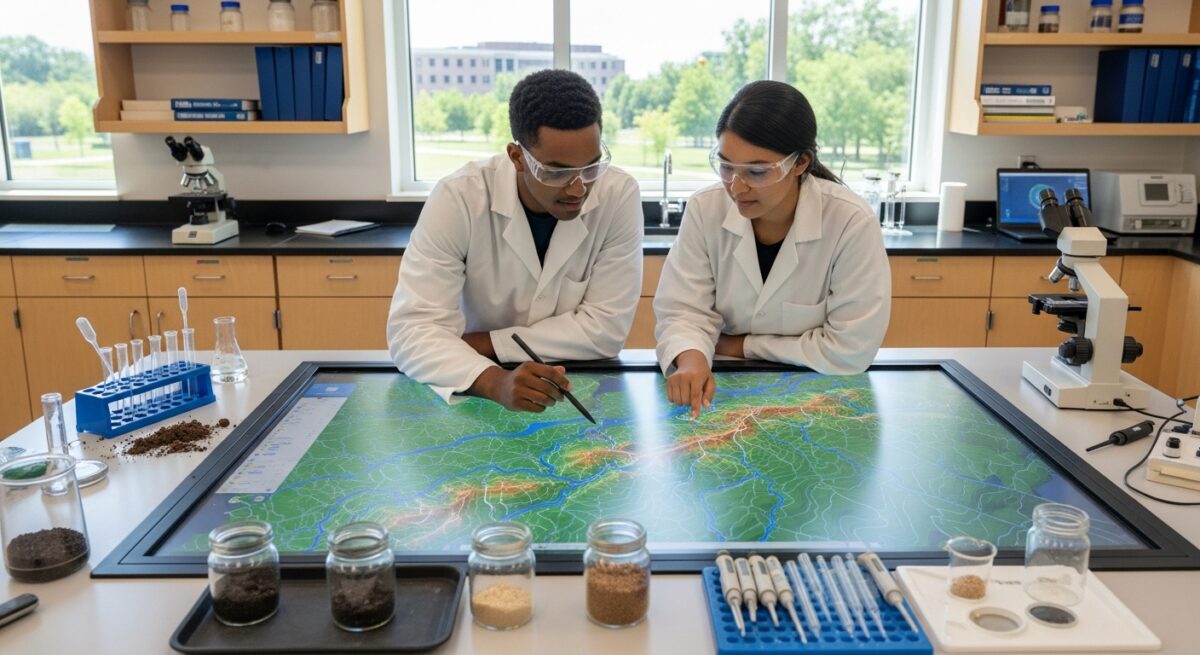
Choosing the right college for environmental engineering is a pivotal decision that shapes your technical expertise, research opportunities, and career trajectory in a field critical to our planet’s future. Environmental engineers design systems to provide safe drinking water, treat and manage waste, control pollution, and remediate contaminated sites. The best colleges for environmental engineering programs combine rigorous core engineering fundamentals with specialized, hands-on learning in sustainability, water resources, and air quality. This guide explores leading institutions, their unique strengths, and key factors to consider, empowering you to find a program that aligns with your academic and professional aspirations in this vital discipline.
Defining Excellence in Environmental Engineering Education
What separates a good environmental engineering program from a truly exceptional one? Top-tier programs are typically housed within accredited engineering schools and boast a curriculum grounded in fundamental principles of chemistry, biology, physics, and mathematics. However, excellence extends beyond the core syllabus. The best environmental engineering universities foster a culture of innovation and practical application. They provide students with access to cutting-edge laboratories for water analysis, environmental chemistry, and geotechnical engineering. They emphasize design projects that solve real-world problems, often in partnership with municipalities, consulting firms, or non-governmental organizations.
Furthermore, leading programs are characterized by distinguished faculty who are active researchers in their fields, contributing to advancements in areas like bioremediation, sustainable infrastructure, or climate resilience. This research activity directly enriches the undergraduate and graduate experience, offering students opportunities for mentorship and participation in groundbreaking projects. When evaluating potential schools, prospective students should look for a balance of theoretical depth and experiential learning, supported by strong industry connections and a track record of successful graduate placement. For those also considering adjacent fields, understanding how to evaluate different technical disciplines is crucial, as explored in our guide on Choosing the Right Technology College Degree Programs.
Leading Institutions for Environmental Engineering Studies
While rankings can vary by methodology, several universities consistently appear at the forefront of environmental engineering education. These institutions are renowned for their comprehensive curricula, research output, and faculty expertise.
The Massachusetts Institute of Technology (MIT) is frequently cited for its pioneering work at the intersection of engineering, science, and policy. Its Civil and Environmental Engineering Department offers deep specializations in environmental chemistry, hydrology, and ecological systems. Stanford University’s Environmental Engineering program emphasizes sustainability and design thinking, with strong ties to Silicon Valley’s culture of innovation. The University of California, Berkeley, offers a world-class program through its Civil and Environmental Engineering department, known for its research in water quality and environmental fluid mechanics.
On the East Coast, the Georgia Institute of Technology boasts a highly respected program with strengths in environmental biotechnology and water resources. The University of Illinois Urbana-Champaign has a long history of excellence, particularly in areas related to water purification and environmental health. These top engineering programs provide a robust foundation, but the “best” choice is highly individual. A student passionate about coastal resilience might prioritize a university with strong ocean engineering ties, while another focused on industrial waste treatment might seek a program with deep chemical engineering integration.
Key Specializations and Program Strengths
Beyond general reputation, the depth of specialization is a critical differentiator. Some of the best colleges for environmental engineering develop particular niches of expertise. For instance, the University of Texas at Austin is renowned for its work in hydrology and water resources engineering, crucial for addressing issues in arid regions. The Colorado School of Mines excels in areas related to resource extraction and mine remediation. Michigan Technological University has strong programs in sustainable engineering and ecosystem restoration.
Prospective students should investigate the specific research centers and labs affiliated with each department. A program with a dedicated center for sustainable infrastructure or atmospheric sciences indicates a concentrated investment in that subfield. This specialization often translates into more targeted course offerings, relevant internship pipelines, and faculty advisors who are leading experts. When researching, look for details on capstone design projects and thesis topics from recent graduates to gauge the practical focus of the program.
Critical Factors in Selecting Your Program
Choosing among the best environmental engineering universities requires a careful evaluation of personal goals against program offerings. Accreditation by ABET (Accreditation Board for Engineering and Technology) is non-negotiable for undergraduate degrees, as it ensures the program meets essential quality standards and is required for professional licensure. Beyond this baseline, consider the following elements that significantly impact the educational experience.
First, examine the curriculum’s flexibility and focus. Does the program allow for technical electives in your area of interest, such as renewable energy systems or environmental law? Second, assess hands-on learning opportunities. Look for co-op programs, required internships, and undergraduate research participation rates. These experiences are invaluable for building a resume and clarifying career direction. Third, consider the campus culture and resources. Does the school have a strong sustainability initiative on campus? Are there active student chapters of professional organizations like the American Academy of Environmental Engineers and Scientists or the Water Environment Federation?
Location can also play a strategic role. Programs located in regions with specific environmental challenges (e.g., water scarcity, industrial legacy sites, coastal erosion) often have stronger local industry partnerships and more relevant case studies. Finally, investigate career support and outcomes. What percentage of graduates secure employment or enter graduate school within six months? Which employers routinely recruit from the program? Answers to these questions provide concrete evidence of a program’s value in the marketplace.
Financial Planning and Career Pathways
Investing in an environmental engineering degree is a significant commitment, but the long-term career prospects are strong. Environmental engineers are in demand across public agencies, consulting firms, non-profits, and private industry. Understanding the financial landscape and potential return on investment is a key part of the decision process. Tuition costs vary dramatically between public and private institutions, and between in-state and out-of-state tuition. It is essential to look beyond the sticker price and investigate the net cost after scholarships, grants, and work-study opportunities.
Many top engineering programs offer substantial merit-based scholarships for high-achieving students. Furthermore, dedicated financial aid & scholarship options exist for students pursuing STEM fields, particularly in areas of critical need like environmental protection. Students should actively seek out these resources through university financial aid offices and external organizations. Graduate funding is often more readily available, with many master’s and nearly all PhD students in research-focused programs receiving tuition waivers and stipends through teaching or research assistantships.
The career trajectory for environmental engineering graduates is diverse and rewarding. Common entry-level roles include water resources engineer, environmental consultant, air quality specialist, or process engineer. With experience and a Professional Engineer (PE) license, opportunities expand to project management, policy development, and executive leadership. The median salary for environmental engineers is competitive within the engineering field, and job growth is steady, driven by ongoing public concern for the environment, regulatory demands, and the need for updated infrastructure. Many graduates also pursue advanced degrees in engineering, public health, law, or business to further specialize or move into interdisciplinary leadership roles.
Frequently Asked Questions
What is the difference between environmental engineering and environmental science?
Environmental engineering is an applied branch of engineering focused on designing and implementing technical solutions to environmental problems. It requires a strong foundation in math, physics, and engineering principles. Environmental science is a broader, more research-oriented field that studies natural systems and the impacts of human activity, drawing more heavily on biology, chemistry, and earth sciences.
Is a graduate degree necessary for a career in environmental engineering?
A Bachelor of Science (BS) is sufficient for many entry-level engineering positions. However, a Master of Science (MS) degree is increasingly common and can provide a competitive advantage for specialization, leadership roles, or research positions. A PhD is typically required for careers in advanced research or academia.
What should I look for in an environmental engineering program’s accreditation?
Ensure the specific environmental engineering or civil/environmental engineering program is accredited by ABET (Accreditation Board for Engineering and Technology). This accreditation is essential for qualifying for the Fundamentals of Engineering (FE) exam, the first step toward professional licensure.
Are there strong online options for environmental engineering degrees?
Fully online ABET-accredited undergraduate degrees in environmental engineering are rare due to the extensive hands-on lab requirements. However, several reputable institutions offer online master’s degrees (M.S. or M.Eng.) in environmental engineering, which are ideal for working professionals seeking advancement.
What high school preparation is best for an environmental engineering major?
Prospective students should take the most advanced high school courses available in mathematics (through calculus), physics, chemistry, and biology. Strong writing and computer skills are also highly beneficial.
Selecting the right environmental engineering program is a foundational step toward a meaningful career dedicated to solving pressing global challenges. By thoroughly researching the best colleges for environmental engineering programs, considering your personal academic interests and career goals, and carefully evaluating factors like curriculum, hands-on opportunities, and financial aid, you can identify a university that will provide the knowledge, skills, and professional network to thrive. The path to becoming an environmental engineer is demanding, but the opportunity to contribute to a more sustainable and healthy world makes it a profoundly rewarding pursuit.