Choosing the right college for an electrical engineering degree is a pivotal decision that shapes your technical skills, career trajectory, and professional network. With countless institutions offering programs, identifying the best colleges for electrical engineering programs requires a nuanced look beyond simple rankings. The ideal program aligns with your academic interests, career goals, and personal learning style, whether you’re drawn to power systems, microelectronics, telecommunications, or emerging fields like robotics and renewable energy. This guide provides a comprehensive framework for evaluating top-tier electrical engineering colleges, highlighting key factors that define excellence and empower you to make an informed choice for your future in this dynamic and essential field.
Defining Excellence in Electrical Engineering Education
What truly separates the best electrical engineering colleges from the rest is a combination of foundational strength and adaptive innovation. A premier program is built upon a rigorous core curriculum that covers essential principles: circuit analysis, electromagnetism, digital systems design, and signal processing. However, excellence extends far beyond the syllabus. It is reflected in the depth of faculty expertise, the opportunities for hands-on undergraduate research, and the integration of cutting-edge topics like machine learning applications in hardware, quantum computing, and sustainable energy grids. The best programs create an ecosystem where theoretical knowledge is constantly tested and applied in laboratory settings, design projects, and industry partnerships.
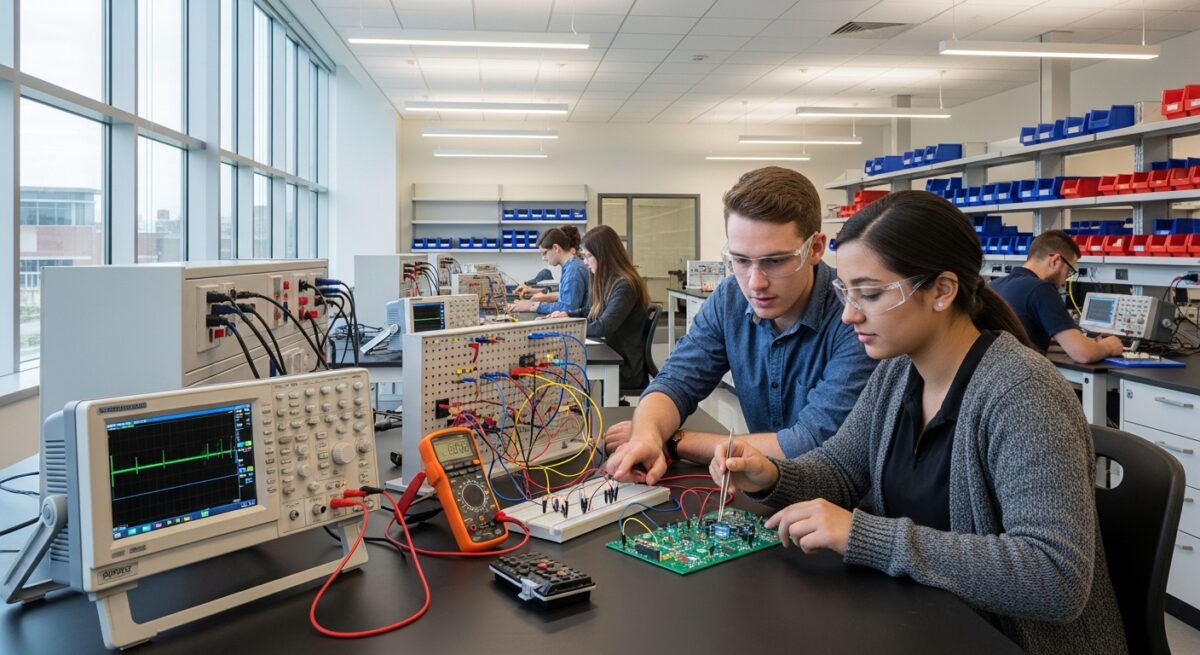
This environment is further enhanced by institutional resources. State-of-the-art facilities, such as nanofabrication clean rooms, advanced power labs, and embedded systems workshops, are not just amenities, they are essential tools for modern engineering education. Furthermore, the connection between a strong electrical engineering department and a robust overall engineering school is critical. Interdisciplinary collaboration with computer science, mechanical engineering, and materials science departments fuels innovation and reflects the real-world, cross-functional nature of today’s technical challenges. When evaluating programs, prospective students should assess how a college fosters this integrative, resource-rich learning environment.
Critical Factors for Choosing Your Program
Selecting among the best colleges for electrical engineering is a personal process. A program that is perfect for one student may not be the ideal fit for another. Therefore, it is essential to consider a matrix of factors that go beyond a school’s general reputation. First, examine the specialization areas or concentrations offered. A large, research-intensive university might offer dozens of niche specializations, from photonics to control theory, while a smaller, teaching-focused college might provide a broader, more generalized foundation with select strengths. Your choice should align with your specific interests within the vast field of electrical engineering.
Another paramount consideration is the balance between theoretical instruction and practical, experiential learning. Look for programs that emphasize capstone design projects, cooperative education (co-op) programs, and internships. These experiences are invaluable, providing resume-building work and often leading directly to job offers. The strength and engagement of a school’s career services office and its alumni network in the tech and engineering sectors are also strong indicators of post-graduate success. Finally, do not overlook the importance of faculty accessibility and the culture of the department. A supportive environment where professors are engaged in both groundbreaking research and undergraduate mentorship can significantly enhance your educational journey.
To systematically evaluate your options, consider the following key criteria:
- ABET Accreditation: This is non-negotiable for ensuring the program meets essential quality standards and is recognized by employers and graduate schools.
- Research Expenditure & Opportunities: High levels of funded research often correlate with advanced facilities and opportunities for undergraduates to participate in meaningful projects.
- Industry Connections & Career Outcomes: Examine placement rates, average starting salaries, and the companies that actively recruit from the program.
- Lab & Facility Modernity: The quality of hardware, software, and experimental setups available for student use is a direct reflection of institutional investment.
- Curriculum Flexibility & Depth: The ability to tailor your degree through electives, minors, or combined majors (like EE/CS) is crucial for career specialization.
Profiles of Leading Electrical Engineering Institutions
While rankings fluctuate, a consistent group of institutions is renowned for their electrical engineering programs. These schools exemplify the hallmarks of excellence discussed earlier. The Massachusetts Institute of Technology (MIT) is often at the pinnacle, known for its profound impact on the field through both fundamental research and revolutionary applications. Its EECS department (Electrical Engineering and Computer Science) is uniquely integrated, reflecting the inseparable link between hardware and software in modern technology. Students have unparalleled access to research initiatives in areas like artificial intelligence, quantum hardware, and energy systems from their first year.
Stanford University’s electrical engineering department leverages its Silicon Valley location to create an unparalleled synergy between academia and industry. The curriculum is intensely entrepreneurial, with many student projects evolving into startup ventures. Stanford’s strength lies in areas like integrated circuits, communications, and photonics. Similarly, the University of California, Berkeley’s EECS program is celebrated for its academic rigor and culture of innovation. Berkeley excels in semiconductor design, micro-electromechanical systems (MEMS), and theoretical computer science, offering students a deeply technical and broad education.
Moving beyond the coasts, institutions like the Georgia Institute of Technology represent the pinnacle of public engineering education. Georgia Tech’s Co-op program is one of the largest and most structured in the nation, guaranteeing students multiple semesters of paid, professional experience. Its strengths in telecommunications, power electronics, and analog circuits are notable. Another powerhouse, the University of Illinois Urbana-Champaign, boasts a storied history in electrical engineering, with groundbreaking contributions to computing. Its facilities, including the Nick Holonyak Jr. Micro and Nanotechnology Lab, are world-class, supporting research in areas like compound semiconductors and bioelectronics.
It is important to remember that the best electrical engineering colleges for you might also include exceptional programs at large public universities, prestigious private tech institutes, or smaller colleges with focused, hands-on approaches. For instance, schools like Purdue University, Carnegie Mellon University, and the University of Michigan-Ann Arbor all offer distinct strengths and cultures that may align perfectly with a student’s goals, perhaps in aerospace systems, robotics, or automotive electronics, respectively. The process of finding the right fit requires diligent research into each program’s specific offerings and culture.
Financial Planning and Scholarship Resources
The cost of a top-tier engineering education is a significant consideration for most students and families. Fortunately, many of the best colleges for electrical engineering programs offer substantial financial aid packages, merit-based scholarships, and targeted funding for students in STEM fields. It is crucial to investigate each school’s financial aid office thoroughly and meet all application deadlines for both need-based and merit-based aid. Many engineering departments also have their own scholarship funds, often donated by alumni, which are awarded based on academic achievement, research potential, or specific interests within electrical engineering.
Prospective students should actively search for external scholarship opportunities from professional organizations like the Institute of Electrical and Electronics Engineers (IEEE), the National Society of Professional Engineers (NSPE), and corporations within the tech and energy sectors. These scholarships can substantially reduce the financial burden. Additionally, participating in a co-op program, a hallmark of many strong engineering schools, provides paid professional work experience that can fund a significant portion of educational expenses. For comprehensive guidance on navigating these opportunities, students can explore dedicated academic degree resources that aggregate information on educational scholarship programs and funding strategies.
Navigating the Admissions Process for Engineering Programs
Gaining admission to a top electrical engineering program is highly competitive. Admissions committees look for a demonstrated passion for and aptitude in math and science. A strong high school transcript is essential, with particular emphasis on advanced placement or honors courses in calculus, physics, chemistry, and computer science. Standardized test scores (SAT/ACT) remain a factor at many schools, though an increasing number are test-optional. Regardless, a high score in the math section can strengthen an application. Beyond grades and scores, applicants must showcase their engineering mindset.
This is where extracurricular activities, personal projects, and essays become critical. Participation in robotics clubs, science fairs, coding competitions, or independent projects (like building a circuit or programming a microcontroller) provides tangible proof of your interest. Your personal statement should articulate not just why you want to be an engineer, but why you are interested in electrical engineering specifically and how a particular program’s resources align with your aspirations. Strong letters of recommendation from math or science teachers who can speak to your problem-solving abilities and intellectual curiosity are invaluable. The admissions process for engineering is holistic, seeking students who will contribute to and thrive in a collaborative, problem-solving environment.
Frequently Asked Questions
What is the difference between electrical engineering and computer engineering?
Electrical engineering (EE) traditionally focuses on the physics of electricity, electromagnetism, and electronics, covering areas like power generation, analog circuits, and communications. Computer engineering (CpE) sits at the intersection of EE and computer science, focusing on the design of computer hardware and the integration of hardware and software, like microprocessors, embedded systems, and digital signal processing. Many top schools offer a combined EECS department, allowing students to explore both fields.
How important is ABET accreditation for an electrical engineering degree?
ABET accreditation is extremely important. It assures that a program meets the quality standards established by the profession. Graduating from an ABET-accredited program is often a prerequisite for licensure as a Professional Engineer (PE) and is highly valued by employers and graduate schools. Always verify a program’s accreditation status.
Are there strong electrical engineering programs at liberal arts colleges?
Yes. Several liberal arts colleges offer excellent, ABET-accredited engineering programs, often with a focus on undergraduate teaching, close faculty mentorship, and a broad educational context. These programs may be structured as 3-2 dual-degree programs (three years at the liberal arts college, two at a partner engineering school) or as dedicated engineering departments within the college.
What career paths are available for electrical engineering graduates?
Career paths are vast and growing. Graduates work in industries including semiconductor design and manufacturing, power and renewable energy systems, telecommunications, aerospace and defense, automotive (especially electric and autonomous vehicles), consumer electronics, robotics, and biomedical instrumentation. Roles include design engineer, systems engineer, test engineer, project manager, and research scientist.
Should I prioritize a school’s overall ranking or the ranking of its specific electrical engineering department?
While both are informative, the specific department ranking and its strengths are often more relevant for graduate outcomes and specialized education. A school with a slightly lower overall ranking but a highly-ranked, well-resourced EE department with strong industry ties in your area of interest can be a far better choice than a generically prestigious university with a less-focused program.
Ultimately, identifying the best colleges for electrical engineering programs is a journey of matching your ambitions with an institution’s capabilities. The most prestigious name is not always the best fit, a principle that applies across many technical fields. For example, when exploring top mechanical engineering programs, similar criteria around hands-on learning and specialization apply. By focusing on the factors that matter most, accreditation, curriculum depth, research and co-op opportunities, and career support, you can select an electrical engineering college that will provide a formidable foundation for a successful and impactful career at the forefront of technological innovation.