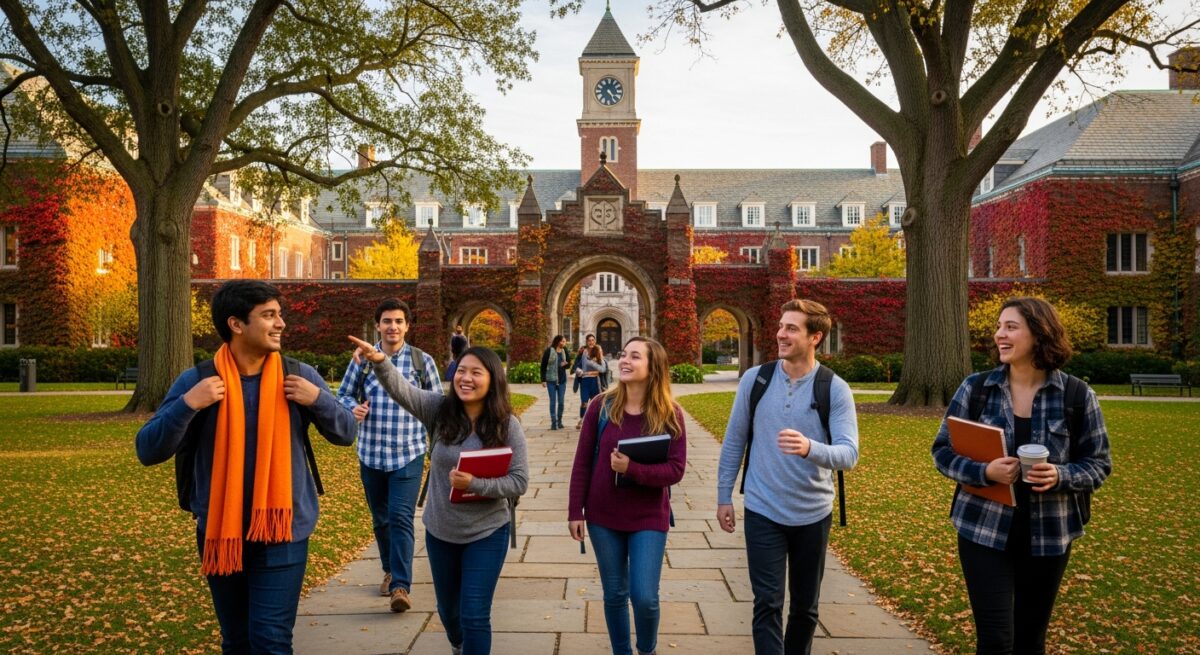
Choosing a college is one of the most significant decisions a student can make, shaping not only their academic trajectory but also their career network and personal growth. The East Coast of the United States is home to a dense concentration of the world’s most prestigious and influential institutions of higher learning. From the historic Ivy League to renowned public research powerhouses and exceptional liberal arts colleges, this region offers an unparalleled array of options. This guide is designed to help prospective students and their families navigate this rich landscape, moving beyond simple name recognition to understand the distinct academic cultures, strengths, and opportunities that define the best colleges on the East Coast. The goal is to find not just a highly-ranked school, but the right educational environment for individual aspirations and learning styles.
Defining Excellence: What Makes an East Coast College Stand Out
When evaluating the best colleges on the east coast, it’s crucial to look beyond generic rankings. True excellence is multifaceted, combining rigorous academics with robust support systems and transformative experiences. Key factors include the strength and accessibility of faculty, the depth of research opportunities for undergraduates, the quality of campus facilities, and the vibrancy of student life. A defining characteristic of top-tier east coast universities is their commitment to fostering critical thinking, interdisciplinary exploration, and leadership. Many of these institutions are steeped in history, offering a sense of tradition and an extensive, influential alumni network that can open doors globally. Furthermore, their locations in major metropolitan corridors, from Boston to Washington D.C., provide unmatched access to internships, cultural institutions, and industry connections.
Financial investment is a major consideration. While many elite private institutions have high sticker prices, they also often possess substantial endowments that allow for generous need-based financial aid packages. Prospective students should thoroughly investigate net price calculators and aid policies. For a deeper dive into understanding degree types, program structures, and long-term educational planning, exploring trusted academic degree resources is highly recommended. This foundational knowledge is essential for making an informed comparison between institutions.
The Ivy League and Peer Private Research Universities
This category represents the most selective and internationally recognized cluster of east coast universities. The eight Ivy League schools (Harvard, Yale, Princeton, Columbia, University of Pennsylvania, Brown, Dartmouth, and Cornell) each possess a unique identity. Harvard and Yale are synonymous with academic prestige across a vast range of disciplines. Princeton emphasizes undergraduate teaching and theoretical research. Columbia leverages its New York City location for arts and global policy. Penn is renowned for its integrated practical approach, epitomized by the Wharton School. Brown’s open curriculum offers exceptional student freedom, while Dartmouth’s tight-knit community focuses on the undergraduate experience. Cornell, with its mix of private and public statutory colleges, offers a uniquely broad scope of study.
Beyond the Ivies, other private research universities compete at the same elite level. The Massachusetts Institute of Technology (MIT) and the California Institute of Technology (Caltech), though the latter is West Coast, are global leaders in STEM, but MIT’s Cambridge location places it firmly in the East Coast academic ecosystem. Duke University, while often associated with the South, has a strong East Coast presence and is a powerhouse in medicine, law, and public policy. Johns Hopkins University in Baltimore is the nation’s leader in research expenditure and a mecca for aspiring medical professionals and scientists. Georgetown University in Washington D.C. is a top destination for international relations, law, and political science. These institutions share characteristics of low acceptance rates, world-class faculty, and prolific research output.
Flagship Public Universities and Specialized Institutes
The East Coast is also home to exceptional public university systems that provide top-tier education, often at a lower cost for in-state residents. These institutions combine broad research capabilities with a mission to serve their state’s population. The University of Virginia, founded by Thomas Jefferson, offers a classic liberal arts foundation within a public setting and is consistently ranked among the top public universities. The University of North Carolina at Chapel Hill boasts outstanding programs in journalism, medicine, and public health. The University of Michigan, though in the Midwest, draws significant East Coast interest due to its perennial top-ten public ranking and comprehensive excellence.
Within specific states, systems like the University of Maryland, College Park (strong in engineering and computer science) and Rutgers University in New Jersey provide massive scale and diversity of programs. For students seeking a focused, intensive education, specialized institutes on the East Coast are unparalleled. Examples include:
- Berklee College of Music (Boston): The world’s preeminent institution for contemporary music education.
- Rhode Island School of Design (RISD): A leader in art and design education, with close ties to Brown University.
- Juilliard School (New York City): The iconic conservatory for performing arts.
- United States Service Academies (West Point, Annapolis, etc.): Providing elite leadership and military education with a service commitment.
These schools attract students with a clear, passionate focus, offering networking and career pathways directly into their respective industries.
Exceptional Liberal Arts Colleges
For students who prioritize close mentorship, small class sizes, and a holistic undergraduate-centered education, the East Coast’s liberal arts colleges are arguably the best in the world. These institutions de-emphasize graduate-level research in favor of faculty dedication to teaching undergraduates. They foster tight-knit communities where intellectual debate extends from the classroom to the dining hall. The “Little Ivies,” a group of highly selective liberal arts schools, include Williams College and Amherst College in Massachusetts, which frequently top national liberal arts rankings. Swarthmore College in Pennsylvania is known for its rigorous academics and Quaker heritage. Bowdoin College in Maine emphasizes a connection to the environment and community service.
Other notable mentions include Wellesley College, a premier women’s college with a powerful alumnae network; Middlebury College, a leader in language and environmental studies; and Wesleyan University, celebrated for its creative and progressive academic culture. The unique benefit of these colleges is the ability to engage deeply with professors, undertake independent research early, and develop strong writing and critical thinking skills that are highly valued by graduate schools and employers. Many have consortium agreements or cross-registration with larger universities, allowing students to access broader course offerings.
The Selection Process: Finding Your Best Fit
With so many outstanding options, how does a student choose? The process must move beyond prestige and involve serious self-reflection and investigation. Start by identifying your academic non-negotiables. What are your intended major(s) or areas of interest? Research department strengths, faculty credentials, and unique program offerings like combined-degree tracks or study abroad requirements. Consider the pedagogical approach: do you thrive in large lecture halls or small seminar discussions? The campus culture is equally vital. Visit if possible, or take virtual tours and attend online information sessions. Pay attention to the residential life system, student clubs, and the general atmosphere. Is the campus collaborative or intensely competitive? Is it located in a college town, a major city, or a rural setting? Each environment offers different advantages for internships, recreation, and personal growth.
Financial fit is a practical reality. Compare financial aid award letters carefully, looking at the breakdown of grants, scholarships, work-study, and loans. Remember that the total cost includes travel, personal expenses, and potential summer program fees. Finally, trust your instincts about where you can see yourself thriving for four years. The best college on the East Coast for you is the one that aligns with your academic goals, personal values, and financial situation, offering a community where you can grow and succeed.
Frequently Asked Questions
What is the difference between an Ivy League school and other top East Coast universities?
The Ivy League is an athletic conference of eight specific private institutions with historic prestige. Other top private universities (like MIT, Duke, Johns Hopkins) and public universities (like UVA, UNC) often match or exceed Ivies in specific academic departments, research output, and career outcomes. The distinction is often more about brand and tradition than a definitive measure of educational quality.
Are public universities on the East Coast a good value for out-of-state students?
It depends. Flagship publics like UVA or UNC offer excellent education, but out-of-state tuition is significantly higher. The value proposition must be weighed against the strength of the specific program compared to private or in-state options. Some publics offer merit scholarships to attract top out-of-state talent.
How important is location when choosing an East Coast college?
Extremely important. Your location will influence internship availability, networking opportunities, cultural life, and your overall daily experience. A school in Boston or New York City provides constant urban stimulation and industry access, while a rural campus in Maine or Virginia offers a focused, communal environment close to nature.
Is a liberal arts college too limiting for someone interested in pre-professional fields like medicine or engineering?
Not at all. Many liberal arts colleges have strong pre-med advising and 3-2 engineering programs where you earn a liberal arts BA and an engineering BS from a partner university. The broad critical thinking and communication skills developed are highly valued in professional fields.
When should I start seriously researching and visiting colleges?
Research can begin in your sophomore or junior year of high school to build a list. Campus visits are most impactful during the spring of junior year or fall of senior year, when school is in session. This allows you to experience the authentic campus atmosphere.
The journey to find the right college is both exciting and demanding. The East Coast’s higher education landscape is rich with possibility, offering pathways for every kind of scholar, researcher, and artist. By focusing on fit over fame, and by thoroughly investigating the academic, cultural, and financial dimensions of each institution, students can make a confident choice that lays the foundation for a successful and fulfilling future. The investment of time in this process is the first step toward a transformative educational experience.