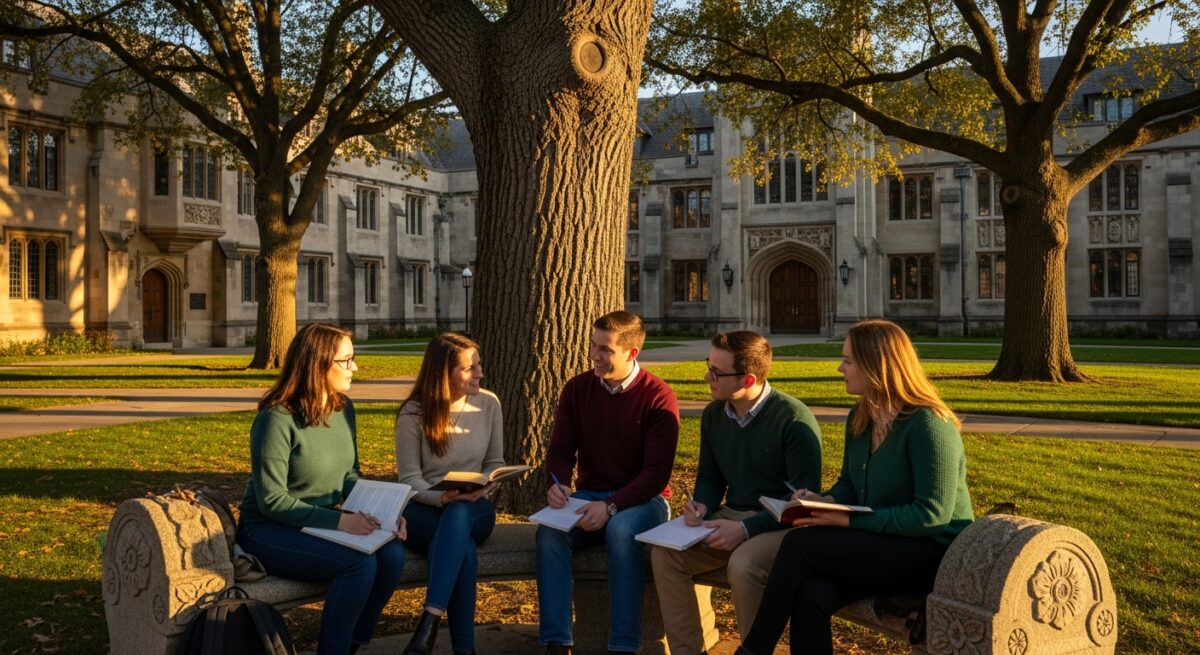
For students and families seeking a higher education experience grounded in traditional values, classical learning, and often a religious worldview, the landscape of American colleges offers distinct and meaningful choices. These institutions, frequently described as the best conservative colleges in the US, prioritize a specific educational philosophy that extends beyond the classroom into campus life, community standards, and intellectual discourse. Choosing a college is one of the most significant decisions a young person makes, shaping not only career prospects but also personal development, worldview, and lifelong networks. For those whose priorities align with conservative principles, whether political, social, or religious, identifying the right campus environment is crucial for a fulfilling and supportive undergraduate experience.
Defining the Conservative College Experience
What exactly makes a college “conservative”? The term encompasses a spectrum of characteristics, and no two institutions are identical. However, several core attributes commonly define these traditional colleges and universities. Academically, many emphasize a Great Books curriculum or a core classical education, ensuring all students engage with foundational texts of Western civilization. They often promote the pursuit of truth through reasoned debate and a respect for enduring wisdom. In terms of campus culture, these schools frequently uphold traditional social norms, which can include structured residential life, honor codes, and a focus on character development alongside intellectual growth. Many, though not all, have a religious affiliation, most commonly with Protestant Christian denominations or the Catholic Church, integrating faith and learning. The political climate on campus also tends to lean conservative, providing a space for open discussion of right-of-center ideas without the fear of social sanction that can exist on more progressive campuses.
Key Factors to Consider in Your Search
Selecting among the leading conservative universities requires careful reflection on your personal values and academic goals. It is not enough to simply seek a “conservative” label, you must understand what that means for daily life and long-term outcomes. Prospective students should evaluate several dimensions. First, consider the academic rigor and core curriculum requirements. How structured is the program? Does the focus on classical liberal arts or a specific theological tradition appeal to you? Second, investigate the campus community and student life. What are the housing rules? Is there an active student body that organizes events and clubs aligned with conservative thought? Third, assess the religious dimension, if important to you. Is the institution’s faith integration central to all activities, or is it more of a historical background? Fourth, examine outcomes. Look at graduation rates, graduate school placements, and career support services. Finally, consider financial aid and the overall cost, as many of these schools are private and may carry a higher tuition, though robust scholarship programs often exist.
To help organize your evaluation, here are the primary areas to research for any conservative college:
- Academic Philosophy: Core curriculum, Great Books program, emphasis on classical vs. modern thought.
- Institutional Affiliation: Religious denomination (e.g., Catholic, Reformed Protestant, Evangelical) or independent status.
- Campus Life & Conduct: Dress codes, visitation policies, honor systems, and extracurricular focus.
- Intellectual Climate: Prevalence of conservative speakers, freedom of speech policies, diversity of thought.
- Post-Graduate Success: Alumni network strength, career services, and graduate school acceptance rates.
Profiles of Leading Conservative Colleges and Universities
The United States is home to a variety of institutions that proudly uphold conservative and traditional educational models. These range from small liberal arts colleges to larger universities, each with its unique character. It is important to note that this list is illustrative, not exhaustive, and prospective students should conduct their own deep research. For a broader overview of this educational landscape, our guide on traditional campuses and their defining features offers additional context and comparison.
Faith-Based Conservative Institutions
A significant number of conservative colleges have a strong religious identity. Catholic institutions like the University of Dallas and Thomas Aquinas College are renowned for their unwavering commitment to the Catholic intellectual tradition and a rigorous Great Books program. Protestant colleges such as Grove City College (independent Christian), Hillsdale College (non-denominational Christian), and Patrick Henry College (evangelical Christian) offer a education deeply informed by Christian worldview and American founding principles. These schools often require theology or philosophy courses and foster a close-knit community centered on shared faith. The integration of faith and reason is not an add-on but the very framework for learning, which appeals to students seeking coherence between their spiritual and intellectual lives.
Secular and Independently Conservative Colleges
Not all conservative colleges are overtly religious. Some, like Hillsdale College, while historically Christian, operate independently of direct denominational control and emphasize a curriculum rooted in the Western tradition and the principles of the American founding. Others may have a more secular governance but foster a campus culture and academic focus that attracts conservative students and faculty. These institutions often highlight their commitment to free market economics, constitutional originalism, and a classical liberal arts education free from contemporary ideological trends. They provide an environment where conservative political and economic thought is not just tolerated but is the mainstream perspective, encouraging vigorous debate within that framework.
The Value of a Traditional Liberal Arts Core
A hallmark of many top conservative colleges is a mandatory, comprehensive core curriculum. Unlike the distribution requirements at many universities, where students choose from a wide array of courses to fulfill broad categories, a true core requires every student to take the same specific courses in literature, history, philosophy, theology, and science. This approach is designed to provide a common intellectual foundation, a shared vocabulary of ideas, and a direct engagement with primary sources. Students read Homer, Plato, Augustine, Shakespeare, Newton, and the American Founders. The goal is to cultivate wisdom, virtue, and the ability to think critically and independently. This model asserts that there is a body of knowledge essential for an educated person, a concept that aligns with conservative educational philosophy. It prepares graduates not just for a first job, but for a life of leadership, citizenship, and continued learning.
Career Paths and Alumni Networks
Graduates from these institutions often find strong career trajectories in fields such as law, public policy, education, journalism, ministry, and business. The emphasis on clear writing, persuasive speaking, and analytical thinking serves students well in any profession. Furthermore, the alumni networks of these schools can be exceptionally powerful and dedicated. Because of the shared formative experience and aligned values, alumni are frequently eager to mentor and hire fellow graduates. Many colleges have dedicated career centers that leverage these networks effectively. It is also common for graduates to pursue advanced degrees at top law schools, seminaries, and graduate programs, as the rigorous undergraduate preparation is highly regarded. For students considering paths outside traditional campus settings, it is worth noting that the skills honed at these institutions are also highly transferable to digital learning environments. Exploring accredited online degrees for graduate study or specialized certifications can be a logical next step, building upon the strong foundational knowledge gained from a conservative liberal arts education.
Addressing Frequently Asked Questions
Are conservative colleges only for religious students?
While many have religious affiliations, not all do. Some, like Hillsdale, are independent and welcome students of all faiths or none, though they teach from a perspective that acknowledges the Judeo-Christian influence on Western civilization. The campus culture will vary, so researching the specific spiritual life offerings is key.
Is the academic rigor at these colleges comparable to other top schools?
Absolutely. Many conservative colleges, such as Thomas Aquinas College and the University of Dallas, have consistently high rankings for academic rigor, student engagement, and post-graduate success. Their curricula are demanding and designed to challenge students intellectually.
Do these campuses lack diversity of thought?
This is a common critique. These campuses certainly provide a space where conservative thought is the norm, which can be a relief for students who feel marginalized elsewhere. However, the definition of “diversity of thought” is key. Students engage deeply with a wide range of thinkers throughout history, from Aristotle to Marx, but the contemporary faculty and student body may lean ideologically similar. The diversity often lies in deep debate within a shared philosophical framework rather than across the entire modern political spectrum.
What if my political or social views evolve while I’m there?
A quality education should challenge you to examine your beliefs. While the environment is supportive of conservative ideas, the goal of a liberal arts education is to teach you how to think, not what to think. Students who undergo intellectual evolution will find faculty who engage with them seriously and respectfully, even in disagreement.
How do I find the best fit among conservative colleges?
Beyond rankings, the best strategy is to visit campuses, sit in on classes, talk to current students and professors, and read the student newspaper. Pay attention to the specifics of the honor code, the core curriculum requirements, and the vibe of the community. The right fit balances academic strength with a community where you can thrive personally.
Choosing a college is about finding the environment that will best nurture your growth, challenge your mind, and prepare you for your future. For students drawn to tradition, faith-based learning, and a classical education, the best conservative colleges in the US offer a unique and compelling path. These institutions stand as beacons for a particular vision of higher education, one that values the wisdom of the past, the cultivation of virtue, and the pursuit of truth within a coherent worldview. By carefully considering your priorities and thoroughly researching these distinctive campuses, you can make an informed decision that aligns your educational journey with your deepest values and aspirations.