For many students and families, the college search extends beyond academics and rankings to include the campus culture and prevailing worldview. In an era of significant social and political polarization, identifying institutions that align with one’s personal values, particularly conservative values, has become a critical part of the selection process. This guide explores the landscape of the most conservative colleges in the US, examining what makes these institutions distinct, the educational experience they offer, and how they cultivate an environment rooted in tradition, faith, and specific philosophical principles. Understanding these campuses provides crucial insight for students seeking a collegiate community that reinforces their worldview and offers a specific type of intellectual and social foundation.
Defining a Conservative College: More Than Just Politics
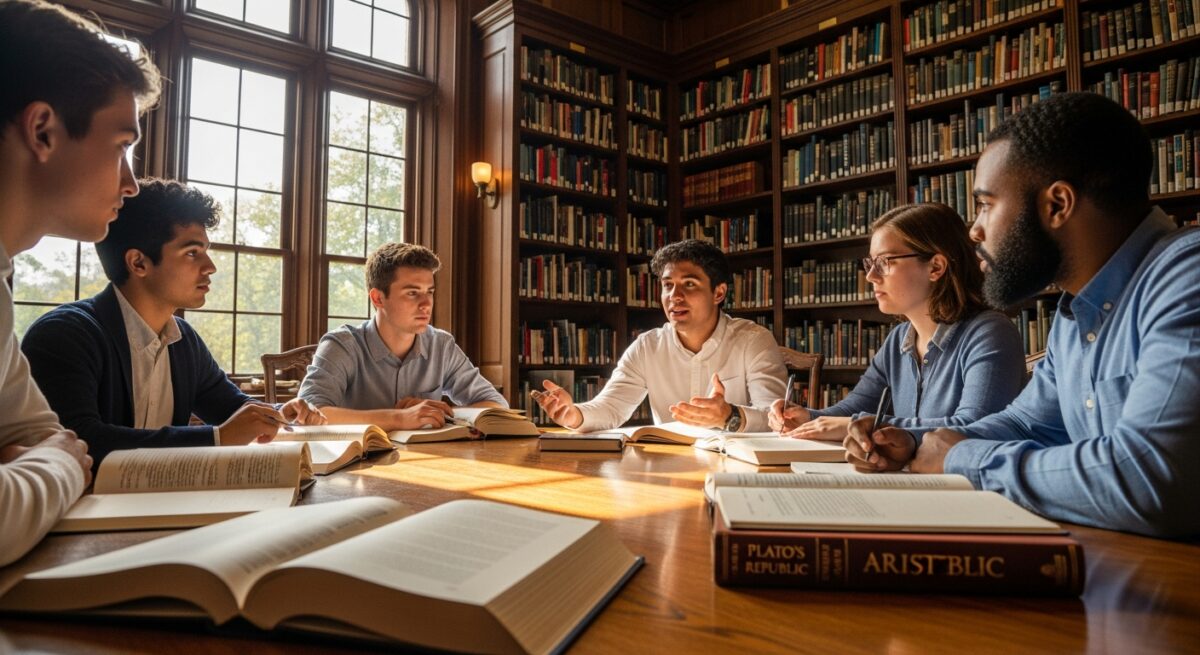
The label “conservative college” encompasses a spectrum of institutions united by a commitment to traditional values, but the expression of those values varies. It is a holistic designation that influences curriculum, campus life, and institutional mission. At its core, a conservative university typically emphasizes a classical liberal arts education, viewing it as the transmission of a cultural and intellectual heritage rather than a platform for deconstruction. This often involves a “great books” curriculum, where students engage directly with foundational texts of Western civilization, from Plato and Aristotle to the American Founding Fathers.
Furthermore, many of the most conservative colleges have a strong affiliation with a religious denomination, most notably Protestant evangelicalism, traditional Catholicism, or the Church of Jesus Christ of Latter-day Saints. This religious identity shapes community standards, often including chapel requirements, honor codes governing personal conduct, and an integration of faith and learning across disciplines. The institutional philosophy frequently upholds principles of limited government, free markets, individual liberty, and traditional social structures. This worldview is not merely a student body preference but is often embedded in the faculty hiring, speaker series, and core academic requirements, creating an integrated educational environment distinct from the prevailing culture at many large public universities.
The Hallmarks of a Conservative Campus Experience
Attending one of the most conservative colleges in America entails a specific campus life experience. The social atmosphere is often characterized by a strong sense of community, sometimes described as insular, where shared values create tight-knit bonds. Dress codes, though not universal, are more common, ranging from business casual for class to formal traditions. Extracurricular life frequently revolves around religious organizations, political clubs like Young Americans for Freedom or Turning Point USA chapters, and service-oriented groups.
Academically, students can expect a curriculum that challenges many contemporary academic trends. There is typically a skepticism toward postmodern critical theories (such as critical race theory or radical gender theory) as dominant lenses for analysis. Instead, there is an emphasis on reasoned debate, logical argumentation, and the pursuit of objective truth. Free speech is highly valued, but it exists within the context of the institution’s mission; while diverse viewpoints may be invited for debate, the core curriculum is deliberately designed to affirm specific philosophical and theological premises. For families budgeting for this path, understanding the total cost of attendance at private institutions is key, and resources for school‑level degree guidance can be invaluable for financial planning.
Profiles of Prominent Conservative Colleges and Universities
While rankings can be subjective, several institutions are consistently recognized for their conservative orientation. These schools serve as archetypes for the values-driven education discussed.
Hillsdale College
Perhaps the most famous independent conservative college, Hillsdale College in Michigan operates entirely without federal funding, including student loans and grants, to maintain its independence from government regulations. Its core curriculum is a dedicated study of the Western tradition, and it requires all students to take a course on the U.S. Constitution. Hillsdale actively promotes its educational philosophy through widely disseminated lecture series and online courses, making it a intellectual hub for conservative thought.
Thomas Aquinas College
With campuses in California and Massachusetts, Thomas Aquinas College offers a purely classical education using the Great Books seminar method. There are no textbooks, lectures, or majors; students read original works from Aristotle, Newton, Shakespeare, and Einstein, and discuss them in guided tutorials. The education is deeply rooted in the Catholic intellectual tradition and the philosophical realism of St. Thomas Aquinas, seeking to integrate faith and reason.
Brigham Young University
Owned and operated by The Church of Jesus Christ of Latter-day Saints, BYU in Utah and its sister campus BYU-Idaho are among the largest conservative universities. All students and faculty agree to live by an honor code that includes academic honesty, dress and grooming standards, and abstention from alcohol, coffee, tea, and premarital sex. The curriculum integrates spiritual and secular learning, and the campus culture is family-oriented and highly service-focused.
Other notable institutions include Grove City College (Pennsylvania), another independent college that refuses federal funds; Christendom College (Virginia), a Catholic liberal arts college; and Patrick Henry College (Virginia), which was founded specifically to serve homeschooled students and prepare them for public service and leadership. Liberty University in Virginia, a large evangelical institution founded by Jerry Falwell Sr., also represents a major force in conservative higher education, particularly in online programs.
Weighing the Benefits and Considerations
Choosing a conservative college is a significant decision with distinct advantages and potential trade-offs that students should carefully evaluate.
The primary benefits are coherence and community. Students often find a deep sense of belonging among peers and mentors who share their fundamental beliefs. The education provides a robust, alternative intellectual framework to mainstream academia, which can be empowering for students who feel alienated by prevailing campus cultures elsewhere. This environment can foster strong leadership skills, clear moral reasoning, and a confident worldview, preparing graduates for careers in law, public policy, ministry, education, and business within supportive networks.
However, there are important considerations. The relative lack of ideological diversity can be a limitation for students seeking to be rigorously challenged on their core beliefs from opposing perspectives. Some critics argue that this can create an “echo chamber.” Furthermore, the strict behavioral codes at many of these schools are not for everyone. The social environment can feel restrictive to some, and the emphasis on tradition may come at the expense of exposure to certain modern artistic or cultural movements. Prospective students must honestly assess whether they seek an affirming environment or a more intentionally disruptive intellectual experience.
Navigating the Selection Process
Identifying the right conservative college requires moving beyond labels and engaging in deep research. Start by scrutinizing the core curriculum: What books are all students required to read? What is the philosophical foundation of the required courses? Investigate the faculty: where did they earn their degrees, what are their published works, and what is their teaching approach? Campus visits are essential. Attend classes, eat in the dining hall, and stay overnight if possible. Speak with current students not just about academics, but about daily life, rules, and the range of acceptable debate on campus.
Ask pointed questions of admissions counselors:
- How does the college define its mission, and how is that mission reflected in tenure decisions and speaker invitations?
- What are the specific components of the student honor code or lifestyle agreement?
- What kinds of clubs and organizations are most active on campus?
- How does the institution handle dissent or disagreement with its core principles?
Finally, consider outcomes. Research where graduates go: into what graduate schools are they accepted? What careers do they pursue? This will tell you more about the real-world value and intellectual rigor of the degree than any mission statement. A thoughtful selection process ensures the college is not just conservative, but also the right fit for the individual student’s academic goals and personal growth.
Frequently Asked Questions
Are conservative colleges only for religious students?
While many of the most conservative colleges have a religious affiliation, not all do. Secular institutions like Hillsdale College and Grove City College are explicitly non-sectarian but grounded in a classical, Western-centric philosophy. However, even at religiously affiliated schools, students of other faiths or no faith may attend, though they are typically required to respect and abide by the community’s standards.
Do conservative colleges have good academic reputations?
Yes, many do. Schools like Hillsdale, BYU, and Thomas Aquinas College are regionally accredited and have strong graduate school placement records. Their academic rigor is often focused differently, emphasizing classical texts, logical reasoning, and primary sources, which can be highly respected in certain graduate disciplines like law, philosophy, and theology.
Will a degree from a conservative college limit my job prospects?
This depends heavily on the field. For careers in conservative think tanks, public policy, certain legal fields, ministry, or within networks aligned with the school’s values, the degree can be a significant asset. In other, more ideologically diverse fields, the key will be the student’s ability to articulate the skills gained, critical thinking, writing ability, and specific knowledge, rather than relying solely on the school’s reputation.
Is there a difference between a “conservative college” and a college with a large conservative student body?
Absolutely. A university like the University of Alabama may have a politically conservative student population, but its institutional administration, official curriculum, and faculty hiring are not necessarily aligned with conservative principles. A conservative college, as defined here, has an institutional mission and educational program designed to promote a conservative worldview.
How can I find conservative colleges that are affordable?
Many conservative colleges are private and have high sticker prices, but they also often offer substantial merit scholarships and need-based aid from private donors. Schools that forgo federal funding, like Hillsdale and Grove City, have robust private endowment funds for aid. Additionally, exploring work-study programs, external scholarships from aligned foundations, and state-based aid (for schools that accept it) are all crucial steps.
Selecting a college is one of the most formative decisions a young person can make. For those whose values are central to their identity, finding an institution that nurtures those values while providing a rigorous education is paramount. The most conservative colleges in the US offer a distinct and deliberate alternative to mainstream higher education, creating communities dedicated to preserving and transmitting specific intellectual, religious, and cultural traditions. By thoroughly researching mission, curriculum, and campus life, students can find an environment where they are not only educated but also affirmed, challenged on their own terms, and prepared to engage the wider world from a position of conviction.