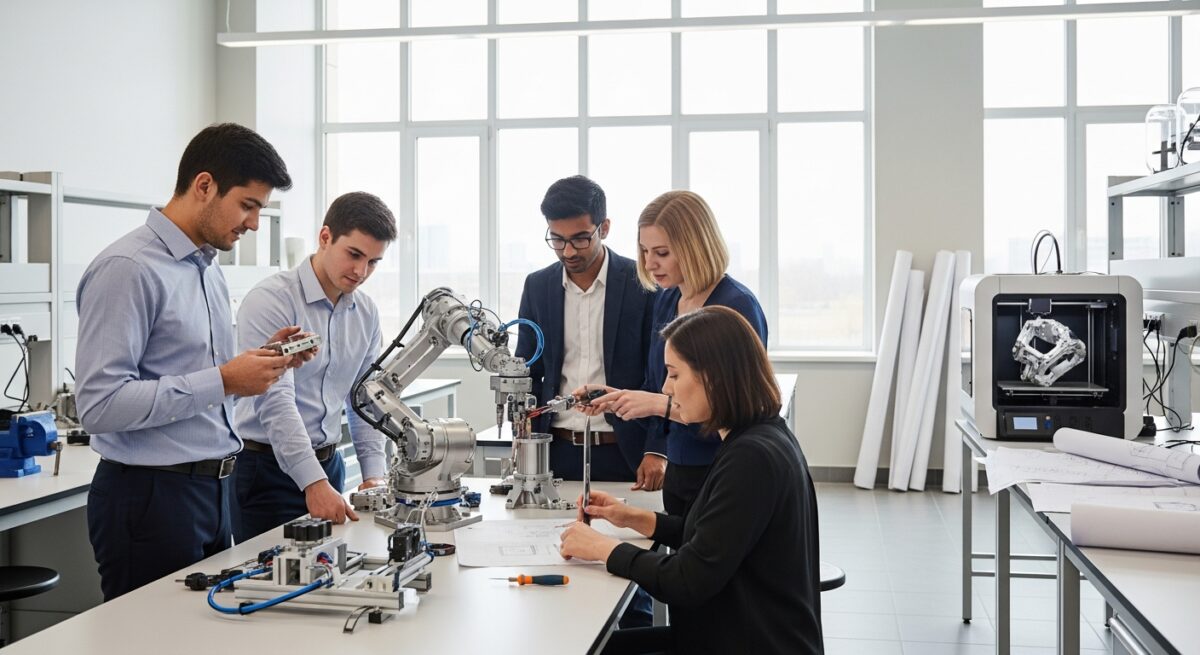
The modern manufacturing floor is a symphony of advanced robotics, data analytics, and sophisticated materials science. It is no longer the dark, dirty, and repetitive environment of the past. This transformation has created a surge in demand for highly educated professionals, making a college degree one of the most reliable tickets to a stable, lucrative, and innovative career in this vital sector. For students and career-changers, understanding which college degrees for manufacturing careers align with industry needs is the critical first step toward securing a role at the forefront of making things better, smarter, and more efficiently.
The Evolution of Manufacturing and the Degree Imperative
Manufacturing has undergone a radical shift, often termed Industry 4.0 or the Fourth Industrial Revolution. This era is defined by cyber-physical systems, the Internet of Things (IoT), additive manufacturing (3D printing), and artificial intelligence. Where mechanical skill alone was once sufficient, today’s manufacturing professional must integrate knowledge of software, data interpretation, systems thinking, and advanced engineering principles. This evolution has directly elevated the educational requirements for the most in-demand and future-proof roles. Employers now seek candidates who can program a collaborative robot, optimize a supply chain using predictive analytics, or design a product for sustainable lifecycle management. A formal degree provides the structured, foundational knowledge in mathematics, physics, and core engineering disciplines required to master these complex tasks. It signals to employers a candidate’s capacity for critical thinking, problem-solving within a theoretical framework, and ability to adapt to continuous technological change.
Core Engineering Degrees: The Foundational Paths
Traditional engineering disciplines remain the bedrock of manufacturing innovation. These programs offer deep, specialized knowledge that is directly applicable to designing, improving, and overseeing production systems.
Mechanical Engineering
This is arguably the most versatile and directly applicable degree for manufacturing. Mechanical engineers design the machinery, tools, and robotic systems used on the factory floor. They work on thermodynamics, fluid mechanics, and materials strength to ensure equipment operates efficiently and reliably. Their expertise is crucial in automation, where they integrate mechanical components with sensors and actuators. A mechanical engineering graduate might work as a manufacturing engineer, process engineer, or quality engineer, focusing on everything from assembly line design to preventive maintenance protocols.
Industrial Engineering
If mechanical engineers design the parts and machines, industrial engineers design the system itself. This degree focuses on optimizing complex processes, systems, and organizations. Industrial engineers analyze production flows, reduce waste (following Lean and Six Sigma principles), manage supply chains, and ensure workplace safety and ergonomics. Their goal is to improve productivity, quality, and efficiency across the entire operation. This makes them invaluable for roles in operations management, logistics, and process improvement. For those interested in the macro-level efficiency of production, our guide on Top College Degrees for a Consulting Career Path explores how similar optimization skills are applied in a consultancy context.
Electrical Engineering and Computer Engineering
As factories become more connected and automated, the expertise of electrical and computer engineers becomes paramount. These professionals design, develop, and maintain the electrical control systems, embedded software, sensor networks, and power distribution systems that drive modern manufacturing. They ensure that robotic arms, conveyor systems, and diagnostic equipment communicate seamlessly and operate without fault. Career paths include controls engineer, automation engineer, and systems integration specialist.
Emerging and Interdisciplinary Degree Programs
Beyond the core engineering fields, several newer or interdisciplinary degrees have emerged to address specific technological frontiers in manufacturing.
Manufacturing Engineering is a degree specifically tailored to the application of engineering principles to manufacturing processes and production systems. It often combines elements of mechanical, industrial, and materials engineering with a direct focus on production techniques. Similarly, a degree in Mechatronics Engineering or Robotics Engineering explicitly prepares graduates for the world of automated systems by blending mechanical, electrical, and software engineering. For those drawn to the data-driven side of modern industry, degrees in Data Science or Applied Statistics are increasingly valuable. These professionals analyze production data to predict machine failures, optimize quality control, and improve yield, a field sometimes called “predictive maintenance” or “manufacturing analytics.” Exploring Choosing College Degrees for Research Careers in Science and Tech can provide further insight into how analytical degrees fuel innovation in industrial R&D settings.
Business and Technology Management Degrees
A successful manufacturing operation requires more than technical prowess, it requires strategic leadership, project management, and business acumen. This is where specialized management degrees come into play.
A Bachelor of Science in Supply Chain Management is directly focused on the end-to-end flow of materials, information, and finances. Graduates manage vendor relationships, logistics, inventory, and distribution, ensuring components arrive just-in-time and finished products reach customers efficiently. For those aiming for leadership, a degree in Operations Management or Technology Management provides skills in project management, budgeting, team leadership, and strategic planning specific to technical environments. These programs often include coursework in quality management systems, safety regulations, and the financial justification of new technology investments. Professionals with these degrees typically advance into roles like production supervisor, plant manager, or director of operations.
Selecting the Right Program and Specialization
Choosing among these college degrees for manufacturing careers requires self-assessment and research. Prospective students should consider their innate interests: are they fascinated by how things move (mechanical), how systems flow (industrial), how machines think (electrical/computer), or how the entire business operates (management)?
When evaluating programs, accreditation is crucial, particularly from ABET (Accreditation Board for Engineering and Technology) for engineering degrees. This ensures the curriculum meets rigorous industry standards. Furthermore, look for programs that offer the following practical components, which dramatically enhance employability:
- Co-op or Internship Programs: Mandatory work terms provide real-world experience and often lead to full-time job offers.
- Capstone Design Projects: These year-long projects, often sponsored by industry partners, require students to solve a genuine manufacturing problem.
- Lab Facilities: Access to modern labs with CNC machines, 3D printers, robotics cells, and PLC trainers is essential for hands-on learning.
- Industry Certifications: Some programs integrate preparation for certifications like Six Sigma Green Belt or SolidWorks certification into the curriculum.
Beyond the classroom, leveraging academic degree resources can help in comparing program specifics, understanding accreditation, and planning an academic track that aligns with long-term manufacturing career goals.
Career Trajectories and Industry Outlook
Graduates with these degrees enter a field with strong prospects. The National Association of Manufacturers consistently reports a significant skills gap, with hundreds of thousands of positions unfilled due to a lack of qualified candidates. This demand translates into competitive salaries and clear advancement pathways.
Entry-level roles for engineers might include Process Engineer, Quality Engineer, or Design Engineer. With experience, these can progress to Senior Engineer, Engineering Manager, or Plant Manager. Management degree holders often start as Production Supervisors or Supply Chain Analysts, advancing to Operations Manager or Director of Manufacturing. The integration of advanced technologies also creates niche, high-demand roles like Automation Specialist, Additive Manufacturing Engineer, or Digital Twin Manager. The overarching trend is that roles requiring a blend of technical knowledge and analytical problem-solving, precisely the skills honed in a college degree program, are the most resilient to automation and the most critical to future growth.
Frequently Asked Questions
Is a four-year degree absolutely necessary for a manufacturing career?
While skilled technician roles (e.g., CNC machinist, robotics technician) are accessible with a two-year associate degree or certificate, the leadership, design, and advanced engineering roles that command higher salaries and involve innovation almost universally require at least a bachelor’s degree. The degree provides the theoretical depth needed for systemic problem-solving.
Which manufacturing degree has the highest starting salary?
Typically, degrees in Electrical Engineering, Computer Engineering, and Robotics Engineering command some of the highest starting salaries due to their critical role in automation and digital transformation. These are closely followed by Mechanical and Industrial Engineering degrees.
Can I work in manufacturing with a business degree?
Absolutely. A business degree with a focus on operations, supply chain management, or technology management is highly valuable. These graduates manage the people, projects, and logistics that allow the technical work to happen efficiently and profitably.
How important is internship experience?
It is extremely important, often as crucial as the degree itself. Internships and co-ops provide practical experience, build a professional network, and offer a tangible line on your resume that demonstrates applied skills. Many companies use their internship programs as a primary pipeline for full-time hiring.
Are online degrees respected in the manufacturing industry?
Accredited online degrees from reputable institutions are increasingly accepted, especially if they include a hands-on component (e.g., lab kits, required in-person residencies, or project-based work). For career-changers already in the industry, an online degree can be a flexible way to advance their qualifications.
The landscape of making things is smarter and more exciting than ever before. For those with the curiosity to understand complex systems and the drive to build and improve, pursuing one of the targeted college degrees for manufacturing careers is a strategic investment. It opens the door to a profession where you can literally see the tangible results of your work, while playing a part in shaping the future of global industry. By aligning your education with the technological currents driving modern production, you position yourself not just for a job, but for a dynamic and essential career.