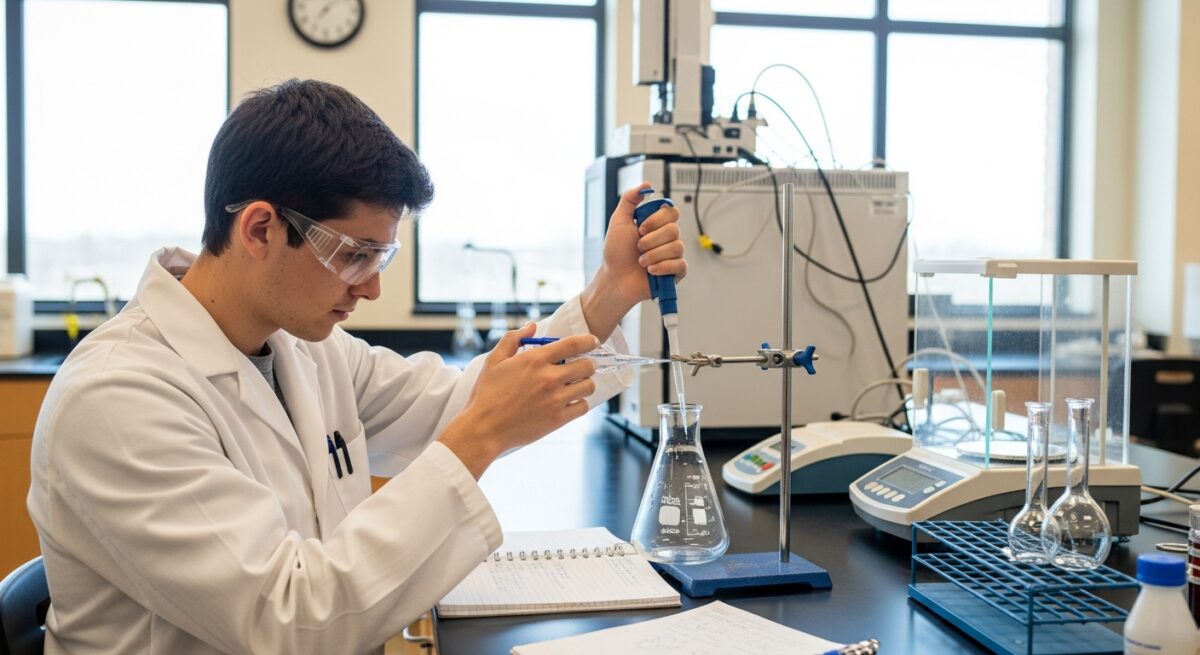
Choosing the right university for a chemistry degree is a pivotal decision that shapes a student’s scientific acumen, research opportunities, and career trajectory. The best universities for chemistry programs offer more than just rigorous coursework, they provide access to cutting-edge laboratories, renowned faculty mentors, and a culture of innovation that pushes the boundaries of molecular science. From traditional inorganic and organic chemistry to emerging fields like nanotechnology and green chemistry, these institutions build the foundation for the next generation of researchers, educators, and industry leaders. This guide explores the defining characteristics of elite chemistry colleges and highlights the academic environments where theoretical knowledge meets transformative experimental discovery.
What Defines a Top-Tier Chemistry Program?
Identifying the best universities for chemistry requires looking beyond general prestige. A truly outstanding program is characterized by several interconnected pillars of excellence. First and foremost is faculty distinction. Programs staffed by Nobel laureates, members of national academies, and pioneering researchers offer students unparalleled mentorship and exposure to groundbreaking work. These professors often integrate undergraduate and graduate students into their research groups, providing hands-on experience with advanced instrumentation and contemporary scientific problems.
Another critical factor is research output and infrastructure. Leading departments consistently publish high-impact studies in journals like Journal of the American Chemical Society and Angewandte Chemie. They house state-of-the-art facilities for nuclear magnetic resonance (NMR) spectroscopy, X-ray crystallography, mass spectrometry, and computational modeling. Access to these resources allows students to develop technical proficiency early in their academic journey. Furthermore, a strong program fosters interdisciplinary collaboration, connecting chemistry with biology, engineering, materials science, and medicine. This approach reflects the real-world nature of scientific discovery and expands career pathways for graduates. Financial support for student research, through fellowships and dedicated grants, is also a key indicator of a department’s commitment to training the next generation of scientists.
Leading Chemistry Programs in the United States
The United States is home to many of the world’s most renowned chemistry departments, each with its own historical strengths and specialized niches. These institutions set the global standard for chemical education and research intensity.
Massachusetts Institute of Technology (MIT) consistently ranks at the pinnacle for chemical sciences. Its Department of Chemistry is celebrated for a culture that blends fundamental inquiry with applied problem-solving. MIT excels in areas like catalysis, synthetic biology, and energy science. Students benefit from the institute’s deep connections to industry and its ethos of “mens et manus” (mind and hand), emphasizing practical application. Similarly, the California Institute of Technology (Caltech) maintains an exceptionally high impact per faculty member. Its small size fosters a close-knit, collaborative environment where undergraduates frequently contribute to publishable research. Caltech’s strength in chemical physics and molecular engineering is particularly notable.
On the West Coast, Stanford University’s chemistry program leverages its Silicon Valley adjacency to pioneer research at the intersection of chemistry, medicine, and technology. Its initiatives in chemical biology and sustainable chemistry are world-leading. On the East Coast, Harvard University’s Department of Chemistry and Chemical Biology offers unmatched breadth, with legendary faculty across all sub-disciplines. Harvard emphasizes a deep understanding of molecular principles as a foundation for tackling complex societal challenges, from climate change to human health.
Other public and private institutions also offer exceptional chemistry education. The University of California, Berkeley is famed for its groundbreaking work in organic and inorganic chemistry, while the University of Illinois Urbana-Champaign boasts one of the most cited chemistry faculties globally, especially in analytical and materials chemistry. When evaluating these best universities for chemistry, prospective students should consider the following common attributes that contribute to their preeminence:
- Nobel Legacy and Award-Winning Faculty: A history of Nobel Prizes in Chemistry and a current faculty recognized with major awards.
- High-Impact Research Funding: Significant grants from the National Science Foundation (NSF), National Institutes of Health (NIH), and Department of Energy (DOE).
- Advanced Centralized Facilities: Shared instrumentation centers that provide student training on multimillion-dollar equipment.
- Strong Industry and Alumni Networks: Pathways to internships and employment in pharmaceuticals, technology, energy, and chemical manufacturing.
- Commitment to Undergraduate Research: Structured programs that guarantee research opportunities, often resulting in co-authorship on scientific papers.
It is worth noting that the choice between a large public research university and a smaller private institute often comes down to learning style. Larger programs may offer more specialized course options and vast research labs, while smaller ones can provide more direct faculty interaction. For students interested in the biological applications of chemistry, exploring top biochemistry programs and selection criteria can provide complementary insights into specialized life science tracks.
Exceptional Chemistry Programs Worldwide
Global excellence in chemical education extends far beyond U.S. borders. Several institutions in Europe and Asia are powerhouses of scientific innovation, often with distinct philosophical approaches and historic specializations.
In the United Kingdom, the University of Cambridge and the University of Oxford maintain centuries-old traditions of scientific excellence. Cambridge’s Department of Chemistry is one of the largest in the UK, known for its strengths in synthetic methodology and atmospheric chemistry. Oxford excels in chemical biology and catalysis, with a tutorial system that offers students highly personalized academic supervision. In continental Europe, ETH Zurich (Swiss Federal Institute of Technology) in Switzerland is frequently ranked among the very best. Its chemistry program is intensely research-oriented, with a strong focus on interdisciplinary science and engineering applications. The Max Planck Institutes across Germany, though primarily postgraduate, represent a pinnacle of focused research excellence that often collaborates closely with nearby university chemistry departments.
In Asia, the National University of Singapore (NUS) and the University of Tokyo stand out as regional leaders. NUS has invested heavily in chemical research infrastructure and attracts top international talent, with particular expertise in materials chemistry and medicinal chemistry. The University of Tokyo benefits from substantial government funding and leads in areas like polymer science and theoretical chemistry. These global programs often offer unique advantages, such as exposure to different research cultures, international collaboration networks, and in some cases, lower tuition costs for international students compared to private U.S. institutions. Their global perspective is invaluable in a scientific field that is inherently international.
Key Factors for Prospective Students to Evaluate
Selecting among the best universities for chemistry programs is a highly personal decision that should align with a student’s academic interests, career goals, and preferred learning environment. The first step is self-assessment. A student fascinated by drug discovery might prioritize programs with strong medicinal chemistry and pharmacology ties, while someone interested in renewable energy should seek departments leading in electrochemistry or photovoltaic materials research. Reviewing faculty research profiles and recent department publications is the most direct way to gauge if a program’s focus matches your passions.
Practical considerations are equally vital. The availability of undergraduate research opportunities is perhaps the single most important differentiator. Prospective students should ask: How early can undergraduates join labs? Is funding available for summer research? What percentage of chemistry majors complete a senior thesis? Visiting campuses, if possible, or attending virtual information sessions can provide a feel for the department culture, whether it is highly competitive or collaborative, and how accessible professors are outside the classroom. Financial aid packages and the long-term value of the degree must also be weighed seriously. A prestigious name carries weight, but graduating with minimal debt from a strong public university can provide greater flexibility for graduate studies or early-career choices.
Finally, students should look at outcome data. What percentage of graduates proceed to top PhD programs in chemistry or related fields? What are the placement rates for industry positions? A strong career services office with specific support for science majors is a significant asset. Remember that a degree in chemistry from a rigorous program opens doors not just in pure research, but also in law (patent law), business (consulting, venture capital in tech), education, and public policy. Exploring online degree resources can also be helpful for understanding the broader landscape of higher education, including hybrid or specialized digital learning options that may complement a traditional chemistry pathway.
Frequently Asked Questions
What is the difference between a BA and a BS in Chemistry?
A Bachelor of Science (BS) in Chemistry is typically more intensive, requiring more advanced chemistry, mathematics, and physics courses. It is designed for students planning to pursue graduate studies in chemistry or immediate work as a laboratory chemist. A Bachelor of Arts (BA) often requires fewer upper-level science credits, allowing more room for humanities and social science courses. It can be an excellent path for students interested in chemistry but also aiming for careers in medicine, law, business, or secondary education where a broad liberal arts foundation is beneficial.
How important is American Chemical Society (ACS) accreditation for an undergraduate program?
ACS accreditation signifies that a chemistry department meets rigorous national standards for curriculum depth, faculty qualifications, and laboratory infrastructure. For students certain about a chemistry-centric career, an ACS-certified degree can be advantageous, as it is recognized by employers and graduate schools as a mark of comprehensive training. However, many elite, highly specialized programs may not pursue ACS accreditation formally, yet their reputations and outcomes are equally strong. It is one factor to consider among many.
Can I pursue a chemistry degree online effectively?
The laboratory component of chemistry education presents a significant challenge for fully online programs. While theoretical coursework can be delivered online, hands-on laboratory skills are fundamental. Some reputable institutions offer hybrid models where intensive, in-person lab sessions are required during summers or short residencies. For most students seeking to become practicing chemists, a traditional, in-person program at one of the best universities for chemistry is the standard and recommended path.
What are the emerging specializations within chemistry I should look for?
Beyond the core sub-disciplines (organic, inorganic, physical, analytical, biochemistry), exciting emerging fields include green/sustainable chemistry (designing environmentally benign processes), nanotechnology (manipulating matter at the atomic scale), chemical biology (using chemistry to understand and manipulate biological systems), and computational chemistry (using computer simulations to solve chemical problems). Programs with research clusters in these areas are often at the forefront of the field.
How crucial is the university’s overall ranking versus the specific chemistry department ranking?
For graduate school admissions and specialized research careers, the specific reputation and ranking of the chemistry department often matter more than the overall university ranking. A university might be ranked highly overall due to its law or business school, while its chemistry department could be modest. Always investigate department-specific rankings, research expenditures, and faculty accolades to get an accurate picture of the chemistry program’s strength.
The journey to find the right chemistry program is an investment in a future defined by discovery and problem-solving. The best universities for chemistry programs do more than teach the periodic table, they immerse students in a community of inquiry where asking profound questions and developing innovative solutions becomes a way of life. By carefully weighing factors like research alignment, mentorship quality, and practical opportunities, students can identify the academic environment where their potential will be fully realized. The goal is to select a program that not only provides a world-class education but also inspires a lifelong passion for the molecular sciences that underpin so much of modern technology and medicine.